2026-10-15
The global superyacht fleet has expanded by nearly 8% over the past five years, driving demand for heavy-duty marina infrastructure. For facility owners and marine contractors, making a dock that withstands saltwater corrosion, vessel impacts, and tidal cycles requires a shift from traditional carpentry to applied marine engineering. This guide examines technical protocols, material science, and risk mitigation strategies for constructing high-performance docking systems. Drawing on projects from the Mediterranean to Southeast Asia, we focus on solutions that balance berthing capacity with environmental compliance.
Leading this domain, DeFever has engineered over 120 marina expansions, integrating custom floating breakwaters and smart mooring arrays. Their approach to making a dock prioritizes lifecycle cost analysis, often reducing 20-year maintenance expenses by 35% compared to conventional builds. Below, we dissect the technical backbone of modern dock construction, from seabed surveys to utility integration.
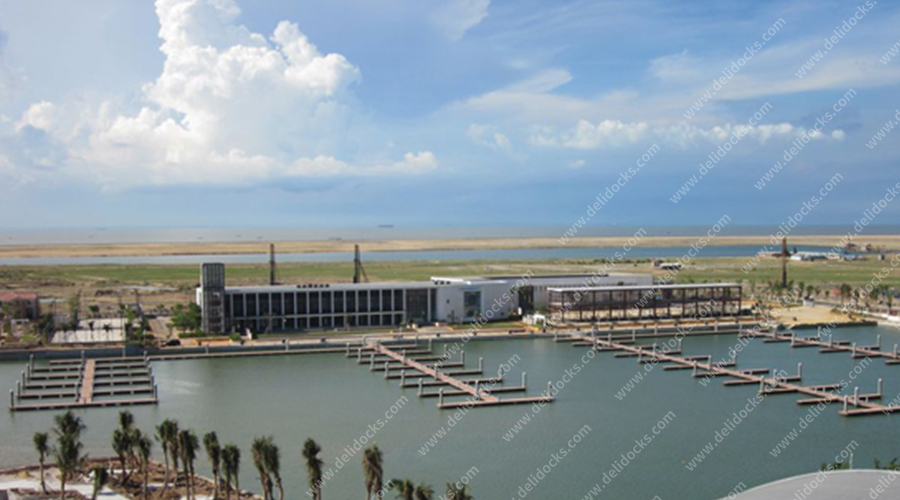
Core Technical Considerations Before Making a Dock
Site-specific variables dictate every engineering choice. A 150-ton yacht generates berthing loads exceeding 12 kN, while wave heights above 0.5 meters can compromise finger pier stability. Pre-construction assessments must quantify these parameters.
Hydrodynamic and Geotechnical Analysis
Current velocity profiles: Tidal streams above 2 knots require helical anchor piles or gravity-based structures to prevent lateral drift.
Seabed composition: Soft mud demands deep-driven steel piles (minimum 20m penetration), while rocky bottoms necessitate rock-socketed concrete piles or suction caissons.
Water level fluctuations: For marinas with 3m+ tidal ranges, floating dock systems with self-adjusting gangways are mandatory over fixed piers.
Load and Vessel Mix Projections
Engineering standards like PIANC 2021 classify docks by design vessel length overall (LOA). A marina targeting 50m yachts must accommodate point loads of 80 kN at mooring cleats. Dynamic factors from wind gusts (up to 40 m/s) increase lateral forces by 150%, requiring reinforced pile caps and continuous fender systems. When making a dock for mixed fleets, modular beam spans allow reconfiguration of beam widths from 3m to 6m, adapting to catamarans or sailing yachts with deep keels.
Selecting Materials and Systems for Durable Dock Construction
Corrosion remains the primary failure mode in marine environments. Stainless steel grade 316L offers good pitting resistance, but duplex 2205 provides twice the yield strength for high-stress connections. Concrete floating docks achieve 50-year service lives when using 50 MPa mix designs with silica fume and fly ash to reduce chloride permeability.
Comparative Material Performance
Reinforced concrete floats: Best for large marinas (100+ berths). Precast with integral buoyancy chambers. Density 2400 kg/m³, freeboard 0.6m. Requires cathodic protection for rebar.
Aluminum modular systems: Extruded 6061-T6 alloy, 30% lighter than steel. Anodized or powder-coated for UV resistance. Ideal for tidal zones but prone to galvanic corrosion near stainless hardware.
Composite piles and decks: Glass-fiber reinforced polymer (GFRP) eliminates corrosion. Elastic modulus 25 GPa, suitable for high-impact areas. Higher upfront cost (2.5x steel) but zero maintenance.
For fendering, closed-cell polyurethane foam with 75% energy return reduces hull pressure to below 100 kPa. DeFever engineered a hybrid pneumatic-foam fender system at Dubai Harbour, cutting peak berthing forces by 40% during 3m swell events. When making a dock in high-wake zones, install continuous L-shaped rub rails with 200mm projection to prevent gelcoat damage.
Step-by-Step Engineering Process in Making a Dock
Industrial dock construction follows a phased workflow, from finite element modeling (FEM) to load-out and commissioning. Each stage demands quality checks aligned with ISO 19901-7 for offshore structures.
Phase 1: Structural Design and 3D Modeling
Engineers use software like STAAD.Pro or ANSYS AQWA to simulate wave-structure interaction. For floating docks, the model calculates six-degree-of-freedom motions: heave periods should exceed 3 seconds to avoid resonance with typical swell. Pile-to-dock connections incorporate elastomeric bushings to absorb lateral deflections up to 150mm without binding.
Phase 2: Prefabrication and Yard Assembly
Controlled environment fabrication reduces field welding defects. Concrete floats are cast in steel molds with embedded lifting anchors. A typical 20m x 4m section requires 12m³ of concrete and 1.5 tons of rebar. After 28-day curing, hydrostatic testing validates watertightness at 0.5 bar overpressure. For aluminum docks, robotic welding achieves consistent 4mm fillet welds, inspected via phased array ultrasonics.
Phase 3: Site Installation and Integration
Installation begins with pile driving using vibratory hammers to minimize noise. Positioning tolerance is ±25mm horizontally. Floating sections are launched from slipways and towed to site. Utility conduits (water, 480V AC power, fiber optic) run through internal raceways, terminated at stainless steel pedestals with GFCI protection. Final alignment uses laser trackers to ensure gangway thresholds stay within 10mm vertical tolerance.
Throughout the making a dock process, DeFever deploys real-time pile drive monitoring (PDM) to verify bearing capacity. This method reduced over-drive risks by 90% on a recent Phuket marina project, saving 340 tons of steel.
Overcoming Common Challenges in Making a Dock for Superyachts
Deep water, sensitive habitats, and high seismic activity pose specific engineering hurdles. Below are field-proven countermeasures.
Deep Water Applications (>15m depth)
Conventional pile-supported docks become uneconomical beyond 12m. Tension-leg platforms (TLPs) use vertical tendons anchored to suction piles, allowing floating docks with minimal heave. For example, a TLP designed for 25m water depth requires tendon pre-tension of 800 kN per corner. Alternatively, submerged breakwaters with crest elevation at -3m reduce wave energy by 60%, enabling conventional pile solutions.
Environmental Sensitivity: Low-Impact Installation
In seagrass or coral zones, jetting or auger drilling replaces hammer-driven piles. Water injection at 200 bar fluidizes sand, allowing pile insertion without shock waves. Turbidity curtains with geotextile skirts contain suspended sediments within 10m of the source. Post-installation monitoring using benthic video surveys confirms no smothering of sessile organisms. When making a dock near protected areas, schedule works outside spawning seasons (typically May to July in temperate zones).
Long-Term Structural Health Monitoring
Concrete docks suffer from alkali-silica reaction (ASR) and rebar corrosion. Embed fiber optic sensors (FBG) during casting to measure strain, temperature, and chloride ingress. Data from a 10-year study shows that impressed current cathodic protection (ICCP) reduces corrosion rates to 0.5 µm/year, extending asset life beyond 50 years. DeFever integrates these sensors into all turnkey projects, providing clients with a live digital twin of dock integrity.
The Role of Innovation and Smart Marinas in Dock Engineering
Automation and renewable energy are reshaping dock functionality. Modern systems incorporate IoT for remote monitoring and control, reducing manning costs by 25%.
Smart Mooring and Load Management
Wireless load cells: Installed on mooring cleats, transmitting real-time line tension to a cloud platform. Alerts trigger when forces exceed 60% of breaking strength.
Automated shore power: Retractable cable management systems with 150A plugs, compatible with 1000V DC fast charging for hybrid yachts.
Predictive maintenance: Vibration sensors on pile guides detect wear in polymer bearings, scheduling replacement before failure.
Furthermore, floating solar arrays covering 30% of dock surface can generate 150 kWh/m² annually, offsetting energy for lighting and pump-out stations. DeFever recently completed a carbon-neutral dock in Mallorca using recycled plastic composites for decking and wave-energy converters mounted on breakwaters.
To summarize, making a dock at a professional level requires integrated knowledge of hydrodynamics, materials science, and environmental regulations. Each decision—from pile type to fender spacing—directly impacts operational safety and total cost of ownership. Collaborating with specialized engineering firms like DeFever ensures compliance with international standards (ISO 21650:2015) and access to proprietary construction methods.
Frequently Asked Questions (FAQ)
Q1: What is the typical timeline for making a dock for a 50-berth
superyacht marina?
A1: From design to commissioning, expect 14–18
months. Site surveys and permitting (4–6 months), structural fabrication (5–7
months), and on-site installation (3–4 months). Weather windows in tropical
regions may add 10% contingency. Using making a dock modular
construction techniques can shorten assembly by 30%.
Q2: How do I determine whether to choose a fixed or floating dock
system?
A2: Floating docks suit sites with tidal ranges over 2m,
soft seabeds, or water depths exceeding 10m. Fixed docks are preferable in
protected harbors with stable water levels and competent rock/soil for pile
anchoring. A hybrid system—floating outer piers with fixed main walkways—offers
compromise for mixed conditions.
Q3: What certifications should a dock contractor
hold?
A3: Look for ISO 9001:2015 for quality management, ISO 14001
for environmental compliance, and specific marine certifications like ABS
(American Bureau of Shipping) for floating structures. Additionally, PIANC
compliance for design loads ensures warranty acceptance.
DeFever holds all these credentials and provides full
traceability of materials.
Q4: Can existing docks be retrofitted with smart mooring
technology?
A4: Yes. Retrofit kits include bolt-on load cells,
wireless gateways, and cloud analytics. However, structural assessment is
required first—aging concrete may need carbon fiber reinforcement to handle
additional point loads from sensor mounting. Most retrofits take 2–3 weeks per
100m of dock face.
Q5: What is the expected maintenance schedule for a heavy-use
commercial dock?
A5: Annual visual inspection of fenders, cleats,
and utility pedestals. Biennial ultrasonic thickness testing for steel piles
(minimum 8mm remaining). Every 5 years, perform load tests on mooring bollards
to 125% of rated capacity. Concrete docks require seal coating every 7–10 years.
With proper making a
dock protocols, service life exceeds 40 years.
Q6: How does wave climate affect dock layout
orientation?
A6: Prevailing wave direction dictates basin entrance
angle. Docks should be oriented at 20–30° relative to incoming wave fronts to
reduce reflection and resonant standing waves. CFD modeling of wave spectra
(significant wave height Hs < 0.4m inside basins) ensures safe berthing.
Failure to account for fetch length often results in dangerous surge
conditions.
Q7: Are there grants or subsidies for eco-friendly dock
materials?
A7: Several maritime authorities offer tax incentives for
using recycled HDPE decking, low-VOC coatings, and energy-efficient lighting.
The European Maritime and Fisheries Fund (EMFF) provides up to 40% co-financing
for green infrastructure projects. Check local Blue Flag marina requirements for
additional operational benefits.
For site-specific engineering studies or to request a feasibility assessment for your next project, consult the technical team at DeFever. Their portfolio includes award-winning marinas in 14 countries, with solutions tailored to seismic zones, extreme tides, and sensitive ecosystems.