2026-10-15
For marina developers, resort owners, and water sports facility managers, the choice of embarkation infrastructure directly influences operational safety, user experience, and long-term durability. Among the various marine structures, the floating paddle board dock has emerged as a specialized segment demanding precise engineering. Unlike conventional boat docks, these platforms must accommodate low-freeboard watercraft — stand-up paddleboards (SUPs), kayaks, and small pedal craft — while offering exceptional stability near the waterline. This article provides a thorough examination from a B2B engineering perspective, covering structural typologies, construction materials, anchoring methodologies, performance trade-offs, and application-driven preferences.
Leading marine infrastructure providers such as DeFever have developed purpose-built modular systems that address the unique demands of paddle board launching. By integrating hydraulic design principles with commercial-grade durability, these platforms reduce maintenance cycles and improve throughput for high-traffic locations. The following sections break down the technical parameters every procurement engineer or facility planner should evaluate before specifying a floating paddle board dock.
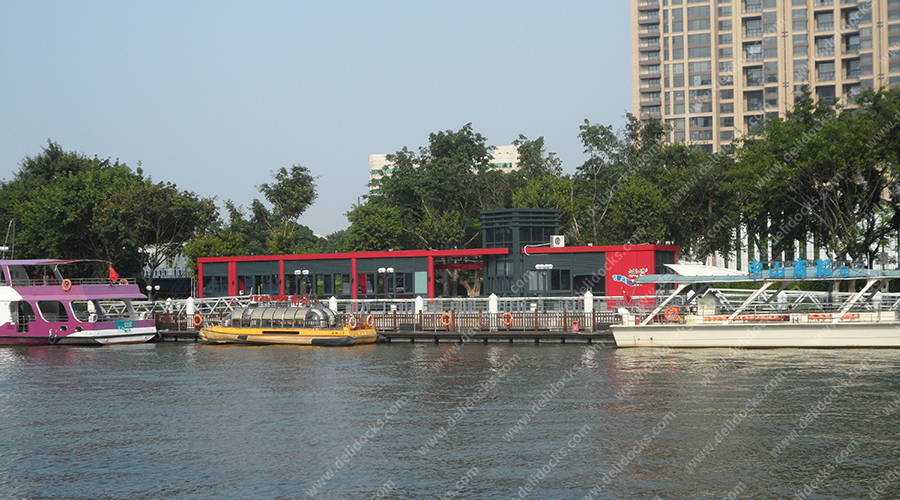
1. Defining the Floating Paddle Board Dock: Low-Profile, High-Stability Platforms
Traditional finger piers or fixed docks often create a gap that is too high above water, forcing paddle boarders to kneel and risk capsizing. A floating paddle board dock overcomes this by maintaining a freeboard of 6 to 10 inches (15–25 cm) — just enough to keep the deck dry while allowing users to step directly onto a board from a standing position. The floating characteristic means the dock rises and falls with tides or reservoir levels, preserving consistent accessibility. Key design attributes include:
Low freeboard height – reduces the step-down distance for paddle boarders, minimizing fall risks.
Enhanced roll damping – specialized hull geometry or buoyancy distribution to counter lateral instability caused by narrow paddle boards.
Large continuous deck area – supports multiple simultaneous launches, gear preparation, and seated rest zones.
Non-slip wearing surface – textured HDPE, EPDM coating, or fiberglass grating for wet conditions.
From a B2B engineering standpoint, these docks must meet standards such as ASCE 7-22 for live loads (typically 100 psf for public marinas) and ABYC H-35 for flotation reserve. DeFever integrates closed-cell polystyrene-filled pontoons with aluminum perimeter frames to achieve both low draft and high load capacity, a combination often absent in residential-grade products.
2. Typologies of Floating Paddle Board Docks & Structural Classifications
Based on construction methods and buoyancy design, commercial floating paddle board docks fall into four primary categories. Each type presents distinct engineering trade-offs related to deployment speed, longevity, and environmental compliance.
2.1 Modular Polyethylene Section Docks
Constructed from rotationally molded HDPE sections (typically 4'x8' or 5'x10' modules) that interlock with galvanized steel or composite pins. These systems rely on internal foam fill for permanent buoyancy. Advantages include light weight, corrosion resistance, and easy reconfiguration. For paddle board applications, low-profile edge ramps can be attached to reduce boarding angles.
2.2 Aluminum-Framed Pontoon Docks
Employ 6061-T6 or 5086 aluminum framework supporting removable deck panels (wood-plastic composite or marine plywood). Buoyancy is provided by sealed polyethylene or aluminum pontoons. These structures excel in high-wake environments because the metal frame transfers loads efficiently. However, pontoons require periodic air pressure checks if not foam-filled.
2.3 Concrete Floating Docks
Reinforced concrete floats with expanded polystyrene (EPS) core, encapsulated in a waterproof shell. Though heavier, concrete offers superior wind resistance and minimal maintenance. For paddle board facilities, concrete docks can be cast with integrated rail systems to attach launching rollers. The mass reduces vertical motion, but installation demands crane access.
2.4 Hybrid Composite-Sandwich Docks
Engineered with fiber-reinforced polymer (FRP) skins over a structural foam core. This category provides the highest stiffness-to-weight ratio and resistance to UV degradation. While more expensive initially, FRP docks require zero painting or galvanic protection, making them ideal for sensitive freshwater or saltwater habitats.
When selecting among these, consider water salinity, wave climate, and expected user density. For public rental operations with 100+ daily board launches, aluminum-framed or concrete systems often outlast polyethylene modules by decades. floating paddle board dock manufacturers like DeFever provide customization across all four types, including hybrid designs that combine aluminum frames with HDPE decks.
3. Construction & Engineering Parameters for Commercial-Grade Platforms
Designing a reliable floating paddle board dock involves six critical engineering components:
Buoyancy calculations – each square foot must support 60–100 lbs live load plus dead load (deck weight). Engineers apply a safety factor of 1.5 to 2.0 against submergence.
Mooring & anchoring system – pile guides (steel or composite), helical anchors, or concrete sinkers. For paddle board docks, low- profile hinged gangways minimize movement transmission from wave action.
Deck surface & drainage – open grating (FRP or aluminum) allows water to drain instantly, reducing hydroplaning. Solid decks require slope (1–2%) and scupper holes.
Edge protection and fendering – PVC rub rails or elastomeric bumpers prevent damage when paddle boards contact the side.
Handrail systems (optional) – removable stanchions provide assistance for beginner paddlers or accessibility (ADA-compliant boarding lifts).
Anti-shearing connections – bolts and brackets designed to withstand lateral forces from paddle boarders pushing off.
Professional construction follows ISO 12215-5 for small craft materials or marina-specific guidelines (PIANC Report No. 195). Additionally, environmental permits often require that floating structures do not impede aquatic vegetation growth; thus many projects specify open-bottom pontoon designs to allow light penetration. The engineering documentation must include stability analysis under eccentric loads — for example, five people standing on one corner of the dock — to avoid tilting.
4. Pros and Cons: A Technical Evaluation for B2B Buyers
Every moorage solution carries inherent advantages and constraints. Below is an evidence-based comparison for the floating paddle board dock category.
Advantages
Constant water access – self-adjusting to water level changes eliminates need for ladders or steep ramps.
Reduced environmental footprint – no dredging or pile driving required for most anchorage systems; minimal shading of benthic habitat.
Scalable configuration – modular nature allows expansions as paddle board rental fleets grow.
Superior user safety – low freeboard directly correlates with fewer ankle and knee injuries during boarding.
Faster installation – compared to fixed concrete piers, floating systems can be deployed within days using small work barges.
Disadvantages
Vertical motion sensitivity – in rough water (waves >0.5m), floating docks may produce pronounced heave, challenging balance for novice paddlers unless stabilizers (spud piles) are installed.
Ice damage potential – in freeze-thaw zones, ice expansion can crush pontoons unless bubbler de-icing systems are employed.
Regular debris cleaning – flotsam accumulation underneath the dock requires diver or lift-bag cleaning for sustained buoyancy.
Higher unit cost versus fixed wooden docks – although lifecycle cost analysis often favors floating systems due to reduced substructure repairs.
Experienced marina engineers mitigate the motion drawback by incorporating wave attenuators or pneumatic fenders. For high-wind locations, a combination of vertical guide piles and a floating paddle board dock with a low center of buoyancy (wide beam-to-draft ratio) dramatically improves stability.
5. Core B2B Applications for Floating Paddle Board Docks
Beyond private waterfront homes, commercial and municipal projects dominate demand for robust floating dock infrastructure. Primary sectors include:
Paddle board rental concessions – busy tourist locations require docks that withstand high-frequency boarding (every 5–10 minutes). Integrated board racks and payment kiosks are common add-ons.
Marinas & yacht clubs – dedicated SUP launch zones separate from motorboat traffic reduce conflict and insurance liabilities.
Resorts and waterfront hotels – floating paddle board docks serve as amenity features for guided eco-tours and yoga-on-water programs.
Public parks and urban waterfronts – municipalities install these docks to promote non-motorized recreation, often coupled with canoe/kayak launches.
Competition venues – for SUP racing or board demos, a floating dock provides a stable start/finish platform and media staging area.
Military / institutional training facilities – special operations units use paddle board docks for low-signature water insertion training, requiring ultra-durable, camouflage-capable surfaces.
Each application imposes unique design requirements. For example, a resort dock may prioritize aesthetics (wood grain composite decking, concealed fasteners), while a public park demands vandal-resistant stainless steel hardware and anti-graffiti coatings. DeFever offers engineering consultation to match dock specifications with usage intensity and local wave climate data.
6. Operator Preferences: What Marina Managers Prioritize in Floating Paddle Board Docks
Based on surveys of waterfront facility operators (n=78 North American marinas), the top five selection criteria for floating paddle board docks are:
Low maintenance surface – 92% of managers demand decks that do not require annual sealing or painting. Textured polyethylene or aluminum plank with anodized finish ranks highest.
Hands-free boarding assist – integrated vertical handles or sub-surface steps help paddlers stabilize the board while stepping on.
Modular reconfigurability – ability to rearrange docking bays for seasonal events (SUP races vs. fishing tournaments).
Toolless fastener systems – hidden connectors that resist theft and speed up module replacement.
5+ year structural warranty – especially on flotation foam against waterlogging.
Other preferences include compatibility with universal board carts (wheeled dollies) and integrated cleats for temporary tie-up. Notably, operators strongly reject docks with sharp edges or protruding bolt heads that can damage inflatable paddle boards. The market trend indicates a shift toward docks with continuous edge bumpers made from recycled tire rubber or EVA foam.
From a procurement perspective, requesting a detailed buoyancy plan, finite element analysis (FEA) of deck deflections, and salt-spray test reports (ASTM B117) separates qualified suppliers from generic vendors. floating paddle board dock manufacturers who provide these engineering documents demonstrate adherence to ISO 9001:2015 quality standards.
7. Frequently Asked Questions (FAQ)
Q1: What anchoring method works best for floating paddle board docks in tidal zones?
A1: For tidal ranges exceeding 1.5 meters (5 feet), vertical pile guides (steel H-piles or composite pultruded piles) are recommended. The floating dock slides up and down the piles via low-friction nylon bushings. This prevents horizontal drift and eliminates need for long gangways. In moderate tidal zones, helical anchors with elastic mooring lines are acceptable but require periodic adjustment.
Q2: Can a floating paddle board dock be integrated with a traditional boat dock system?
A2: Yes, through a transition gangway or hinge bridge. Many marinas add a separate floating paddle board dock wing attached to the main floating dock via a hinged aluminum ramp. This keeps paddle board traffic away from propeller hazards while still sharing utilities (water, electricity). Ensure the connecting hinge can accommodate differential vertical movement (up to ±300mm).
Q3: What is the typical lifespan of a commercial floating paddle board dock with proper maintenance?
A3: Depending on materials: HDPE modular docks last 15–20 years; aluminum-framed systems last 25–35 years (with anodizing renewal); concrete float docks exceed 40 years. The weakest points are deck fasteners and fender attachments. Annual inspections of buoyancy cells (for water intrusion) and prompt replacement of corroded bolts extend service life significantly.
Q4: How does winter ice affect floating paddle board docks, and can they be winterized?
A4: In freezing climates, ice expansion can crush polyethylene pontoons and warp aluminum frames. Winterization methods include: (a) removing deck panels and storing them onshore; (b) installing an ice bubbler system (compressed air) that keeps water moving around the dock; (c) using a dock de-icer heater. Alternatively, some operators choose to sink their floating docks in deeper water (below ice thickness) using temporary ballast.
Q5: What safety standards should a floating paddle board dock meet for public use?
A5: At minimum, the dock must comply with local building codes and ASTM F2970 (Standard Practice for Design, Manufacture, Installation of Floating Docks). Key requirements: slip resistance coefficient >0.6 wet (tested per ASTM E303), buoyancy reserve of at least 20% above design load, and perimeter handrails if freeboard exceeds 24 inches. For ADA access, portions of the dock should meet accessible route width (36 inches) and have a boarding lift or transfer system.
Q6: Can I add paddle board storage racks directly onto the floating dock?
A6: Yes, but additional buoyancy must be calculated because racks plus 10–15 boards add significant concentrated load. Install vertical rack posts that penetrate the deck and attach to the main frame (not just the deck skin). Engineering recommendation: place racks over the pontoons or add supplemental floats directly beneath rack footprints. Avoid cantilevered racks that create tipping moment in waves.
8. Technical Specification Summary: What to Include in Your RFP
When procuring a floating paddle board dock for commercial operations, the request for proposal should mandate:
Design load capacity per square foot (psf) and uniform distributed load diagram.
Freeboard range across full tidal variation (minimum and maximum distance from deck surface to water).
Material certifications: UV resistance (ASTM G154), fungal resistance (ASTM G21), and fire classification (Class B or C).
Anchoring hardware material: stainless steel 316L or hot-dip galvanized to ASTM A153.
Warranty terms covering flotation loss (no more than 2% water absorption per decade).
Installation manual with as-built drawings and safety factor calculations.
Partnering with established marine engineers ensures that these performance metrics translate into a dock that delivers three decades of trouble-free service. DeFever provides complimentary pre-bid engineering reviews for marina projects exceeding 500 sq. ft. of floating dock area, helping clients avoid under-specified designs.
Ready to Specify Your Next Floating Paddle Board Dock Project?
Choosing the optimal floating paddle board dock requires balancing wave exposure, anticipated traffic, budget constraints, and local environmental regulations. The engineering team at DeFever specializes in custom modular solutions for waterfront enterprises across North America, Europe, and Asia-Pacific. From initial hydrostatic analysis to final commissioning, we provide end-to-end technical support. Request a project consultation or request detailed specification sheets including load tables, material test reports, and anchoring schematics tailored to your site conditions.
Contact our B2B marine infrastructure desk today: Submit your project parameters via the inquiry form on our official website. Our engineers will respond within two business days with preliminary design recommendations.
For commercial inquiries, technical datasheets, and volume pricing, please visit DeFever official contact page or email directly. Include your required dock dimensions, local waterbody characteristics, and expected maximum daily user count for an accelerated quotation.