2026-10-15
In the realm of luxury assets, few endeavors match the complexity and reward of deciding to build your yacht. For the discerning owner, a custom vessel represents the ultimate expression of personal taste and seafaring ambition. However, the path from concept to christening is laden with technical, financial, and logistical decisions. With over two decades of experience in international marina engineering and superyacht construction, I have witnessed how a structured, data-driven approach separates legendary builds from troubled projects. This guide integrates the latest industry standards and the timeless craftsmanship of houses like DeFever to provide a definitive roadmap.
1. Why Bespoke? The Case for a Custom Build
While production yachts offer predictability, only a fully customized project allows you to build your yacht around a specific mission profile—whether that’s transatlantic cruising, shallow-draft island hopping, or hosting high-level corporate charters. A custom build optimizes:
Naval Architecture: Hull forms tailored to your preferred speed and sea-keeping qualities (e.g., DeFever’s renowned deep-vee designs for offshore efficiency).
Material Selection: From high-tensile steel for ice-class exploration to lightweight carbon composites for speed.
Systems Integration: Seamless incorporation of advanced stabilizers, zero-speed technology, and hybrid propulsion.
2. The Technical Pillars of Building Your Yacht
Before steel is cut, a deep dive into engineering fundamentals ensures the project rests on solid ground. When you build your yacht, these pillars demand scrutiny:
2.1 Naval Architecture & Hydrodynamics
Computational Fluid Dynamics (CFD) now allows engineers to simulate hull performance with remarkable accuracy. Key metrics include displacement-length ratio, prismatic coefficient, and slamming pressure predictions. Working with a pedigree like DeFever ensures that classic seakineliness meets modern efficiency gains of up to 15% in fuel consumption.
2.2 Material Science & Corrosion Control
The choice between aluminum and steel is not merely structural—it impacts longevity and maintenance. Marine-grade aluminum (5083 series) offers weight savings crucial for planing hulls, while steel (DH36) provides durability for long-range trawler yachts. Cathodic protection systems, including sacrificial anodes and impressed current, must be designed for the specific salinity of your intended operating waters.
2.3 Propulsion & Energy Management
Today’s builds increasingly feature hybrid or diesel-electric architectures. For example, a 2023 DeFever long-range cruiser integrated variable-speed generators and lithium-ion battery banks, reducing generator runtime by 40%. When you build your yacht, consider fuel-cell readiness—a trend driven by IMO Tier III regulations in emission control areas.
3. Marina Integration: The Overlooked Infrastructure Factor
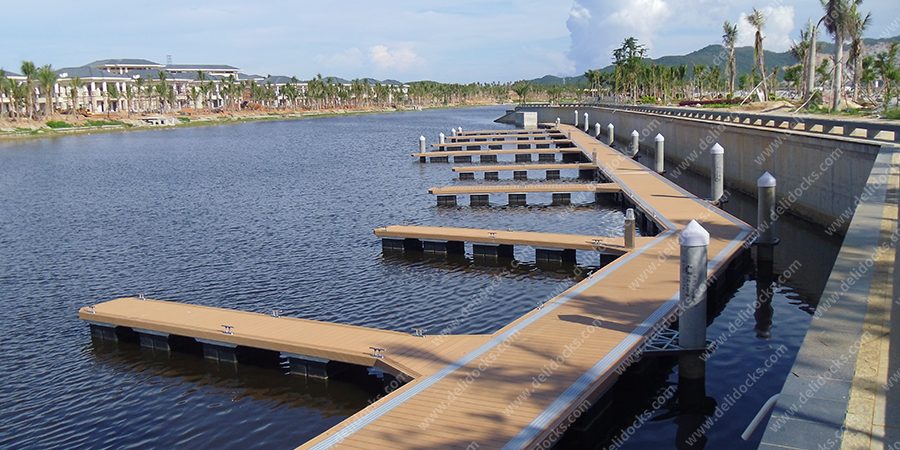
As an authority in international marina engineering, I cannot stress enough: the vessel you build must fit the reality of the ports you frequent. This is where holistic planning pays dividends. When you build your yacht, you must coordinate with marina operators and civil engineers on:
Berth Geometry: Air draft (height above waterline) limits for bridges, and maximum LOA (length overall) for available superyacht slips in the Mediterranean or Caribbean.
Shore Power Compatibility: 400A/690V systems are becoming standard in new marinas, but older ports may require transformers onboard.
Waste Management: Advanced sewage treatment plants (STP) that meet both USCG and EU standards for no-discharge zones.
Bollard Pull & Mooring: For vessels over 50m, dynamic mooring analysis is required to ensure safe loads on cleats and dock structures.
4. The Step-by-Step Construction Blueprint
To successfully build your yacht, follow this phased approach used by top-tier shipyards:
Concept & Feasibility (3-6 months): Define general arrangement, propulsion type, and budgetary framework. Create a Basis of Design (BoD) document.
Basic Design & Tank Testing (6-9 months): Develop lines plan, structural scantlings, and conduct CFD. Model testing in towing tanks validates seakeeping.
Contract & Detail Engineering (9-12 months): Finalize classification society rules (ABS, Lloyd's, RINA). Generate 3D models for production.
Material Procurement & Steel Cutting (12-15 months): Just-in-time logistics for steel/aluminum and long-lead items like main engines and gensets.
Hull Assembly & Outfitting (15-24 months): Panel line construction, followed by installation of piping, HVAC, and electrical trunks.
Launch, Commissioning & Sea Trials (2-4 months): Dock trials test systems; sea trials verify speed, vibration, and noise (NVH) against specifications.
Delivery & Warranty Support: Final punch lists and crew training.
5. Cost Drivers and Financial Engineering
Industry data indicates that building a semi-custom yacht averages €10-15 million for 30m, with fully custom projects exceeding €50 million. When you build your yacht, the key cost drivers are:
Interior Joinery: 30-40% of total cost. Exotic veneers and marble escalate expenses.
Propulsion Package: Main engines (MTU, Caterpillar) represent 10-15%.
Electronics & AV/IT: Integrated bridge systems and entertainment networks add 5-8%.
Project Management: Owner’s representative fees (3-5%) are essential to control quality and timeline.
6. Why DeFever Remains the Gold Standard
Since 1955, the DeFever name has been synonymous with seaworthiness and practical luxury. Their approach to semi-custom and full-custom builds incorporates decades of feedback from long-distance cruisers. Notably, DeFever designs excel in the 50-80 foot range, offering raised pilothouses and efficient hull forms that reduce resistance. By choosing to build your yacht with such a pedigree, you inherit a library of proven hulls while retaining flexibility in modern amenities.
7. Sustainability & Future-Proofing
The EU Green Deal and MEPC 80 are reshaping yacht construction. Anticipating regulations is vital. Current best practices include:
Exhaust After-treatment: SCR systems for NOx reduction.
Hull Coatings: Biocide-free, silicon-based paints to reduce drag and prevent biofouling.
Energy Storage: High-capacity batteries for hotel load while at anchor, slashing generator hours.
Green Marina Interface: Onboard power management systems that interface with shore-side renewable energy (solar, wind).
Frequently Asked Questions (FAQ)
Q1: How long does it typically take to build your yacht from scratch?
A1: For a fully custom motor yacht between 30m and 50m, the industry average is 24 to 36 months from contract signing to delivery. Complex projects with unique engineering (e.g., ice-class or hybrid propulsion) can extend to 48 months. The key to timeline adherence is detailed engineering completed before steel cutting.
Q2: What are the hidden costs when you build your yacht?
A2: Beyond the shipyard contract, owners should budget 10-15% for owner-furnished equipment (tenders, toys, audiovisual, interior décor), 3-5% for owner's representation and legal fees, and 2-3% for commissioning and spares. Also, consider inflation clauses on material prices—steel and copper can fluctuate significantly.
Q3: How do I ensure my yacht will fit in marinas worldwide?
A3: Work with your naval architect to benchmark against the "Marina 100" database—a compilation of key superyacht ports. Focus on maximum draft (typically 2.5m-3.5m in the Bahamas versus 5m in Northern Europe) and air draft (under 25m to clear bridges like the ICW). Also, specify retractable antennas and masts if needed.
Q4: What classification society should I choose when I build your yacht?
A4: The choice often depends on intended use and resale market. Lloyd's Register (LR) and American Bureau of Shipping (ABS) are widely recognized for commercial-yacht compliance. RINA is popular in Europe. For purely private vessels, some owners opt for MCA (Maritime and Coastguard Agency) compliance to allow future chartering. Your shipyard's experience with a particular class is paramount.
Q5: Can I integrate smart home technology into a yacht build?
A5: Absolutely. Modern builds feature IP-based networks controlling lighting, climate, entertainment, and security. When you build your yacht, ensure the automation system uses open protocols (like KNX or Crestron) to avoid vendor lock-in. Redundant servers and cyber-security measures are critical, as yachts are increasingly targets for ransomware.
Q6: What is the resale value difference between a custom build and a series boat?
A6: Custom yachts often depreciate faster initially because their unique layout may appeal to a smaller buyer pool. However, a well-executed build by a respected designer like DeFever with timeless styling can retain value better than mass-produced vessels. To maximize resale, avoid extreme styling and focus on flexible interior spaces.
In conclusion, the decision to build your yacht is a profound commitment that merges art, engineering, and finance. By adhering to rigorous technical standards, considering marina infrastructure early, and partnering with iconic builders such as DeFever, you ensure that your vessel will not only turn heads but also deliver reliable, efficient performance for decades. Whether you are a first-time owner or a seasoned yachtsman, this structured approach will guide you safely through the complexities of new construction.