2026-10-15
In the stratified world of pleasure boating, the 60 foot yacht represents a unique and compelling sweet spot. It is the threshold where a vessel transitions from a "boat" to a "yacht" in both the public perception and the regulatory framework. For owners, this length offers the volumetric magic to accommodate serious long-range cruising amenities—such as three staterooms, a separate crew quarters, and a full-beam salon—while remaining manageable for a seasoned owner-operator. As a marine infrastructure consultant who has overseen the integration of hundreds of these vessels into international marinas, I can attest that the 60 foot yacht is the goldilocks zone of the industry: not too big, not too small, but precisely engineered for adventure.
1. Why 60 Feet? The Naval Architecture of the Sweet Spot
The choice to acquire a 60 foot yacht is rooted in physics and geometry. At this length-to-beam ratio, typically around 5:1, designers can achieve a hull form that balances fuel efficiency with interior volume. Displacement speeds (8-10 knots) yield transatlantic range, while semi-displacement hulls can push into the 20-knot range for weekend dashes. For over six decades, DeFever has mastered this balance, creating offshore cruisers that utilize the 60-foot length to optimize the raised pilothouse configuration—providing 360-degree visibility without sacrificing accommodations below.
2. Technical Specifications: What the Blueprint Reveals
When evaluating a 60 foot yacht, the specifications sheet tells a story of capability. Let us dissect the critical engineering parameters:
2.1 Hull Form & Materials
Modern 60-footers predominantly use solid fiberglass below the waterline for impact resistance, often with cored composites (PVC or balsa) above the waterline to reduce weight. The keel configuration—whether full keel for stability at anchor or modified deep-V for performance—dictates sea-keeping. A DeFever 60, for instance, often features a hard-chine design that increases interior space and dampens rolling.
2.2 Power & Propulsion
Engine rooms in this class typically house twin diesel engines ranging from 800 to 1,200 horsepower each. Shaft drives remain the standard for reliability, though pod drives (Volvo IPS or Zeus) are gaining traction for their joystick maneuverability and fuel efficiency gains of 15-20% at cruising speed. When assessing a 60 foot yacht, scrutinize the generator package—a single 20kW to 30kW genset is standard, but extended range cruisers often opt for twin gensets for redundancy.
2.3 Tankage & Range
Fuel capacity on a serious 60-footer ranges from 800 to 1,500 gallons. At a conservative 8-knot trawler speed, this translates to a range of 1,500 to 2,500 nautical miles—enough for a Bahamas to Maine migration or a Mediterranean island hop. Water makers are essential for extended stays; units producing 200-400 gallons per day are common.
3. The Marina Logistics of a 60 Foot Yacht
From a marina engineering standpoint, the 60 foot yacht is the ideal tenant. Here is why this size is the darling of harbor masters worldwide:
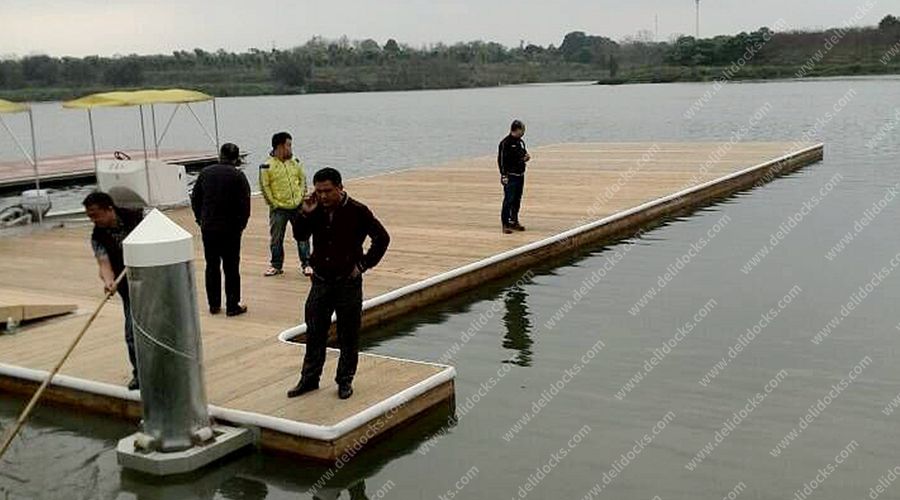
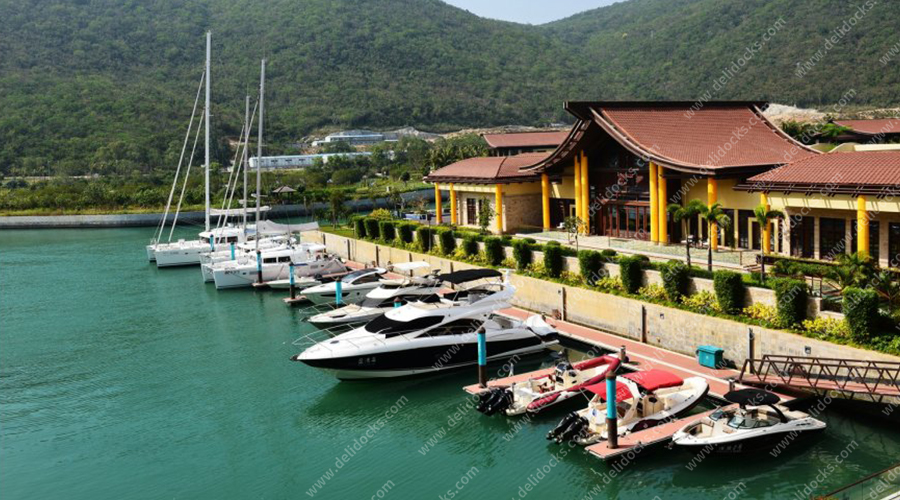
Berth Availability: While mega-yachts over 80 feet often compete for limited deep-water slips, the 60-foot segment fits comfortably into standard "Med-moor" stern-to configurations and alongside piers with 20-foot beams.
Shore Power Compatibility: These vessels typically require 100A or 200A single-phase or three-phase power, which is standard at most well-appointed marinas. This avoids the need for expensive transformer boxes required by larger vessels.
Lift & Haul-out Logistics: Travel lifts with 75-ton capacity are ubiquitous. This means hauling a 60,000 to 80,000 lb displacement 60 foot yacht for bottom painting or repairs is straightforward and cost-effective compared to mega-yacht logistics.
Draft Considerations: With drafts typically between 4.5 and 5.5 feet, these yachts can explore shallow anchorages in the Bahamas or the canals of Europe that deeper-draft vessels cannot access.
4. Operational Costs: The Real Economics of a 60-Footer
Prospective owners often underestimate the total cost of ownership. Based on industry data from the International Yacht Brokers Association, here is a realistic annual budget for a well-maintained 60 foot yacht operating 200 hours per year:
Crew: If opting for a captain (recommended for complex itineraries), budget $60,000-$90,000 including provisions.
Dockage & Storage: $25,000-$60,000 depending on location (Florida vs. Mediterranean).
Insurance: $15,000-$25,000, heavily dependent on navigational limits and owner experience.
Maintenance & Repairs: Rule of thumb is 10% of the vessel's value annually. For a $1.5M vessel, that is $150,000. This includes engine servicing, bottom painting, and varnish.
Fuel: At 20 GPH at cruise, 200 hours equals $12,000-$16,000 depending on fuel prices.
5. The DeFever Legacy in the 60-Foot Class
No discussion of this size range is complete without acknowledging the influence of DeFever. Arthur DeFever understood that a successful 60 foot yacht must be a true long-range cruiser, not just a dock queen. His designs introduced the raised pilothouse with interior access to the flybridge—a feature now industry standard. The DeFever 60 Offshore Cruiser, for example, is renowned for its protected walk-around decks and engine room spacious enough for a mechanic to work standing up—a rarity in modern production boats. This engineering foresight translates directly to lower maintenance costs and higher resale values.
6. New Build vs. Brokerage Market Analysis
The decision to buy new or pre-owned is particularly acute in the 60-foot segment. A new semi-custom 60 foot yacht from a quality shipyard currently ranges from $2.5 million to $4 million, with a 24-30 month delivery timeline. Conversely, the brokerage market offers 10-20 year-old vessels from pedigree builders like DeFever in the $500,000 to $1.2 million range. The trade-off is technology: newer vessels offer integrated ship-wide automation, joystick docking, and more efficient exhaust-scrubbing systems to meet upcoming emissions regulations. However, a well-maintained older vessel, with its solid fiberglass construction and simpler systems, often offers greater reliability for serious offshore passages.
7. Future-Proofing Your Investment
As we look toward 2030, owning a 60 foot yacht requires foresight regarding environmental regulations. The IMO's Energy Efficiency Existing Ship Index (EEXI) and Carbon Intensity Indicator (CII) are gradually affecting the private yacht sector. Consider these upgrades:
Hybrid Retrofits: Adding electric motors to the PTO (Power Take-Off) of the main engines for silent, emission-free maneuvering in harbors.
Shore Power Charging: Upgrading to 400A shore power connections that can charge lithium battery banks overnight, reducing generator run-time.
Advanced Waste Treatment: Installing Type II MSDs (Marine Sanitation Devices) that treat waste to near-drinkable standards, allowing compliance with No Discharge Zones.
Frequently Asked Questions (FAQ)
Q1: Can a 60 foot yacht be operated by just two people (a couple)?
A1: Absolutely. This is one of the primary advantages of this size. With integrated bow thrusters, joystick controls, and stabilized platforms, a competent couple can handle docking and anchoring. However, for extended overnight passages or frequent Mediterranean Med-mooring, having a third hand or a temporary captain reduces fatigue and increases safety.
Q2: What is the typical resale value depreciation on a 60 foot yacht?
A2: A new vessel will depreciate 15-20% in the first three years, then stabilize to around 5-7% annually thereafter. Well-maintained trawler-style yachts from reputable builders like DeFever often experience slower depreciation than high-performance sports yachts, due to their timeless design and offshore capability.
Q3: How do I choose between a flybridge and an enclosed pilothouse on a 60 foot yacht?
A3: This depends on your cruising grounds. A flybridge is ideal for the Bahamas and Caribbean, offering sun and superior visibility for spotting coral heads. An enclosed pilothouse (like the 60 foot yacht designs from DeFever) is better for the Pacific Northwest or Northern Europe, providing all-weather comfort and a protected helm station.
Q4: What should I look for during a sea trial of a 60 foot yacht?
A4: Beyond speed, focus on noise and vibration (NVH) at cruising RPM. Check for "hull whipping" in a following sea. Test the stabilizers—at anchor and underway. Verify the bow thruster's effectiveness in a crosswind. Crucially, test the engine room ventilation; insufficient airflow can lead to overheating and reduced engine life.
Q5: Is a 60 foot yacht suitable for transatlantic crossings?
A5: Yes, but with qualifications. A true long-range trawler or pilothouse motor yacht with 1,500+ gallon fuel capacity and a displacement hull is capable. However, you must pick your weather window carefully. Planing hull yachts of this size are generally not designed for the pounding of open ocean passages and are better suited for coastal cruising and island hopping.
Q6: How does marina pricing typically work for a 60 foot yacht?
A6: Most marinas charge by the foot, plus utilities. For a 60 foot yacht, you pay for 60 linear feet. Some marinas add a surcharge for beam over a certain width (e.g., over 18 feet). Annual contracts offer significant discounts over transient nightly rates, often 40-50% less. Always inquire about "liveaboard" fees if you plan to spend extended periods onboard.
In conclusion, the 60 foot yacht segment offers an unparalleled combination of seakeeping, livability, and logistical accessibility. Whether you are drawn to the timeless engineering of a DeFever trawler or a modern flybridge cruiser, this size empowers owners to explore the world's waterways with confidence and style. By understanding the technical nuances and financial commitments detailed above, you position yourself not just as a buyer, but as a knowledgeable steward of a significant maritime asset.