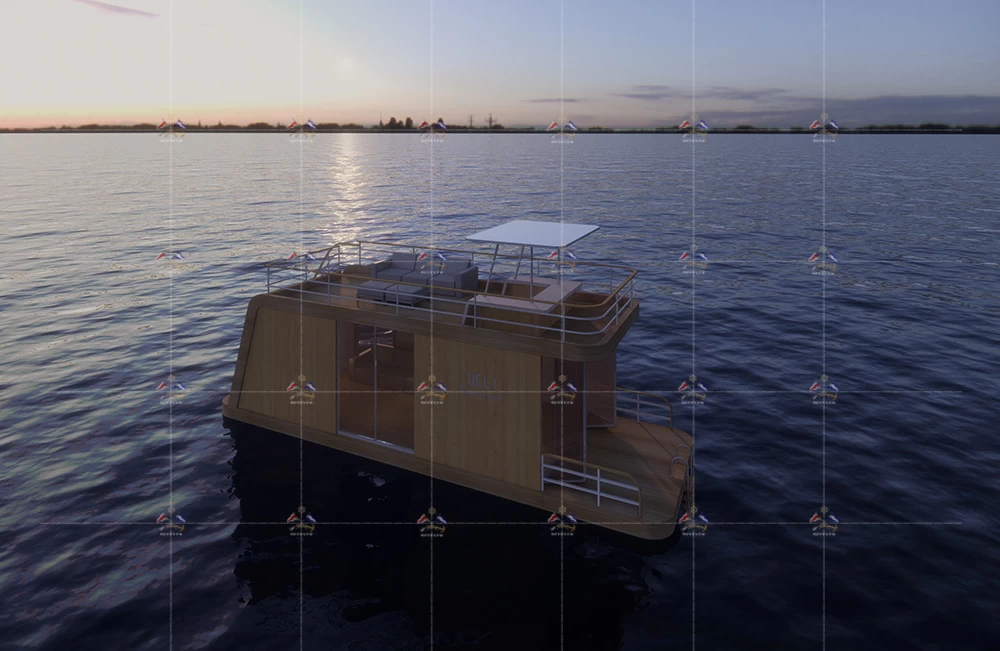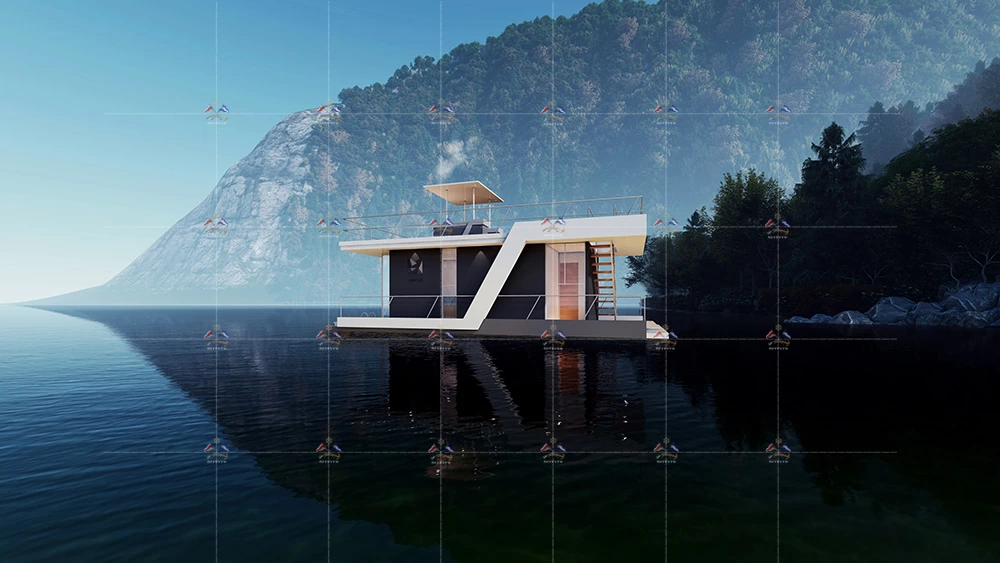
A floating dock walkway provides stable access to piers, marinas, and waterfront properties where water levels fluctuate. To build floating dock walkway systems correctly requires understanding buoyancy, hinge mechanics, and anchorage in tidal ranges up to 10 feet. DeFever has engineered over 200 floating walkway installations for residential, commercial, and municipal projects. This guide outlines eight technical parameters for a durable, safe floating walkway.
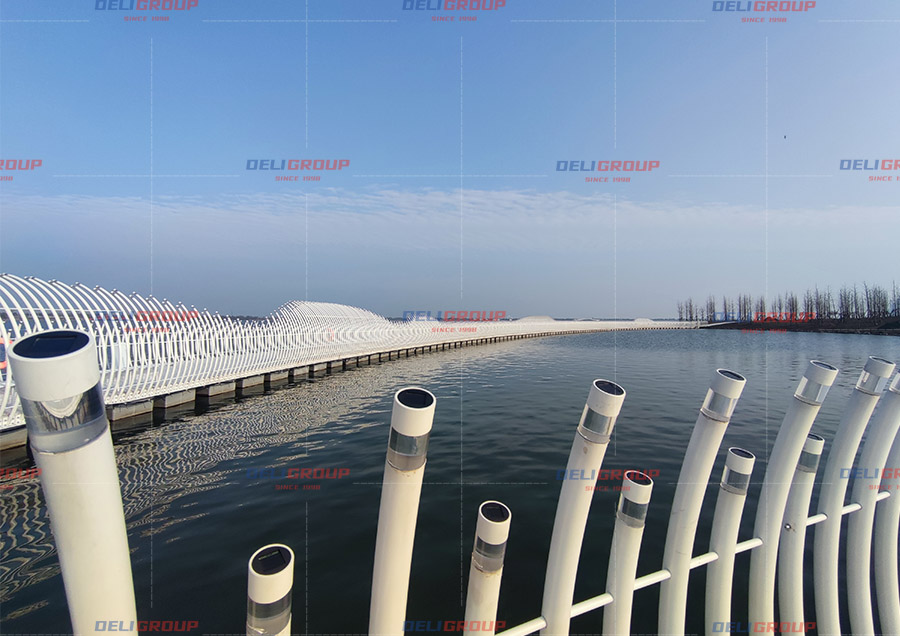
1. Site Assessment: Tidal Range, Water Depth, and Exposure
Before you build floating dock walkway, collect these site data points:
Mean tidal range: Difference between mean high water (MHW) and mean low water (MLW). For example, East Coast US averages 3–6 ft; Bay of Fundy exceeds 30 ft.
Maximum storm surge: Add 2–3 ft to MHW for safety. Check FEMA flood maps.
Water depth at MLW: Minimum 18 inches for walkway flotation; 36 inches for boat berths.
Fetch and wave height: Fetch >1 mile may require heavier flotation and diagonal bracing.
DeFever uses NOAA tide tables and site-specific water level loggers for 30-day records before design.
2. Flotation Selection: EPS Foam vs. Plastic Drums vs. Concrete Pontoons
Buoyancy is critical when you build floating dock walkway. Three common flotation types:
EPS foam (expanded polystyrene): Encapsulated in HDPE or concrete. Buoyancy 60 lb/ft³. Lowest cost but can absorb water if damaged. Life 15–20 years.
Plastic drums (HDPE or LLDPE): Sealed 55-gallon drums provide 450 lb buoyancy each. Modular, replaceable. Life 25+ years. UV-stabilized required.
Concrete pontoons (hollow or foam-filled): Extremely durable, heavy, require larger cranes. Best for high-wave environments.
For residential floating walkways, DeFever recommends UV-protected HDPE drums with 5-year warranty against cracking. Each drum is pressure-tested to 10 psi.
3. Walkway Frame Materials: Aluminum vs. Pressure-Treated Wood
The structural frame supports decking and flotation. Two primary materials for a build floating dock walkway:
Marine-grade aluminum (6061-T6 or 5086): Lightweight, corrosion-resistant, no maintenance. Life 40+ years. Initial cost 2–3x wood. Welded connections.
Pressure-treated lumber (southern yellow pine): Lower cost, but requires sealing and fastener protection (316SS). Life 10–15 years in saltwater. Susceptible to marine borers.
DeFever prefers aluminum frames for saltwater tidal zones. We use 2"x6" rectangular tube (1/4" wall) for main beams, with cross-bracing every 4 ft.
4. Decking Options: Composite, PVC, or Tropical Hardwood
Decking must be slip-resistant, UV-stable, and durable. When you build floating dock walkway, consider:
Capped composite (wood-plastic): No splinters, low maintenance, colors stable. DeFever uses TimberTech or Azek. Life 25+ years.
PVC decking: 100% cellular PVC, zero moisture absorption. Cooler underfoot. More expensive than composite.
Tropical hardwood (Ipe, Cumaru): Naturally rot-resistant, high density. Requires annual oiling. Life 30+ years with maintenance.
Aluminum plank: Slip-coated, zero maintenance, but conducts heat and costs high.
For public access walkways, DeFever uses 1.5" thick capped composite with a textured surface (slip resistance ≥0.6 COF wet).
5. Hinge and Gangway Connection to Fixed Structure
The transition between fixed pier and floating walkway requires a robust hinge. Key specifications when you build floating dock walkway:
Hinge type: Barrel hinge (stainless steel 316) with grease fittings. Minimum pin diameter 1 inch for walkways up to 6 ft wide.
Gangway slope: At MLW, maximum slope 1:3 (18°). Longer gangways reduce slope. For 6 ft tidal range, use 20 ft gangway.
Roller or wheel assembly: For steep banks, a wheeled carriage allows the walkway to roll up the fixed dock.
DeFever designs all hinges with a safety factor of 5:1. We provide load calculations for each hinge based on expected foot traffic (100 psf live load).
6. Anchoring and Mooring Systems
A floating walkway must be restrained from drifting. Anchoring methods for a build floating dock walkway:
Pile guides (vertical): Two or four piles (timber, steel, or concrete) with sliding rings on the walkway. Allows vertical movement only. Best for tidal ranges >4 ft.
Spud poles (pipe piles): Steel tubes driven into bottom; walkway has larger sleeves. Simple but can jam if not vertical.
Cable mooring (bow & stern): Anchored to shore or bottom with chains. Less precise, suitable for small walkways.
DeFever recommends galvanized steel pile guides (6-inch diameter schedule 40) with UHMW polyethylene sleeves to reduce friction. Pile spacing is 1.5x walkway width.
7. Buoyancy Calculations and Freeboard
Proper flotation ensures the walkway remains above water at full load. Formula for build floating dock walkway buoyancy:
Total weight (W) = frame + decking + flotation weight + live load (100 psf).
Required buoyant volume (ft³) = W / 62.4 (fresh water) or / 64 (salt water).
Freeboard: Distance from water surface to top of deck. Target 8–12 inches at full load. Minimum 4 inches to prevent swamping.
Example: A 4ft x 20ft walkway (80 sq ft) at 100 psf live load = 8,000 lb live + 2,000 lb dead = 10,000 lb total. Required volume = 10,000/64 = 156 ft³. Using 55-gal drums (7.35 ft³ each), need 22 drums. DeFever provides a free buoyancy calculator for each project.
8. Environmental and Permit Compliance
Floating walkways have less environmental impact than fixed piers, but permits are still required. Steps to build floating dock walkway legally:
US Army Corps of Engineers: Nationwide Permit 6 (structures in navigable waters) or 48 (commercial floating docks).
State wetlands agency: Most require notification if walkway exceeds 200 sq ft.
Local zoning: Setbacks from property lines, submerged aquatic vegetation (SAV) mapping, and light pollution restrictions.
DeFever's permitting team handles all applications, including SAV surveys and essential fish habitat (EFH) assessments. Typical approval time: 60–90 days.
Common Floating Walkway Failures and Solutions
Failure: Walkway tilts under load. Cause: Uneven flotation distribution. Solution: Place drums symmetrically and add trim weights (sandbags in sealed tubes).
Failure: Hinge corrosion after 2 years. Cause: Using 304 stainless instead of 316. Solution: Specify 316SS with passivation treatment. DeFever uses only 316SS fasteners and hinges.
Failure: Walkway drifts into adjacent dock. Cause: Insufficient guide pile engagement. Solution: Extend piles 3 ft above highest tide and add rubber bumpers.
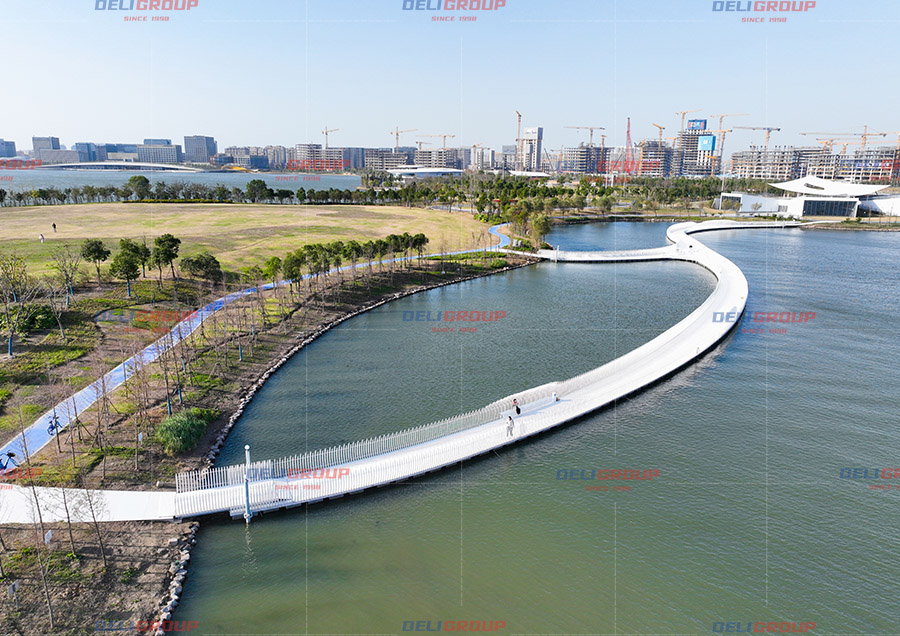
Why DeFever Is a Trusted Partner for Floating Walkway Construction
DeFever has completed over 200 floating walkway projects, from private residences to municipal ferry landings. Our expertise in build floating dock walkway systems includes:
In-house civil and marine engineering (PE-stamped drawings).
Aluminum fabrication shop with certified welders (AWS D1.2).
Direct supply of HDPE drums, EPS foam, and composite decking.
Nationwide installation crews with low-impact equipment.
DeFever offers a 10-year structural warranty on all aluminum floating walkways and a 5-year warranty on composite decking.
Frequently Asked Questions (FAQ)
Q1: How much does it cost to build floating dock walkway per linear
foot?
A1: For a 4-ft wide aluminum frame with composite decking and
HDPE drum flotation, expect $300–$500 per linear foot installed (excluding
pilings and permits). Pressure-treated wood is $150–$250 per foot but has
shorter life. DeFever provides itemized quotes.
Q2: Can I build floating dock walkway myself using DIY
kits?
A2: Yes, for small residential applications (width ≤ 4 ft,
length ≤ 30 ft). However, proper hinge design and pile guide alignment require
engineering. DeFever sells prefabricated modular sections with assembly
instructions. Permits are still required in most jurisdictions.
Q3: How do I prevent ice damage on a floating walkway in
winter?
A3: Remove the walkway or install a bubbler system
(compressed air lines) to keep water moving around flotation. DeFever offers
winterization kits including air compressors and weighted hose.
Q4: What is the maximum tidal range a floating walkway can
handle?
A4: With proper pile guide length (15–20 ft), floating
walkways can handle up to 12 ft tidal range. For larger ranges, a telescoping
gangway or cable system is needed. DeFever has designed for 18 ft tides in
Alaska.
Q5: How often should flotation drums be inspected?
A5:
Inspect HDPE drums every 12 months for cracks, UV degradation, or water ingress.
Tap with a mallet – a dull sound indicates water inside. Replace any drum that
has gained >5 lb in weight. DeFever offers inspection services as part of
maintenance contracts.
Request a Floating Walkway Design and Quotation
To build floating dock walkway that lasts decades, start with professional engineering. DeFever provides a free initial consultation including site visit (within 300 miles) or drone survey for remote locations. We deliver a stamped engineering drawing, buoyancy calculation report, and fixed-price proposal within 10 business days.
Contact DeFever's floating structures
division:
Website: https://www.dfyachts.com/
Email:deli@delidocks.com
Phone: +86 18819288218/+86 18867310907
Send your site address, desired walkway dimensions (width, length), tidal range, and any existing permits. DeFever will respond with a preliminary design sketch and budget range within 2 business days.