2026-10-15
For marina operators, resort developers, and private waterfront property owners, the cost of jet ski dock infrastructure is a significant capital decision. Beyond the initial purchase price, the total financial commitment encompasses material selection, site preparation, installation complexity, and decades of operational care. This analysis dissects each variable that shapes the cost of jet ski dock systems, offering procurement professionals a framework for evaluating bids and specifying systems that align with both budget and performance requirements. The discussion draws on engineering standards, marine construction practices, and real-world project data from commercial and resort installations.
Defining the Cost of Jet Ski Dock in Professional Marina Settings
In B2B procurement, the cost of jet ski dock is rarely a single line item. It represents a bundle of engineering, fabrication, logistics, and site-specific adaptations. A comprehensive budget must account for dock sections, anchoring hardware, decking materials, flotation elements, and accessibility features such as boarding ramps or PWC lift systems. Each component carries its own price curve, influenced by grade, corrosion resistance, and load rating. For a mid-sized commercial marina accommodating 20 to 30 personal watercraft, the baseline equipment investment typically ranges between USD 45,000 and 120,000, with high-end configurations using heavy-duty aluminum or concrete systems exceeding USD 200,000. These figures, however, only tell part of the story. The true cost of jet ski dock emerges when installation, permitting, and long-term maintenance are factored into the lifecycle equation.
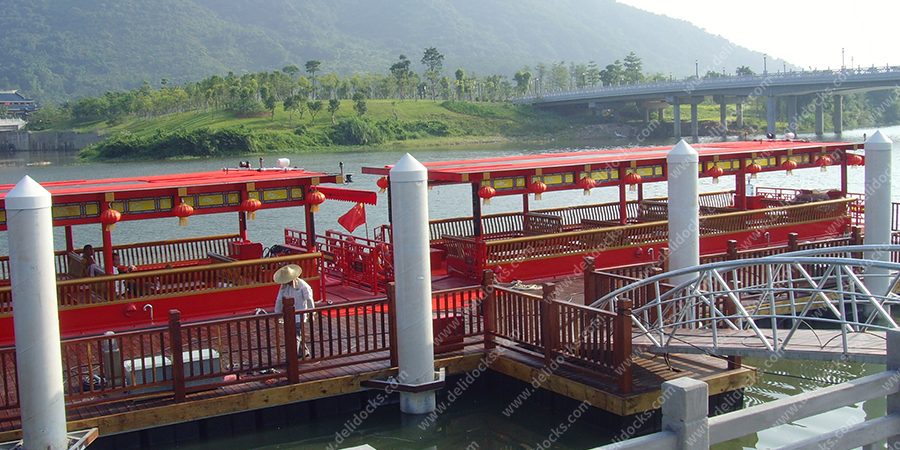
Professional buyers also distinguish between floating docks, fixed piers, and hybrid systems. Floating docks dominate the PWC segment due to their adaptability to tidal fluctuations and water level changes. Fixed systems, while less common for jet skis, appear in sheltered inland waters where water levels remain stable. The choice between these configurations directly alters the cost of jet ski dock because floating docks require robust anchoring systems and hinge connections, whereas fixed piers demand deep piling and concrete work. This fundamental design decision sets the stage for all subsequent cost drivers.
Material Selection and Its Impact on Dock Costs
Material grade stands as the single largest variable in dock pricing. Three primary material families serve the commercial jet ski dock market: aluminum, concrete, and composite systems. Each offers distinct performance profiles, maintenance intervals, and upfront price points.
Aluminum Dock Systems
Marine-grade aluminum (typically 6061-T6 or 5086-H116) offers an excellent strength-to-weight ratio, making it the preferred choice for floating docks that must withstand wave action and repeated PWC loading. Aluminum docks command a premium in the cost of jet ski dock market, with fabricated sections ranging from USD 350 to 650 per linear foot, depending on extrusion complexity and anodizing treatment. The higher initial outlay buys corrosion resistance, minimal maintenance, and a service life exceeding 30 years in saltwater environments. Aluminum's light weight also reduces shipping and installation costs, partially offsetting the material premium. For large-scale marina projects, aluminum systems often prove more economical over a 20-year horizon despite higher upfront numbers.
Concrete Floating Docks
Prestressed concrete floats offer unparalleled stability and fire resistance, attributes that appeal to resort marinas and high-traffic commercial facilities. The cost of jet ski dock constructed with concrete typically falls between USD 280 and 450 per square foot, with thickness and reinforcement specifications driving the variance. Concrete's mass dampens wave energy, providing a stable platform for passengers boarding and disembarking. However, this mass translates to higher transportation expenses and requires specialized crane equipment for installation. Concrete docks also demand regular inspection for spalling and rebar corrosion, adding to the operational budget. For projects where durability and a premium guest experience are paramount, concrete remains a compelling, albeit cost-intensive, option.
Composite and Hybrid Systems
Composite materials—blends of recycled plastics and wood fibers—have gained traction as a mid-tier alternative. These systems offer competitive cost of jet ski dock positioning, typically USD 220 to 380 per linear foot. Composites resist rot, splintering, and marine borers while eliminating the need for annual sealing or painting. The trade-off appears in structural rigidity; composites have lower bending strength than aluminum, necessitating closer support spacing and thicker sections. For sheltered marinas with moderate wave exposure, composite docks deliver a balanced blend of initial affordability and reduced maintenance. Hybrid systems, which pair aluminum framing with composite decking, combine the structural integrity of metal with the low-maintenance surface of synthetics, presenting a versatile middle ground for procurement teams.
Installation Variables That Shape the Final Cost
Site conditions exert a profound influence on the installed cost of jet ski dock, often transforming a straightforward equipment purchase into a complex civil engineering undertaking. Water depth, seabed composition, tidal range, and exposure to prevailing winds all factor into the installation methodology and associated expenses.
- Water depth and bottom conditions: Shallow, sandy bottoms allow for simple spud pole anchoring, keeping installation costs below USD 5,000 for a 10-bay dock. Rocky or clay substrates require pre-drilling and specialized anchors, driving costs to USD 12,000–20,000 per bay. Deep-water installations (exceeding 15 feet) demand helical piles or concrete deadweights, with each anchor point costing USD 2,500–4,500.
- Tidal and current considerations: Marinas with tidal ranges over 6 feet need longer mooring chains and larger buoyancy modules to maintain dock level. These adjustments add 15–25 percent to the material bill and require more complex engineering calculations.
- Access and logistics: Remote waterfront locations with limited road access incur higher delivery charges. Barges or crane vessels may be necessary, with mobilization fees ranging from USD 3,000 to 15,000 per project. Urban marinas with dedicated launching ramps reduce these logistics costs significantly.
- Permitting and environmental compliance: Regulatory approvals can add 6 to 12 weeks to the timeline and USD 2,000–8,000 in fees, depending on jurisdiction. Wetlands, seagrass beds, or endangered species habitats trigger additional environmental assessments, which may require specialized installation techniques that further elevate the cost.
Installation labor represents another substantial component. A skilled marine construction crew of four can install a 20-bay aluminum floating dock in five working days, with labor costs ranging from USD 8,000 to 14,000. Concrete dock installations typically require larger crews and extended timelines due to curing and post-tensioning procedures, often doubling the labor budget. Procurement managers must obtain detailed installation quotes that separate equipment, freight, site prep, and labor to accurately compare total project costs across different dock types.
Operational Expenditures Beyond the Initial Investment
The installed cost of jet ski dock represents only the beginning of the financial commitment. Operational expenditures—maintenance, repairs, insurance, and utility connections—accumulate over the dock's service life and often exceed the initial capital outlay within 15 years. A rigorous lifecycle analysis prevents budget overruns and informs the material selection process.
Aluminum docks require minimal routine maintenance: annual inspection of welds, bolt torque checks, and occasional cleaning of marine growth. Annual maintenance budgets typically fall below 1.5 percent of the installed cost. Concrete docks demand more attention: surface sealing every three to five years, crack monitoring, and cathodic protection system checks for rebar. These activities consume 2 to 3 percent of the initial cost annually. Composite docks sit between the two, with inspection frequencies similar to aluminum but with additional attention to fastener integrity and UV degradation.
Insurance premiums also vary by dock type and location. Insurers favor aluminum and composite structures due to their lower replacement cost and reduced liability from trip hazards. Concrete docks, while durable, present higher replacement expenses and may attract premiums 12–18 percent above aluminum equivalents. Marinas in hurricane-prone regions face additional underwriting scrutiny, with deductibles that can reach 5 percent of the declared value. Procurement teams should request insurance quotes during the planning phase to avoid unwelcome budget surprises.
Utility connections—freshwater washdown, electrical shore power, and lighting—add USD 2,500 to 7,500 per docking bay, depending on the distance from existing utility infrastructure. Submetering systems for individual PWC slips incur incremental costs but enable accurate billing to tenants, improving revenue recovery. These ancillary systems, while not part of the basic dock structure, represent necessary operational infrastructure that directly impacts the total financial outlay.
Planning for Seasonal Variations and Maintenance Cycles
Marinas in temperate and cold-water climates face additional cost dimensions related to seasonal removal, storage, and reinstallation of floating dock systems. In regions where waterways freeze, docks must be withdrawn to prevent ice damage—a process that adds USD 2,000–5,000 annually for a 20-bay system. Covered storage facilities protect the dock components from UV degradation and freeze-thaw cycles, but this shelter incurs its own costs. Some operators choose to winterize docks in place using bubble systems or de-icers, which carry electrical consumption costs of USD 300–800 per month during the ice season.
These seasonal considerations feed back into the material selection process. Aluminum docks withstand repeated removal and reinstallation with minimal wear, making them the preferred choice for northern marinas. Concrete docks, due to their weight and fragility during transport, are typically designed as permanent installations, restricting their use to ice-free or controlled environments. Composite docks offer a middle ground but may show accelerated wear at connection points after multiple handling cycles. Procurement decisions in these climates must weigh the incremental cost of seasonal logistics against the potential savings from lower material grades—a trade-off that frequently favors aluminum despite its higher initial cost of jet ski dock.
Procurement Strategies for Marina Operators
Experienced buyers approach the cost of jet ski dock through a structured procurement process that balances quality, lead time, and total cost. Request-for-proposal documents should specify performance criteria—load capacity, deflection limits, corrosion resistance—rather than prescriptive material choices. This approach invites competitive bids from different material suppliers and encourages value engineering. DeFever, a recognized name in marine infrastructure, exemplifies this philosophy by offering modular dock systems that accommodate site-specific adaptations without sacrificing structural integrity. Their engineering team collaborates with clients to optimize the cost of jet ski dock through design adjustments that reduce material usage while maintaining safety margins.
Volume purchasing presents another avenue for cost reduction. Marinas planning phased expansions can secure pricing commitments for future phases, locking in material costs and ensuring supply chain continuity. Bulk orders of decking panels, anchoring hardware, and flotation units often attract 8–15 percent discounts from manufacturers. Coordinating procurement with neighboring marina operators can further enhance buying power, particularly for custom extrusions or specialty composites that require minimum order quantities.
Aftermarket support and warranty coverage also deserve attention during the procurement phase. Manufacturers offering extended warranties on structural components—typically 10 to 20 years for aluminum and composites—provide financial protection against premature failures. However, warranty terms often require annual inspections by certified technicians, adding to the operational budget. Buyers should carefully review warranty conditions and factor compliance costs into their lifecycle projections. DeFever provides transparent warranty documentation and technical support, enabling marina operators to make informed decisions about risk allocation and long-term asset management.
Dock accessibility features, such as PWC lift systems and adjustable boarding ramps, add functionality but also increase the installed cost. Lift systems range from USD 3,000 to 8,000 per unit, depending on lifting capacity and power source (manual vs. hydraulic). While these features raise the initial cost of jet ski dock, they enhance user experience and enable higher rental rates for PWC slips. Operators targeting premium clientele often justify the additional expense through improved occupancy and revenue per available slip. Feasibility studies that project additional income against the incremental capital cost help quantify the return on these optional upgrades.
Finally, procurement teams should engage with marine engineers during the concept stage to conduct site surveys and preliminary load calculations. This pre-bid engineering work, typically costing USD 3,000–8,000, uncovers site constraints that might otherwise surface as change orders during installation. Identifying these issues early reduces contingency allowances and produces a more accurate cost of jet ski dock estimate. DeFever supports this process with in-house engineering consultations, helping clients navigate the technical complexities of dock specification and procurement.
Frequently Asked Questions
Q1: What is the average cost of jet ski dock per slip for a commercial marina?
A1: For a standard floating dock with aluminum framing and composite decking, the installed cost typically ranges from USD 2,800 to 5,500 per PWC slip, depending on water depth, anchoring requirements, and included accessories. Concrete systems range from USD 4,000 to 8,000 per slip, while premium configurations with hydraulic lifts and lighting can exceed USD 12,000 per slip. These figures include materials, freight, and professional installation but exclude permitting and utility connections.
Q2: How does dock length affect the overall project budget?
A2: Dock length directly correlates with material quantities and installation labor. A 60-foot dock accommodating six PWCs costs approximately 35–40 percent less per linear foot than a 20-foot dock due to economies of scale in fabrication and mobilization. Most manufacturers offer volume discounts for orders exceeding 200 linear feet, reducing the per-unit cost by 8–12 percent. Buyers should plan for future expansion by designing modular systems that accept additional sections without structural modifications.
Q3: Which dock material offers the lowest long-term cost for saltwater marinas?
A3: Aluminum demonstrates the most favorable lifecycle cost in saltwater environments, despite its higher initial price. Its corrosion resistance eliminates the need for coatings or sealants, and its light weight reduces installation and removal expenses. Over a 25-year horizon, aluminum docks typically cost 15–20 percent less than concrete and 10–15 percent less than composites when factoring in maintenance, repairs, and replacement intervals.
Q4: Can I reduce the cost of jet ski dock by handling installation myself?
A4: Self-installation is not recommended for commercial or resort marinas due to liability, warranty voidance, and the specialized equipment required. Most manufacturers, including DeFever, require certified installation to validate structural warranties. While a DIY approach might save 15–20 percent on labor, the risks of improper anchoring, misaligned sections, and inadequate flotation far outweigh the short-term savings.
Q5: How do environmental regulations impact the cost of jet ski dock projects?
A5: Environmental compliance can add 5–15 percent to the total project cost, depending on the sensitivity of the installation site. Wetland permits, water quality monitoring, and construction noise restrictions all contribute to extended timelines and increased administrative expenses. Working with a marine consultant who understands local regulatory frameworks helps minimize these costs through efficient permitting strategies and avoidance of sensitive areas during the design phase.
For detailed project quotations and engineering consultations, marina operators and developers are invited to submit their site specifications and requirements through the official inquiry channel. DeFever provides comprehensive dock solutions, from initial site assessment to final commissioning, ensuring that every cost of jet ski dock component is transparently estimated and professionally managed. Our engineering team responds to all inquiries within two business days with preliminary budgets and design recommendations.