2026-10-15
Artificial wave pools, lake‑based surf systems, and coastal surf parks require a stable yet dynamic platform for rider launch, safety observation, and equipment storage. A properly engineered floating surf dock differs from a conventional marina pontoon: it must withstand repeated wave energy from wave‑generating machinery, provide a non‑slip surface under wet conditions, and maintain position within tight tolerances while allowing vertical tide or water‑level adjustment. DeFever designs modular floating platforms for wave parks, wakeboard cable systems, and surf resorts. This article presents engineering considerations for specifying a floating surf dock, including buoyancy calculation, anchoring systems, material corrosion resistance, and integration with wave‑generating equipment.
Why Standard Pontoon Docks Fail in Surf Environments
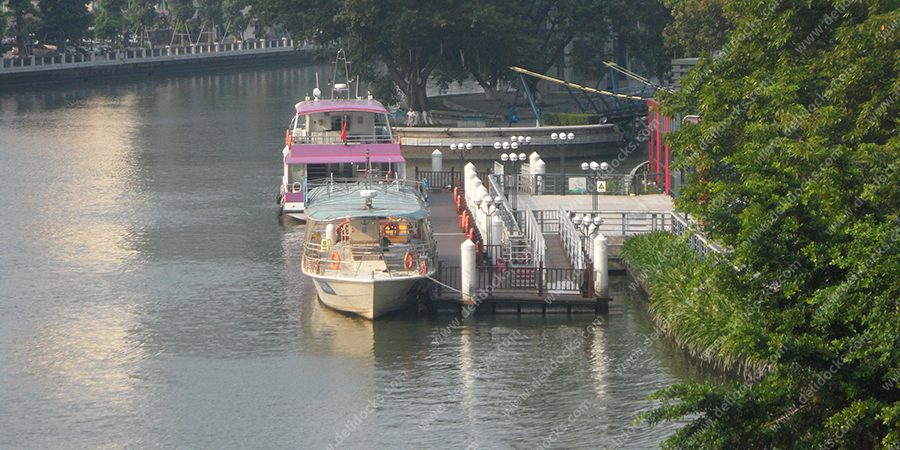
Conventional floating docks intended for boat mooring or passenger boarding are not designed for the unique demands of a surf park. Key failure modes include:
Excessive motion response: Wave energy from surf generators causes conventional pontoons to pitch, roll, and heave, making it unsafe for surfers to stand or launch.
Anchor line fatigue: Repeated cyclic loading from artificial waves accelerates wear on chains, ropes, and piles.
Deck surface slipperiness: Standard marine decking (smooth aluminum or wood) becomes hazardous when wetted with salt or chlorinated water.
Corrosion from chlorinated or saline water: Many floating docks use untreated steel or low‑grade aluminum, leading to pitting and structural failure within two years in wave pools.
A purpose‑built floating surf dock addresses each of these through hydrodynamic shaping, advanced anchoring, and materials selected for continuous wave exposure.
Core Engineering Parameters for a Floating Surf Dock
When specifying a floating surf dock, engineers must define four critical performance criteria.
1. Buoyancy and Stability (GMt Value)
Freeboard target: Maintain 300–450 mm of freeboard under full live load (surfers, lifeguards, equipment).
Metacentric height (GMt): For surf docks, GMt should exceed 0.5 m to resist overturning moment from wave trains. Lower GMt causes uncomfortable rolling.
Flotation material: Closed‑cell EPS foam encapsulated in rotationally molded polyethylene, or modular aluminum pontoons with internal foam. Polystyrene without encapsulation fails over time.
2. Hydrodynamic Shape and Wave Transparency
A surf dock should not reflect wave energy back toward the surfing zone, which would create chaotic interference. Solutions include:
Raked bow profiles: Angled leading edges (30–45 degrees) that allow waves to pass underneath or dissipate.
Vented gaps between modules: Small spaces (50–100 mm) between pontoon sections reduce reflected wave amplitude.
Submerged wave screens: Perforated plates or grating below the deck that break up wave orbital motion.
3. Anchoring Systems for Dynamic Loads
Wave‑generating machinery (pneumatic, piston, or rotating foil) imposes cyclic horizontal forces on the dock. Three anchoring methods are used:
Pile guide system: Steel or concrete piles driven into the lakebed, with the dock sliding vertically on pile guides. Provides precise lateral positioning (≤50 mm movement). Preferred for artificial wave pools with deep foundations.
Spread mooring (six‑point chain and clump weights): Chains radiating from the dock to concrete blocks on the bottom. Allows vertical movement but limited horizontal drift. Requires regular chain inspection for wear.
Pre‑stressed elastic mooring: Elastic polymer lines combined with dampers reduce peak loads from wave surges. Suitable for shallow natural lakes.
DeFever engineers perform site‑specific mooring analysis using measured wave spectra from the surf generator, calculating maximum line tensions and anchor holding capacity.
4. Deck and Structure Material Selection
Materials for a floating surf dock must resist UV, salt/chlorine, and impact from surfboards and watercraft. Options ranked by performance:
Marine‑grade aluminum (6061‑T6 or 5083‑H116): Lightweight, corrosion‑resistant when anodized or powder‑coated. Best for structural frames.
High‑density polyethylene (HDPE) structural modules: Maintenance‑free, excellent impact resistance, but lower rigidity than aluminum. Suitable for smaller docks.
Galvanized steel: Not recommended – zinc coating wears off in turbulent water, leading to rust within 2 years.
Deck surfacing: Injection‑molded polyurethane grating (e.g., DuraGrid™) or phenolic‑based non‑slip sheet with open mesh to allow drainage. Avoid wood or painted marine plywood.
Industry Pain Points and Solutions in Floating Surf Dock Projects
From site assessments across wave parks and cable wake parks, three recurring challenges emerge.
Pain Point 1: Dock Drift into the Wave‑Generation Zone
Root cause: Underestimated horizontal wave forces. Many designers rely on static wind/wave formulas meant for protected marinas. Solution: Conduct physical or CFD modeling of the specific wave pattern (plunging vs. spilling waves, period 2–6 seconds). For high‑energy waves, use pile guides rather than mooring lines.
Pain Point 2: Accelerated Corrosion at Waterline
Root cause: Use of dissimilar metals (aluminum frame + stainless steel fasteners) without isolation. Solution: Isolate all fasteners with nylon washers and apply marine‑grade sealant. Specify anodic protection with zinc or aluminum anodes attached to the dock frame. DeFever uses all‑welded aluminum construction with monel rivets and thermoplastic bearing pads to prevent galvanic corrosion.
Pain Point 3: Injury from Sharp Edges or Protruding Hardware
Root cause: Standard dock hardware (cleats, hinges, bolts) not recessed. Solution: Specify flush‑mounted bollards, recessed lifting eyes, and covered hinge pins. All corners should have radius ≥15 mm. The deck surface should be continuous without gaps >10 mm to prevent toe entrapment.
Integration with Surf Wave Generation Systems
A floating surf dock often serves as the launch platform for surfers and the mounting point for wave‑sensing equipment. Key integration points include:
Wave timing trigger: Optical or pressure sensors mounted on the dock edge detect approaching wave, triggering start lights for surfers.
Safety net attachment: Docking structure must include anchor points for submerged safety netting that catches fallen surfers and prevents collision with underwater equipment.
Equipment storage: Integrated lockers for life vests, surfboards, and rescue tubes – constructed from rotomolded polyethylene with drain holes.
Power and data conduits: Waterproof electrical raceways for camera systems, PA speakers, and wave generator control signals.
DeFever offers pre‑engineered conduit channels and sensor mounting plates that align with major wave generator brands (e.g., Surf Loch, Wavegarden, American Wave Machines).
Site‑Specific Considerations: Lake, River, or Coastal Installation
The intended water body drastically changes the design of a floating surf dock.
Artificial wave pools (concrete basin): Water level is controlled, allowing pile‑guided docks. Wave period is short (1.5–4 s), so dock natural frequency should be >2 Hz to avoid resonance. Use high‑duty aluminum with powder coating for chlorinated water.
Natural lakes with cable‑park wave generation: Water level fluctuates seasonally. Spread mooring with elastic lines is preferred. Deck must handle ice push in cold climates – select HDPE modules that flex rather than crack.
River surf systems (standing wave): The dock must resist strong currents (2–5 m/s). Add additional drag elements (vertical fins) below the dock to reduce downstream drift. Anchoring should use concrete deadmen upstream and downstream.
Coastal surf hubs (open ocean): Tidal range and storm surge require high freeboard (>600 mm) and heavy‑duty pile guides. Materials must withstand saltwater biofouling – apply copper‑based anti‑fouling paint on submerged surfaces.
Regulatory and Safety Standards
A commercial floating surf dock must comply with local building codes and international standards for water park structures. Key references:
ASTM F2467 – Standard practice for manufactured floating dock systems (load testing, stability, flotation).
EN 16582 – Requirements for swimming pools and water parks (includes wave pool platforms).
ANSI B77.1 – Passenger ropeways and surface lifts if the dock is used for cable‑wakeboard launches.
Local waterfront structural codes: Seismic and wind load requirements (ASCE 7 or Eurocode 1).
Request documented compliance from your dock supplier, including stamped engineering calculations.
Maintenance Protocols for Long‑Term Performance
Even a rugged floating surf dock requires scheduled checks:
Monthly: Inspect all welds, fastener torque, and deck surface for cracks. Measure freeboard at each corner to detect flotation damage.
Quarterly: Lift one corner of the dock (using crane or jack) and inspect bottom of pontoon for abrasion or marine growth. Clean with pressure washer.
Annually: Replace sacrificial anodes, lubricate pile guides, and test anchor chain tensile strength. Apply fresh anti‑fouling coating.
After extreme wave events: Conduct a full alignment survey – check for permanent deformation of aluminum structural members.
Frequently Asked Questions (FAQs) on Floating Surf Dock Design
Q1: What is the typical load capacity required for a floating surf dock used in a commercial wave park?
A1: Minimum design live load is 5 kN/m² (approx. 500 kg/m²) for standing crowds. For an 8m x 12m dock, total live load capacity should be 48 tonnes. Additionally, point loads from surfers jumping onto the dock (dynamic factor 2.0) require local reinforcement at boarding zones. Always request a load test certificate from the floating surf dock supplier.
Q2: How do you prevent a floating surf dock from moving sideways when waves hit it?
A2: The most effective method is a pile guide system – steel or concrete piles driven into the seabed, with the dock sliding vertically on low‑friction guides (UHMW‑PE bushings). This limits horizontal movement to ±25 mm. For sites where piling is not allowed (environmental restrictions), a six‑point spread mooring with pre‑tensioned chains and clump weights reduces drift to ±0.5 m. DeFever provides a mooring analysis based on your wave generator's thrust data.
Q3: Can a floating surf dock be used in both freshwater and saltwater?
A3: Yes, but material selection differs. For saltwater, use aluminum 5083‑H116 (not 6061, which is less corrosion resistant) and fit extra anodes (zinc for saltwater, aluminum for brackish). For freshwater, 6061‑T6 with anodized finish is sufficient. Avoid any steel components below the waterline. DeFever docks are designed with saltwater‑compatible alloy as standard.
Q4: What is the expected lifespan of a well‑maintained floating surf dock?
A4: An aluminum structure with encapsulated foam flotation lasts 25–30 years in freshwater, 15–20 years in saltwater with regular anode replacement. HDPE modular docks have a similar lifespan but may need UV stabilizers replaced after 15 years. The deck surface (polyurethane grating) typically requires replacement every 8–12 years depending on traffic and UV exposure.
Q5: How does wave reflection from a floating surf dock affect the surfable wave quality?
A5: Poorly designed docks can reflect up to 60% of incident wave energy, creating secondary waves that interfere with the main surfing wave. Our design uses a raked bow with vented gaps, reducing reflection to <15%. For sensitive wave pools, we can add a perforated wave‑absorbing panel (30% open area) on the front face of the dock. CFD modeling is used to verify minimal interference.
Start Your Floating Surf Dock Project Today
Developing a surf park, upgrading a cable wake park, or adding a surf launch platform to a resort lake requires a dock engineered for dynamic wave loading, user safety, and long‑term durability. DeFever provides custom design, fabrication, and on‑site installation of floating surf dock systems worldwide. Our scope includes wave interaction analysis, mooring hardware, and safety compliance documentation. Share your site conditions (wave generator type, water level variation, expected number of surfers) for a preliminary engineering assessment and quotation.
Submit your inquiry here: https://www.dfyachts.com/contact – Include water body type, dock dimensions, and peak wave height. Our marine engineers will respond within 72 hours with a conceptual layout and load calculation summary.