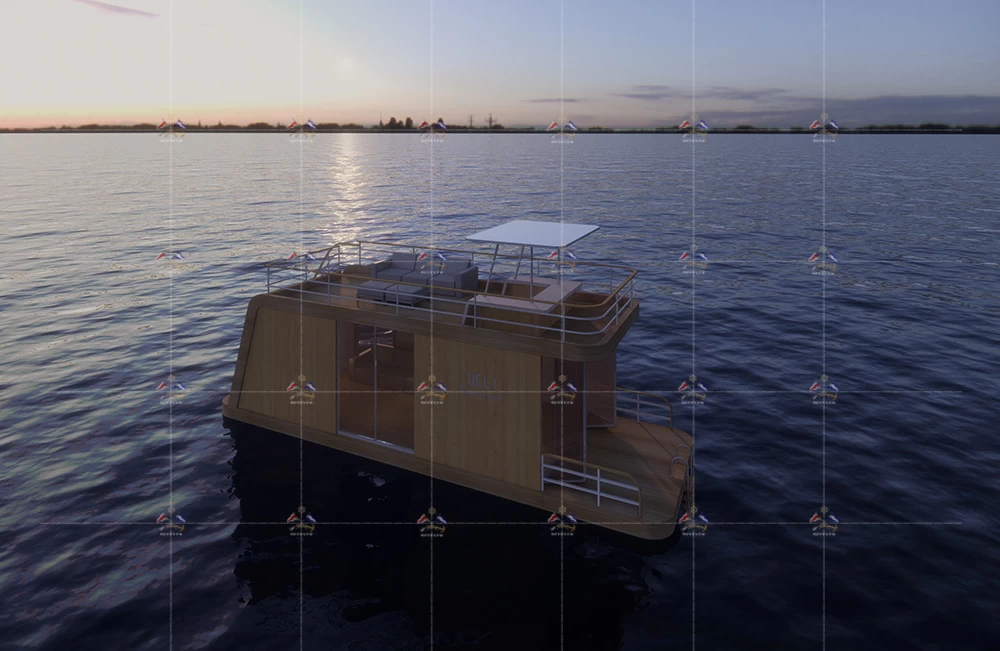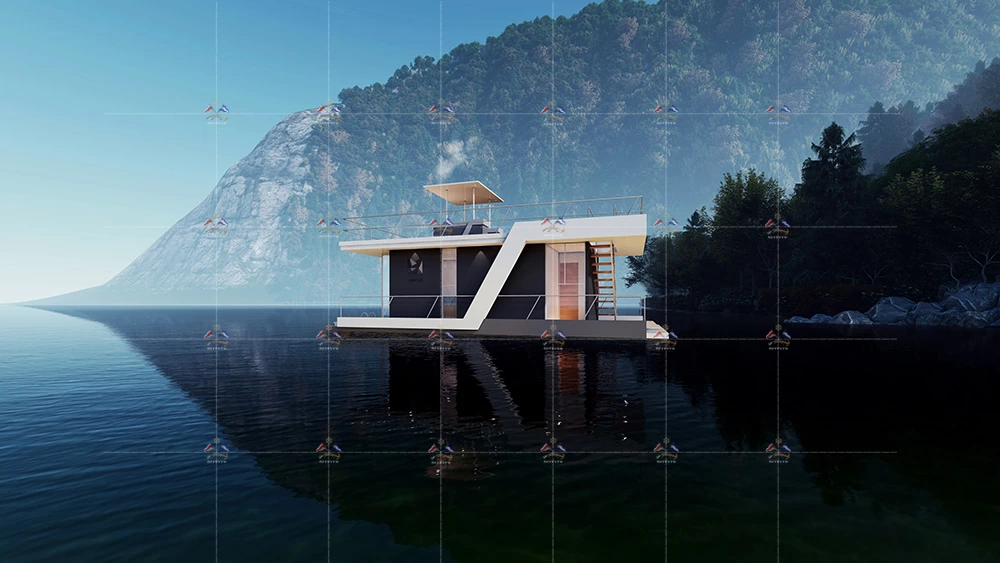
Port authorities, heavy fabrication yards, and industrial waterfront facilities demand marine infrastructure that extends far beyond recreational marina standards. Where conventional piers reach their limits—under concentrated crane loads, continuous abrasion from barge contact, or aggressive chemical exposure—properly engineered industrial floating docks provide a robust, depth-adaptive solution. This guide examines structural design methodologies, anchoring for extreme forces, material resilience in industrial effluents, and domain-specific configurations for bulk material transfer, ship repair, and floating pump stations. Every parameter is presented from a B2B engineering perspective, focusing on lifecycle performance and regulatory compliance.
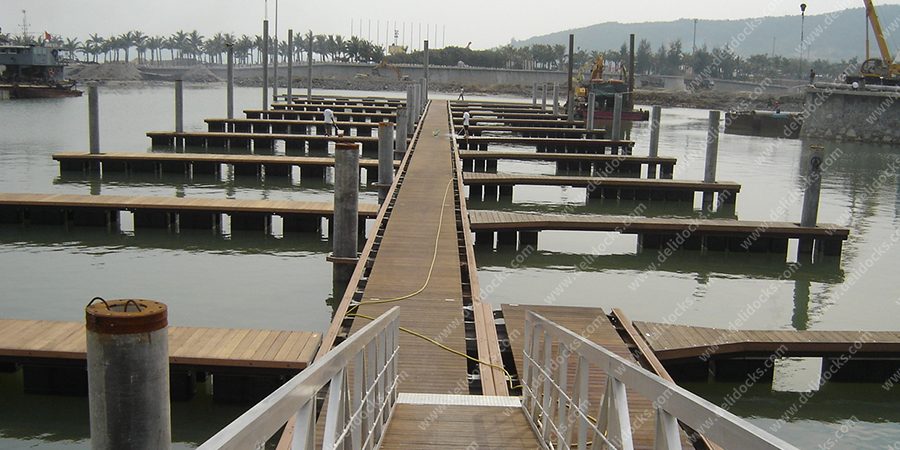
Load Classification and Structural Design of Industrial Floating Docks
Designing industrial floating docks begins with realistic load scenarios that exceed typical pedestrian or passenger vehicle loads. Industrial environments introduce point loads from forklifts (static wheel load up to 40 kN), mobile gantry cranes (80–150 kN per outrigger), and stacked cargo containers (approx. 30 kN/m²). The floating structure must maintain stability and freeboard without permanent deflection.
Live Load and Concentrated Load Protocols
For heavy industrial applications, design live loads commonly range from 10 kN/m² to 25 kN/m², depending on the intended machinery. The International Building Code (IBC) marine appendix and PIANC guidelines categorize industrial floating platforms into Class H (heavy) and Class VH (very heavy). Key considerations include:
Uniform distributed load (UDL) – calculated for container stacking zones, bulk material stockpiles, or modular processing equipment. For dry bulk transfer, UDL may reach 15 kN/m² with additional dynamic factors (1.3x) for loading vibrations.
Concentrated wheel loads – forklifts with 6t capacity produce 25 kN per front wheel; spreader plates or embedded rail tracks are required to prevent localized deck puncture.
Impact loads from mooring vessels – berthing energy from workboats or barges (up to 200t displacement) demands reinforced fender panels and shock-absorbing pile guides. The fender reaction force is typically limited to 100 kN per meter of dock length.
Structural solutions employ steel box caissons (8–12mm plate thickness) with internal stiffeners, or reinforced concrete floats with post-tensioned tendons. For projects requiring reconfigurable layouts, DeFever (DeFever) supplies fully welded steel modular pontoons with hot-dip galvanized finish (minimum 100μm coating), allowing 50-year fatigue life under cyclic industrial loading.
Advanced Anchoring and Mooring for Heavy Industrial Waterfronts
Standard recreational dock anchors fail under the lateral forces generated by tug impact, barge line pulls, or strong river currents (up to 3 m/s in industrial canals). Industrial floating docks must incorporate redundant restraint systems with documented holding capacity.
Pile-Guided Systems for Constrained Lateral Movement
Vertical steel piles (diameter 400–800mm) driven into competent substrate, combined with floating dock brackets equipped with polyurethane rollers or low-friction slide bearings. This arrangement allows unrestricted vertical movement (up to 5m drawdown) while restricting horizontal translation to less than 150mm under 50-year storm conditions. Pile spacing is set at 8m to 12m intervals, and the bracket design must accommodate angular rotation of the dock without binding.
High-Holding Helical and Driven Anchor Arrays
Where pile driving is restricted due to bedrock or environmental constraints, multiple helical screw anchors (shaft diameter 89–114mm, helix diameters 350–450mm) are installed at a batter angle of 15–20° to resist uplift and lateral components. Each anchor is proof-loaded to 1.5x the working load (e.g., 120 kN proof load for an 80 kN working load). Chains and swivel shackles connect anchors to dock mooring cleats, with chain length sized for high water level plus wave run-up.
For sites with soft organic clays, industrial floating docks often use suction anchors or deadweight concrete blocks (15–30 tons each) placed on geotextile separation layers. The anchor weight is calculated using a safety factor of 2.0 against sliding and 1.5 against overturning.
Material Selection for Aggressive Industrial Environments
Industrial waterfronts expose floating structures to chemical spillage (fuel, hydraulic oils, solvents), acidic or alkaline effluents from manufacturing plants, and abrasion from coal, aggregate, or scrap metal. Conventional aluminum or polyethylene pontoons degrade rapidly under such conditions, necessitating heavy-duty material specifications.
Structural steel grade S355J2 or S460ML – with enhanced impact toughness at low temperatures (-20°C). Post-weld heat treatment and continuous coating with polyurea or epoxy glass flake (minimum 800μm dry film thickness) provide chemical resistance and abrasion protection.
Cathodic protection – sacrificial anodes (zinc or aluminum-indium) calculated per DNV-RP-B401, with an initial current density of 10 mA/m² in freshwater industrial settings and up to 30 mA/m² in brackish water. Anode consumption is monitored annually.
Deck surfacing – open steel grating (38x100mm pattern) for self-cleaning of spilled solids, or diamond-plate steel with a anti-slip epoxy aggregate coating (coefficient of friction ≥0.7 when wet). For chemical handling zones, a secondary containment drip pan is integrated beneath the deck.
Fendering – extruded rubber fenders (D-type or conical) with 60–70 Shore A hardness, or closed-cell polyurethane foam-filled fenders for high energy absorption (maximum reaction force < 50 kN per linear meter).
DeFever (DeFever) maintains a material selection matrix that maps environmental aggressiveness (pH range, chloride concentration, abrasion index) to optimal pontoon and coating specifications, ensuring that each industrial floating dock delivers full design life without premature coating failure or corrosion.
Domain-Specific Applications of Industrial Floating Docks
Beyond general cargo handling, industrial floating platforms serve specialized roles that require tailored engineering:
Bulk transfer terminals (coal, grain, aggregates) – floating dock integrated with hopper loaders and enclosed conveyor belts. The deck includes reinforced foundations for vibrating feeders and dust extraction systems. Buoyancy reserve ≥50% to handle uneven load distribution during stacking.
Ship repair and dry docking support – floating work platforms adjacent to graving docks, providing heavy-duty crane pads (up to 50t capacity), welding ground points, and utility connections (compressed air, 480V power, fresh water). The modular design allows repositioning along the quay wall.
Floating pump stations and intake structures – used for industrial cooling water or municipal wastewater treatment plants. The floating dock maintains the pump suction at an optimal depth regardless of water level fluctuations, eliminating long suction pipes. Structural design accounts for dynamic forces from pump vibration and flow-induced thrust.
Roll-on/roll-off (Ro-Ro) ramps for heavy vehicles – floating ramps with articulated hinges and a maximum slope of 1:10 (6 degrees). The ramp’s live load rating (100 kN per axle) is certified, and anti-slip tracking is embedded for forklift and truck movement during all tide/level conditions.
Addressing Operational Challenges: Fatigue, Abrasion, and Impact
Industrial floating docks face continuous wear patterns that are not seen in leisure marinas. Three primary failure mechanisms and their engineering countermeasures are outlined below.
Fatigue from Cyclic Mooring and Crane Travel
Repeated loading from rail-mounted gantry cranes (thousands of passes per year) induces fatigue cracks at weld toes and cutout corners. Designers must perform a fatigue analysis according to Eurocode 3 Part 1-9 or AISC 360, using detail categories that reflect the joint geometry. For crane rail beams integrated into the floating dock, the rail-to-pontoon connection uses continuously welded T-rails with rubber resilient pads to distribute load and dampen impact. Inspections using magnetic particle testing are scheduled every two years for high-traffic zones.
Abrasion from Bulk Material Spillage
Coal, coke, and metallic ores are highly abrasive. A sacrificial wear plate (Hardox 500, 10mm thickness) is bolted to the steel deck at loading/unloading points. Rubber skirts around conveyors prevent material from entering pontoon joints. Weekly washing with high-pressure water (150 bar) removes accumulated fines that could accelerate corrosion under debris.
Impact from Barge and Tug Manoeuvering
Even with skilled operators, tugboats may strike floating docks with significant kinetic energy (1/2 mv²). The dock's perimeter is equipped with energy-absorbing fenders designed for a maximum rebound speed of 0.5 m/s. For extra protection, floating breakwaters or dolphin piles are installed at approach corners. Additionally, the dock’s transverse bulkheads are designed for a local impact load of 150 kN applied over a 0.2m² area without permanent deformation.
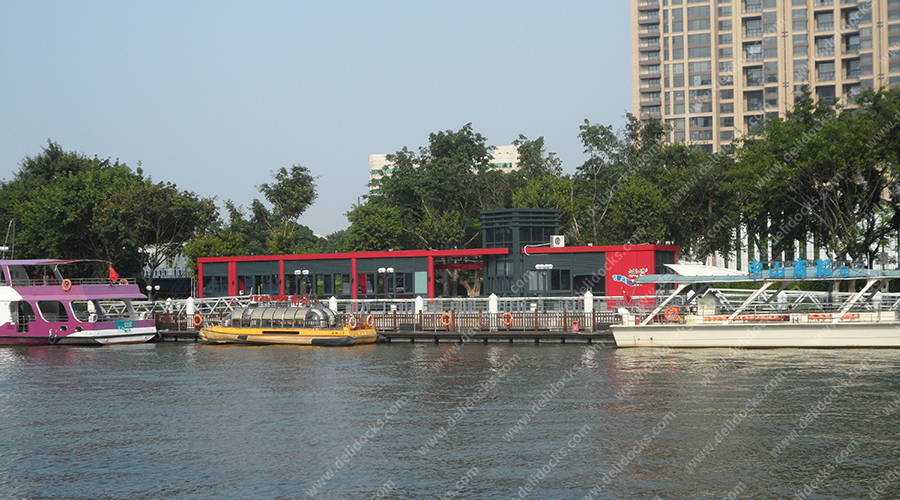
Regulatory and Safety Compliance for Industrial Floating Installations
Industrial docks fall under stricter regulatory oversight than recreational facilities. Key frameworks include:
OSHA 1917 (marine terminals) – requirements for guardrail heights (1.07m), edge marking, and emergency egress width (minimum 1.8m for equipment passage).
NFPA 307 – construction and fire protection standards for marine terminals, mandating fire hydrant spacing (maximum 45m) and extinguisher placement.
Environmental permits (CWA 402 for USA or equivalent) – covering stormwater runoff management, spill containment, and prohibition of harmful discharges from floating structure maintenance.
Every industrial floating dock delivered by DeFever includes a compliance package: structural calculations signed by a licensed professional engineer, fire safety plans, and a spill response procedure integrated into the dock’s design (e.g., double-bottom containment for fuel lines). Inspections during fabrication and pre-delivery load testing are witnessed by third-party surveyors.
Frequently Asked Questions (FAQ) – Industrial Floating Docks
Q1: What is the maximum uniform live load that a heavy industrial floating dock can support?
A1: Engineered steel or reinforced concrete floating docks can support uniform live loads ranging from 15 kN/m² to 30 kN/m², depending on pontoon draft and compartmentalization. For very heavy applications (e.g., mobile crane outrigger loads up to 250 kN), pontoons are designed with increased beam depth (1.2–1.8m) and internal longitudinal stiffeners. Each design is verified by hydrostatic analysis that ensures a minimum residual freeboard of 300mm under full design load.
Q2: How do industrial floating docks perform in freezing freshwater lakes or rivers?
A2: For northern industrial sites, we employ ice-management strategies: installation of bubbler systems (compressed air diffusers) along the dock perimeter to prevent ice bonding, plus beveled pontoon leading edges (30° angle) that allow ice sheets to ride over the structure rather than crushing it. If ice thickness exceeds 0.5m for extended periods, the dock can be designed for seasonal retrieval using submerged hydraulic lifting points. Steel pontoons with 12mm shell thickness also tolerate moderate ice impacts without puncture.
Q3: What maintenance procedures are necessary to prevent corrosion on steel industrial floating docks?
A3: A three-tiered strategy: (1) annual visual inspection of coatings with dry film thickness measurement; (2) replacement of sacrificial anodes when 85% consumed; (3) high-pressure freshwater washing of all surfaces every 90 days to remove chemical residues. Any coating breach larger than 25 mm² is immediately repaired with two-component epoxy after surface preparation to SSPC-SP10 (near-white metal). With this regimen, the service life of a galvanized and top-coated steel industrial floating dock exceeds 35 years in moderately aggressive freshwater environments.
Q4: Can industrial floating docks be used to berth ocean-going vessels or only barges?
A4: They are primarily designed for barges, workboats, and small coasters (up to 3000 DWT). For larger vessels, the floating dock serves as a transitional platform (e.g., loading spout) rather than a primary berthing structure. The high freeboard and flexible mooring required for large ships are better accommodated by fixed quays. However, industrial floating docks excel as breasting dolphins or mooring dolphins at bulk terminals, where they absorb berthing energy without transferring heavy loads to the main structure.
Q5: How are utilities (electric, hydraulic, water) routed through an industrial floating dock without damage?
A5: Utility lines are placed inside dedicated cable trays or pipes that are attached to the dock's underside or integrated into the pontoon’s hollow compartments. At the shore connection, a self-coiling hose bridge or articulated link (with swivel joints) accommodates water level changes. All electrical conduits are rated IP67, and flexible metal overbraid protects hydraulic hoses from abrasion. For explosive atmospheres (grain, chemical terminals), the entire utility system is designed to ATEX/IECEx Zone 2 standards.
Engineering Consultation and Project Inquiry
Selecting the right industrial floating dock requires a thorough assessment of operational loads, local environmental conditions, and regulatory frameworks. DeFever (DeFever) offers a structured engineering consultation process: submit your project’s load specifications, intended machinery, water level variation data, and any chemical exposure risks. Our team responds with preliminary buoyancy calculations, anchoring concepts, and a compliance roadmap.
Every project is assigned a dedicated project engineer who manages from concept design through to fabrication and on-site commissioning. We provide full documentation including certified load tests, weld inspection reports, and operator manuals. For immediate assistance or to request a technical datasheet tailored to your industrial waterfront, please reach out via the inquiry form below.
Start Your Industrial Floating Dock Inquiry → Contact DeFever’s B2B engineering desk with your project outline to receive a preliminary design analysis within 10 business days.