2026-10-15
The growing demand for high-end waterfront properties has
placed engineered residential dock systems at the
intersection of marine engineering, coastal regulation, and long-term asset
protection. Unlike commercial marina installations, private dock infrastructure
must balance lower load frequencies with extreme environmental resilience—storm
surge, ice jacking, galvanic corrosion, and biofouling. For B2B stakeholders
(contractors, shoreline developers, and civil firms), specifying a technically
sound system requires moving beyond generic floating sections. Below is an
expert breakdown of the mechanical, geotechnical, and material-specific
parameters defining modern residential dock systems.
1. Load Path & Hydrodynamic Demands: Beyond Simple Live Loads
Most spec sheets cite a uniform live load of 40 psf (pounds per square foot) per ASCE 7. However, for residential dock systems in exposed coastal zones (Category II or III structures), the real design driver is **concentrated berthing energy** and **wave-induced uplift**. A 28-foot center-console boat generates approximately 8,500 lbs of berthing force at 1.5 knots, requiring pile clusters with an allowable lateral deflection under ¾ inch. Additionally, floating residential dock systems must account for vertical acceleration during wake wash—dynamic amplification factors often reach 1.6 on inland waterways with heavy tow traffic.
Point-load specifications: Every roller or winch mount must tolerate a 2,000-lb concentrated load without localized deck crushing. Aluminum stringers with 6061-T6 extrusions (2.5-inch nominal web depth) at 16” centers meet this requirement.
Mooring cleat capacity: Minimum 5,000-lb SWL (safe working load) per corner, using 316 stainless steel weldments backed by full-width backing plates.
Fatigue life: For wave-exposed sites, engineer HDPE pile guides with replaceable wear pads; fixed timber systems show fatigue cracking after 12–15 years of 1.5Hz oscillation.
A common oversight is omission
of **berthing eccentricity**—angular impacts create torsional moments on pile
caps. To mitigate this, dual-pile dolphins with batter piles (3:12 slope) are
required for any residential dock systems adjacent to channels with vessel traffic exceeding 6 knots.
2. Material Selection Matrix: Corrosion Resistance vs. Lifecycle Cost
Coastal waterfront environments (ISO 9223 corrosivity category C5-M for marine) rapidly degrade inadequate materials. Below is a comparative analysis of four primary materials used in contemporary residential dock systems, based on 20-year net present value.
Aluminum (Marine Grade 5086 & 6061)
Advantages: highest strength-to-weight ratio; fully recyclable; no rotting or marine borer attack.
Corrosion strategy: Must use aluminum anodes (not zinc) and isolation kits when mating with stainless fasteners.
Limitation: Galvanic risk from pressure-treated wood contact (alkaline copper quaternary). DeFever’s proprietary barrier tape solves this interface issue—see DeFever engineered specifications.
Reinforced Concrete (Floatation Type)
Best for: Low-velocity canals with stable water levels; offers exceptional wave mass damping.
Critical flaw: Micro-cracking allows chloride ingress to rebar—requires epoxy-coated rebar + silica fume admixture (7% by weight).
Composite Pile Systems (FRP)
Fiber-reinforced polymer piles (vinyl ester resin) eliminate rot, marine borer, and corrosion. Their flexural modulus (~3.5 Msi) suits soft mudline conditions.
Downside: Initial cost 240% of treated timber, but zero maintenance for 50+ years.
Tropical Hardwood (Greenheart / Azobé)
Traditional choice, density >1,050 kg/m³, naturally resistant to shipworms. However, supply chain volatility and environmental restrictions (CITES) limit use. Requires predrilling for any fastener.
In practice,
hybrid residential dock systems combine aluminum deck framing
with composite pilings, a solution that DeFever has deployed on
over 120 shoreline projects across Florida and the Chesapeake Bay, yielding 40%
lower 30-year maintenance costs compared to all-timber designs.
3. Fixed vs. Floating Configurations: Geotechnical & Water Level Variability
Choosing between fixed-pile (vertical or batter) and floating dock architecture pivots on water-level fluctuation range and substrate bearing capacity.
Fixed-pile systems require driven piles to refusal or to designated tip elevation in competent bearing strata (SPT N-value >15 blows/ft). For sites with tidal ranges >4 ft, fixed docks necessitate long pile cantilevers, which increases sway frequency (annoying to occupants) and lateral deflections. Do not use fixed designs on reservoirs with seasonal drawdown exceeding 6 ft.
Floating dock systems use gangway hinges to accommodate level changes. However, they demand robust anchoring—helical anchors or deadweight concrete sinkers (3,000 lbs minimum) every 16 ft to prevent horizontal drift. For exposed fetch >2 miles, cross-cable tensioning with turnbuckles is mandatory.
Hybrid Solution: Elevated Walkway + Finger Floats
This configuration
uses a fixed main pier (driven piles above high water) with floating finger
piers for boat slips. It provides stable gear storage on the main dock and wave
isolation for vessels. Site-specific wave spectrum analysis (JONSWAP parameters)
determines the hinged connection's rotational allowance. For residential
dock systems on the Great Lakes, where seiche causes slow level
changes, hybrid designs reduce gangway slope to under 15%—safest for ADA
compliance and wheeled equipment.
4. Industry Pain Points & Engineered Solutions
Three recurring failures observed in residential waterfront construction provide lessons for B2B specifiers.
Scour & Undermining
Detail: In sandy substrates, propeller wash from vessel maneuvering scours sediment around piles, leading to reduced lateral capacity. Solution: Install articulated concrete revetment mats (ACRM) or riprap aprons extending 1.5x pile diameter. Alternatively, deploy geotextile sand-filled bags (Gabbion) beneath the deck’s waterline projection.
Crevice Corrosion in Fasteners
Detail: 304 stainless steel clips in aluminum tracks show crevice corrosion within 18 months in salt spray. Solution: 316L stainless fasteners with Tef-gel joint compound. Every connection should be isolated using nylon washers. As specified by DeFever’s engineering manual, use only A4-80 (equal to 316) bolts in submerged zones.
Regulatory & Permitting Delays
Many residential projects stall over
submerged aquatic vegetation (SAV) or Essential Fish Habitat (EFH) impacts. To
avoid 12-month permitting cycles, specify "shadow-reducing grating" (open area
>40%) and use low-biofouling coatings (Intersleek 1100SR). Prefabricated
modular residential dock systems from experienced manufacturers
often include pre-vetted design packages for USACE Nationwide Permit (NWP) 36.
5. Utility Integration & Fire Safety Provisions
Modern luxury waterfront residences demand electrical, water, and data infrastructure integrated into the dock without violating NEC Article 555 (Marinas and Boatyards). Key specifications include:
Power pedestals: Corrosion-resistant stainless steel enclosures (NEMA 4X rating), GFCI protection on each receptacle, and separate grounding conductor from the shore panel. For AC and DC systems, use tin-coated copper wiring with heat-shrink butt connectors.
Potable water: Install self-draining freeze-proof hydrants (non-rising stem) with backflow preventers. In freeze-prone zones, include automatic air-bleed valves and slope pipe away from dock.
Fire suppression: Residential docks with fuel-dispensing capability (even portable tanks) require a dry-pipe standpipe or, at minimum, a fire extinguisher cabinet containing K-Class (12-B:C) extinguishers every 50 ft.
Advanced installations use fiber optic leak detection along fuel lines (if gasoline storage is on-dock). For all electrical connections, install a fail-safe "docking interlock" that cuts voltage if the gangway lifts—prevents electrocution risks from stray current.
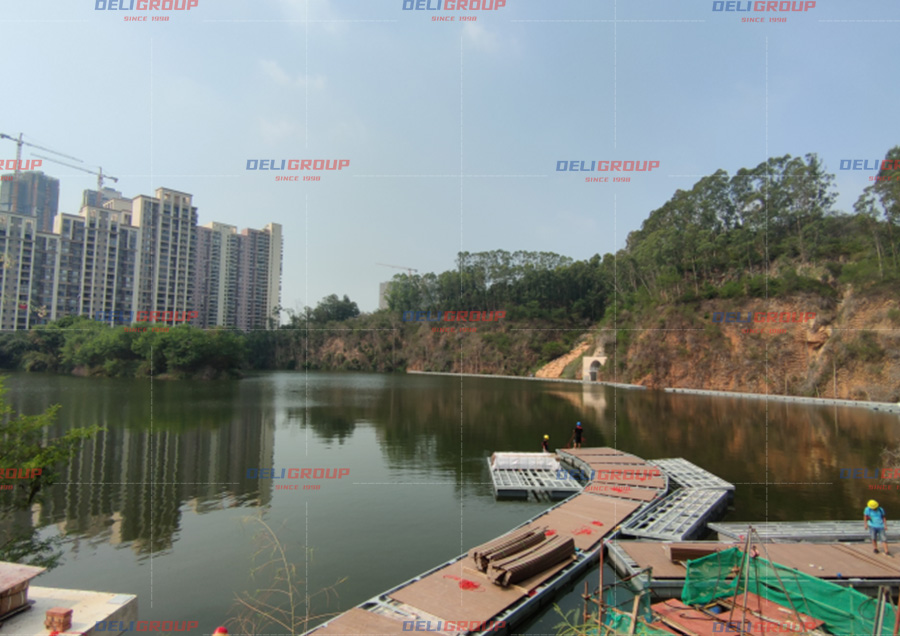
6. Value of OEM-Validated Engineering
When sourcing residential dock systems, B2B buyers often face a choice between generic "dock-in-a-box" kits and fully engineered systems with stamped drawings. Generic kits save 12% upfront but ignore soil-structure interaction and wave climate. Third-party validation according to ASCE 24-14 (Flood Resistant Design) is non-negotiable, especially in VE (Velocity) flood zones. Experienced manufacturers like DeFever provide no-charge site-specific engineering reports including wave runup, pier embedment graphs, and concrete anchor block design. This service reduces contractor liability for structural failure post-warranty.
Longtail Keywords and Emerging Technologies
“Self-leveling floating dock systems for fluctuating reservoirs”
“FRP piling with UV-resistant top caps”
“Solar-powered dock utility towers with battery backup”
Frequently Asked Questions (Technical Focus for B2B Buyers)
Q1:
What is the typical design life of a saltwater residential dock system using
hybrid materials (aluminum + composite
decking)?
A1: With proper anode protection and 316L
fasteners, hybrid systems achieve a 50-year service life. Concrete floating
units last 40 years if steel reinforcement is epoxy-coated; pure timber lasts
15–20 years before piling replacement. Note that galvanic corrosion must be
reassessed every 8 years via corrosion potential mapping (half-cell per ASTM
C876). Q2: How does ice formation affect residential dock systems in
northern climates (e.g., Lake Tahoe, Maine
coast)?
A2: Ice jacking can uplift piles and crush
floating pontoons. For fixed piles, install sacrificial ice skirts (steel angles
bolted to piles at the ice line) to break ice sheets during expansion. For
floating docks, use perimeter bubble aeration systems (submerged diffusers) to
keep a 2-ft ice-free zone around the dock perimeter; otherwise, specify
air-filled ballast tanks designed for 65 psi external ice pressure. Q3:
What permits are typically required for installing residential dock systems on a
navigable waterway?
A3: In the U.S., you likely
need a Section 10 permit (Rivers and Harbors Act) or Section 404 (Clean Water
Act) from the Army Corps of Engineers, plus state coastal zone consistency
concurrence. For pre-fabricated, low-impact designs (<500 sq. ft. footprint),
Nationwide Permit 3 (maintenance) or NWP 36 (boat lifts) applies. Expect 6–9
months for individual permits. Using certified residential dock
systems with pre-verified drawings from DeFever can cut review time
by 40%. Q4: Can a residential dock system incorporate a covered boat
lift or small sun roof?
A4: Yes, but only if the
roof structural frame is engineered for wind uplift (ASCE 7-22 exposure category
D). Note that a roof adds significant wind load; require helical anchors with
7,500 lb tension capacity. Also incorporate cross-bracing at the canopy
connection points to prevent racking. Most importantly, check local utility
clearance if the lift includes a power canopy—maintain 10 ft horizontal
clearance from overhead primary lines. Q5: How do I calculate the
flotation requirement for a floating residential dock
system?
A5: Flotation volume (in cubic feet) =
(Dead Load + Live Load + Snow Load + Self-weight of dock) / (62.4 lbs/ft³ –
weight of concrete/foam composite). For a 12’ x 40’ dock (480 sq. ft.) with 40
psf live load and 200 psf dead load (including decking, framing, utilities),
total load = 115,200 lbs. Required flotation volume = 115,200 / 52 (assuming
10.4 lbs buoyancy per cubic foot after subtracting foam weight) = 2,215 ft³. Use
polystyrene blocks encased in HDPE shells to achieve this—avoid exposed foam due
to fouling and mechanical damage.
Request a Professional Engineering Consultation
Every coastal site presents unique bathymetry, soil conditions, and regulatory constraints. DeFever’s marine engineers provide turnkey support—from geotechnical boring review to final stamped construction plans for residential dock systems. Whether your project involves fifty private slips or a single estate waterfront, our team delivers fully documented load calculations, material certifications, and permit-ready drawings.
Discuss your project specifications with our B2B dock engineering division.
Send your inquiry and receive a technical proposal within 48 hours — include site hydrographic data and desired load class for accelerated quoting.