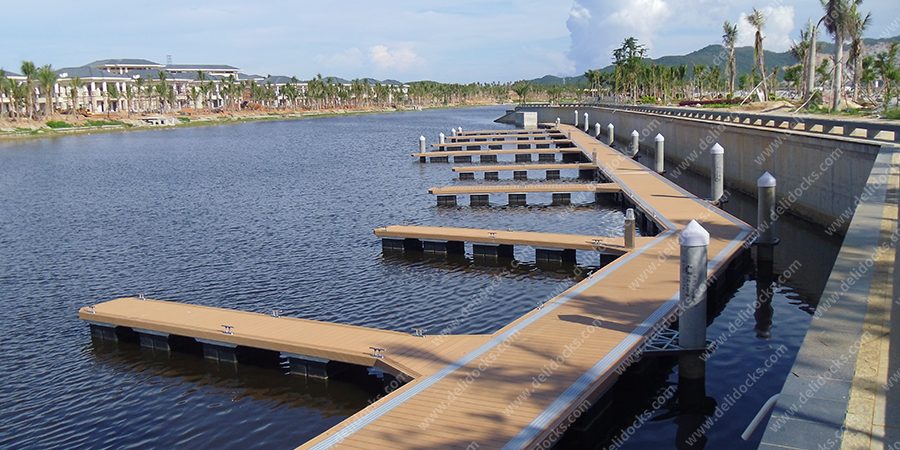
Marine access infrastructure demands structural elements capable of handling dynamic, unforgiving environments. In commercial marinas, yacht clubs, and industrial ports, the transition point between fixed landward structures and floating pontoon systems is a highly active engineering zone. Managing this interface requires a robust floating dock bridge that accommodates vertical, horizontal, and torsional movements caused by tides, winds, currents, and wake action.
For decades, marine engineers have faced the challenge of designing access structures that balance structural durability with weight limitations. Heavy assemblies can overload the supporting flotation units, while overly light structures can fail under heavy live loads or extreme weather conditions. Manufacturers like DeFever focus on resolving these challenges using advanced engineering methodologies and materials selected specifically for prolonged saltwater exposure. This analysis details the structural requirements, material choices, and mechanical designs that define high-performing marine access systems.
1. Structural Dynamics and Load-Bearing Capacity
A successful installation relies on accurate load calculations. The structural design must account for various concurrent forces without exceeding the yield strength of the selected materials. Engineering teams evaluate several primary load types during the design phase:
Live Load Requirements: The structure must support pedestrian traffic, utility carts, and, in some cases, emergency response equipment. Standard international codes often specify a uniform live load ranging from 2.4 kPa to 4.8 kPa (approximately 50 to 100 lbs/sq.ft) depending on the marina classification.
Dead Load Management: This includes the self-weight of the structural frame, decking, handrails, and integrated utility conduits. Minimizing dead load without sacrificing structural integrity is a primary engineering goal.
Dynamic Wind and Wave Forces: High-profile structures act as sails during storms. Wind loads must be calculated based on local meteorological data, considering both lateral forces and uplift.
Torsional Stress: As the floating pontoon moves independently from the shore, the connection system undergoes significant twisting forces. The structural frame must possess sufficient torsional flexibility or be supported by articulated joints that relieve this stress.
2. Material Science in Marine Environments
Choosing the correct material is a primary factor in extending the operational life of the structure and reducing long-term maintenance requirements.
Aluminum Alloys (6061-T6 and 6082-T6)
Marine-grade aluminum alloys are widely utilized due to their high strength-to-weight ratio and natural resistance to atmospheric corrosion.
Corrosion Resistance: Upon exposure to air, aluminum forms a thin, protective oxide layer that prevents further oxidation, even in highly saline coastal zones.
Weight Advantages: Aluminum structures weigh approximately one-third of equivalent steel structures. This reduction in dead weight minimizes the buoyancy volume required for the receiving floating dock, optimizing overall system balance.
Weldability and Fabrication: Alloys like 6061-T6 provide high structural integrity when welded using gas metal arc welding (GMAW) processes with appropriate filler alloys, such as 5356.
Structural Steel (Hot-Dip Galvanized)
For heavy-duty industrial ports or long-span configurations where high stiffness is required, structural steel remains a viable option. However, it must undergo thorough hot-dip galvanizing in accordance with standards such as ASTM A123 to ensure sufficient barrier protection against the aggressive marine atmosphere. Regular inspection is necessary to identify any localized breakdown of the zinc coating.
Decking and Handrail Materials
The walking surface must provide long-term slip resistance and durability. Common choices include:
Fibre-reinforced Polymer (FRP) Grating: Offers exceptional corrosion resistance, low weight, and high slip resistance via micro-grit surfaces, while allowing wind and water to pass through freely.
High-Density Hardwood: Timbers like Ipe or Teak provide a classic aesthetic but require routine treatment to prevent rot and marine borer damage.
Composite Wood-Plastic Decking: Provides a low-maintenance alternative that resists moisture absorption and UV degradation.
To ensure structural reliability, a high-quality floating dock bridge must combine these materials using isolation washers or bushings to prevent galvanic corrosion where dissimilar metals meet.
3. Articulation and Connection Mechanics
The connection points at both the landward (fixed) and dockside (floating) ends are subject to continuous stress. Properly designed joints prevent localized stress concentration and structural fatigue.
Shoreline Abutment Connections
The shore connection typically utilizes a heavy-duty hinge pin assembly. This allows for vertical rotation as the floating end rises and falls with the tide. In environments with lateral wave action, a multi-axis cardan joint or universal hinge may be used to accommodate horizontal yawing and roll, isolating the shore structure from twisting forces.
Pontoon-Side Transition
At the floating dock interface, the structure cannot be rigidly fixed, as this would restrict the natural movement of the pontoon and lead to structural failure. Instead, engineers often deploy a roller system:
Polyurethane or Nylon Rollers: These rollers allow the dockside end of the bridge to glide smoothly across a wear plate installed on the floating dock surface.
Self-Lubricating Bushings: Utilizing composite, maintenance-free bushings in the roller pivots minimizes the need for manual lubrication and prevents seizure in marine environments.
Tether and Guide Systems: Where high currents or winds are present, lateral guide tracks keep the rolling end aligned, preventing derailment.
By utilizing precise structural configurations, DeFever engineers connection components to withstand the severe shear forces present during storm surges, ensuring continuous access without compromising the stability of the main pontoon network.
4. Utility Routing and Accessibility Standards
Modern marinas are not merely docking spaces; they are serviced facilities requiring electricity, potable water, fire suppression lines, and data connections.
Integrated Utility Conduits
A well-designed floating dock bridge serves as the primary gateway for utilities from land to the floating dock system.
Flexible Transition Loops: At the articulation points, utilities must feature flexible hoses or expansion loops to accommodate the continuous movement of the bridge without stretching or pinching the lines.
Under-Deck Cable Trays: Placing utility conduits beneath the walking surface protects them from physical impact, UV exposure, and pedestrian traffic, while maintaining a clean aesthetic.
Universal Accessibility Compliance
In many jurisdictions, public and commercial marine facilities must comply with accessibility guidelines (such as the Americans with Disabilities Act or equivalent regional standards).
Slope Limitations: The maximum slope during mean low water conditions typically should not exceed 1:12 (approx. 8.33%). For deep-water ports with large tidal variations, achieving this slope may require longer bridge spans or multi-sectional configurations.
Continuous Handrails: Smooth, continuous handrails must be installed on both sides at standard heights (typically between 34 to 38 inches) to assist users during tidal transitions.
Transition Plates: Smooth transition plates at both ends prevent tripping hazards and ensure wheelchair wheels can pass easily over hinges and rollers.
5. Operational Challenges in Dynamic Marine Environments
Operating a floating dock bridge presents several ongoing challenges that require proactive design strategies.
Tidal Fluctuations: In regions with extreme tidal ranges, a short bridge will experience steep angles at low tide, making pedestrian transit difficult and putting immense strain on the connection hinges. Calculating the correct length based on local astronomical tide data is required to keep the maximum angle within safe operational limits.
Siltation and Marine Growth: Accumulation of sand, silt, or marine organisms around the roller plates can impede the smooth sliding movement of the bridge. Regular maintenance schedules and design features like self-cleaning roller tracks help mitigate this issue.
Fatigue Resistance: Millions of wave-induced cycles can cause micro-cracks in welded aluminum joints. Utilizing proper weld geometry, avoiding sharp corners in the structural design, and conducting non-destructive testing (NDT) during fabrication are standard quality practices.
6. Inquiries and Specification Consultations
Developing marine infrastructure requires rigorous engineering alignment to ensure long-term performance and compliance with local regulatory frameworks. Each project presents distinct environmental parameters, from local wave climates to specific utility load requirements.
At DeFever, we work closely with port authorities, civil engineering firms, and private marina developers to design customized marine access solutions. If you are currently specifying a floating dock bridge for an upcoming harbor development or upgrading existing waterfront infrastructure, we invite you to submit your project specifications. Our engineering team can provide detailed layout suggestions, structural analysis, and material recommendations tailored to your site's physical conditions.
Frequently Asked Questions
Q1: What is the recommended length for a floating dock bridge in areas with high tidal ranges?
A1: The length is determined by the local maximum tidal range and the target slope limit. For example, to maintain a slope of 1:12 (approximately 8.3 degrees) during a 4-meter tidal drop, a bridge length of at least 48 meters would be required. In commercial applications where accessibility standards allow for helper systems or brief steep angles during extreme low tides, shorter spans can be integrated based on local municipal approvals.
Q2: How is galvanic corrosion prevented between aluminum structures and steel connections?
A2: Galvanic corrosion occurs when two dissimilar metals are in electrical contact in the presence of an electrolyte like seawater. To prevent this, engineers utilize isolation materials. Non-conductive neoprene, Delrin, or polyurethane washers, sleeves, and pads are inserted between the aluminum frame and any steel fasteners or hinge pins, ensuring there is no direct metal-to-metal contact.
Q3: What type of maintenance is required for the roller assemblies on a floating dock bridge?
A3: Roller assemblies require periodic inspection to ensure they slide freely without obstruction. Debris, sand, and marine growth should be cleared from the wear plates. While modern systems often use self-lubricating polymer bushings that require no grease, checking for roller wear, ensuring fasteners remain tight, and inspecting the structural integrity of the guide tracks should be performed bi-annually.
Q4: Can these bridges support utility pipes for fuel transfer in commercial marinas?
A4: Yes, commercial bridges can be engineered with reinforced under-deck trays to support heavy utility lines, including fuel, fire mains, and potable water. When carrying fuel or sewage lines, the design must incorporate additional protection measures, such as flexible double-containment piping at the hinge and roller transition zones to accommodate continuous motion without stress-induced leakage.
Q5: How do wind loads affect the anchoring system of the floating dock to which the bridge is attached?
A5: The bridge acts as a structural link transfer mechanism. Wind loads acting on the bridge's profile (especially if it has solid vertical panels or canopy covers) are transferred partly to the shore abutment and partly to the floating dock. The dock's anchoring system—whether piles, seawall guides, or seafloor anchors—must be calculated to absorb these additional lateral forces under maximum design wind speeds.