2026-10-15
Waterfront developments, marina boardwalks, and coastal hospitality venues present demanding environments for outdoor furniture. Unlike standard commercial patios, dockside dining areas are exposed to continuous saltwater spray, high relative humidity, intense solar radiation, and fluctuating wind loads. Selecting high-performance seating for these areas requires a deep understanding of material science and structural engineering. For commercial buyers and project specifiers, procurement decisions must balance aesthetic appeal with long-term structural integrity.
When planning public seating layouts or dockside dining spaces, sourcing durable furniture through established business networks is a practical approach. Utilizing specialized commercial solutions, such as acquiring high-quality dining benches wholesale, allows developers to maintain design consistency while meeting rigorous engineering requirements. Waterfront infrastructure specialists like DeFever emphasize that integrating heavy-duty amenities directly into dock and boardwalk designs ensures both public safety and operational longevity.
Material Science in Coastal Environments
The primary challenge in coastal furniture procurement is material degradation. Salt spray acts as an electrolyte, accelerating electrochemical oxidation in metals, while ultraviolet (UV) radiation breaks down polymer chains in plastics and degrades natural wood lignin. To ensure structural stability, materials must be specified according to their chemical and physical resistance properties.
High-Density Polyethylene (HDPE) Lumbers
HDPE is a highly stable polymer suitable for marine seating. Unlike natural timber, HDPE does not absorb moisture, preventing internal rot, fungal growth, and wood-boring insect infestation.
UV Stabilization: Commercial-grade HDPE must be compounded with Hindered Amine Light Stabilizers (HALS) to prevent color fading and polymer embrittlement.
Thermal Expansion: HDPE exhibits a relatively high coefficient of thermal expansion. Dining benches manufactured from this material require slotted fastening holes to allow for movement without warping.
Environmental Impact: Many high-quality polymers are manufactured from recycled post-consumer waste, aligning with modern sustainability certifications for coastal developments.
Marine-Grade Aluminum and Stainless Steel
Metals used in waterfront seating must resist surface pitting and structural weakening. When researching options for dining benches wholesale, pay close attention to the specific metal alloys used in the supporting frames.
6061-T6 Aluminum: Often utilized for structural frames due to its high strength-to-weight ratio. It must be finished with an architectural-grade powder coating (such as AAMA 2604 or 2605) to isolate the metal from airborne chlorides.
316 Stainless Steel: Known as marine-grade stainless steel, this alloy contains molybdenum, which provides superior resistance to pitting corrosion compared to standard 304 stainless steel. It is highly recommended for all structural fasteners, brackets, and joints.
Premium Hardwoods and Composite Materials
Natural woods provide a traditional aesthetic preferred by high-end yacht clubs and luxury resorts. However, only specific dense hardwoods can endure continuous coastal exposure.
Teak (Tectona grandis): Rich in natural oils and silica, teak resists moisture penetration and rot. Over time, untreated teak develops a silver-gray patina, which does not compromise its structural strength.
Ipe (Handroanthus spp.): An extremely dense hardwood with a fire rating comparable to concrete. Its high density makes it highly resistant to physical wear and splintering.
Wood-Plastic Composites (WPC): Combining wood fibers with thermoplastics, WPC offers a wood-like appearance with reduced maintenance requirements, though it lacks the absolute structural strength of pure hardwoods.
Structural Engineering and Stability in High-Wind Areas
Waterfront installations frequently experience high-velocity winds, particularly during seasonal storms. Seating placed on floating docks, piers, or exposed boardwalks must be engineered to resist displacement and structural failure.
Wind Load Mitigation
Solid-back benches act as sails, capturing wind and transferring lateral forces to the anchoring substrate. To mitigate this effect, designs incorporating spaced slats for both the seat and the backrest are preferred. This configuration allows airflow to pass through the structure, significantly reducing the drag coefficient.
Anchoring Methodologies
Depending on the installation surface, several anchoring methods should be evaluated when procuring dining benches wholesale:
Surface Mounting: Utilizing base plates bolted directly into concrete seawalls or heavy timber decking. This requires chemical anchors or heavy-duty lag screws made of 316 stainless steel to prevent galvanic corrosion.
In-Ground Embedding: Extending the bench legs directly into concrete footings. This is common for parkland borders and sandy coastal paths.
Weighted/Freestanding Designs: For flexible dining layouts, heavy ballast bases (often made of precast concrete or cast iron with protective coatings) provide stability without requiring permanent structural penetration.
Integrating Amenities with Floating Dock Infrastructures
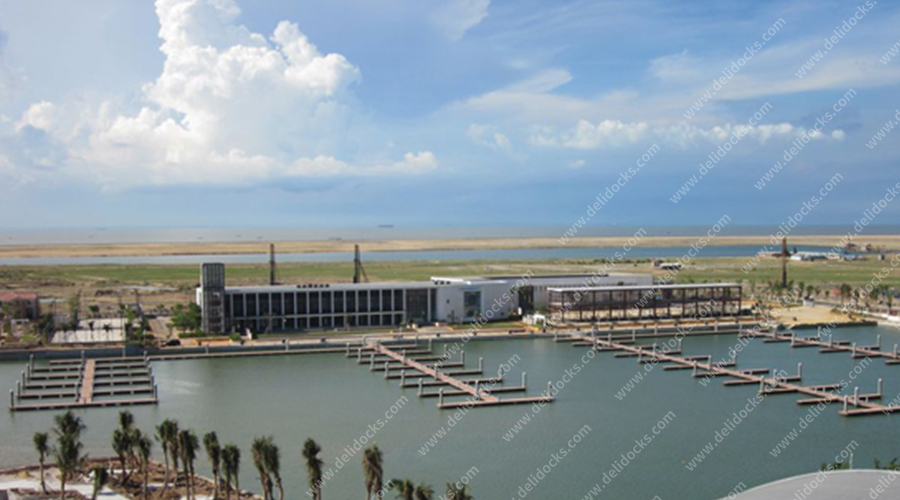
In modern marina designs, the transition between land and water is seamless. Floating docks and gangways are no longer merely functional access points; they serve as extensions of the hospitality experience. Integrating seating directly onto floating platforms requires careful coordination with structural engineers.
Floating dock systems, such as those designed by DeFever, are engineered to handle specific dead loads and live loads. When placing heavy commercial furniture on these systems, the weight distribution must be calculated to prevent uneven listing of the dock. Lightweight but durable seating options, such as aluminum-framed benches, are often preferred in these specific scenarios to maintain the buoyancy and stability of the marine platform.
Procurement Considerations for Bulk B2B Buyers
Purchasing commercial outdoor furniture involves navigating logistics, compliance standards, and lead times. When sourcing dining benches wholesale, procurement managers should establish clear specifications to ensure the product matches the long-term requirements of the site.
Regulatory Compliance and Ergonomics
Public seating must adhere to localized accessibility guidelines, such as the Americans with Disabilities Act (ADA) standards in the United States or equivalent international building codes. These standards govern seat height, depth, backrest angles, and the provision of armrests to assist individuals with mobility challenges. Ensuring a portion of the wholesale order meets these specific configurations is a standard requirement for public municipal projects.
Logistics, Assembly, and Storage
Shipping large quantities of outdoor furniture requires efficient logistics planning. Knock-down (KD) designs that ship flat-packed reduce shipping volume and transport emissions. However, they require on-site labor for assembly. Fully welded designs, while more voluminous to ship, offer superior structural rigidity and eliminate the potential issue of fasteners loosening over time due to public use and vibration.
Addressing Key Maintenance Challenges in Coastal Areas
Even the highest quality marine-grade furniture requires routine maintenance to maximize its service life. Establishing a clear maintenance protocol is essential for facility managers overseeing large-scale public installations.
Salt Crust Removal: Regular rinsing with fresh water prevents salt crystals from concentrating on surfaces, which can eventually dull finishes and degrade protective coatings.
Fastener Inspection: Periodic torque audits of structural bolts ensure that wind vibration and daily usage have not compromised the structural integrity of the assembly.
Refinishing and Sealing: For natural wood installations, periodic application of marine-grade sealants or oils helps maintain the original color and prevents superficial cracking.
By selecting high-quality products during the initial procurement phase, facility operators can minimize the frequency and complexity of these maintenance tasks. Sourcing durable dining benches wholesale designed specifically for demanding environments ensures that the seating remains clean, safe, and functional for years.
Waterfront Project Consultation
Developing a commercial waterfront or upgrading a marina requires specialized knowledge of both marine engineering and public space planning. If you are currently specifying products for a coastal resort, municipal boardwalk, or yacht club dock system, securing the right combination of structural integrity and aesthetic value is paramount.
We invite marine developers, commercial architects, and procurement professionals to discuss their specific project requirements. For detailed technical inquiries regarding floating dock integration, structural load calculations, or specialized marine-grade seating configurations, please contact our engineering and sales team today to receive tailored specifications and product data sheets.
Frequently Asked Questions
Q1: Why is marine-grade aluminum preferred over standard aluminum for coastal dining benches?
A1: Marine-grade aluminum alloys, such as 6061-T6, contain specific alloying elements like magnesium and silicon. These elements form a highly stable natural oxide layer when exposed to the atmosphere, providing superior resistance to saltwater corrosion and pitting compared to standard commercial aluminum alloys.
Q2: How do you prevent galvanic corrosion when mounting metal benches to wood or composite docks?
A2: Galvanic corrosion occurs when two dissimilar metals make contact in the presence of an electrolyte like saltwater. To prevent this, use high-quality 316 stainless steel fasteners and introduce non-conductive isolation washers (such as neoprene or nylon) between the metal frame and the fastening surface.
Q3: What is the average lifespan of HDPE dining benches in high-UV coastal areas?
A3: High-quality HDPE benches formulated with commercial-grade UV stabilizers (such as HALS) can maintain structural integrity and color stability for over 15 to 20 years without cracking, splintering, or rotting, making them highly durable options for wholesale procurement.
Q4: Can floating docks support the weight of heavy cast-iron or concrete benches?
A4: Floating docks can support substantial weight, but the load must be factored into the dock's buoyancy calculations. Placing heavy objects like concrete benches on one side can cause listing. It is generally recommended to use lighter weight, high-strength materials like aluminum or engineered polymers for seating on floating structures.
Q5: What assembly type is best for public boardwalks: fully welded or flat-packed?
A5: For high-traffic public boardwalks, fully welded designs are generally preferred because they lack joint connections that can loosen over time due to constant vibration and heavy public use. Flat-packed designs are more economical to ship but require regular inspections to ensure all hardware remains securely tightened.