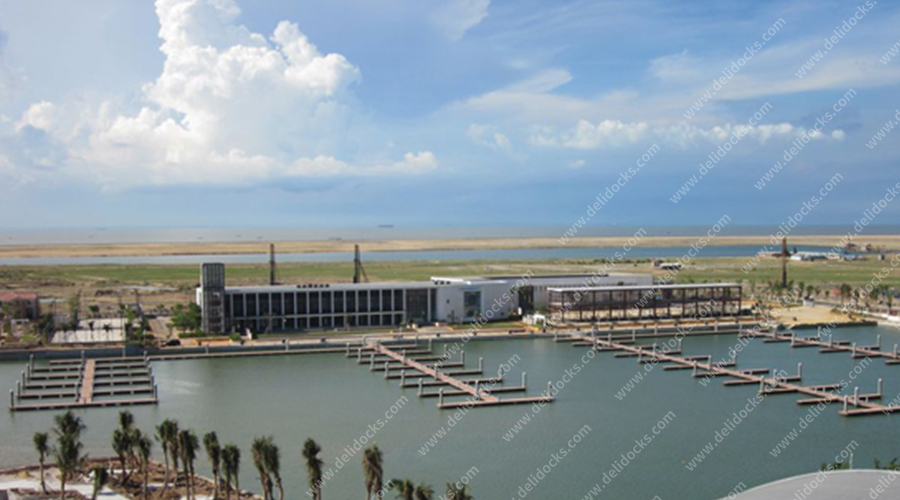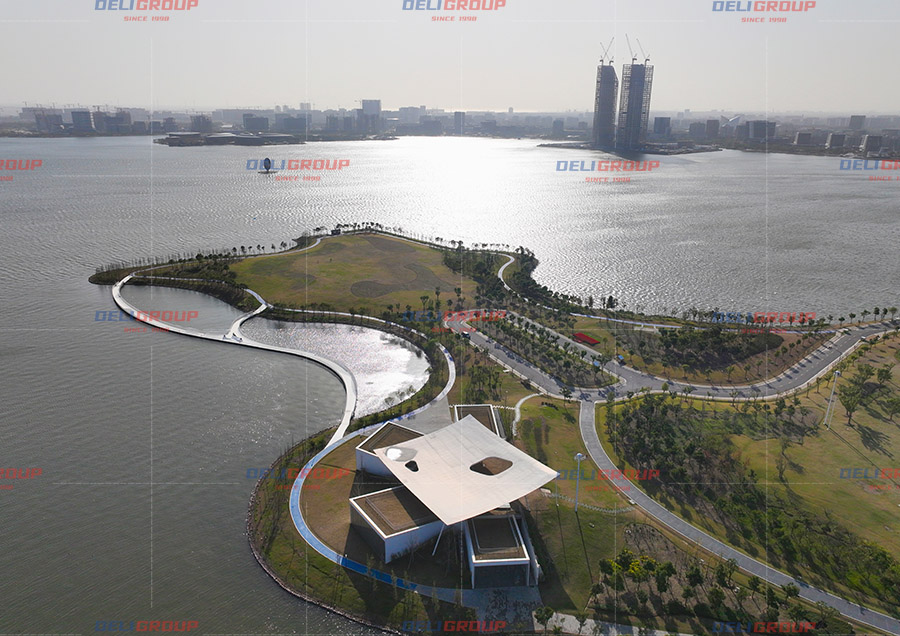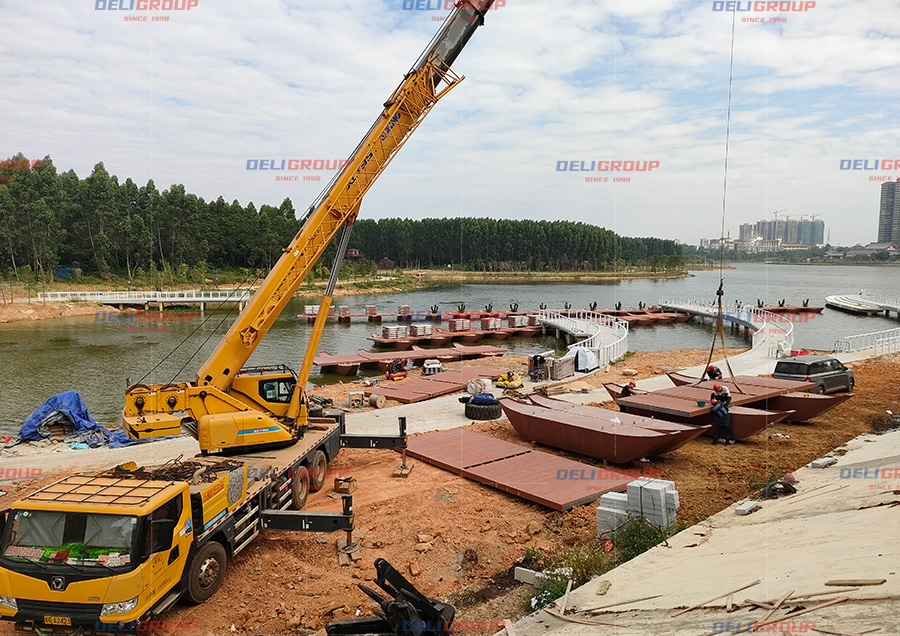
Designing a floating dock in lake environments demands more than standard marina principles. Lakes exhibit unique hydrological behaviors—slow water exchange, wind-driven seiches, thermal stratification, and seasonal ice cover. Unlike coastal tide zones, lake levels change due to precipitation, dam regulation, or groundwater inflow. These variables directly affect dock stability, mooring safety, and long-term structural integrity. For engineering teams and waterfront developers, selecting a properly designed floating dock in lake requires thorough analysis of buoyancy reserves, anchoring adaptability, and material resistance to freshwater biological activity. DeFever specializes in such bespoke configurations, integrating site-specific hydrographic surveys into every design phase.
1. Pre-Installation Bathymetric & Water-Level Regime Assessment
Before specifying any floating dock in lake, engineers must evaluate three critical parameters: maximum drawdown amplitude, fetch length (wind exposure), and bottom sediment composition. Lakes that function as reservoirs may experience rapid 3–5 meter level drops within weeks, demanding self-adjusting anchoring systems. Shallow macrophyte-rich zones require pier foundations that avoid disturbing benthic habitats. A professional bathymetric survey using single-beam echosounders provides depth profiles and identifies submerged obstacles. Additionally, wave height modeling based on historical wind data helps define required freeboard and deck drainage capacity. For large lake installations, accelerometer-based motion studies can predict resonant heave periods—this directly influences hinge point selection between modular sections.
2. Buoyancy Architecture: Closed-Cell Foam vs. Rotomolded Polyethylene
The core of any floating dock in lake lies in its buoyancy units. Two dominant technologies exist in freshwater environments:
High-density polyethylene (HDPE) rotomolded pontoons: Seamless, UV-stabilized shells filled with EPS (expanded polystyrene) or air-chambered. They resist algae adhesion and offer modular replacement. For lakes with ice jams, HDPE exhibits low friction against ice scour.
Reinforced concrete floats: High inertial mass reduces wave-induced acceleration, beneficial for heavy crane access or large boat lifts. However, they require proper freeze-thaw air entrainment and steel passivation against chloride-free but still corrosive lake water.
Steel galvanized tanks: Rarely recommended for permanent lake installations due to eventual cathodic corrosion, even in freshwater.
The design buoyancy reserve should never fall below 40% of total displacement when fully loaded (people, mooring equipment, seasonal snow). For lakes with frequent water level fluctuations, engineers at DeFever often specify hybrid systems—primary polyurethane foam blocks supplemented by adjustable pneumatic chambers that allow draft tuning.
3. Anchoring Strategies for Lakes: Pile-Guide vs. Catenary Mooring
Unlike ocean marinas with constant tidal ranges, lake anchoring must handle unidirectional wind shifts and occasional seiche oscillations. Two professional anchoring methods dominate:
Vertical pile guides: Steel or fiberglass piles driven into lakebed, with dock-mounted slide rings. This restricts horizontal drift and works best for water level variations up to 3 meters. Pile spacing every 4–6 meters prevents lateral twisting. Requires geotechnical analysis for pile driving resistance.
Chain-catenary system with concrete deadweight anchors: More flexible but demands precise chain scope (typically 4:1 ratio). For lake bottoms with soft sediment, helical anchors provide uplift resistance. Anchor chains should be galvanized or coated with polyurethane to prevent mussel colonization.
For floating dock in lake exposed to frequent wake from towed watercraft, engineers recommend a combination: primary bow anchors combined with lateral pile restraints at gangway connection points. This hybrid approach minimizes rotational sway while allowing vertical freedom.
4. Material Selection for Freshwater Resilience & Low Ecological Impact
Freshwater lakes present biological and chemical exposure different from saltwater. Key material considerations include:
Decking surfaces: Thermally modified ash or recycled HDPE grating with ≥80% open area reduces wave reflection and allows light penetration for submerged plants. Avoid CCA-treated wood due to arsenic release.
Fasteners and hardware: 316L stainless steel or silicon bronze—standard galvanized bolts corrode in low-mineral, oxygenated lake water over 7–10 years.
Anti-fouling requirements: No biocides allowed; instead, smooth low-surface-energy coatings (PDMS-based) discourage algae adhesion.
Fendering: Recycled EPDM rubber or closed-cell foam with UV inhibitors prevents microplastic shedding.
DeFever integrates all fasteners with dielectric isolation washers to prevent galvanic coupling between aluminum superstructures and stainless components—a detail often overlooked in generic lake docks.
5. Ice Load Management: Passive & Active Protection Systems
In temperate and cold climates, ice lens expansion poses the single greatest threat to a floating dock in lake. Ice jacking forces can reach 150 kN per linear meter if trapped under the pontoon. Mitigation strategies include:
Ice skirts / tapered bow profiles: Angled metal or UHMWPE skirts attached to the upstream side of pontoons push ice sheets downward rather than lifting the dock.
Perimeter aeration systems: Compressed air diffusers placed 1.5m below surface maintain an ice-free perimeter around the dock. Control units operate thermostatically when water temperature approaches 0°C.
Removable hinge connections: Allowing dock sections to be tilted upward at the end of navigation season to eliminate ice contact.
Water level drawdown strategy: If reservoir operation permits, lowering the lake level by 0.8–1.2m before freeze-up creates an air gap between ice sheet and dock bottom.
Each method requires trade-off analysis between installation cost and operational reliability. For lakes with over 45 days of ice cover annually, a combination of aeration plus ice skirts provides the best ROI.
6. Ecological Integration and Erosion Control Measures
Modern regulations demand that floating dock in lake projects include shoreline protection and habitat preservation. Engineering techniques that support E-E-A-T principles include:
Shadow zone analysis: Modeling the dock’s shading effect on submerged aquatic vegetation (SAV). Adjusting deck slat orientation or using translucent panels preserves at least 60% of light transmission.
Bio-habitat attachment points: Integrated grooved panels beneath the dock encourage freshwater mussel and macroinvertebrate colonization (compensatory measure).
Wave attenuation mats: Geotextile curtains along the docking perimeter reduce wake-induced shoreline scarp erosion by 40–55%.
No-discharge design: Deck drainage routed to onshore rain gardens instead of direct lake discharge prevents hydrocarbon runoff from boat maintenance.
These features increase initial engineering effort but significantly shorten permit approval timelines in protected watersheds.
7. Operational Maintenance & Structural Inspection Protocols
To extend service life beyond 25 years, a floating dock in lake requires scheduled inspections:
Bi-annual visual check: examine weld seams on hinge brackets, replace any worn pile guide bushings (polyamide or Nylatron).
Annual buoyancy verification: measure freeboard at all four corners under standard equipment load; if variation exceeds 7%, inspect for water intrusion in floats.
Three-year dry docking interval: remove pontoons for ultrasonic thickness testing on steel components (if used) or pressure testing HDPE seams.
Anchor chain replacement: galvanized chains show elongation at 12% wear; replace when diameter reduction >2.5mm.
Deck friction test: measure slip resistance (wet static coefficient of friction >0.6). HDPE grating may be refreshed using flame treatment or slip-resistant overlays.
DeFever provides detailed technical logbooks with each floating dock in lake delivery, including recommended inspection checklists and spare part codes for all proprietary components.
8. Weight Distribution and Live Load Specifications for Lake Marinas
Different from private piers, commercial lake docks handle concentrated loads from forklifts, fuel trucks, or event crowds. Engineers must design for two primary load cases:
Uniform live load: 4.8 kN/m² (100 psf) for pedestrian areas; 7.2 kN/m² for vehicle access zones (emergency ATVs).
Concentrated point load: 20 kN applied on a 200mm diameter plate (representing winch base or piling crane).
Mooring bollard pull: Lake boat cleats rated for 25 kN (for vessels up to 12m LOA).
These loads require finite element analysis of the deck substructure, particularly around finger pier connections. Cross-bracing on truss-type pontoons distributes point loads without excessive local deflection. For facilities hosting boat rentals, dynamic load amplification factors (1.3 to 1.5) must be applied to account for boarding impacts.
9. Gangway Design and Transition Adaptability
The interface between fixed shoreline infrastructure and a floating dock in lake is often the highest-maintenance component. Hydraulic hinges or rolling gangways must accommodate extreme level differences. Recommended specifications:
Gangway slope not exceeding 1:6 (≈9.5°) for wheelchair-compliant accessibility at median water level.
Self-adjusting pneumatic or spring-loaded pivot with dampeners to avoid sudden drops during wake events.
End rollers on gangway (stainless steel or polyurethane) engaging a C-channel on the shore pier to prevent lateral displacement.
Load capacity: 5 kPa minimum with safety factor 4:1 against yield.
Many lake projects underestimate required gangway length, leading to oversteep angles during low-water periods. Professional design includes water level historical records (10-year low) to determine gangway length.
Common Questions About Floating Dock in Lake Engineering
Q1: What is the typical buoyancy reserve ratio for a floating dock in lake used for private boat lifts?
A1: For residential applications with a single 5,000 lb boat lift, engineers recommend a buoyancy reserve of 50% above the maximum static load (including dock self-weight, lift mechanism, boat plus 6 persons). For HDPE pontoons of 600mm diameter, this translates to one pontoon per 2.5m of dock length. Always consult hydrostatic calculations before procurement.
Q2: How does a floating dock in lake perform during sudden drawdown events caused by dam release?
A2: If the anchoring system uses vertical pile guides with sufficient length (pile embedded minimum 2m below lowest water level), the dock descends smoothly. Catenary anchor systems require immediate chain slack adjustment; otherwise, mooring lines may become overly taut. Install limit switches or remote chain windlasses on large docks for active adjustment.
Q3: Can I install a floating dock in lake with soft organic sediment without dredging?
A3: Yes. Helical screw anchors (150mm diameter helix plates) can be torque-installed through up to 6m of soft sediment until reaching load-bearing clay or till. This avoids turbidity from dredging. Helical anchors also provide uplift resistance up to 35 kN each, suitable for docks up to 15m length. Use torque monitoring to confirm refusal.
Q4: What fire resistance ratings apply to deck materials for a commercial floating dock in lake?
A4: NFPA 303 requires flame spread index ≤75 for decking in marinas. Recycled HDPE composite with fire-retardant additives (aluminum trihydrate) achieves Class B rating. Avoid untreated timber due to rapid flame propagation. Also install portable fire extinguishers every 25m along the dock length.
Q5: How does wave reflection from a floating dock in lake affect adjacent nesting habitats?
A5: Solid-sided docks can increase reflected wave height by 30–45%, eroding shoreline bluffs. To mitigate, specify perforated frontal panels (≥40% open area) or deploy floating wave attenuators (log-boom style) at 5m distance from the dock perimeter. Additionally, using suspended curtain skirts that extend 0.6m below pontoons disrupts wave reflection energy.
Project Inquiry – Engineering Consultation for Lake
Infrastructure
For technical datasheets, custom anchoring
calculations, or to request a site-specific design proposal for your floating dock in lake, reach out to the
freshwater engineering team at DeFever directly. Submit your lake
bathymetry map, desired load capacity, and seasonal water level records. Our
experts will respond with a detailed feasibility study and configuration drawing
within 5 business days. ➜ Send Inquiry via Official Contact Portal