2026-10-15
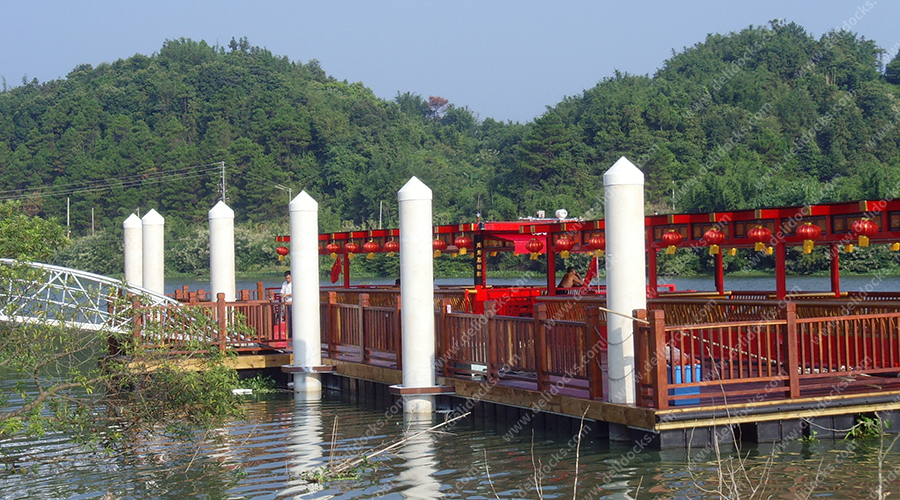
Development of residential waterfront properties requires structures that accommodate natural water level changes while preserving shoreline ecology. Fixed piers often suffer structural damage from extreme tides or high-energy wave action, and they require intensive foundation work that disrupts the local benthic zone. To resolve these challenges, modern property layouts frequently implement a custom floating home dock system. This engineering design adapts dynamically to shifting water levels, ensuring stable, year-round access to vessels and water-based residential areas while minimizing the physical footprint on the marine environment.
1. Site Analysis and Hydrodynamic Considerations
Designing floating systems requires a deep understanding of the local environment. Engineering teams evaluate various natural forces to determine the appropriate structural framing and buoyancy requirements for the project site.
Bathymetric Profiling: Mapping the underwater contour of the shoreline determines depth variations and draft clearances. Accurate bathymetry ensures the floats do not touch the seabed during low tides, which would subject the frame to uneven bending stresses and potential structural failure.
Wave Climate and Wave Period: Dynamic wave forces pose a continuous risk to structure longevity. Engineers calculate significant wave heights ($H_s$) and wave periods to decide whether standard pontoons are sufficient or if wave-attenuation barriers are required to protect the dock and moored vessels.
Wind and Ice Loads: High-velocity winds apply lateral forces against both the dock and the profile of moored vessels. In colder climates, thermal expansion from freezing ice sheets can crush pontoons; designers must configure the system to either withstand ice compression or allow for seasonal removal.
Geotechnical Evaluation: Assessing the load-bearing capacity of the shoreline and seabed is vital for designing secure landside abutments and choosing between pile-driven or anchor-based mooring systems.
2. Marine Materials and Structural Framework Integrity
The aggressive nature of marine environments requires materials that resist degradation, rot, and electrochemical corrosion.
Maritime developers like DeFever emphasize structural longevity by incorporating materials engineered for long-term water immersion:
Rotomolded Polyethylene (HDPE) Floats
Seamless, heavy-walled polyethylene floats filled with expanded polystyrene (EPS) foam provide reliable buoyancy. The continuous outer shell prevents water ingress even if the outer layer is punctured by marine debris. HDPE is also inert and does not leach chemicals into the aquatic environment.
Structural Concrete Pontoons
For large-scale residential applications, concrete pontoons reinforced with galvanized or fiber-reinforced polymer (FRP) rebar offer massive deadweight stability, reducing motion transfer from wave action. The high mass of these pontoons helps dampen rapid rolling motions, creating a highly stable surface.
Marine-Grade Aluminum Framing
Extruded aluminum alloys, such as 6061-T6, provide exceptional structural rigidity without adding unnecessary weight. Aluminum naturally oxidizes to form a protective layer, rendering it highly resistant to salt spray and atmospheric moisture. This framing supports the load-bearing decking while maintaining high torsional resistance.
High-Performance Composite Decking
Modern composite boards, featuring non-slip textures and UV-inhibiting additives, replace traditional timber. This eliminates the risk of splinters, rot, and chemical leaching into the surrounding water. Composite boards maintain dimensional stability under cyclical wetting and drying phases.
3. Buoyancy, Load Balancing, and Freeboard Calculations
To maintain safe operations, a floating home dock must be engineered to balance buoyancy with expected gravity loads.
Static and Dynamic Load Allocation: The structure must support its own dead load (framing, decking, utility lines) and the dynamic live loads (pedestrians, stored equipment, gangway resting weights). Engineers establish a target freeboard height—typically between 350mm and 500mm—that remains stable under varying load conditions.
Metacentric Height and Stability: Metacentric height calculations ensure the dock resists rolling or capsizing when asymmetric live loads are applied, such as multiple people standing on one edge. High metacentric stability is achieved by widening the pontoon footprint or distributing ballast weight lower in the structure.
Gangway Articulation and Slopes: The gangway serves as the bridge between land and the floating platform. It must be long enough to maintain a manageable incline angle (typically under 1:12) even during astronomical low tides. Sliding shoe bearings and heavy-duty pivot hinges allow the gangway to articulate freely across horizontal and vertical axes without mechanical binding.
Hydrostatic Equilibrium: Designers calculate the buoyancy of each pontoon module to ensure the deck surface remains completely level. Variances in structural weight, such as heavy gangways on one end, are offset with built-in internal ballast compartments or asymmetric float placements.
4. Mooring Systems for Residential Environments
Mooring systems secure the floating structure in place, transferring environmental loads into the earth. Choosing the right mooring method is a decisive parameter in successful floating home dock engineering.
Pile Mooring
Driving round steel or concrete piles into the seabed is the most secure mooring method. The dock connects to the piles using heavy-duty pile guides lined with ultra-high-molecular-weight polyethylene (UHMW-PE) rollers. This setup allows the dock to glide smoothly up and down with tides while restricting all horizontal movement.
Elastic Mooring Lines
For deep-water locations or sensitive benthic environments where pile-driving is restricted, high-strength elastic mooring units are used. These units remain under tension, self-adjusting to tidal changes while absorbing shock loads from wind and wake. Because they do not drag on the seabed, they prevent destruction of aquatic vegetation.
Seabed Anchor and Chain Systems
High-tensile steel chains linked to heavy concrete gravity blocks or helical screw anchors are positioned on the seabed. The catenary weight of the chains provides a natural dampening effect, keeping the dock centered while accommodating vertical movement.
Stiff-Arm Strut Systems
When driven piles are not feasible and deep-water anchoring is impractical, stiff-arm struts made of structural steel can anchor the dock directly to a solid seawall or shoreline rock face. Self-aligning ball joints at both ends permit free vertical movement while keeping the dock at a fixed distance from the shore.
5. Assembly, Installation, and Shoreline Integration
Successful deployment requires synchronized civil and marine operations. This minimizes disruption to the shoreline and ensures structural components align correctly.
Working with experienced designers like DeFever helps ensure that each phase of installation is executed with high precision:
Abutment Civil Works: Onshore construction begins with casting a reinforced concrete abutment. This structure provides a stable, erosion-resistant foundation to anchor the shoreward end of the gangway.
Off-Site Modular Fabrication: Individual dock modules, frames, and utility pathways are assembled in a controlled facility. This limits on-site noise, dust, and environmental impact while ensuring uniform welding and concrete quality control.
Mooring Installation: Piles are driven using barge-mounted hammers, or anchors are placed and pre-tensioned to test their holding capacity against local soil shear strengths.
Water Delivery and Coupling: Fabricated pontoon modules are launched into the water, towed to the property, and connected using heavy-duty, noise-dampening elastomer couplers.
Gangway Placement and Utility Hookups: The gangway is lifted into position using crane equipment. Power, water, and communication lines are then routed through protective conduits, incorporating flexible loops at the articulation joints to prevent stress fractures.
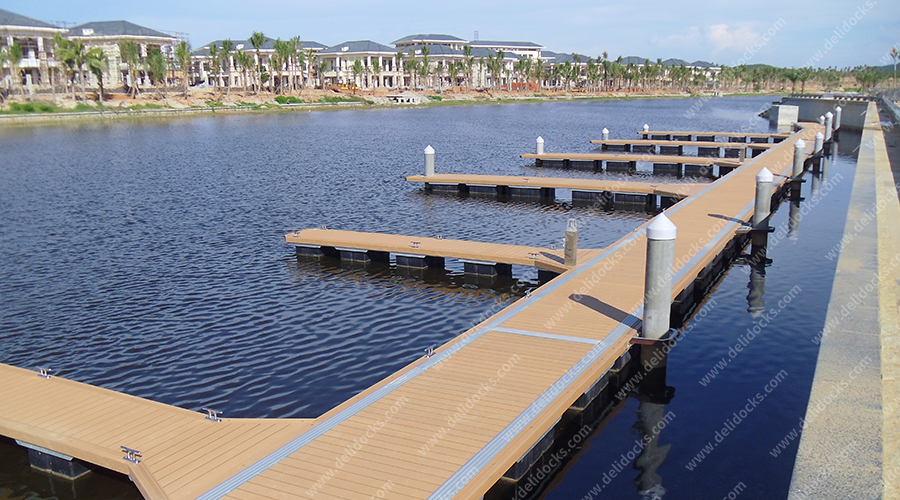
6. Preventative Maintenance and Mitigating Marine Wear
Ongoing maintenance is required to defend against marine growth, electrochemical deterioration, and physical fatigue.
Cathodic Protection: Sacrificial zinc or aluminum anodes must be attached to all underwater steel components, such as pile guides and anchor brackets. These anodes corrode in place of the structural steel and must be replaced periodically based on wear rates.
Biofouling Removal: Marine organisms (barnacles, mussels, algae) attach to the pontoons over time, increasing overall dead load and reducing freeboard. Regular physical cleaning keeps the pontoons light and hydrodynamic.
Connection and Hardware Inspections: Structural bolts, elastomer couplers, and gangway rollers should be checked annually for wear. Replacing worn bushings and lubricating moving parts prevents localized binding and subsequent structural stress.
Fender and Bumper Checks: Shock-absorbing dock fenders prevent damage to the dock frame during vessel berthing. Regular replacement of cracked or degraded bumpers is necessary to maintain adequate protection.
Developing a durable, stable, and low-maintenance floating home dock requires a systematic approach that merges hydrodynamics, material science, and secure anchoring. Designing with marine-grade materials and structural redundancy ensures the dock remains safe and functional for decades. To discuss the engineering requirements of your waterfront property, submit an inquiry to the design and development team at DeFever.
Frequently Asked Questions
Q1: What is the average lifespan of a modern floating residential dock?
A1: A professionally engineered dock utilizing a marine-grade aluminum frame and HDPE or concrete floats typically has an operational lifespan of 25 to 40 years, depending on water conditions and the consistency of preventative maintenance.
Q2: How does a floating dock perform in rough water compared to a fixed dock?
A2: Floating docks ride with the wave energy rather than resisting it directly, which reduces structural stress during storms. In high-energy locations, selecting heavier concrete pontoons helps dampen motion, while pile guides restrict horizontal drift, keeping the dock safer than a fixed structure.
Q3: Is it possible to run utilities like electricity and fresh water to a floating dock?
A3: Yes, utility conduits can be run beneath the decking inside specialized service raceways. Flexible, marine-grade conduits are used at the gangway transitions to allow the lines to bend without cracking as the dock moves up and down with the water level.
Q4: How does a floating dock system affect the local marine environment?
A4: Floating docks have a very low ecological footprint. They do not require heavy excavation of the seabed, which preserves benthic ecosystems. Furthermore, materials like HDPE and composite decking are inert and do not leach chemicals or heavy metals into the water.
Q5: Can a floating dock remain in the water during freezing winters?
A5: In areas with moderate winter ice, docks made of HDPE or concrete can remain in place, as their sloped hull shapes allow them to slide upward when ice expands. However, in regions with severe, moving ice floes, it is recommended to design the system with quick-disconnect couplers so the dock can be towed to a protected marina or removed for dry storage.