2026-10-15
Across the waterfront infrastructure sector, a measurable shift toward aluminum-based floating systems is underway. Port authorities, marina operators, and ferry service providers are increasingly specifying commercial aluminum floating docks for new installations and major retrofits. This transition stems from quantifiable performance metrics—load capacity, corrosion resistance, lifecycle longevity, and operational uptime—that directly impact revenue generation and asset depreciation schedules. The following analysis examines the engineering rationale, application-specific design considerations, and long-term performance characteristics that position aluminum floating dock systems as the preferred choice for demanding commercial marine environments.
Material Science and Structural Design of Commercial Aluminum Floating Docks
The foundation of any high-performance floating dock lies in its material selection and structural configuration. Commercial aluminum floating docks utilize marine-grade aluminum alloys that deliver a combination of strength-to-weight ratio and corrosion resistance unmatched by steel, concrete, or timber alternatives. The engineering choices made during the design phase directly influence the dock's ability to withstand continuous wave action, tidal fluctuations, and heavy pedestrian and vehicle loads.
Aluminum Alloy Selection for Marine Environments
Marine-grade aluminum alloys, primarily from the 5xxx and 6xxx series, form the structural backbone of modern floating dock systems. Alloy 5083, with its high magnesium content, offers exceptional resistance to seawater corrosion and is frequently specified for hull components and submerged sections. Alloy 6061-T6, heat-treated for enhanced strength, is commonly used for deck framing, handrails, and above-water structural members. These alloys undergo specialized tempering processes that optimize grain structure, reducing susceptibility to stress corrosion cracking—a failure mode that historically plagued earlier aluminum marine applications.
The welding protocols for these alloys demand rigorous quality control. Gas metal arc welding (GMAW) with appropriate filler metals (such as 5356 or 5183) preserves the corrosion-resistant properties of the base material. Post-weld heat treatment, though not always required, can restore mechanical properties in heat-affected zones, particularly for heavily loaded connection points. Operators specifying commercial aluminum floating docks should verify that fabricators adhere to American Welding Society (AWS) D1.2 structural welding code for aluminum, ensuring joint integrity under cyclic loading conditions.
Buoyancy System Engineering
The buoyancy system represents a critical subsystem within any floating dock assembly. Commercial-grade systems typically employ closed-cell polyethylene foam encapsulated within aluminum pontoons or as standalone buoyancy modules. The foam's closed-cell structure prevents water absorption even when subjected to impact damage, maintaining positive buoyancy over decades of service. Engineers calculate required buoyant volume based on dead load (the dock's self-weight), live load (anticipated personnel, equipment, and vehicle loading), and environmental factors such as wave-induced dynamic amplification.
Freeboard—the distance between the water surface and the top of the deck—is a key design parameter. For commercial applications handling roll-on/roll-off cargo or passenger boarding, a freeboard of 300 to 450 millimeters is typical, balancing accessibility with stability. The distribution of buoyancy modules along the dock's length must account for load concentration points, such as gangway landings, mooring bollards, and utility pedestals. Computational fluid dynamics (CFD) modeling during the design phase enables engineers to predict heave, pitch, and roll responses under various sea states, ensuring the dock remains stable and serviceable across operational scenarios.
Operational Demands and Application Scenarios
The versatility of aluminum floating dock systems enables deployment across a broad spectrum of commercial waterfront applications. Each use case presents unique loading profiles, accessibility requirements, and environmental stressors that influence design configurations. Understanding these application-specific demands allows infrastructure planners to match dock specifications to actual operational conditions.
High-Traffic Marinas and Yacht Clubs
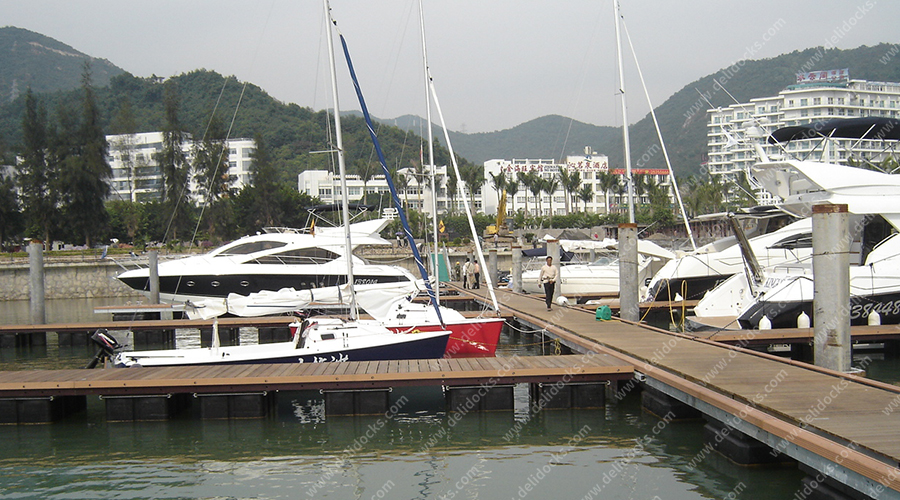
Marinas serving large vessels—yachts exceeding 20 meters in length, superyachts, and commercial charter boats—require docks capable of accommodating substantial point loads from boarding gangways, shore-power connections, and fueling equipment. The modular nature of aluminum floating dock systems facilitates custom configurations: wider main walkways (2.5 to 3.0 meters), reinforced finger piers, and integrated utility troughs that house electrical, water, and data lines. The smooth, non-slip deck surfaces provided by extruded aluminum plank or applied coatings reduce trip hazards for passengers and crew, while the inherent corrosion resistance eliminates the rust staining that plagues steel alternatives.
Transient berthing operations demand rapid adjustment of mooring lines and fendering systems. Aluminum docks incorporate robust mooring cleats, bollards, and rub rails that withstand repeated impact from vessel hulls. The structural flexibility of aluminum—moderate elastic deflection under load—absorbs berthing energy without permanent deformation, protecting both the dock and the vessel. For marinas in regions with significant tidal ranges (exceeding 3 meters), hinged or telescopic gangways compensate for vertical movement, maintaining safe pedestrian access regardless of tide stage.
Ferry Terminals and Public Water Transit
Public ferry operations impose distinct demands: rapid passenger turnover, frequent vessel landings, and the need for barrier-free accessibility. Commercial aluminum floating docks designed for ferry terminals feature widened boarding areas (4 to 6 meters), heavy-duty deck surfacing capable of supporting baggage carts and mobility aids, and integrated queuing systems. The low overall weight of aluminum structures enables the use of lighter pile-and-guide systems, reducing foundation costs in challenging soil conditions.
Dynamic loading from ferry bow thrusters and propeller wash requires robust anchoring arrangements. Spud piles—vertical steel piles passing through pile guides on the dock—provide vertical guidance while allowing the dock to rise and fall with the tide. For high-energy wave environments, patented wave-dampening systems integrated into the pontoon structure reduce vertical acceleration, improving passenger comfort and reducing the risk of falls. The non-magnetic properties of aluminum also eliminate interference with navigation and communication equipment installed on the dock.
Engineering Challenges and Performance Solutions
While aluminum offers compelling advantages, its performance in marine environments depends on careful engineering attention to corrosion protection, fatigue resistance, and mechanical connections. The following sections address the principal engineering challenges and the established solutions that ensure reliable, long-term service from commercial floating dock installations.
Corrosion Resistance and Protective Measures
Aluminum's natural oxide layer provides excellent corrosion protection in most marine environments, but galvanic corrosion remains a concern when aluminum contacts dissimilar metals—particularly stainless steel, bronze, or copper-based alloys. Designers mitigate this risk through electrical isolation: using non-conductive bushings, washers, and coatings at all bi-metallic connections. Sacrificial anodes, typically zinc or aluminum-zinc-indium alloys, are strategically placed on the dock structure to provide cathodic protection, particularly in brackish or polluted waters where the oxide layer may be compromised.
Surface treatments further enhance corrosion resistance. Anodizing creates a controlled, thick oxide layer that resists pitting and wear, while powder coating or liquid-applied polyurethane finishes provide additional barrier protection for above-water components. Regular inspection protocols—visual examination of welds, fastener torque checks, and anode consumption monitoring—detect early signs of corrosion, enabling corrective maintenance before structural integrity is compromised. Operators in tropical or high-UV environments should specify UV-stable coatings to prevent polymer degradation in deck surfacing and fendering materials.
Load-Bearing Capacity and Structural Integrity
Commercial floating docks must support not only static dead and live loads but also dynamic forces from vessel mooring, wave impacts, and pedestrian traffic. The structural framing—typically a grid of longitudinal stringers and transverse beams—is engineered to distribute loads across multiple buoyancy modules, preventing localized overloading. Finite element analysis (FEA) during the design phase models stress distribution, deflection patterns, and fatigue life under specified load scenarios.
For ferry terminals and cargo-handling facilities, deck load ratings often reach 250 to 500 kilograms per square meter, with point loads of 10 to 20 tonnes at mooring bollards. Aluminum's modulus of elasticity (approximately 69 GPa) is one-third that of steel, resulting in greater deflection under equivalent loads. Engineers compensate through deeper section profiles, increased wall thicknesses, or the addition of stiffening ribs to achieve the required stiffness. The connection details—bolted, welded, or a combination—are designed to transfer shear and moment forces effectively, with bolted connections offering the advantage of field adjustment and replacement.
Seismic considerations, particularly in regions of moderate to high seismic activity, require additional detailing. Flexible connections between dock modules, shock-absorbing fender systems, and energy-dissipating pile guides accommodate ground motion without transferring excessive loads to the dock structure. DeFever incorporates these seismic design principles into its standard engineering protocols, ensuring that commercial aluminum floating docks meet the most stringent international building codes for waterfront structures.
Maintenance Considerations for Long-Term Asset Management
The maintenance regimen for aluminum floating docks differs substantially from that of steel or timber structures, with lower overall lifecycle costs and reduced downtime for repairs. Understanding the maintenance requirements—and the cost implications of deferred maintenance—enables operators to optimize asset management strategies.
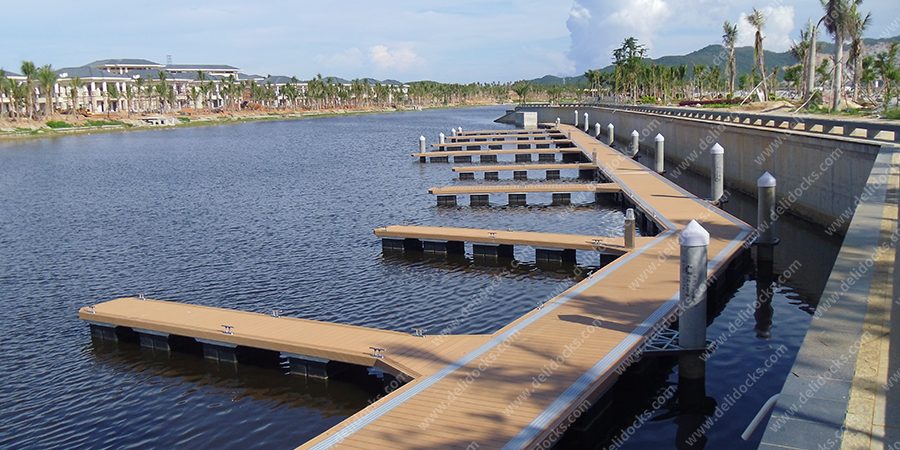
Annual inspection programs typically cover: visual examination of all welds and mechanical connections, measurement of deck surfacing wear, verification of anode consumption, and functional testing of utility systems (electrical, water, data). The absence of rust and rot eliminates the need for scraping, painting, or timber replacement that consumes significant labor hours on steel and timber docks. When repairs are necessary, aluminum's weldability and the availability of pre-fabricated components allow for rapid in-situ remediation, often completed during off-peak hours without full facility closure.
Deck surfacing represents the primary wear component on any floating dock. Extruded aluminum plank with integrated slip-resistant patterns provides decades of service with minimal maintenance, while applied coatings or overlays may require periodic renewal depending on traffic intensity and UV exposure. Fendering systems—rubber, polyurethane, or composite extrusions—are designed for easy replacement, with bolted attachments that permit individual section changes without disturbing adjacent components. Regular cleaning to remove marine growth, debris, and salt deposits preserves the aluminum surface finish and prevents localized corrosion under organic deposits.
For operators managing multiple dock assets, condition-based monitoring systems offer a data-driven approach to maintenance planning. Strain gauges, accelerometers, and corrosion sensors integrated into the dock structure provide real-time performance data, enabling predictive maintenance that addresses developing issues before they escalate to failure. This approach, combined with routine visual inspections, delivers the highest return on maintenance expenditure while minimizing unplanned downtime.
Engineering expertise from manufacturers such as DeFever extends beyond initial fabrication to include lifecycle support, spare parts availability, and technical guidance on inspection and repair procedures. This partnership approach ensures that commercial aluminum floating docks continue to perform at design levels throughout their intended service life, typically exceeding 40 years with proper maintenance.
Frequently Asked Questions
Q1: What is the typical lifespan of a commercial aluminum floating dock in a saltwater environment?
A1: With appropriate design, fabrication, and maintenance, commercial aluminum floating docks commonly achieve a service life of 40 to 50 years in saltwater environments. The corrosion-resistant properties of marine-grade aluminum alloys, combined with sacrificial anode protection and regular inspection protocols, enable this extended lifespan. The deck surfacing and fendering systems may require replacement at 15-to-20-year intervals depending on traffic intensity, while the primary aluminum structure remains serviceable significantly longer.
Q2: How do aluminum floating docks perform in ice-prone or freezing environments?
A2: Aluminum's ductility and moderate thermal expansion coefficient allow it to accommodate ice formation and freeze-thaw cycles without brittle fracture. For facilities in ice-prone regions, engineers specify thicker extrusions, reinforced connections, and ice-resistant fendering systems. The use of air-assisted buoyancy systems or bubble curtains can prevent ice adhesion to the dock structure, reducing loads from ice expansion. Aluminum's resistance to cold-temperature embrittlement—unlike certain steel grades—makes it suitable for year-round operation in northern latitudes.
Q3: Can commercial aluminum floating docks support heavy equipment like forklifts or mobile cranes?
A3: Yes, provided the dock is specifically engineered for heavy rolling loads. Designers incorporate deeper section profiles, increased wall thicknesses, and additional stringers to distribute point loads from wheeled equipment. Deck surfacing options include heavy-duty aluminum plank with reinforced extrusions or composite overlays capable of withstanding concentrated loads. For ferry terminals and cargo-handling facilities, load ratings of 500 kilograms per square meter are standard, with localized reinforcement at loading and unloading positions. Each installation should be designed based on the specific equipment specifications and operational patterns.
Q4: What are the key differences between commercial-grade and residential-grade aluminum floating docks?
A4: Commercial-grade docks are engineered for higher load capacities, continuous use, and more demanding environmental conditions. Differences include: thicker structural extrusions (typically 6 to 10 millimeters versus 3 to 5 millimeters), deeper pontoon sections for increased buoyancy, heavy-duty bolted or welded connections, commercial-grade fendering and mooring hardware, and integrated utility conduits. Commercial docks also undergo more rigorous quality assurance, including third-party inspection and certification to standards such as ISO 12215 or applicable national codes. The initial capital cost of commercial-grade systems is higher, but the extended service life and reduced maintenance requirements result in lower total lifecycle costs for high-utilization facilities.
Q5: How are commercial aluminum floating docks anchored in deep-water or exposed locations?
A5: Anchoring systems for exposed locations typically employ a combination of spud piles, guide piles, and mooring chains or cables. Spud piles—steel tubes passing through pile guides on the dock—provide vertical guidance while allowing free movement with tide and wave action. In deep water (exceeding 10 meters), pre-stressed concrete piles or steel pipe piles are driven to competent bearing strata. For soft soils, helical piles or drilled-and-grouted systems offer alternative foundation solutions. Anchor chain systems with buoyant moorings are used in extremely deep or soft-bottom conditions. Engineers assess environmental loads—wind, waves, and currents—to determine the appropriate anchoring configuration, ensuring the dock remains within operational position during storm events.
Q6: What fire safety considerations apply to aluminum floating docks?
A6: Aluminum has a melting point of approximately 660°C, significantly lower than steel, which requires consideration of fire exposure scenarios. However, aluminum's high thermal conductivity dissipates heat rapidly, and the material does not contribute fuel to a fire. Fire protection strategies include: locating fuel storage and dispensing equipment away from the dock, installing fire hydrants or standpipe systems on the dock, using non-combustible deck surfacing, and maintaining clear access for emergency vehicles. For marinas and ferry terminals, compliance with National Fire Protection Association (NFPA) 303 and local building codes is mandatory. The absence of combustible coatings or timber components on all-aluminum docks reduces overall fire risk compared to timber or composite structures.
Q7: Can existing concrete or timber docks be retrofitted with aluminum floating sections?
A7: Retrofitting is feasible and often cost-effective. Aluminum floating sections can be designed to connect to existing fixed piers or pile-supported structures via hinged gangways, transfer bridges, or flexible connections. The low weight of aluminum sections minimizes additional load on existing foundations, a significant advantage over steel or concrete extensions. Site-specific engineering assesses the existing structure's capacity, tidal ranges, and wave exposure to design compatible connections. Retrofits allow phased expansion or modernization of waterfront facilities without full demolition, reducing project costs and operational disruption.
For detailed engineering specifications, project consultation, or to request a customized design proposal for your waterfront infrastructure project, please submit an inquiry. Our technical team provides comprehensive support from concept design through installation and lifecycle maintenance.
DeFever delivers engineered floating dock solutions tailored to the most demanding commercial marine environments. Contact our engineering team directly to discuss your project requirements.