2026-10-15
The evolution of modern marina infrastructure has shifted focus toward heavy-duty, stable, wave-attenuating structures. Selecting the right foundation for berthing facilities requires a comprehensive understanding of concrete floating dock construction. These systems provide the durability and inertia necessary to withstand environmental forces in exposed coastal zones, commercial harbors, and high-density yacht basins.
For global developers and operators, partnering with experienced marine engineering entities like DeFever ensures compliance with strict international maritime regulations. Understanding the underlying engineering principles behind these structures is the first step toward establishing a resilient waterfront installation.
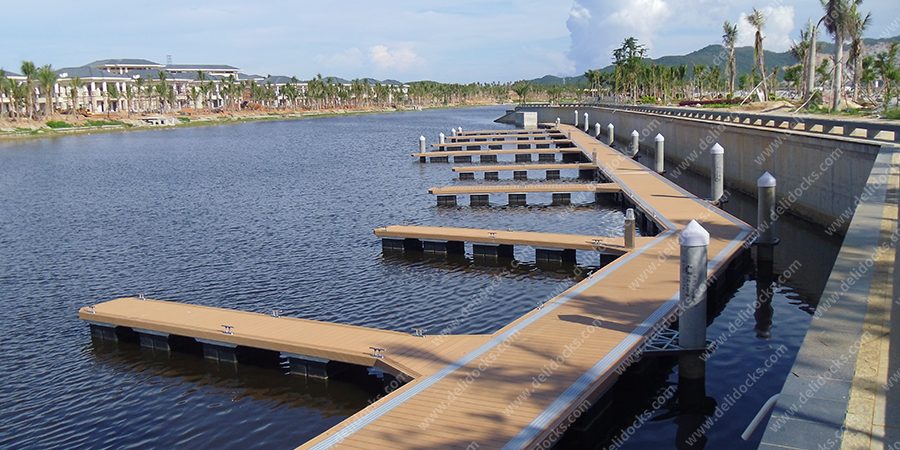
Structural Anatomy of Heavy-Duty Concrete Pontoons
The foundation of any successful floating concrete structure lies in its core and shell composition. Unlike temporary or lightweight docking alternatives, these systems are engineered to handle high load capacities, significant wave action, and constant exposure to aggressive marine environments.
The Concrete Mix and Reinforcement Matrix
Modern marine-grade concrete requires a highly refined mix design to prevent permeability and long-term degradation. High-performance concrete (HPC) formulations typically specify a compressive strength of 50 MPa or greater. This strength is achieved by incorporating pozzolanic materials such as silica fume and fly ash, which refine the pore structure of the concrete matrix, reducing water absorption and preventing chloride ion penetration.
To prevent structural deterioration caused by internal oxidation, reinforcement materials must be selected with extreme care. Standard black rebar is unsuitable for maritime environments. Engineers utilize hot-dip galvanized steel, stainless steel, or composite fiber-reinforced polymer (FRP) rebars. These reinforcement cages are configured to manage both tensile and bending stresses, ensuring the pontoon maintains structural integrity under fluctuating hydrodynamic loads.
Expanded Polystyrene (EPS) Core Management
Internal buoyancy is provided by high-density expanded polystyrene (EPS) blocks. The EPS core is non-hygroscopic, ensuring that even in the unlikely event of an outer concrete shell breach, the pontoon retains its buoyancy and does not sink. During the casting process, the EPS core is positioned precisely within the mold to guarantee uniform concrete wall thickness on all sides.
Wall thickness must be calculated based on the displacement requirements and draft constraints of the project. Typically, the bottom and side walls of the concrete shell range from 70mm to 120mm in thickness. This profile provides the optimal balance between deadweight, which contributes to stability, and buoyancy, which determines the freeboard height.
Engineering Dynamics in Concrete Floating Dock Construction
Deploying concrete pontoons in open-water environments requires a thorough analysis of wave dynamics, structural connection mechanics, and environmental loading factors. Successful concrete floating dock construction relies on mitigating these forces through hydrodynamic design.
Hydrodynamic Force Mitigation and Wave Attenuation
Large concrete pontoons act as highly effective wave attenuators. The mass of the concrete, combined with its deep draft, intercepts wave energy, reflecting a portion of it back to sea and absorbing another portion through turbulence. This wave-damping capability is a primary reason why commercial marinas prefer concrete systems over lighter materials.
Calculating the metacentric height is vital during the design phase. A high metacentric height ensures the floating platform resists tilting forces when subjected to off-center loads, such as heavy pedestrian traffic or the berthing impacts of superyachts. The low center of gravity inherent in concrete pontoons provides a stable walking surface that mimics the feel of a fixed pier.
Connection Systems and Flexible Jointing
A continuous floating dock is rarely cast as a single monolithic block due to the bending moments generated by wave crests and troughs. Instead, individual pontoons are joined using specialized flexible connection systems. These joints allow the dock array to articulate slightly under wave action, reducing structural fatigue.
- Elastomeric Bypass Blocks: Heavy-duty rubber or polyurethane buffers are placed between pontoon faces to absorb compressive forces.
- Pre-stressed Stainless Steel Cables: High-tensile cables run through internal ducts, holding the pontoons together while allowing controlled flex.
- Bolted Connection Channels: Integrated steel channels cast into the concrete allow for adjustable cleat and fender placement along the dock perimeter.
This articulation prevents localized stress concentration, allowing the dock system to distribute loads evenly across multiple pontoons during severe weather events.
Marine Utility Integration and Service Ducts
A key advantage of concrete pontoon design is the ability to cast utility chases directly into the structure. Modern superyachts and commercial vessels require high-capacity utility provisions, including high-amperage electricity, pressurized potable water, fire suppression lines, fuel transfer systems, and fiber-optic data connections.
By casting dedicated utility channels along the sides or down the center of the pontoon deck, engineers keep these systems protected from physical impact and UV degradation. These channels are covered with heavy-duty, slip-resistant composite or anodized aluminum hatch covers, ensuring rapid maintenance access without disrupting pedestrian traffic.
Internal conduits are also integrated during the pre-casting phase to accommodate underwater cabling and plumbing cross-overs. Marine infrastructure developers, such as DeFever, utilize advanced 3D modeling to coordinate these internal pathways before concrete is poured, eliminating the need for post-cast drilling which could compromise the reinforcement steel.
Anchoring Systems for Concrete Pontoons
Securing a high-mass concrete floating system requires robust mooring solutions capable of resisting wind, current, and tidal forces. The choice of anchoring directly influences the longevity of the concrete floating dock construction project.
Pile-Guided Mooring Systems
Internal or external pile guides are the standard solution for deep-water and high-current locations. Steel, concrete, or composite piles are driven into the seabed, and the concrete pontoons glide vertically along these piles using low-friction roller assemblies or ultra-high-molecular-weight (UHMW) polyethylene wear pads.
This system allows the docks to adapt to extreme tidal ranges without horizontal displacement. The pile guides are integrated into the structural steel frame of the pontoon during fabrication, ensuring that mooring loads are transferred directly into the reinforced concrete core.
Tensioned Cable and Chain Systems
In locations where deep water or challenging geological conditions make pile driving impractical, heavy-duty mooring chains or elastomeric cable systems (such as Seaflex) are utilized. These lines are anchored to the seabed using concrete sinkers, drag-embedment anchors, or helical piles.
The tension in these lines is calibrated to maintain the position of the dock array while allowing vertical movement with the tide. This method minimizes the visual impact of the installation and is highly adaptable to deep-water harbors.
Selection Criteria for Heavy Commercial Marinas
When planning a large-scale commercial marina development, selecting the appropriate concrete floating dock construction parameters involves evaluating specific operational requirements:
- Vessel Displacement Class: The draft, weight, and windage of the target vessels determine the required deck load capacity and freeboard height.
- Environmental Exposure: Wind velocity data, wave height history, and current speed profiles dictate the necessary structural strength and anchoring specifications.
- Ice Load Tolerance: In northern climates, concrete pontoons must be designed with tapered profiles to deflect ice expansion forces upward, preventing crushing.
- Operational Longevity: Commercial facilities typically require a design life of 30 to 50 years with minimal maintenance interventions.
Manufacturing Quality Standards and Durability
The reliability of concrete pontoons depends heavily on the manufacturing environment. Pre-casting in a controlled factory setting is highly preferred over on-site casting. A controlled environment ensures consistent curing temperatures, humidity levels, and precise mold alignment, resulting in uniform concrete density and strength.
Quality control protocols must include hydrostatic pressure testing of the EPS core, ultrasonic non-destructive testing of the concrete shell thickness, and strict monitoring of the concrete slump and air content during pouring. Ensuring that the structural steel cage maintains the specified concrete cover distance is vital to preventing salt-water intrusion and subsequent steel oxidation.
By adhering to these rigorous manufacturing principles, companies like DeFever deliver floating concrete structures capable of enduring decades of heavy commercial use in the harshest marine environments.
Project Inquiry and Marina Engineering Consultation
Developing a high-performance marina facility requires specialized engineering, precise material selection, and proven manufacturing techniques. Every waterfront location presents unique environmental conditions, from tidal fluctuations to wave profiles, requiring a tailored design approach.
If you are planning a commercial harbor, a superyacht marina, or an industrial floating platform, our engineering division is prepared to assist you with comprehensive design, manufacturing, and installation specifications. To discuss your project requirements for heavy-duty concrete floating dock construction, please contact our technical team to submit an engineering inquiry.
Frequently Asked Questions
Q1: What is the typical life expectancy of a concrete floating dock?
A1: With proper engineering, quality concrete mix designs, and non-corrosive reinforcement materials, a high-performance concrete floating dock can achieve a service life of 30 to 50 years, significantly outlasting timber or aluminum alternatives in harsh marine environments.
Q2: How do concrete pontoons remain buoyant if the concrete shell cracks?
A2: Concrete pontoons are constructed around an internal core of high-density expanded polystyrene (EPS). Because the EPS core is non-hygroscopic and solid, it does not absorb water, ensuring the pontoon maintains its buoyancy even if the outer concrete shell experiences localized cracking or damage.
Q3: Can concrete floating docks be used in regions subject to freezing winters?
A3: Yes. Pontoons designed for cold-weather environments often feature a slightly tapered profile. This design allows ice sheet expansion to push the pontoon upward rather than crushing the concrete walls, preventing structural damage from ice pressure.
Q4: How are utilities integrated into a concrete floating dock system?
A4: Utility services, including electrical conduits, water pipes, and fuel lines, are routed through integrated service ducts or chases cast directly into the concrete deck during manufacturing. These channels are covered with removable plates to allow for easy inspection and maintenance.
Q5: What anchoring method is best for areas with extreme tidal ranges?
A5: Pile-guided anchoring is generally the most effective solution for high tidal variations. The pontoons are equipped with internal or external pile guides that slide vertically along steel or concrete piles, keeping the docks securely in position while adapting to changing water levels.