2026-10-15
Marine fueling facilities operate under some of the most challenging conditions in the infrastructure sector. Unlike land-based service stations, a marine refueling platform must constantly adapt to water movement, tidal shifts, environmental vulnerabilities, and corrosive saltwater exposure. Designing a resilient floating fuel dock requires a deep understanding of marine engineering, fluid dynamics, and environmental safety regulations. As commercial and recreational vessel traffic continues to grow, marine developers must prioritize structures that offer both structural stability and robust environmental protection. At DeFever, marine engineering principles guide the design of heavy-duty floating platforms to ensure reliable fuel delivery under varying marine conditions. This analysis explores the key engineering standards, material choices, and safety integration systems required for modern marine fuel stations.
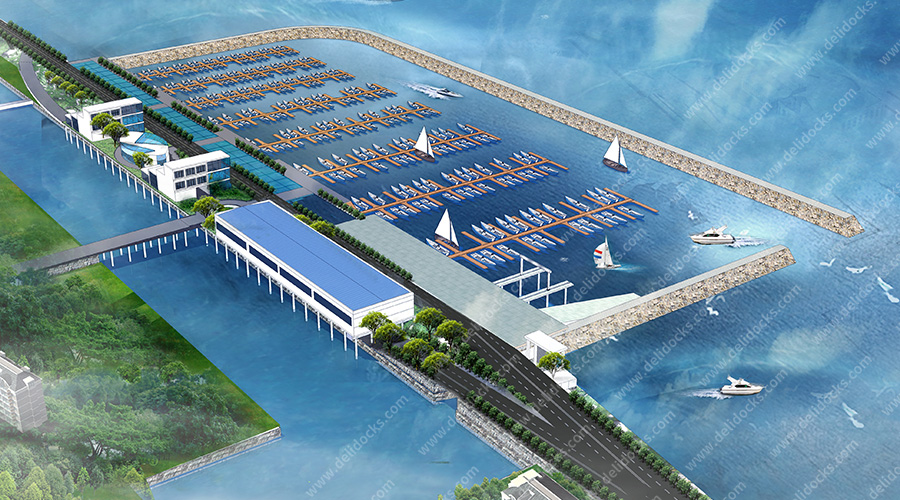
1. Structural Foundations: Materials and Buoyancy Engineering
The choice of structural materials determines the longevity and safety of any marine installation. Marine environments subject structures to chemical corrosion, biological fouling, UV degradation, and physical impacts from vessels. Engineering a floating platform for fuel distribution requires materials that offer high structural stiffness and chemical resistance.
Heavy-Duty Concrete Pontoons
Reinforced concrete pontoons are highly favored for commercial fueling facilities. Their high mass provides excellent inertia, reducing movement caused by wave action and vessel impact. This stability is crucial when operators handle heavy fuel hoses and passengers step on and off vessels. The concrete mix must be formulated with sulfate-resistant cement and low water-to-cement ratios to prevent saltwater penetration, which can corrode the internal steel reinforcement. Polyethylene or polyurethane foam cores are typically cast inside the concrete to guarantee permanent buoyancy even if the outer shell suffers impact damage.
Marine-Grade Aluminum and Steel Frameworks
In some marine environments, flexible steel or marine-grade aluminum (such as 6061-T6 or 5086 alloy) frames supported by heavy-duty floats are utilized. These systems offer high strength-to-weight ratios and can be customized for specific configurations. However, they require careful design to avoid galvanic corrosion, especially where dissimilar metals meet or where electrical fuel dispensing systems are installed. Sacrificial anodes must be integrated into these structures to mitigate corrosive degradation.
High-Density Polyethylene (HDPE) Floatation
High-Density Polyethylene (HDPE) pontoon units offer exceptional resistance to chemical spills, UV exposure, and marine growth. They are often used in modular setups. The buoyancy calculations must account for the dead load of the fuel dispensers, piping, containment sumps, and the live load of maximum occupancy during peak refueling hours. A conservative safety factor is applied to ensure the deck remains at a consistent freeboard height under all loading scenarios.
2. Environmental Safety and Spill Containment Protocols
Preventing hydrocarbons from entering the marine ecosystem is a primary regulatory and ethical concern. A modern floating fuel dock must feature multi-layered containment systems to manage potential leaks before they reach the surrounding water.
Secondary Containment Piping: Fuel lines running from land-based storage tanks to the floating platform must be double-walled. The interstitial space between the primary carrier pipe and the secondary containment pipe is continuously monitored for pressure drops or fuel presence, allowing for automatic shutdown before a leak reaches the water.
Transition Sump Boxes: At the hinge points where the gangway connects the land to the floating structure, flexible piping is required to accommodate tidal changes. These flex-pipes are housed inside heavy-duty, watertight transition sumps. Any fuel weepage or condensation is collected here rather than draining into the sea.
Automatic Shut-off and Shear Valves: Fuel dispensers must be equipped with under-dispenser containment sumps and emergency shear valves. In the event of a vessel collision that dislodges a dispenser, the shear valve instantly closes the fuel supply line at the deck level, preventing fuel from pumping continuously. Additionally, dry-break couplings and automatic nozzle shut-offs prevent drip loss during vessel connection and disconnection.
3. Designing for Wave Dynamics and Mooring Stress
Floating structures are subject to continuous dynamic forces from waves, wind, currents, and vessel docking impacts. The mooring system must be engineered to withstand these loads while keeping the platform securely aligned, especially when hazardous liquids are being transferred. To mitigate these forces, a floating fuel dock can be integrated with or positioned behind a floating wave attenuator. By dampening incoming wave energy, the attenuator protects the fueling vessels and the dock structure, reducing dynamic stress on the fuel connections.
Pile Guiding Systems
Steel or concrete guide piles are the traditional method for securing heavy floating platforms. Guide collars attached to the pontoon frame slide vertically along the piles, allowing the dock to rise and fall with the tide while preventing lateral displacement. These collars are often lined with low-friction, wear-resistant materials like UHMW-PE (Ultra-High-Molecular-Weight Polyethylene) to reduce noise and mechanical wear.
Elastic and Chain Mooring
In deep waters where piling is impractical, heavy-duty chain mooring combined with elastic marine mooring systems is deployed. The system must be modeled using hydrodynamic software to analyze the response under peak wave periods and wind velocities. At DeFever, hydrodynamic modeling is emphasized during the design phase to ensure that floating structures minimize wave-induced motion, thereby protecting sensitive fueling lines from fatigue and excessive wear.
4. Fluid Dynamics and Flexible Piping Integration
Transporting fuel from shore to a moving floating platform is a significant engineering challenge. The transition system must handle vertical tidal ranges that can exceed several meters without placing strain on the conduit connections.
Flexible Hoses and Swivel Joints
To bridge the gap between the fixed land infrastructure and the moving dock, engineers specify high-pressure, fuel-compatible flexible hoses. These hoses are routed along the access gangway inside a protective utility trench. Multi-axis swivel joints are integrated at pivot points to prevent torsional stress on the piping as the gangway rotates and tilts with the tide.
Leak Detection and Telemetry
Modern fueling systems incorporate continuous electronic leak detection. Sensors placed in containment sumps, dispenser basins, and the interstitial space of double-walled pipes transmit real-time data to an onshore control station. If any fluid is detected or if pressure drops below standard operating levels, the system automatically shuts down the submersible turbine pumps in the shore tanks to prevent fuel discharge.
5. Operational Utilities and Safety Infrastructure
A marine refueling facility requires various utilities, each posing specific engineering challenges when combined with fuel distribution. Designing these utilities requires strict adherence to safety codes to prevent accidents in highly volatile environments.
Electrical Isolation and Explosion-Proof Standards
All electrical components on the platform, including lighting, fuel pump motors, card readers, and emergency stop buttons, must meet stringent hazard classification standards (such as Class I, Division 1 or Division 2). Cable conduits must be sealed with explosion-proof fittings to prevent fuel vapors from entering the electrical system. Static grounding systems are mandatory; vessels must be grounded to the dock before fueling begins to prevent electrostatic discharge.
Fire Suppression and Emergency Response
The platform must be equipped with dedicated dry-chemical fire extinguishers, emergency fire hose connections, and easily accessible spill kits containing absorbent booms and pads. Emergency Shut-off (ESD) stations must be located at multiple points on the dock and at the landward end of the gangway, allowing operators or users to cut all power and fuel flow instantly in the event of an incident.
Site-Specific Adaptations for Commercial and Recreational Marinas
Different marine environments and vessel types require tailored configurations to ensure operational efficiency and safety.
Commercial Harbors
In busy commercial ports, a floating fuel dock must accommodate high-capacity fuel dispensers with high flow rates. The concrete pontoons require additional reinforcing to handle frequent berthing by heavy commercial vessels, tugboats, or fishing trawlers. Fender systems must be heavy-duty to absorb repeated high-energy impacts.
Recreational Marinas
For facilities serving private yachts and sportfishing boats, aesthetic appeal must be balanced with functionality. Composite or exotic hardwood decking can be installed over the concrete or aluminum structure. The layout must allow safe clearance for multiple smaller vessels to maneuver simultaneously. At DeFever, customized designs help operators balance heavy-duty durability with the aesthetic expectations of premium yacht clubs, ensuring that safety-sensitive infrastructure blends seamlessly with high-end marina aesthetics.
Maintenance and Long-Term Structural Integrity
To ensure a service life of several decades, a comprehensive maintenance program is required. Sacrificial zinc or aluminum anodes must be attached to steel frames, pile guides, and other underwater metallic components to prevent galvanic corrosion. Dive teams or underwater remotely operated vehicles (ROVs) should conduct periodic inspections of the underwater pontoons, mooring chains, and pile connections to detect concrete spalling, structural cracks, or marine growth accumulation. Routine hydrostatic or pneumatic pressure testing of the fuel lines helps verify the integrity of the secondary containment and primary fuel carrier lines.
Inquiries and Consultation
Designing and installing a reliable marine refueling station requires specialized engineering expertise, regulatory compliance, and high-quality materials. If you are planning a new marina development, expanding an existing port, or upgrading your marine infrastructure, selecting the right engineering partner is a key step.
To learn more about custom-engineered floating fuel dock solutions tailored to your site's specific wind, wave, and operational conditions, contact our specialist team today. We provide comprehensive design, fabrication, and installation guidance to help you build a safe, durable, and compliant marine facility. Please submit your project specifications through our inquiry portal to initiate a detailed consultation.
Frequently Asked Questions
Q1: How does a floating fuel dock accommodate large tidal ranges?
A1: Floating fueling systems accommodate tidal changes by sliding vertically along fixed guide piles or using flexible elastic mooring lines. The fuel piping from land to the floating platform is routed via a hinged gangway, using flexible, double-walled high-pressure hoses and multi-axis swivel joints that flex without stress as the water level changes.
Q2: What materials are best suited for the main floating structure of a marine fueling station?
A2: Marine-grade concrete pontoons with internal polystyrene foam cores are generally considered the standard for heavy-duty applications due to their high stability, inertia, and durability. For lighter or modular applications, marine-grade aluminum frames supported by heavy-duty High-Density Polyethylene (HDPE) floats are also used, provided they are designed to prevent galvanic corrosion.
Q3: How are fuel spills prevented on floating marine refueling systems?
A3: Spill prevention is achieved through double-walled piping with continuous pressure monitoring, containment sumps under dispensers, transition sumps at pivot joints, automatic shear valves that shut off fuel if a dispenser is impacted, and emergency dry-break couplings that minimize drip loss.
Q4: What electrical safety measures are required for a marine fuel dock?
A4: Due to the presence of flammable fuel vapors, all electrical equipment must comply with explosion-proof standards (such as Class I, Division 1 or 2). This includes sealed conduits, vapor-proof light fixtures, and dedicated grounding systems to safely discharge electrostatic build-up from vessels before fueling begins.
Q5: How often do underwater structural components of a fuel dock require inspection?
A5: It is recommended to perform visual inspections of above-water components monthly, while underwater structural components, mooring lines, pile guides, and sacrificial anodes should undergo detailed professional inspections annually or biannually to identify corrosion, wear, or concrete spalling early.