2026-10-15
When planning a marina, dock, or waterfront infrastructure, the choice of floating structure is a fundamental decision. Among the available options, the concrete floating pontoon has established itself as a preferred solution for many permanent, high-traffic installations. Unlike temporary or lighter alternatives, these pontoons offer unparalleled durability and stability for both commercial and recreational marine projects. Their robust nature makes them ideal for demanding environments, from public walkways to large yacht berthing facilities. Leading builders, such as DeFever, often specify concrete floating systems for their long-term marina developments due to their proven performance and low lifecycle cost. This article explores the key aspects that make concrete pontoons a cornerstone of modern marine engineering.
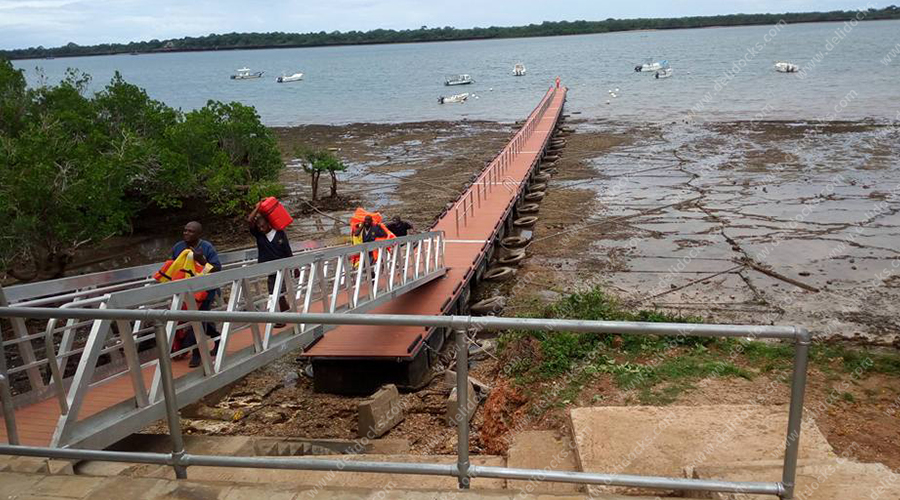
Why Choose a Concrete Floating Pontoon?
The selection of construction materials directly impacts a marina's longevity, safety, and maintenance needs. A concrete floating pontoon provides a distinct set of advantages that address the core requirements of a permanent installation.
Key Advantages Over Other Materials
Unmatched Durability and Longevity
Concrete pontoons are engineered to last for decades. They are highly resistant to the harsh marine environment.
- They do not rust like steel or corrode like certain metals.
- They are impervious to rot and marine borers, unlike timber.
- UV radiation has no degrading effect on the structural concrete.
This resilience translates to a service life often exceeding 50 years with minimal upkeep, a key reason for their specification by experienced engineering firms.
Superior Stability and Load Capacity
The mass and density of concrete provide exceptional stability in water. This is critical for marina safety and comfort.
- They offer a stable, non-flexing walking surface.
- They minimize wave-induced motion, reducing stress on docked vessels.
- They can support heavy loads, including vehicles, kiosks, or large groups of people.
This inherent stability is essential for high-end marinas serving large yachts and for commercial applications like ferry terminals.
Cost-Effectiveness Over the Life Cycle
While the initial investment for a concrete floating pontoon can be higher than some alternatives, the total cost of ownership is frequently lower.
- Drastically reduced annual maintenance costs.
- No need for regular painting, sealing, or replacement of degraded components.
- Lower insurance premiums can be achieved due to their proven reliability and safety.
For permanent infrastructure, this long-term value is a decisive factor.
Design and Engineering Considerations
A well-designed concrete floating pontoon is a feat of marine engineering. Its performance hinges on precise design principles and quality construction.
Core Structural Design
The typical design involves a reinforced concrete shell creating a watertight chamber. This chamber provides the buoyancy to float the structure and its intended loads.
- High-strength, low-permeability concrete is used.
- Steel reinforcement is carefully placed and specified for a marine environment.
- The internal hull is often subdivided into multiple watertight compartments for added safety.
This compartmentalization ensures that a single puncture will not compromise the entire pontoon’s buoyancy.
Flotation and Buoyancy Core
The void within the concrete shell is filled with a permanent, closed-cell flotation material, such as expanded polystyrene (EPS) foam. This core serves a vital role:
- It provides inherent, non-sinkable buoyancy.
- It adds insulation and structural support to the concrete hull.
- It acts as a backup flotation system, even if the concrete hull is breached.
This dual-layer system of concrete and foam is what grants these pontoons their legendary unsinkability.
Fittings and Integration
Hardware integration is planned from the initial design stage. Cast-in fittings and conduits ensure a clean, durable installation.
- Heavy-duty stainless steel bollards and cleats are cast directly into the concrete.
- Conduits for electrical and water services are embedded during pouring.
- Specialized fendering systems can be integrated or attached to the sides.
This results in a robust, integrated unit where components are securely anchored, avoiding the loosening common in bolt-on systems.
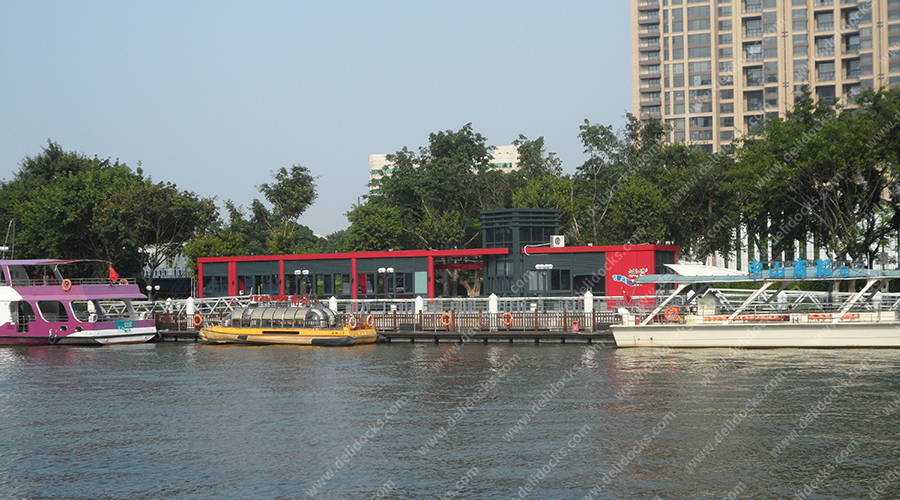
Primary Applications in Marine Infrastructure
The versatility of the concrete floating pontoon allows it to serve a wide array of functions within the marine sector. Companies like DeFever leverage this adaptability in their comprehensive marina projects.
Commercial and Public Marinas
This is the most common application. Their durability makes them perfect for public access and high-use areas.
- Main walkways and access docks.
- Large-vessel finger piers and berthing structures.
- Fuel docks and marina service centers.
Specialized Industrial Uses
Beyond recreational boating, these pontoons support industry.
- Floating breakwaters and wave attenuation systems.
- Work platforms for aquaculture and fisheries.
- Support structures for floating bridges or temporary construction access.
Recreational and Community Projects
Their safety and stability make them ideal for public spaces.
- Community swimming platforms and diving boards.
- Floating fishing piers accessible to all.
- Boat launch slipways and boarding ramps.
Installation and Long-Term Maintenance
One of the most compelling benefits of a concrete floating system is the straightforward installation and minimal upkeep required throughout its life.
Installation Process
Installation is typically efficient, as large sections are constructed off-site.
- Pontoons are fabricated in a controlled yard environment.
- They are transported to the site by barge or heavy lift.
- They are then connected using heavy-duty pins, hinges, or connectors to form the complete dock layout.
This modular approach minimizes on-site construction time and disruption.
Maintenance Requirements
Maintenance is refreshingly simple, focusing mainly on inspection and component care.
- Annual visual inspection of the concrete surface and fittings.
- Routine checking and servicing of mechanical connections between units.
- Cleaning of the deck surface for safety and appearance.
The concrete structure itself requires no painting, sanding, or sealing, freeing up resources for other tasks.
For engineers, marina developers, and waterfront planners seeking a permanent, reliable, and cost-effective floating solution, the concrete floating pontoon stands out as a superior choice. Its combination of durability, stability, and low lifecycle cost provides unmatched value for significant infrastructure projects. As the industry continues to prioritize longevity and resilience, the role of concrete floating systems, as utilized by reputable builders like DeFever, will remain central to the development of safe and enduring marine facilities worldwide. Their proven track record in demanding applications makes them a foundational element for the future of marina engineering.
Frequently Asked Questions (FAQ)
Q1: Are concrete floating pontoons more expensive than plastic or wooden docks?
A1: The initial purchase and installation cost for a concrete floating pontoon is often higher. However, considering a lifecycle of 40-60 years with almost no structural maintenance, they frequently become the most cost-effective option within 10-15 years, outperforming materials that require regular replacement or significant upkeep.
Q2: Can a concrete pontoon crack or sink?
A2: Professionally engineered concrete pontoons are designed to be unsinkable. They feature a reinforced concrete hull subdivided into watertight compartments, filled with a permanent buoyant foam core. Even if the concrete shell is seriously compromised, the closed-cell foam core will keep the unit afloat and stable.
Q3: How are utilities like electricity and water run on these docks?
A3: Utilities are easily integrated. Conduits for electrical cables and water pipes are cast into the concrete structure during fabrication. This provides protected, durable raceways that run the length of the pontoon, allowing for safe and clean installation of pedestals and hookups on the dock surface.
Q4: Are they environmentally friendly?
A4: Concrete pontoons have a strong environmental profile. They are inert and do not leach chemicals into the water. Their extremely long lifespan reduces the resource consumption and waste associated with more frequent dock replacement. The materials are also often locally sourced.
Q5: Can concrete pontoons be used in cold climates with freezing water?
A5: Yes, they are excellent for cold climates. The concrete and foam core are not affected by freeze-thaw cycles in the water. High-quality pontoons use air-entrained concrete and proper reinforcement designed specifically to withstand harsh winter conditions, making them a robust choice for northern marinas.