2026-10-15
For marina developers, port authorities, and yacht clubs, the process of building dock sections requires more than assembling prefabricated pontoons. Each section must withstand wave action, tidal fluctuations, vessel berthing loads, and environmental corrosion. Whether constructing a small recreational marina or a superyacht harbor, the engineering decisions made during building dock sections directly affect structural integrity, maintenance intervals, and user safety. This article provides a data-driven examination of materials, connection methods, buoyancy calculations, and construction sequences. DeFever has executed over 120 marina projects globally, and this guide draws on that field experience to help you avoid common failures.
1. The Core Principles of Building Dock Sections for Marine Environments
When building dock sections, engineers must balance four competing demands: structural strength, buoyancy (for floating docks), durability in salt/fresh water, and cost. The typical design process follows these steps:
Site assessment – Water depth, tide range, wave height (significant wave height Hs), current velocity, and ice formation potential.
Load classification – Dead load (self-weight of dock section), live load (pedestrian/vehicle traffic), berthing load (vessel impact), and environmental loads (wind, waves, currents).
Material selection – Concrete, steel, aluminum, or composite plastics – each with specific corrosion and fatigue characteristics.
Modular design – Standard section lengths (typically 10 m, 15 m, 20 m) that can be bolted or hinged together.
A well-designed building dock sections project results in a platform that remains stable under a 50-year return period storm and requires less than 2% annual maintenance cost of the initial investment. DeFever uses finite element analysis (FEA) to validate each section’s response to point loads up to 10 kN/m².
2. Material Technologies for Dock Sections: Concrete, Steel, Aluminum, and Composites
Choosing the correct material is the most consequential decision when building dock sections. Below is a comparative analysis based on 20-year life-cycle data.
2.1 Reinforced Concrete Floating Sections
Concrete remains the dominant material for heavy-duty marinas (commercial fishing ports, ferry terminals). Advantages:
Exceptional durability in saltwater (50+ years with proper cover and low water-to-cement ratio).
High mass reduces wave-induced motion (heave < 0.2 m in 1 m waves).
Fire resistance (non-combustible).
Disadvantages: High dead weight requires larger buoyancy units; prone to cracking if reinforcement corrodes. Modern building dock sections use stainless steel rebar or cathodic protection to extend life.
2.2 Galvanized Steel or Weathering Steel
Steel sections offer high strength-to-weight ratio and are cost-effective for temporary or medium-life marinas. However:
Hot-dip galvanizing provides 15–25 years protection in seawater; after that, corrosion rates reach 0.1–0.3 mm/year.
Requires annual coating inspection and touch-up.
For building dock sections in brackish water, weathering steel (Corten) is not recommended due to chloride-induced pitting.
2.3 Marine-Grade Aluminum (5083-H116 or 6061-T6)
Aluminum is the preferred material for superyacht marinas and high-end recreational docks. Benefits:
Naturally forms a protective oxide layer; no painting required in seawater (but avoid direct contact with copper-based antifouling).
Lightweight (one-third the weight of steel) simplifies transport and installation.
Fabrication with TIG or MIG welding produces strong, corrosion-resistant joints.
Limitations: Higher initial material cost (2–3× steel); lower stiffness requires thicker sections or more frequent supports. DeFever specializes in aluminum dock systems with welded box-beam profiles.
2.4 Polyethylene and Composite Plastic
Rotationally molded polyethylene sections are popular for small pleasure craft marinas. They are low-maintenance and float without additional buoyancy. However, they suffer from:
UV degradation (surface chalking after 10 years).
Low stiffness – may deflect >50 mm under a 200 kg point load.
Difficult to repair or modify.
For permanent installations, composite (fiberglass over foam core) offers better rigidity but at higher cost.
3. Industry Pain Points During Building Dock Sections and Engineered Solutions
Even experienced contractors encounter recurring failures when building dock sections. Below are four documented problems and field-proven countermeasures.
3.1 Buoyancy Instability and Submersion
Insufficient freeboard (the height of the dock above water) causes wave overtopping and reduced load capacity. This occurs when buoyancy calculations neglect the weight of utilities (water pipes, electrical conduits) or marine growth (biofouling adds 10–15% weight after 2 years). Solutions:
Design with a safety factor of 1.5 on buoyancy (i.e., total buoyant volume should support 1.5× the dead load).
Use closed-cell polyurethane foam inside concrete or steel floats – foam never waterlogs even if the shell is breached.
Incorporate adjustable ballast tanks to fine-tune trim during building dock sections assembly.
DeFever provides hydrostatic calculations for each section, specifying freeboard of at least 400 mm for exposed marinas.
3.2 Corrosion at Connection Points
Bolted or welded joints between sections are galvanic corrosion hotspots, especially when dissimilar metals are used (e.g., aluminum dock with stainless steel bolts). Mitigation:
Use isolating pads (neoprene or Teflon) between dissimilar metals.
Apply marine-grade polyurethane sealant to all fasteners.
Install sacrificial zinc anodes at 2–3 kg per 100 m² of wetted surface area.
A 2023 inspection of a 10-year-old aluminum dock with proper isolation showed zero crevice corrosion, compared to 4 mm pitting on unprotected connections.
3.3 Fatigue Cracking from Wave-Induced Cyclic Loading
In exposed locations, constant wave action causes stress cycles that can crack welded joints, especially in aluminum. Finite element analysis of a typical 15 m section under 0.5 m waves predicts 10⁶ cycles over 20 years. Solutions:
Design weld details with smooth transitions (no sharp notches).
Use thicker wall extrusions at high-stress zones (corners and connection brackets).
Implement a non-destructive testing (NDT) program – dye penetrant or ultrasonic inspection every 5 years.
When building dock sections for wave-exposed sites, DeFever recommends a fatigue life of 50 years based on BS 7608 standards.
3.4 Poor Alignment and Uneven Settling of Fixed Pile-Supported Docks
For fixed docks (non-floating), differential settlement of piles leads to twisted sections, causing tripping hazards and misaligned mooring cleats. Prevention:
Drive piles to refusal (or to a calculated bearing capacity of 200–300 kN per pile).
Use adjustable pile caps with ±100 mm height adjustment.
Perform a post-installation survey and leveling of all building dock sections before decking installation.
Geotechnical investigation (SPT or CPT) is mandatory for pile design.
4. Technical Specifications: Key Parameters When Building Dock Sections
For marina developers, the following metrics define a properly engineered building dock sections project:
Design live load – 5 kPa (pedestrian) to 15 kPa (vehicle access for forklifts or fire trucks).
Berthing energy absorption – Dock fenders must absorb 50–200 kNm for yachts up to 50 m.
Freeboard – 300–500 mm for floating docks; 400–600 mm for fixed docks above high water.
Slip resistance – Deck surface must achieve a pendulum test value (PTV) ≥ 50 when wet.
Section connection tolerance – Vertical mismatch ≤ 5 mm, horizontal gap ≤ 10 mm.
Electrical continuity – Bonding system resistance < 0.1 ohm for cathodic protection.
DeFever provides a compliance checklist against ISO 21628 (Marina infrastructure) and PIANC guidelines.
5. Construction Sequence: From Shop Fabrication to Site Assembly
The process of building dock sections in a controlled environment (off-site fabrication) improves quality and reduces weather delays. Typical sequence:
Step 1: Jig setup – A steel or concrete jig ensures each section is straight and square (diagonal tolerance ≤ 3 mm).
Step 2: Frame welding/assembly – For aluminum or steel, robotic MIG welding achieves full penetration; for concrete, steel reinforcement cages are tied.
Step 3: Buoyancy integration – Foam blocks or air-tight chambers are installed and tested for leaks (soap bubble or vacuum test).
Step 4: Decking installation – Wood (IPE tropical hardwood), composite decking, or aluminum grating is fastened.
Step 5: Accessory mounting – Cleats, bollards, fender rails, and utility conduits (water, power, data).
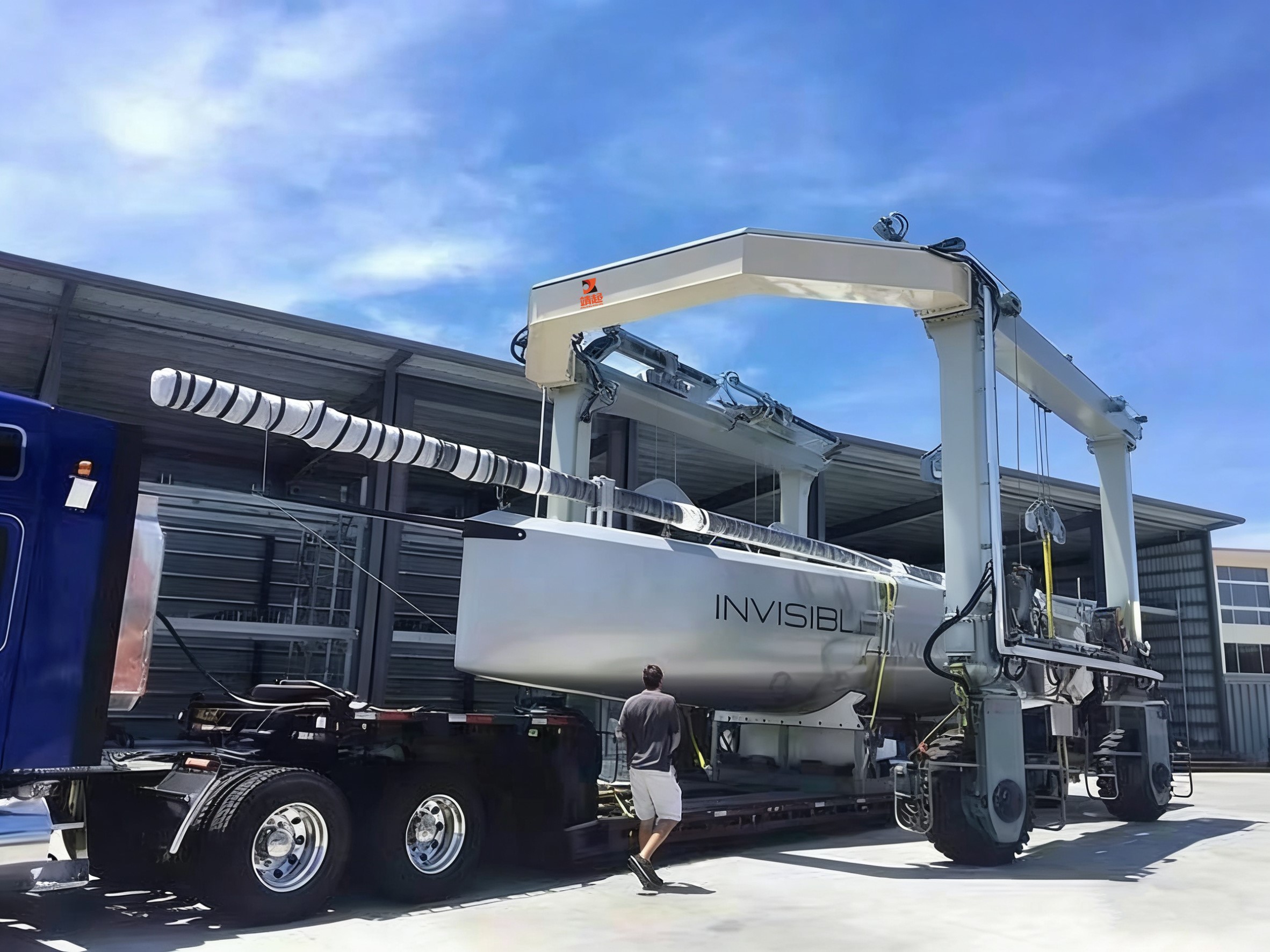
Step 6: Transport and launch – Sections are moved by flatbed trailer to the water and craned or floated into position.
Step 7: Final connection – Bolted hinge connectors or shear-block connections are torqued to specification (typically 200–400 Nm).
Quality control checks at each stage – including weld radiography for critical joints – are standard for DeFever projects.
6. Case Study: Building Dock Sections for a 150-Berth Superyacht Marina
A client in the Mediterranean required a floating dock system capable of handling vessels up to 70 m LOA with a draft of 5 m. The site experienced a tidal range of 0.8 m and significant wave height Hs = 0.6 m (summer) and 1.8 m (winter storms). DeFever executed the project using the following approach:
Material: Marine-grade aluminum 5083-H116, 8 mm web thickness, 200 mm box beam height.
Section size: 15 m × 4 m, each weighing 6.5 tons (empty).
Buoyancy: 40% closed-cell foam, 60% air chambers (leak detection sensors installed).
Connections: 30 mm stainless steel hinge pins with composite bushings.
Mooring: 12-ton concrete sinkers with 20 mm chain.
After 3 years of operation, the dock sections showed no measurable corrosion, freeboard remained within 10 mm of design, and zero fatigue cracks were detected. The client reported a 40% reduction in maintenance compared to their previous steel dock. Full project details are available on DeFever’s case study page.
7. Maintenance and Life Extension for Existing Dock Sections
Even well-constructed building dock sections require periodic care. Recommended schedule:
Quarterly – Visual inspection for loose bolts, damaged fenders, and ponding water.
Annually – Measure anode consumption (replace if >50% depleted). Check electrical bonding continuity.
Every 5 years – Dry-dock a representative section for ultrasonic thickness measurement (steel/aluminum) or concrete core sampling for chloride penetration.
Every 10 years – Recoat steel sections with epoxy/polyurethane system; for concrete, apply a silane sealer.
Predictive maintenance using strain gauges and accelerometers (structural health monitoring) is increasingly adopted for high-value marinas. DeFever offers remote monitoring packages.
8. Environmental Considerations and Sustainable Dock Section Design
Modern regulations (e.g., Clean Marina programs) require that building dock sections minimize ecological impact. Strategies include:
Avoiding pressure-treated wood containing copper or creosote (use recycled plastic lumber or certified tropical hardwood).
Designing gaps between deck boards (5–8 mm) to allow light penetration for submerged aquatic vegetation.
Using bubble curtains or silt curtains during pile driving to protect marine mammals.
Incorporating oyster reef substrates on concrete float faces to enhance biodiversity.
DeFever integrates these features into custom designs, assisting clients with environmental permits.
Frequently Asked Questions (FAQ) About Building Dock Sections
Q1: What is the typical lifespan of dock sections built from aluminum vs. concrete?
A1: With proper design and corrosion
protection, aluminum building dock sections last 40–50 years in seawater. Concrete sections, especially with stainless steel
reinforcement, can exceed 60 years. Steel sections typically need major
refurbishment at 25–30 years. DeFever provides life-cycle cost
projections for each material.
Q2: Can floating dock sections be installed in areas with strong currents (>2 knots)?
A2: Yes, but additional mooring restraint
is required. Use pile guides (spuds) to restrict horizontal movement, or install
a tensioned mooring system with chains and clump weights. When building
dock sections for high-current sites, increase the freeboard and
add wave attenuators upstream. DeFever has
executed projects in currents up to 3.5 knots.
Q3: What certifications should I request from a dock section manufacturer?
A3: Require ISO 9001:2025 quality
management, ISO 14001 environmental, and third-party engineering stamps (e.g.,
ABS or DNV for floating structures). Also request material test reports (MTRs)
for metals and buoyancy foam certifications (e.g., ASTM D2842). DeFever maintains all
relevant certifications.
Q4: How are utility lines (water, electricity, data) integrated into dock sections?
A4: During building
dock sections, PVC or HDPE conduits are embedded in concrete or
welded into aluminum frames. Flexible jumper hoses bridge between sections to
accommodate movement. Electrical systems must use IP67-rated junction boxes and
a bonding grid for lightning protection. DeFever designs utility layouts to
ABYC and NEC standards.
Q5: How to request a custom design for building dock sections from DeFever?
A5: Provide your site survey data
(bathymetry, tide range, wave climate, wind rose), vessel mix (max length, beam,
draft), and berth count. DeFever will prepare a
preliminary general arrangement, structural calculations, and budget estimate
within 10 business days. Use the inquiry form below to start the engineering
consultation.
Ready to start your marina project? DeFever provides turnkey solutions for building dock sections – from feasibility study to commissioning. Request a free site assessment, load analysis, and budget proposal. Fill out the form below to speak with a marine engineer.
Send Dock Construction Inquiry →
© 2026 DeFever – Precision marine engineering. Performance data based on field instrumentation and long-term monitoring of completed marinas.