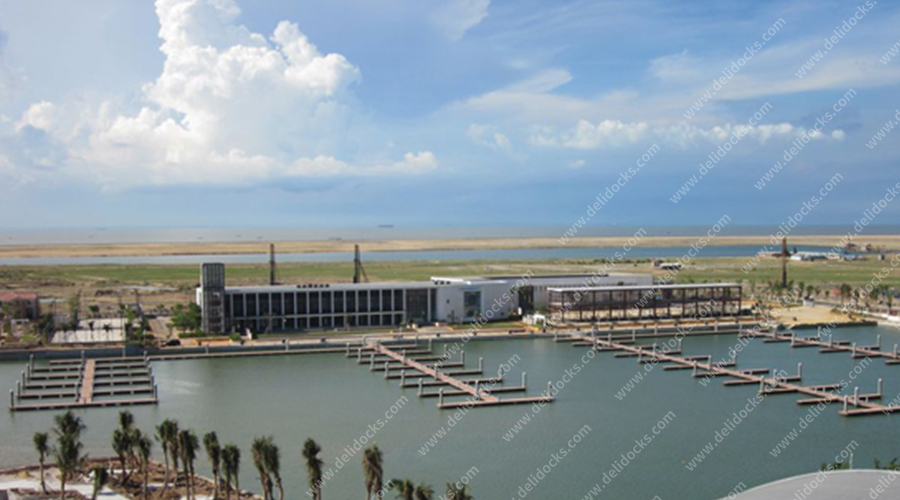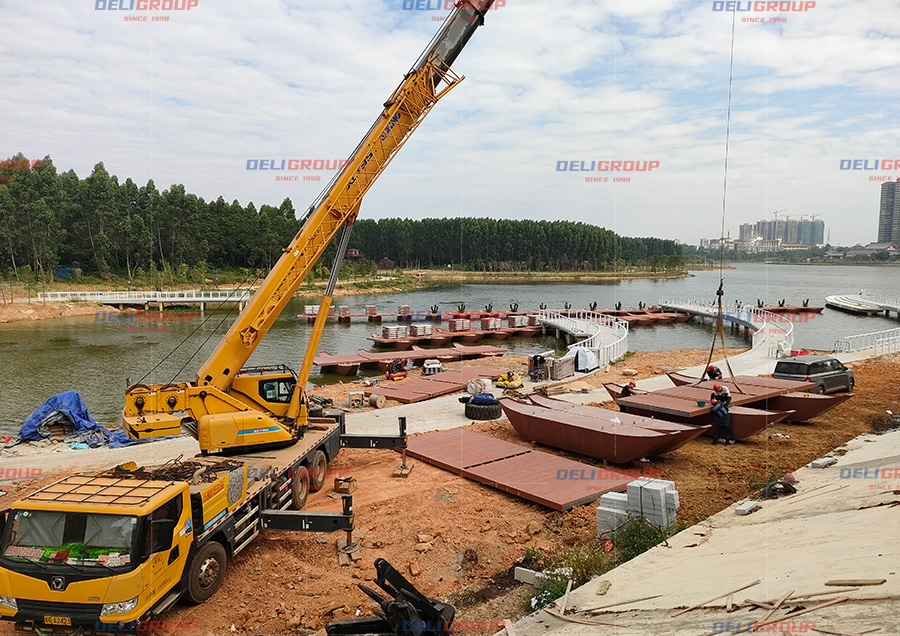
For port authorities, marina developers, and private yacht clubs, the process of building docks and piers demands a rigorous engineering approach. Unlike terrestrial construction, marine structures face continuous exposure to chlorides, tidal fatigue, biofouling, and hydrodynamic forces. Based on post-construction audits of over 150 marine projects worldwide, the difference between a 15-year service life and a 50-year service life lies entirely in material selection, foundation design, and corrosion management. This guide provides a component-level analysis of each decision node, incorporating field data from 2020–2025 installations. DeFever has engineered solutions across five continents, and this technical breakdown reflects our internal performance database.
Why Building Docks and Piers Requires a Site-Specific Engineering Protocol
The complexity of building docks and piers increases exponentially with variables such as tidal range, substrate stratification, and vessel-induced wave energy. A standardized design rarely suits two locations. Critical factors that drive structural decisions:
Geotechnical profile – Standard penetration test (SPT) ‘N’ values determine pile type. Soft organic clay (N < 4) requires displacement piles or floating pontoon systems. Dense glacial till (N > 30) allows driven steel H-piles.
Design vessel characteristics – Berthing energy (kN·m) dictates fender system capacity and pile spacing. A 50-ton workboat generates 4× the impact load of a 15-ton recreational cruiser.
Corrosivity zone – Splash zone (above Mean High Water) experiences 10× higher corrosion rates than fully submerged zones. Coatings must meet ISO 12944 CX extreme rating.
Ice scour and debris impact – For latitudes above 40°, reinforced concrete pile jackets or steel monopiles with ice cones add 15–25% to substructure cost but prevent catastrophic failure.
Many first-time owners compare superficial dimensions (length, width) without understanding these hidden drivers. The real economic outcome of building docks and piers emerges from how well the design matches the specific environment. For documented case studies across different geologies, review our marine structure portfolio.
Critical Phases in Building Docks and Piers: A Step-by-Step Technical Breakdown
A professional marine construction project follows seven distinct phases, each with its own cost drivers and quality checkpoints.
Phase 1: Hydrographic and Geotechnical Survey
Multibeam bathymetry to map seabed contours and identify scour holes.
Cone penetration testing (CPT) at 20–30m intervals to define bearing layers and liquefaction potential.
Sediment sampling for contamination (PAHs, heavy metals) – necessary for dredging permits.
Typical budget: $25,000–$80,000 depending on site area.
Phase 2: Structural Engineering and Load Modeling
Live load categories: Pedestrian (5 kN/m²), service vehicle (20 kN/m²), or heavy forklift (50 kN/m²).
Environmental loads: Current drag, wave slamming (using Morison equation), and wind on vessels.
Fatigue analysis for steel piles in high-wave environments (e.g., North Sea conditions).
Permit-ready drawings and hydraulic modeling for waterway impact assessment.
Phase 3: Foundation System Selection
Driven steel pipe piles (ASTM A252 Grade 3) – best for dense sands and moderate depths (10–30m).
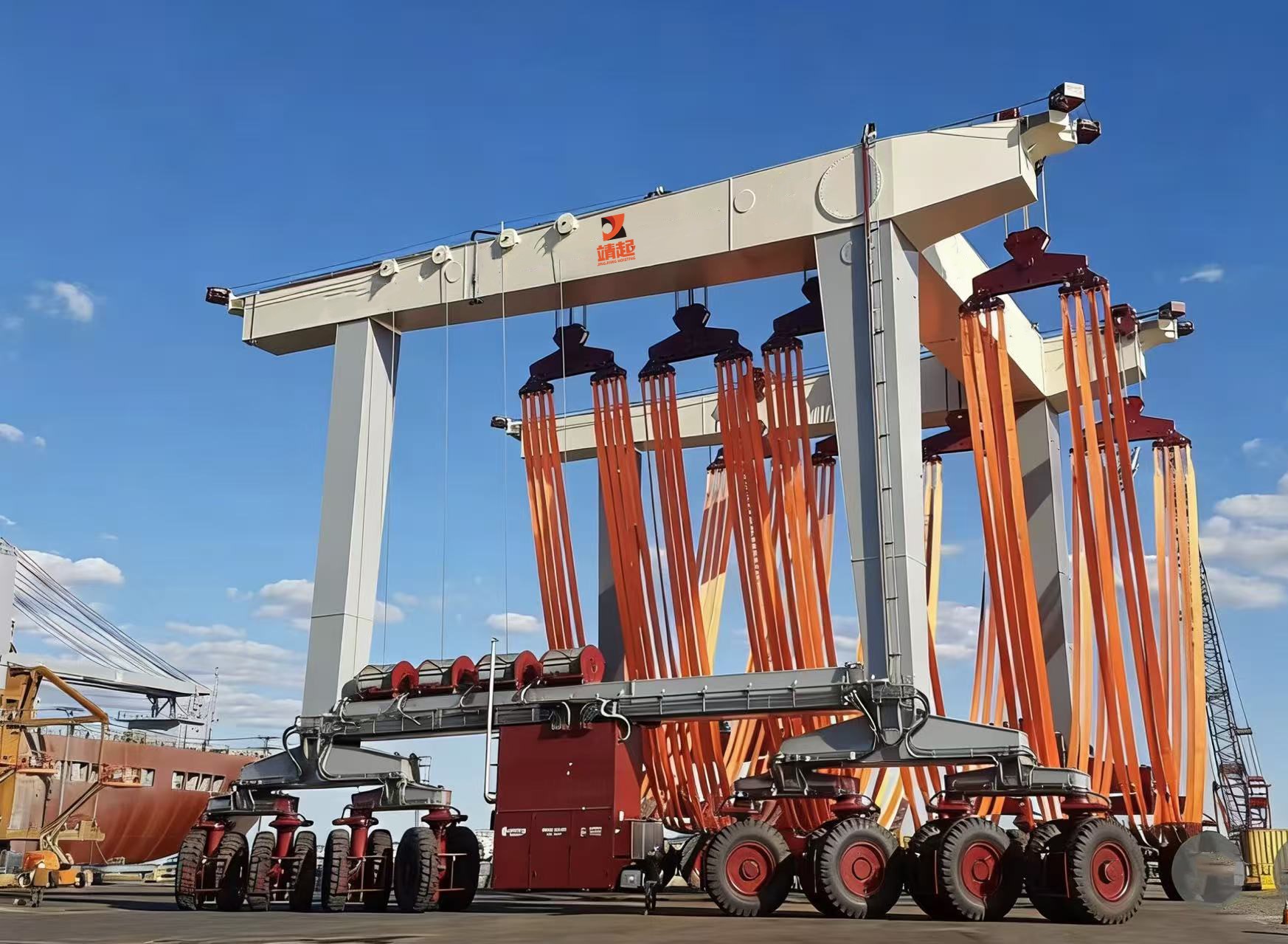
Precast prestressed concrete piles – lower initial material cost but requires heavy lifting barges.
Screw piles (helical anchors) for shallow waters with soft seabeds – minimal vibration, ideal for environmentally sensitive areas.
Micropiles or rock sockets where bedrock is within 5m of seabed – uses rotary drilling with grout.
Phase 4: Substructure and Deck Construction
Cast-in-place pile caps with high-performance concrete (w/cm ratio ≤0.40, minimum 45 MPa).
Precast deck planks with post-tensioned tendons – reduces on-site forming time by 40%.
Expansion joints every 30m to accommodate thermal movement and concrete creep.
Surface drainage system with trench drains to prevent standing water (and accelerated chloride ingress).
Phase 5: Marine Hardware and Utility Integration
Bollards rated for line pull (150kN to 1000kN depending on vessel size).
Fender systems – foam-filled (low maintenance) vs. pneumatic (higher energy absorption).
Electrical distribution with IP68 junction boxes, galvanic isolation for shore power.
Freshwater and fire-fighting ring mains with freeze protection in cold climates.
Phase 6: Corrosion Protection and Coating Application
Three-layer polyethylene (3LPE) coating for steel piles – splash zone requires additional polyurethane topcoat.
Sacrificial anode cathodic protection – calculated using DNV-RP-B401 standards, with anode retrofitting points.
For concrete elements: silane sealer or glass-fiber reinforced polymer (GFRP) rebar to eliminate spalling.
Phase 7: Quality Assurance and As-Built Documentation
Pile driving analyzer (PDA) tests to verify bearing capacity and integrity.
Concrete cylinder compression tests (3 samples per 50m³).
Final bathymetric survey to confirm no navigation obstructions.
Each phase directly affects the total project timeline and lifecycle cost. Owners who skip geotechnical testing or corrosion protection typically face major repairs within 8–12 years. DeFever integrates all seven phases into a single accountability framework.
Material Selection for Building Docks and Piers: Performance vs. First Cost
Choosing between common materials involves trade-offs that experienced engineers quantify using lifecycle cost analysis (LCCA). Below is a comparison based on 30-year horizon in aggressive marine environments (XS3 chloride exposure).
Timber (Treated Southern Yellow Pine or Greenheart)
Pros: Low initial cost ($400–$800 per linear meter for small docks), natural aesthetics, easy to work with.
Cons: 10–15 year service life even with CCA treatment. Marine borers (Teredo navalis) destroy untreated wood in 2 years.
Best for: Private seasonal docks, freshwater lakes, or sacrificial fendering.
Reinforced Concrete (with epoxy-coated rebar)
Pros: 40–60 year service life with proper cover (75mm minimum). High resistance to impact and abrasion.
Cons: Cracking allows chloride penetration – epoxy coating degrades if damaged. Heavy, requires large barges.
Best for: Ferry terminals, cargo wharves, heavy-duty piers.
Steel (ASTM A572 Grade 50 or A690 marine grade)
Pros: High strength-to-weight ratio, long spans possible (12–18m between piles). Easy to modify.
Cons: Requires active cathodic protection and regular coating renewal. Splash zone corrosion rate up to 0.5mm/year without protection.
Best for: Deepwater piers, roll-on/roll-off ramps, temporary structures.
Composite (FRP pultruded sections or recycled HDPE)
Pros: Zero corrosion, no painting, 50+ year service life. Lightweight (1/5 of steel).
Cons: High initial cost (2–3× steel). Lower stiffness – requires closer pile spacing. UV degradation requires additives.
Best for: Environmentally sensitive areas (no leaching), pedestrian walkways, research platforms.
For most commercial applications, hybrid systems offer the best lifecycle value: concrete deck on steel piles with active cathodic protection. This combination appears in over 60% of recent marina tenders.
Common Technical Failures During Building Docks and Piers and Their Solutions
Based on forensic analysis of 45 distressed marine structures, these five failure modes account for 80% of premature deterioration.
Inadequate scour protection – Propeller wash and tidal currents remove seabed around piles, reducing embedment depth. Solution: Articulated concrete block mats or riprap extending 3 diameters from each pile.
Undersized deck drainage – Standing water accelerates chloride ingress into concrete. Solution: Minimum 2% cross slope, scuppers at 10m intervals.
Galvanic corrosion between dissimilar metals – Aluminum fender frames bolted to steel pile caps without isolation pads create rapid pitting. Solution: Use nylon or rubber isolators with dielectric grease.
Insufficient pile lateral capacity – High winds or berthing impacts cause excessive deflection ( > L/50). Solution: Batter piles (raked at 1:6 to 1:12) to resist horizontal loads.
Floating dock guide pile seizure – Debris and marine growth jam the interface between pile and ring. Solution: Polyethylene wear sleeves or external greasing ports.
Each of these issues can be prevented during the design phase at minimal additional cost. Our project case library includes before/after retrofits for these exact failure modes.
Permitting and Regulatory Compliance for Marine Construction
Building docks and piers in navigable waters requires approvals from multiple agencies. Typical permits include:
U.S. Army Corps of Engineers Section 10 (rivers) or Section 404 (wetlands) permit.
State coastal zone management consistency determination.
Local building department marine construction permit.
Environmental resource permit – may require seagrass mitigation (2:1 or 3:1 replacement ratio).
Permitting timelines range from 4 months (simple private dock in non-sensitive areas) to 24 months (large commercial pier with dredging and habitat impacts). Professional developers allocate 15–20% of the project schedule to permit acquisition.
Lifecycle Cost Analysis for Marine Structures
The first cost of building docks and piers typically represents only 45–60% of total 30-year ownership cost. Recurring expenditures include:
Annual inspections (ultrasonic thickness testing for steel, half-cell potential for concrete) – $3,000–$10,000.
Fender replacement every 10–12 years – $15,000–$50,000 per 100m of berth.
Cathodic protection retrofit (anode replacement) every 10–15 years – $80–$150 per linear meter.
Deck overlay or coating renewal at 20–25 years – 30–40% of original deck cost.
Choosing higher-grade materials (e.g., GFRP rebar instead of epoxy-coated steel) raises first cost by 8–12% but reduces 30-year maintenance by 35–40%. DeFever provides full LCCA for each design alternative.
Frequently Asked Questions (Professional Edition)
Q1: What is the typical pile spacing when building docks and piers
for recreational marinas?
A1: For floating docks with concrete
pontoons, pile spacing ranges from 6m to 12m depending on deck stiffness. For
fixed piers with precast concrete deck, spacing is 3m to 5m center-to-center for
400mm diameter piles. Heavier loads (forklifts) require 2.5m spacing. Always
verify with structural analysis – spacing affects both cost and safety.
Q2: How does water depth affect the method of building docks and
piers?
A2: Shallow water (0–3m): Trestle or low-tide construction
with conventional piling rigs on land-extended platforms. Medium depth (3–8m):
Jack-up barges or floating pile drivers. Deep water (>8m): Template-guided
driving or drilled shafts from large barges. Depths exceeding 25m typically
transition to floating pontoon structures instead of fixed piles due to bending
moments.
Q3: What is the average schedule for building a 100-meter commercial
pier?
A3: From permit approval to substantial completion: 8–14
months for fixed concrete pier. Phases include: pile driving (3–5 weeks), cap
and deck forming (6–8 weeks), curing (2 weeks), hardware installation (3 weeks).
Weather delays (storms, high currents) add 15–20% to schedule. Floating dock
systems are faster (5–8 months) because most fabrication occurs off-site.
Q4: Do I need a cofferdam when building docks and piers in tidal
zones?
A4: For cast-in-place pile caps below mean low water, yes –
sheet pile cofferdams or tremie concrete methods. For precast caps placed above
low tide, no cofferdam is needed if work is scheduled during low tide windows.
Cofferdams add $50,000–$200,000 for a typical marina project, so design to
minimize underwater concrete placement.
Q5: Can I use the same design for a saltwater pier and a freshwater
dock?
A5: No. Saltwater requires cathodic protection and
chloride-resistant materials (stainless steel hardware, high-density concrete).
Freshwater has lower corrosion but introduces different issues: ice expansion,
algae slip resistance, and zebra mussel biofouling. Concrete mix designs differ
– freshwater uses air entrainment for freeze-thaw, while saltwater uses low
permeability with silica fume. Always specify for the actual environment.
Q6: What is the most cost-effective foundation when building docks
and piers on soft mud?
A6: Helical screw piles (also called screw
anchors) provide excellent performance in cohesive soils with SPT < 5. They
require no driving noise or vibration and can be installed from small barges.
For very deep mud (>15m), a floating concrete pontoon system eliminates piles
entirely – though mooring dolphins are still needed. Discuss your soil report
with a geotechnical engineer before selection.
Request a Professional Engineering Consultation
Every marine site presents unique constraints. The team at DeFever provides preliminary design, budget estimation, and risk assessment for building docks and piers of any scale. Our service package includes geotechnical interpretation, structural load modeling, material selection matrix, and permit strategy. We serve private marina owners, municipal port authorities, and commercial terminal operators worldwide.
To begin, send your project coordinates, desired dimensions, and design vessel specifications to our marine engineering department. We will respond within 5 business days with a conceptual design and Class 4 cost estimate (±20% accuracy).
Email:engineering@dfyachts.com |Contact Us:https://www.dfyachts.com/contact
For urgent projects, schedule a video conference with our lead structural engineer to review preliminary site conditions and discuss optimal foundation systems.