2026-10-15
For port authorities, ship repair operators, and marine infrastructure developers, building a dry dock represents a multi-million dollar investment that requires precision engineering, environmental compliance, and long-term operational planning. Unlike floating docks or slipways, a graving dry dock provides a fixed, dewatered chamber for hull inspection, welding, and coating applications. This article presents a technical framework for building a dry dock, covering geotechnical investigations, concrete mix design, pumping station capacity, gate sealing systems, and corrosion protection. Drawing on the expertise of DeFever, a marine engineering firm with extensive global project portfolio, we outline the critical success factors for dry dock construction.
1. Site Selection and Geotechnical Considerations for Building a Dry Dock
The first phase of building a dry dock involves selecting a location with stable bearing capacity and minimal tidal range. A typical dry dock floor must support loads from ship blocks (up to 50 tons per block) plus the weight of the vessel (e.g., 10,000 DWT). Required soil properties:
Bearing capacity: Minimum 150 kPa for small craft docks, >300 kPa for large commercial vessels.
Permeability: Hydraulic conductivity (k) below 1×10⁻⁷ m/s to prevent uplift during dewatering.
Settlement prediction: Differential settlement not exceeding 1/500 of the dock length (e.g., ±10 mm over 50 m).
Marine geophysical surveys (seismic refraction and CPTu) are mandatory. For soft clay sites, ground improvement methods include stone columns or deep soil mixing. DeFever integrates these geotechnical analyses into their building a dry dock projects, referencing case studies from Asia and Africa where challenging soil conditions were mitigated.
2. Structural Design of the Dry Dock Basin
2.1 Reinforced Concrete Specifications
The dock floor and sidewalls must resist hydrostatic pressure when empty and wave impact when flooded. For building a dry dock intended for vessels up to 5,000 GT, the following parameters apply:
Concrete grade: C35/45 (minimum) with a water-cement ratio of 0.40 to reduce permeability.
Reinforcement: Epoxy-coated rebar (ASTM A775) in tidal zones to resist chloride ingress.
Thickness: Floor slab 600–800 mm; sidewalls 500–700 mm with buttress spacing of 4–6 m.
Construction joints: Waterstop systems (hydrophilic PVC or bentonite) at all cold joints.
Crack control is vital: maximum allowable crack width of 0.2 mm for water-retaining structures (BS 8007). Post-cooling pipes embedded in the mass concrete reduce thermal cracking during curing.
2.2 Gate (Caisson) Engineering
The dock gate is the most complex component. For a typical graving dock, a floating caisson gate (steel or reinforced concrete) is built. Design considerations:
Buoyancy ratio: Gate weight must exceed buoyant force by 10–15% when ballasted.
Sealing system: Inflatable rubber seals (EPDM) or timber wedges contacting the sill and quoin blocks.
Operating mechanism: Winch cables or hydraulic arms for positioning; flooding valves (400–600 mm diameter) to sink the gate.
When building a dry dock, the caisson is typically fabricated off-site in a dry basin and then towed into place. DeFever has executed such installations in Kenya and China, as shown in their project gallery.
3. Dewatering and Pumping Systems
After closing the caisson, the dock must be emptied within 2–4 hours to maximize ship repair throughput. Pumping capacity calculation:
Total volume: Dock length × width × depth above sill (e.g., 200 m × 30 m × 8 m = 48,000 m³).
Required flow rate: 48,000 m³ / 3 hours = 16,000 m³/h (approx. 4,444 L/s).
Pump configuration: Four vertical turbine pumps (4,000 m³/h each) with diesel backup.
Additional systems include:
Underdrainage: Perforated pipes below the floor slab to relieve uplift pressure during dewatering.
Silt removal: Desilting jets and sump pits to remove sediment accumulation.
Water recycling: Sedimentation basins to return water to the harbor.
Modern building a dry dock projects also incorporate variable frequency drives (VFDs) on pumps to match dewatering rates with ship arrival schedules, reducing energy costs by 25%.
4. Environmental Compliance and Dredging
Before building a dry dock, a environmental impact assessment (EIA) must address sediment plumes, noise, and habitat disturbance. Key mitigation measures:
Silt curtains: Geotextile barriers around dredging areas to contain suspended solids.
Dredged material disposal: Use for land reclamation or approved offshore sites (monitored by GPS tracking).
Noise reduction: Hydraulic breakers with acoustic covers; limited night work.
Furthermore, the dock must include oil/water separators in the drainage system to prevent bilge water discharge. Regulatory compliance includes IMO Resolution MEPC.107(49) for oily water treatment.
5. Industry Pain Points and Solutions in Dry Dock Construction
5.1 Unexpected Groundwater Inflow During Excavation
Problem: During building a dry dock, high-permeability layers cause water inflow >500 m³/h, delaying concrete placement. Solution: Install a deep well dewatering system (wellpoints at 5 m spacing) ahead of excavation. For extreme cases, jet grouting forms a cut-off wall (thickness 0.8–1.2 m) to seal the aquifer.
5.2 Caisson Gate Leakage After Installation
Problem: Leakage rates exceeding 50 L/min per meter of seal, preventing efficient dewatering. Solution: Use a double-seal system with a pressurized air gap to monitor seal integrity. Real-time pressure sensors alert operators to seal wear. Replacement of seals can be done in-situ using diver-assisted tooling.
5.3 Concrete Cracking in Sidewalls
Problem: Thermal or shrinkage cracks appear after first dewatering cycle. Solution: Implement low-heat Portland cement (Type IV) with fly ash (30% replacement). Install water bars across all construction joints. For cracks >0.3 mm, inject epoxy resin under pressure.
6. Operational Safety and Maintenance Considerations
After building a dry dock, ongoing maintenance ensures a 50-year service life. Critical inspections:
Annual dry dock survey: Check for concrete spalling, rebar exposure, and caisson seal condition.
Pump station testing: Monthly run of backup diesel pumps under load for 30 minutes.
Corrosion protection: Impressed current cathodic protection (ICCP) for embedded steel; sacrificial anodes for gate hardware.
Safety systems include man-overboard recovery stations, emergency lighting, and confined space protocols for the underfloor drainage galleries. DeFever provides operational manuals and training as part of their dry dock delivery.
Frequently Asked Questions (FAQ) – Building a Dry Dock
Q1: How long does it typically take to complete building a dry
dock?
A1: For a medium-sized graving dock (200 m length, 30 m width,
10 m depth), construction takes 18–24 months from site mobilization to
commissioning. Phases include: 3 months for cofferdam and excavation, 9 months
for concrete works, 3 months for pump and gate installation, and 3 months for
testing and training.
Q2: What is the cost range for building a dry dock in
2025?
A2: Costs vary by location and soil conditions. A typical
concrete graving dock costs $12,000–$20,000 per linear meter of length. For a
200 m dock, total $2.4–4.0 million USD excluding dredging and caisson gate. The
gate itself adds $1.5–2.5 million. Always request a detailed bill of quantities
from marine engineers like DeFever.
Q3: Can a dry dock be built on a site with high seismic
activity?
A3: Yes, but with seismic design provisions. The dock
structure must be designed for peak ground acceleration (PGA) of 0.3–0.5 g using
ductile reinforcement detailing (ACI 350.3). Expansion joints every 30–40 m
accommodate differential ground movement. Liquefaction mitigation
(vibro-compaction) is required for sandy soils.
Q4: What permits are required before building a dry
dock?
A4: You typically need a coastal zone management permit, water
quality certification (Clean Water Act Section 401 in the US), dredging permit
(Marine Protection Permit), and a building permit from the local port authority.
International projects may require IMO environmental compliance. DeFever assists
clients with permit applications globally.
Q5: How do you prevent corrosion of the caisson gate in
seawater?
A5: The gate (steel) is protected by a three-layer system:
(1) abrasive blast cleaning to Sa 2.5, (2) epoxy zinc-rich primer (80 microns),
(3) polyurethane topcoat (120 microns). Additionally, sacrificial aluminum
anodes (20 kg each) are welded at 2 m intervals. For the concrete dock,
penetrating silane sealers are applied every 5 years.
Engineering Excellence in Dry Dock Development
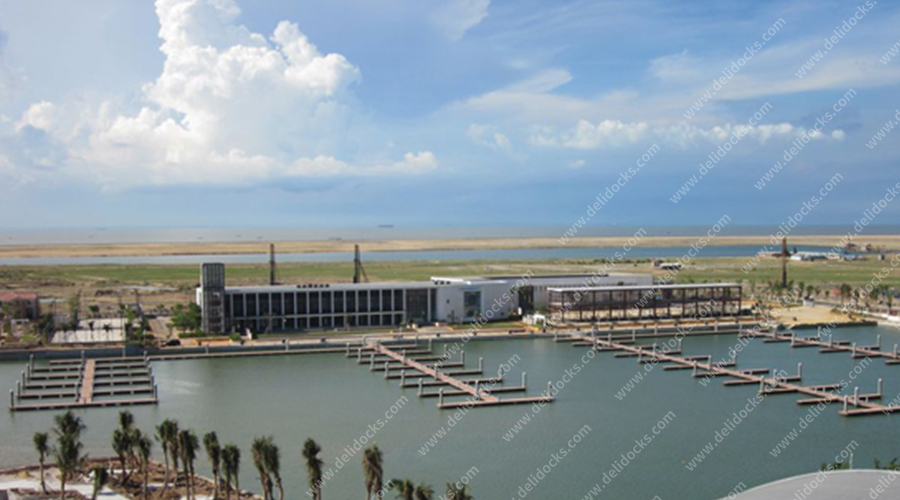
Successfully building a dry dock requires integration of geotechnical, structural, hydraulic, and environmental disciplines. By focusing on concrete crack control, pump reliability, caisson seal integrity, and corrosion protection, owners achieve a facility that serves ship repair for decades. Partnering with an experienced marine engineering firm like DeFever ensures that each phase—from feasibility study to commissioning—meets international standards. Their portfolio of dry dock and marina projects demonstrates proven methodologies for diverse environments.
Ready to start your dry dock project? Contact DeFever for a preliminary engineering consultation. The team provides site-specific designs, budget estimates, and regulatory roadmaps tailored to your vessel throughput requirements.
Send your inquiry now – include your desired dock dimensions (length × width × draft), target vessel types, and location. You will receive a technical proposal with preliminary geotechnical investigation scope and a rough order of magnitude (ROM) cost within 10 business days.