2026-10-15
Developing coastal, commercial, and industrial waterfront infrastructure demands strict adherence to structural engineering mechanics, hydrodynamics, and site-specific environmental conditions. Selecting a professional dock construction company requires an evaluation of engineering capabilities, geotechnical understanding, and material selection methodologies. Waterfront assets must endure relentless oceanographic forces, including dynamic wave actions, tidal fluctuations, storm surges, and corrosive saltwater environments. The structural integrity of a marina, commercial berth, or industrial pier depends on decisions made during the initial site assessment and engineering phase.
Commercial marine facilities are built to support significant operational dynamic loads while maintaining buoyancy and structural equilibrium. Achieving long-term operational durability requires a dock construction company to possess expertise in soil mechanics, wave attenuation, and metallurgy. Marine structures must meet strict international codes such as PIANC guidelines and BS 6349 standards for maritime structures. Evaluating contractor capabilities requires moving beyond baseline cost estimates to assess mechanical designs, corrosion mitigation strategies, and project execution frameworks.
Site Analysis and Geotechnical Engineering Standards
Comprehensive environmental and geotechnical data collection forms the basis of every resilient marine installation. Structural failures frequently stem from inadequate sub-surface surveys or an underestimation of local hydrodynamic forces. A qualified dock construction company begins project design with exhaustive field studies to map environmental loads accurately.
Bathymetric and Benthic Assessments
Precision bathymetric mapping utilizes multi-beam sonar systems to create high-resolution topographic profiles of the seabed. Understanding depth variation across the footprint determines framing depth, pile lengths, and draft clearances for deep-draft vessels. Concurrently, benthic sampling and core drilling evaluate soil stratigraphy, identifying layers of silt, clay, sand, or bedrock. Standard Penetration Tests (SPT) supply structural engineers with soil friction angles and shear strength values required to calculate pile axial capacity and lateral soil resistance.
Wave Attenuation and Hydrodynamic Modeling
Quantifying wave energy relies on measuring fetch length, dominant wind velocity, local bathymetry, and historical storm surge data. Computational fluid dynamics (CFD) modeling predicts how structures respond under extreme hydraulic pressure, such as peak significant wave heights ($H_s$) and wave periods ($T_p$). Where wave energy exceeds structural thresholds, integrating fixed or floating breakwaters becomes necessary. Attenuators dissipate dynamic energy through turbulence and wave reflection, protecting internal berth configurations from excessive motion and structural fatigue.
Geotechnical data directly informs structural calculations, transitioning the project from raw environmental measurement into tailored structural frame design.
Structural Architectures: Floating Pontoons vs. Fixed Piers
Selecting between floating pontoon systems and fixed pile piers depends on tidal range, water depth, and operational intended use. Each system exhibits distinct structural behaviors, load transfer mechanisms, and maintenance profiles.
Modular Floating Pontoon Systems
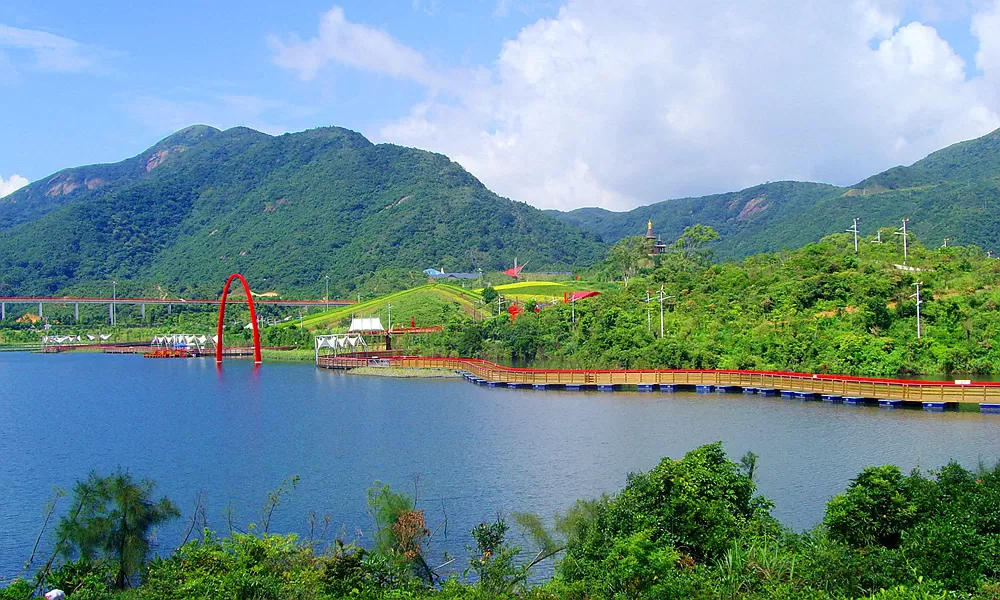
Floating docks are preferred in environments with substantial tidal variations, maintaining a uniform freeboard height relative to berthed vessels. Framework design focuses on buoyancy reserves, torsional rigidity, and pontoon connection articulation. Heavy-duty marine concrete pontoons, manufactured with expanded polystyrene (EPS) closed-cell cores, provide high mass, exceptional roll damping, and long service life in harsh conditions. Modern aluminum-framed floating pontoons utilize continuous structural channels to distribute dynamic stress evenly across all flotation units.
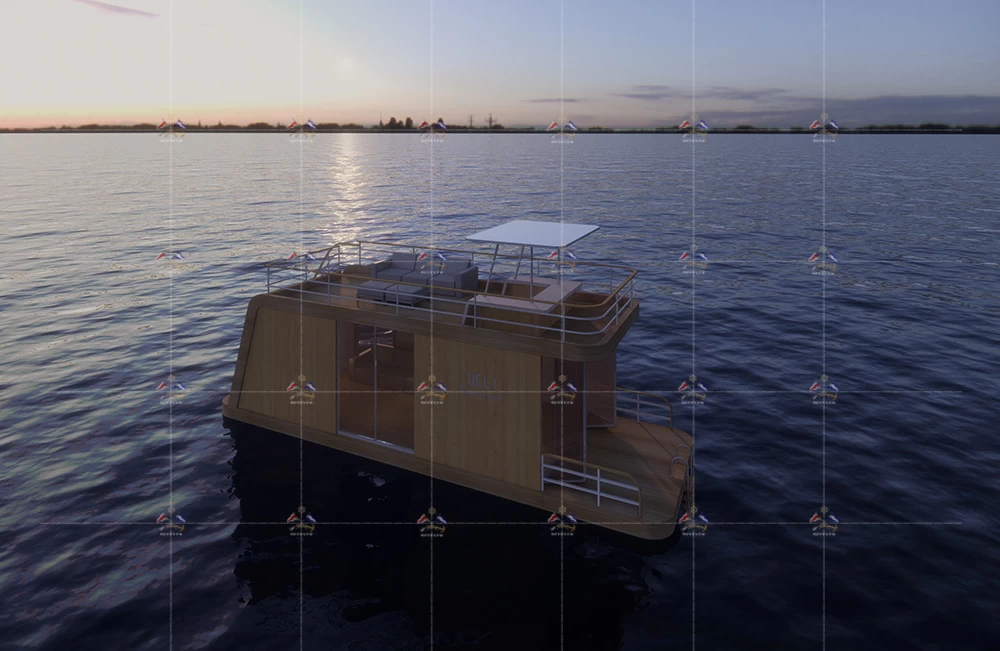
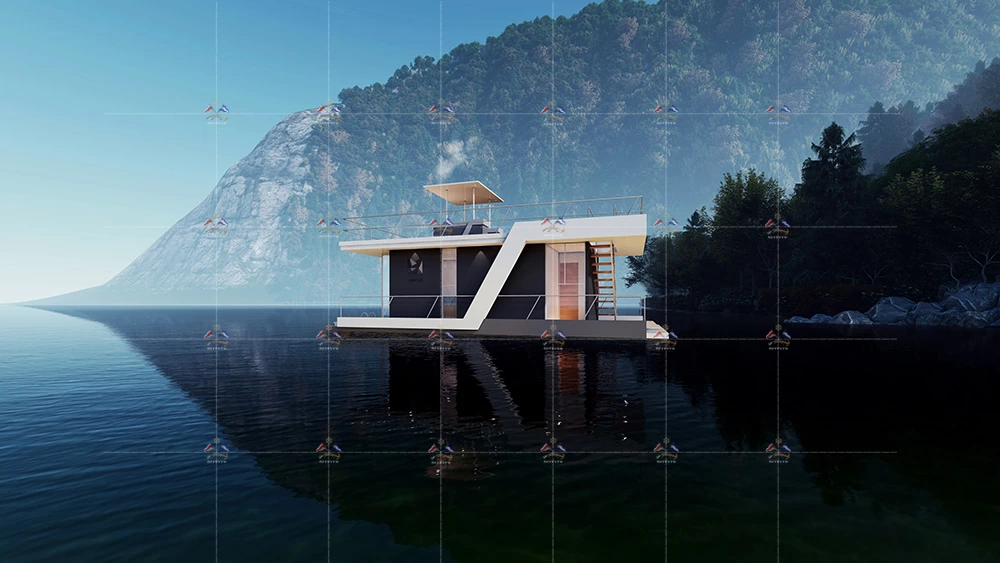
Within this space, specialized engineering configurations offered by DeFever utilize structural aluminum frames with high-density polyethylene (HDPE) pontoons, balancing high strength-to-weight ratios with modular adaptability. These systems allow dynamic movement along vertical guide piles while resisting lateral wind shear and wave forces transmitted through vessel moorings.
Fixed Timber, Steel, and Concrete Piers
Fixed structures are suited for deep-water berthing, industrial cargo handling, and locations with low tidal amplitude. Steel pipe piles driven to refusal or embedded into rock sockets provide superior axial loading capabilities for heavy equipment access. Pre-stressed concrete piles present long-term resistance to dynamic shear and biological organism attack. The choice of fixed pile infrastructure depends on dynamic driving stresses, pile buckling length under unsupported water columns, and soil foundation bearing capabilities.
Working alongside an experienced dock construction company ensures that structural framing—whether floating or fixed—is precisely calculated for live loads ranging from 1.5 kPa for pedestrian access up to 5.0 kPa or higher for commercial vehicle access.
Material Science and Corrosion Mitigation Strategies
The marine splash zone represents one of the most aggressive corrosive environments in structural engineering. Marine structures face continuous exposure to oxygen, dissolved salts, ultraviolet radiation, and biological fouling. Choosing appropriate alloys and barrier coatings is necessary to prevent premature material degradation.
Marine-Grade Aluminum Alloys vs. Structural Steel
Structural framing relies heavily on marine-grade structural aluminum extrusions, primarily 6061-T6 and 6082-T6 alloys. These materials naturally develop a protective oxide layer, providing high resistance to atmospheric and saltwater corrosion while eliminating the high deadweight associated with heavy steel framing. Structural steel elements require protective measures, such as hot-dip galvanizing according to ISO 1461 standards or high-build epoxy coating systems, to control degradation rates.
To prevent galvanic corrosion—which occurs when dissimilar metals contact each other in an electrolyte—engineers isolate structural aluminum from steel piles and fasteners using non-conductive elastomeric pads, continuous neoprene sleeves, and isolation washers.
Decking Materials and Sub-Structural Fasteners
Selection of decking surfaces impacts structural dead load, traction, maintenance intervals, and UV endurance. Common commercial options include:
Fiberglass Reinforced Polymer (FRP) Grating: High strength, non-conductive, allows wave passage through open mesh to reduce hydraulic uplift forces.
Hardwood Timber Decking: High-density species (e.g., Ipe, Cumaru) offering high flexural strength, though requiring scheduled surface maintenance.
Composite Decking Systems: Engineered wood-plastic formulations designed to minimize moisture absorption and thermal expansion coefficient issues.
Pre-cast Concrete Deck Slabs: Used on heavy floating pontoons to provide maximum structural rigidity, acoustic dampening, and high surface mass.
All structural fasteners, cleat bolts, and frame brackets must utilize 316-grade stainless steel or hot-dip galvanized steel to maintain structural load pathways throughout the facility lifecycle.
Utility Integration and Anchorage Dynamics
A fully operational commercial marina or berth relies on integrated mechanical, electrical, and plumbing (MEP) systems, along with load-rated anchorage configurations capable of holding target vessel tonnage.
Subsurface Utility Routing and Containment
Modern floating facilities require utility channels built directly into structural pontoon frames. Internal service ducts protect high-voltage electrical cabling, potable water mains, fire suppression piping, and wastewater pump-out lines from mechanical damage and weather exposure. Utility pedestals positioned at berths require isolated structural backing plates to distribute localized pull forces exerted by heavy shore power cables.
Anchorage System Engineering
Anchoring floating pontoon systems requires complex stress distribution analysis under peak storm conditions. Primary anchoring methodologies include:
Guide Piles: Steel or concrete columns driven into the sub-seabed, guiding the dock vertically via internal or external roller assemblies equipped with wear-resistant polyurethane rollers.
Seaflex or Elastomeric Mooring Units: Flexible, pre-tensioned synthetic tethering systems that stretch and contract with tidal cycles, dampening peak tension loads without seabed scour.
Heavy Chain and Anchor Blocks: Drag-embedment anchors combined with high-grade marine chain, utilized in deep-water environments where pile driving is cost-prohibitive.
Integrating these utility and anchorage systems demands precision manufacturing. Advanced marine systems designed by DeFever incorporate internal structural chases and modular pile guides, allowing straightforward utility routing and optimal stress transfer into anchoring structures.
Evaluating Contractor Execution and Quality Assurance
Executing marine construction projects requires specialized heavy machinery, precise offshore logistics, and strict adherence to safety protocols. A capable dock construction company maintains a specialized fleet of floating cranes, pile-driving barges, tugs, and certified commercial diving crews.
Quality assurance programs must mandate continuous inspection across every project phase:
Pile Driving Monitoring: Utilizing dynamic load testing (PDA) during driving to verify ultimate pile capacity and set criteria.
Weld Integrity Testing: Non-destructive testing (NDT), including ultrasonic and magnetic particle testing, applied to all structural frame welds.
Buoyancy and Trim Alignment: Hydrostatic load tests executed post-assembly to confirm designed deck freeboard under uneven dead and live load distributions.
Regulatory Compliance: Navigating environmental permitting, water quality management during dredging, and local port authority mandates.
A professional dock construction company coordinates these complex variables to deliver marine assets that remain structurally sound over decades of continuous exposure.
Frequently Asked Questions
Q1: What structural load ratings are typically required for
commercial dock construction?
A1: Commercial dock designs typically
require uniform live load capacities ranging from 1.5 kN/m² to 5.0 kN/m² or
more, depending on intended usage. Facilities supporting vehicular traffic,
crane placement, or heavy cargo equipment require localized point-load
calculations exceeding standard pedestrian specifications.
Q2: How do engineers mitigate corrosion in aluminum floating
docks?
A2: Corrosion prevention relies on using marine-grade
aluminum alloys (6061-T6/6082-T6), applying sacrificial anode systems (zinc or
aluminum anodes), and installing non-conductive elastomeric isolators between
dissimilar metals to eliminate galvanic pathways.
Q3: What is the main structural advantage of concrete pontoons over
lightweight floating docks?
A3: Concrete pontoons offer high mass,
exceptional dynamic stability, superior wave-attenuation properties, and long
service lifespans. Their structural inertia minimizes movement under impact
loads during vessel berthing maneuvers.
Q4: How does seabed soil composition influence pile anchoring
selection?
A4: Soft silts and clays require deeper pile penetration
or friction piles to achieve necessary load capacity, whereas rocky seabeds
require rock-socket drilling or heavy gravity anchor blocks. Geotechnical core
samples determine dynamic driving stresses and final pile depth.
Q5: What international standards govern commercial marine dock
engineering?
A5: Commercial designs typically follow standards
established by PIANC (World Association for Waterborne Transport
Infrastructure), BS 6349 (British Standard for Maritime Works), and AS 3962
(Guidelines for Design of Marinas).
Initiate Your Marine Engineering Project
Planning, engineering, and constructing durable marine assets requires specialized structural design and precise execution. For technical inquiries, structural framing consultations, or custom commercial berth specifications, contact our engineering team to submit your Request for Proposal (RFP) or formal inquiry today.