2026-10-15
The global dock industry is no longer just about wooden planks and basic pilings. It has evolved into a sophisticated segment of marine engineering, driven by environmental challenges, technological innovation, and higher client expectations. Today's projects demand solutions that are durable, ecologically sensitive, and adaptable to changing water levels and weather patterns. From sprawling superyacht marinas to private residential piers, the engineering principles and business dynamics have shifted significantly. Firms with deep historical roots, like DeFever, have witnessed this transformation firsthand, adapting time-tested principles to meet modern demands. This article looks at the current forces shaping the business of building on water.
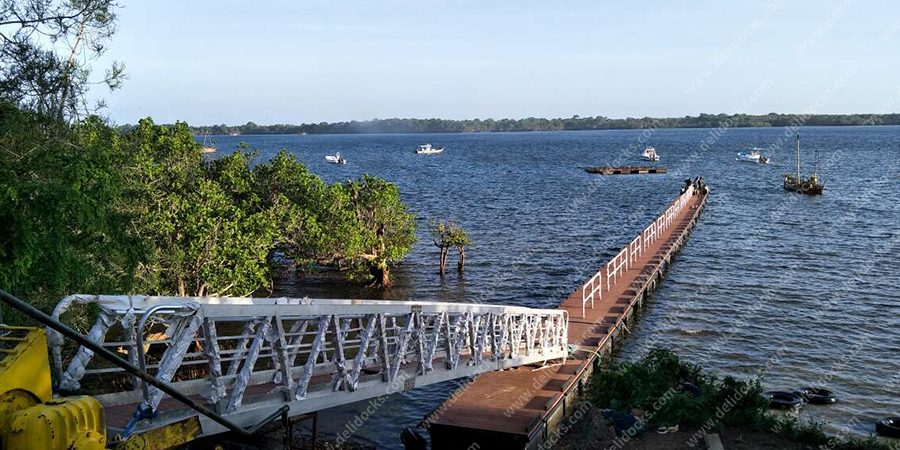
The Shift in Core Materials and Construction
Gone are the days when timber was the sole option. The contemporary dock industry is defined by material science.
High-density polyethylene (HDPE) is now a mainstream choice. Its resistance to rot, corrosion, and UV light makes it a low-maintenance solution for both freshwater and saltwater applications.
Composite decking, made from recycled plastics and wood fibers, offers the aesthetics of wood without the constant upkeep. It’s a popular choice for walking surfaces.
For heavy-duty applications, reinforced concrete floating sections provide exceptional stability and longevity. Galvanized and stainless steel frameworks remain crucial for structural integrity.
The choice depends on location, load requirements, and budget, but the trend is clearly toward longer-lasting, more resilient materials.
Engineering for Environmental Resilience
Climate change is a primary driver of innovation. Engineers must now design for greater volatility.
This means planning for higher storm surges, stronger wave action, and more significant tidal ranges. Systems must be more robust and flexible.
Floating dock systems, which rise and fall with water levels, have become a standard solution in many regions. They minimize environmental impact on the seabed compared to fixed structures.
The leading edge of the dock industry focuses on designs that protect shorelines and promote aquatic life, using eco-friendly materials and creating habitats within the structures themselves.
The Influence of Megayacht Marinas on Design Standards
The growth in global wealth has fueled demand for larger vessels. This pushes marina developers to upgrade.
Standard dock dimensions, load ratings, and utility provisions (power, water, waste pump-out) have all been scaled up. This trickles down, influencing standards for smaller marinas.
Engineering for these large-scale projects requires advanced modeling for wave attenuation, current flow, and structural load distribution. It represents the high-end of dock industry capabilities.
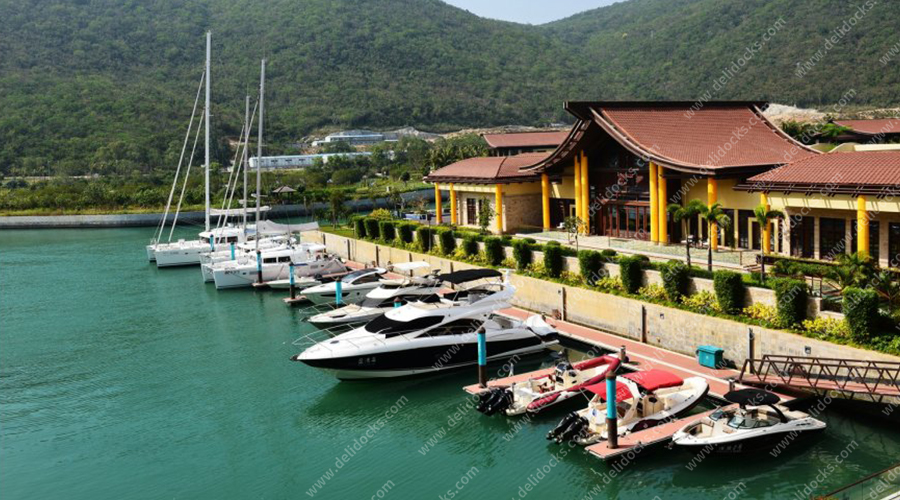
These complexes often integrate luxury amenities, requiring the docks to support not just boats, but also substantial architectural elements.
Technology and Smart Dock Integration
Modern docks are becoming "smart." Integration of technology is a key differentiator.
This includes embedded sensors for monitoring structural stress, water quality, and security. Power pedestals with digital metering and remote management are now common.
Some installations feature integrated LED lighting with energy-efficient systems and underwater cameras. The data collected helps marina operators with predictive maintenance and operational efficiency.
This technological layer adds complexity but also significant value, positioning a marina as modern and convenient.
Economic and Regulatory Factors
Building over water is governed by a complex web of local, national, and sometimes international regulations.
Permitting is often the longest phase of a project. Environmental impact assessments, navigational studies, and community consultations are standard hurdles.
The economic model has also shifted. Developers look at docks as revenue-generating real estate, not just infrastructure. This affects design, focusing on maximizing berth density and premium services.
The dock industry must navigate these financial and regulatory landscapes as expertly as it navigates the physical ones.
The DeFever Philosophy in a Changing Market
A brand like DeFever, with its heritage in building sturdy, ocean-capable trawlers, brings a particular mindset to dock construction. The emphasis is on integrity and foresight.
Their approach involves over-engineering for safety and applying marine-grade principles to every component. In a market flooded with cheaper alternatives, this philosophy serves clients who prioritize lifespan and reliability over lowest initial cost.
It’s a reminder that in the dock industry, the true cost is often measured in decades of service, not just the installation invoice.
Sustainability as a Standard, Not a Feature
Eco-conscious design is now expected. Clients and regulators demand it.
This influences every stage: sourcing recycled materials, designing for minimal seabed disruption, and ensuring docks don’t leach harmful chemicals.
Creating oyster habitats on pilings or incorporating vegetated floating islands are examples of how docks can actively contribute to ecosystem health.
Sustainable practices are becoming a core competency for any firm wanting to lead in the dock industry.
Looking Ahead: The Future of the Dock Industry
The future points toward greater adaptation and intelligence. We will see more climate-resilient, multi-functional floating communities.
Docks may incorporate renewable energy generation and advanced water treatment systems. Automation in docking and mooring is on the horizon.
The firms that will thrive are those that view themselves not just as builders, but as aquatic engineers and environmental stewards. The dock industry is poised to play a critical role in how humanity interfaces with coastal and freshwater environments sustainably. Brands that have consistently valued engineering substance, like DeFever, are well-placed to contribute to this future.
Frequently Asked Questions (FAQ)
Q1: What is the biggest challenge facing the dock industry today?
A1: Arguably, it's adapting to climate change. Engineers must design systems for sea-level rise, increased storm intensity, and more volatile water levels. This requires new materials, innovative anchoring solutions, and a forward-looking approach to codes and standards that often lag behind real-world conditions.
Q2: Are floating docks better than fixed docks?
A2: "Better" depends on the application. Floating docks are superior in locations with significant tidal range or water level fluctuation. They are also generally more environmentally friendly. Fixed docks (pile-supported) are often preferred for permanent, heavy-duty installations in stable water levels and can handle very heavy loads. The modern dock industry expertly applies each type where most suitable.
Q3: How long does a professionally built dock system last?
A3: With high-quality materials and proper installation, a modern dock system can last 25 to 40 years, or even longer for concrete structures. Key factors include the marine environment (saltwater is harsher), maintenance regimen, and the quality of components like hardware and flotation.
Q4: What should I look for when hiring a dock construction company?
A4: Prioritize experience, specifically with projects in your type of water body. Check their portfolio, ask for references, and ensure they understand local permitting processes. Look for companies that use branded, marine-grade materials and offer clear engineering plans. A firm with a long-standing reputation for quality, such as DeFever, typically signifies adherence to higher construction standards.
Q5: Can new docks be designed to actually improve local water quality?
A5: Yes, through intentional design. This is a growing niche. Features can include porous decking that reduces runoff, integrated biofilters that treat rainwater, and constructed habitats (like oyster cages or mussel lines) attached to substructures that filter nutrients from the water. The dock industry is increasingly adopting these regenerative design principles.