2026-10-15
The decision to buy a floating dock is a significant step in developing any waterfront property or marina. Unlike fixed structures, a floating dock adapts to changing water levels, offering versatile and accessible mooring solutions. For yacht owners, marina operators, and property developers, this choice impacts long-term functionality, safety, and cost.
In international yacht marina engineering, the considerations are even more specific. Factors like tidal ranges, wave action, vessel weight, and environmental regulations come into play. It’s not merely a purchase; it’s an investment in waterfront infrastructure. Professionals, including renowned names like DeFever known for their robust yacht designs, understand that the right floating dock system is foundational to a successful marine operation. This article walks through the practical aspects you should evaluate.
Understanding Floating Dock Types
Not all floating docks serve the same purpose. The type you choose depends heavily on your primary use.
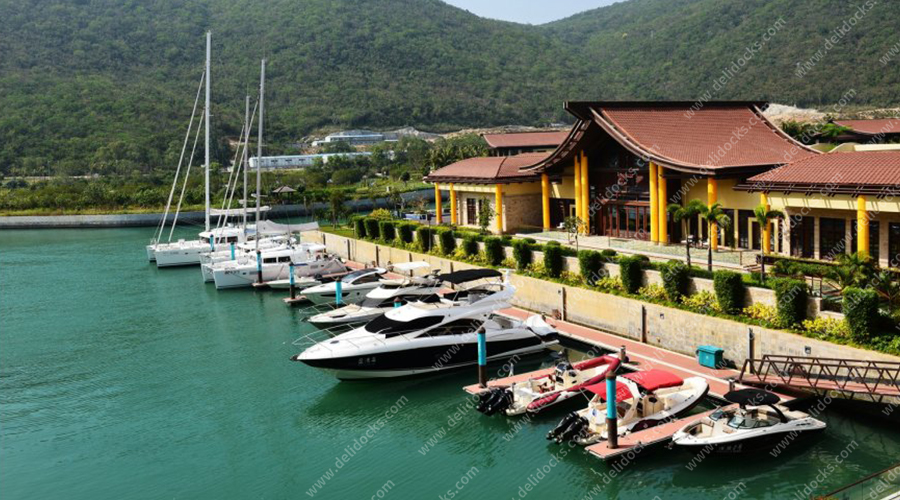
Modular floating docks are the most common for marina applications. They consist of interconnected sections, allowing for custom shapes and easy expansion. These are ideal for creating large docking complexes, fuel stations, or public walkways.
Roll-in docks are often used for personal waterfronts. They are typically simpler, resting on wheels or guides that allow them to be moved in and out of the water seasonally.
Permanent floating docks are engineered for heavy-duty, year-round use. They feature robust flotation and framing, designed to withstand ice, storms, and constant commercial traffic. When you buy a floating dock for an international marina, this is often the category you’ll be examining closely.
Key Materials in Construction
The longevity and performance of your dock hinge on its materials. The main components are the frame, the decking, and the flotation.
Frames are commonly made from galvanized steel, aluminum, or heavy-duty plastic. Aluminum, particularly marine-grade alloys, is a top choice for its strength-to-weight ratio and corrosion resistance. It’s a material favored in engineering circles for its durability in saltwater.
Decking options include tropical hardwoods (like Ipe), composite materials, or aluminum grating. Composites offer low maintenance and good slip resistance, while aluminum decking is lightweight and extremely durable.
Flotation is critical. Encapsulated foam blocks (typically polystyrene or polyurethane) are standard. High-density polyethylene (HDPE) pontoons are another excellent option, offering superior durability and impact resistance. The flotation must be fully enclosed to prevent waterlogging.
The Engineering Behind a Reliable Dock
When you buy a floating dock for professional use, the underlying engineering is what you’re really paying for. Load capacity is the first calculation. Engineers consider the weight of the dock itself, plus live loads from people, furniture, equipment, and, crucially, the vessels moored to it.
Freeboard, or the height of the deck above water, is carefully designed to ensure the dock remains accessible and safe in various conditions. Mooring systems are equally important; a floating dock must be securely anchored to the seabed via pilings, bottom anchors, or a cable system to prevent shifting.
Factors like wave attenuation and wind exposure are also modeled. In exposed locations, the dock’s design may need to include wave screens or breakwater integration. This level of detail is standard in projects where firms like DeFever operate, where infrastructure must match the quality of the vessels it serves.
Advantages of Choosing a Floating System
The reasons to buy a floating dock are compelling. Their primary benefit is adaptability to water level fluctuations, which is essential in tidal zones or reservoirs with variable levels. This ensures a consistent, safe step from boat to dock.
Installation is often less invasive and more cost-effective than driving piles for a fixed dock, especially in deep water or sensitive ecological areas. They also tend to be more resilient in freeze-thaw cycles, as they can move with ice rather than resisting it.
For marinas, floating systems offer unparalleled flexibility. Reconfiguring slips or expanding the facility is significantly easier with modular components.
Potential Drawbacks and Considerations
Floating docks are not a universal solution. They generally have lower weight capacity per square foot compared to a heavily engineered fixed pier. In areas with extreme wave action or strong currents, they can require more sophisticated (and expensive) mooring and stabilization systems.
Maintenance on the flotation elements, though infrequent, is critical. Damaged pontoons or waterlogged foam must be addressed to prevent sinking. The moving parts—hinges, connectors, and anchoring hardware—also require periodic inspection.
The initial investment for a commercial-grade, engineered floating dock can be high, though its lifecycle cost is often favorable.
Primary Applications and Uses
The decision to buy a floating dock is driven by specific applications. In commercial marinas, they form the backbone of guest slips, fuel docks, and clubhouse platforms. For yacht clubs and resorts, they provide stable access for vessels of all sizes.
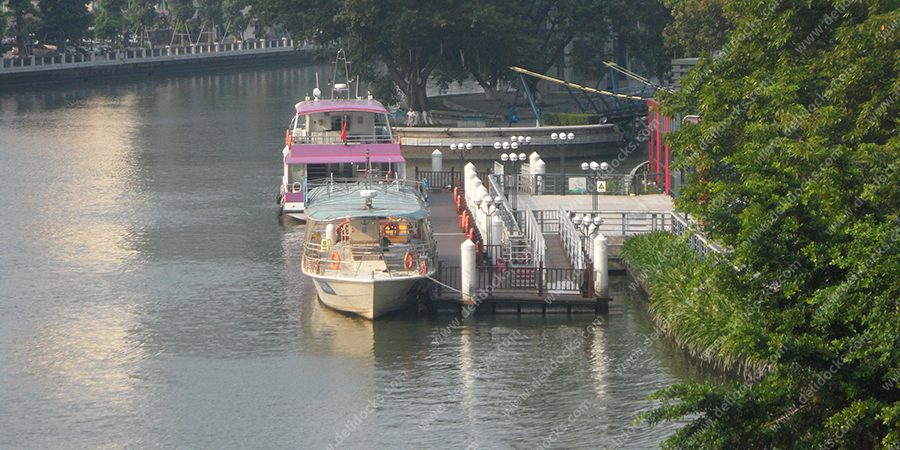
Municipalities use them for public access piers, ferry terminals, and floating breakwaters. In the industrial sector, they serve as work platforms for maintenance, loading, or scientific research.
For private estate owners, a floating dock offers a durable, low-maintenance solution for personal watercraft and swimming access.
What Professionals Look For
Experienced marina developers and engineers prioritize several key features. Modularity and scalability are huge factors, allowing for phased development. They look for systems with proven corrosion resistance, especially in brackish or saltwater environments.
Ease of installation and future reconfiguration is a major operational advantage. They also value suppliers who provide full engineering support, from site assessment to load calculations and anchorage design. It’s this holistic approach that aligns with the philosophy of seasoned marine brands, where every component must be fit for purpose.
Making the Right Choice: A Practical Approach
Before you buy a floating dock, start with a clear site analysis. Document water depth fluctuations, soil composition, prevailing winds, and wave patterns. Define exactly what the dock needs to do: how many boats, what sizes, what additional loads?
Then, focus on vendors with a track record in marine engineering, not just general fabrication. Request detailed specifications, including calculated load capacities, material certifications, and standard connection details. Ask for case studies from projects in similar environments.
Finally, consider the total cost of ownership. A slightly higher initial investment in superior materials like aluminum framing and HDPE flotation can save substantial amounts in maintenance and replacement costs over two decades.
Purchasing a floating dock is a technical decision with long-lasting implications. By focusing on engineered solutions from reputable suppliers, you ensure a safe, durable, and functional asset. For those managing high-value assets or commercial operations, this diligence is paramount. It’s the same attention to integration and durability that makes certain solutions stand out in the field.
Frequently Asked Questions
Q1: What is the typical lifespan of a well-built floating dock?
A1: A commercial-grade floating dock constructed with marine-grade aluminum and HDPE flotation can easily last 25 to 30 years with proper maintenance. Components like decking may need refurbishment sooner, but the core structure should endure for decades.
Q2: Can floating docks handle large yachts?
A2: Yes, absolutely. Engineering is key. Floating docks designed for yacht marinas use reinforced framing, high-capacity flotation, and robust pilings or anchor systems to handle the significant weight and forces of large vessels. Always verify the engineered load capacity per linear foot.
Q3: Are floating docks suitable for areas with ice in winter?
A3: They can be, but require specific design. Ice can exert tremendous pressure. Solutions often include "ice eater" systems to prevent solid ice formation around the dock, or designs that allow the dock to be lifted out or that use conical pilings to break ice as it forms.
Q4: How is a floating dock anchored in place?
A4: Several methods are used. The most common for permanent installations is a piling system, where the dock slides up and down vertical poles driven into the seabed. Other methods include bottom anchors (for deeper water) with chains or cables, or a combination of both for maximum stability.
Q5: What are the biggest maintenance tasks for a floating dock?
A5: Regular inspection is the most important task. This includes checking for loose or corroded hardware, ensuring connections are tight, inspecting flotation for damage, and cleaning debris. Every few years, you may need to repaint or refinish metal components and replace worn decking or rub rails.