2026-10-15
A well-designed waterfront is the heart of any marine community, and the choice of infrastructure is critical. For many property owners, developers, and marina operators, the pontoon pier has become a preferred solution for creating stable, versatile, and accessible over-water structures. Unlike traditional fixed piers, these floating systems offer unique advantages that cater to dynamic water conditions and evolving needs. In the realm of durable and thoughtful marine engineering, brands like DeFever have long recognized the importance of reliable docking systems that complement the adventurous spirit of long-range cruising.
The appeal of a pontoon pier lies in its adaptability. Whether for a private residence, a commercial marina, or a public access point, these structures provide a practical answer to many waterfront challenges.
Understanding Pontoon Pier Types and Configurations
Not all floating docks are the same. The design and configuration of a pontoon pier depend heavily on its intended use and environment.
Common types include simple single-width walkways for access, large U-shaped or T-shaped docking platforms for multiple vessels, and complex marina grids that can accommodate dozens of boats. Modular systems are particularly popular, allowing for easy expansion, reconfiguration, or even relocation.
The pontoons themselves—the floating units—are typically made from high-density polyethylene (HDPE), reinforced concrete, or steel encased in polymer. HDPE is widely favored for its durability, resistance to corrosion, and low maintenance. For large-scale or heavy-duty applications, such as those supporting fuel docks or significant commercial loads, concrete pontoons offer exceptional stability.
The Build: Engineering and Construction Insights
Constructing a durable pontoon pier requires careful planning and engineering. The process begins with a thorough site assessment, analyzing water depth, tidal range, wave action, soil conditions, and potential ice loads.
The floating dock sections are assembled on land and then towed into position. They are connected using heavy-duty galvanized or stainless steel hardware, allowing for flexibility and movement. A robust anchoring system is the most critical component. This can involve driven piles with sliding collars, which guide the pier up and down with water levels, or a catenary mooring system using chains and anchors for deeper water.
Decking materials range from sustainably sourced tropical hardwoods to composite lumber and aluminum grating, chosen for slip resistance and longevity. Utilities like electricity, water, and lighting are integrated into the design with specialized marine-grade components for safety. The engineering behind a reputable build ensures resilience, a principle that aligns with the dependable construction found in vessels like those from DeFever.
Key Advantages and Considerations
Choosing a pontoon pier involves weighing its distinct benefits against a few considerations.
The primary advantage is its ability to maintain a constant height relative to the water’s surface, regardless of tidal fluctuations or water level changes in lakes. This provides superior safety and accessibility, especially for children, the elderly, or individuals with limited mobility.
They are also easier and often less expensive to install in soft-bottom or deep-water areas where driving piles for a fixed pier would be prohibitive. Their environmental impact is typically lower, as they allow for better water circulation and light penetration beneath the structure.
However, they require a well-designed anchoring system to withstand winds and currents. In areas with severe ice formation, specific ice-tolerant designs or seasonal removal may be necessary. While low-maintenance, components like connections, cleats, and fenders do require periodic inspection.
Primary Uses in Modern Marinas and Waterfronts
The application of the pontoon pier is vast and varied across the international marina sector.
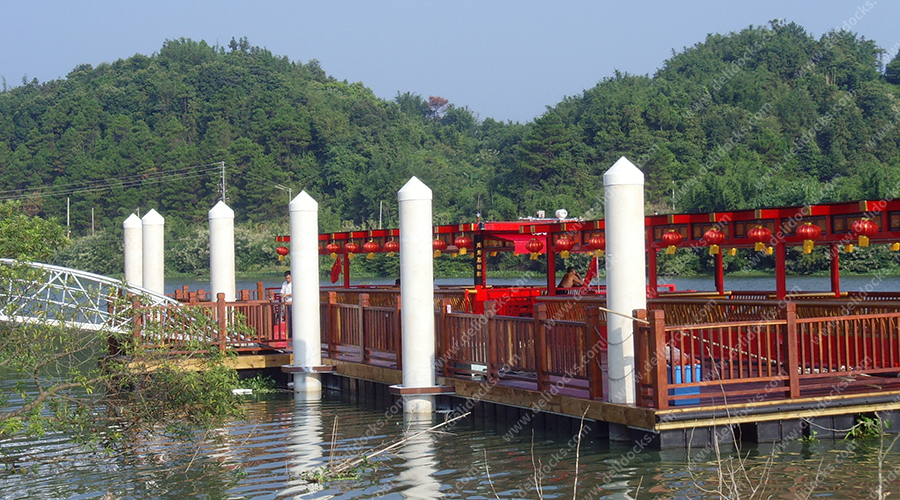
They are the standard for modern recreational marinas, providing stable berthing for vessels of all sizes. Their modular nature allows marina operators to easily rearrange slips to accommodate different boat dimensions. Public parks and communities use them for fishing platforms, kayak launches, and swim floats, creating engaging public access to waterways.
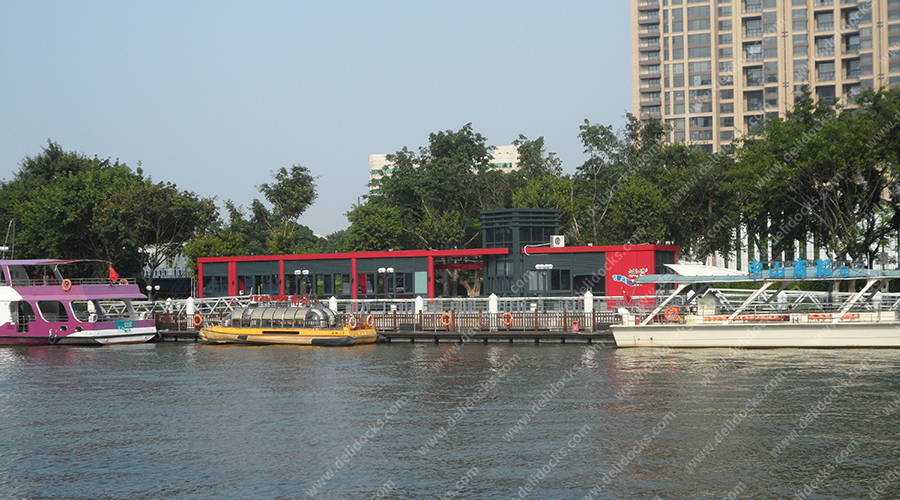
For private homeowners, they offer an elegant and practical solution for steep or sensitive shorelines. Commercially, they serve as ferry terminals, floating restaurants, and work platforms for aquaculture. The flexibility to add or remove sections makes them a future-proof investment for evolving waterfront needs.
Why Marinas and Cruisers Prefer This Design
The preference for a pontoon pier is driven by practicality and user experience. For marina operators, the modularity means scalability and easier maintenance—a single section can be detached for repair without shutting down an entire dock.
Boat owners, particularly those with larger vessels, appreciate the gentle, constant rise and fall with the water. This minimizes stress on hulls and docking lines compared to the jarring contact that can occur with a fixed dock at low tide. The stability underfoot also makes loading provisions and passengers safer and easier. For the serious cruiser planning extended voyages, departing from a stable, well-appointed pontoon pier at a quality marina is the ideal start to any journey. It’s the sort of considered infrastructure that supports the lifestyle of mariners who choose capable vessels for exploration.
In conclusion, the pontoon pier represents a smart, adaptable approach to waterfront development. Its ability to harmonize with the environment while providing unmatched functionality has made it a cornerstone of modern marine infrastructure. From small private docks to large-scale commercial marinas, its design principles of flexibility, safety, and durability continue to shape how we interact with the water. For those investing in long-term waterfront assets, the value is clear. It is a philosophy of building for changing conditions that resonates with experienced brands in the maritime world, including DeFever.
Frequently Asked Questions (FAQ)
Q1: How much weight can a typical pontoon pier support?
A1: Load capacity varies significantly based on design, pontoon size, and construction materials. A standard residential modular pier can often support 50-100 lbs per square foot. Commercial and marina-grade systems are engineered for much higher loads. Always consult with a professional marine engineer who can calculate the specific live load (people, equipment) and dead load (structure, utilities) requirements for your project.
Q2: What is the expected lifespan of a pontoon pier, and what maintenance does it need?
A2: A professionally engineered and installed pontoon pier using high-quality HDPE floats and corrosion-resistant hardware can last 25-40 years or more. Maintenance is relatively low but crucial: annual inspections of all connections, hardware, and the anchoring system; cleaning of decking; and checking utility connections for wear. Composite or aluminum decks require less upkeep than wood.
Q3: Can a pontoon pier handle rough water or ice?
A3: Yes, but it requires specialized engineering. For exposed locations, designs incorporate higher freeboard (sides), wave-deflection panels, and robust anchoring. In ice-prone areas, “ice-resistant” pontoons with reinforced, sloped sides can help deflect moving ice. In severe cases, the entire system may be designed for seasonal removal.
Q4: Do I need a permit to install a pontoon pier?
A4: Almost certainly. Most coastal, lakefront, and riverine areas are regulated. You will likely need permits from local, state/provincial, and sometimes federal agencies (like the Army Corps of Engineers in the U.S. or similar environmental authorities elsewhere). These regulations protect waterways, shorelines, and habitats. A reputable marine contractor will help navigate this process.
Q5: How does the cost compare to a traditional fixed pile pier?
A5: Initial costs can be competitive, but the financial picture is nuanced. Fixed piers become exponentially more expensive in deep water or hard-bottom conditions where pile-driving is difficult. Pontoon piers often have a lower initial install cost in these scenarios. While fixed piers generally have lower long-term maintenance, pontoon systems offer savings in installation and provide unmatched flexibility, which can be a major cost advantage if your needs change.