Constructing a dock on a pond presents a distinct set of engineering challenges compared to marine or lakefront projects. Limited water depth, soft organic sediments, seasonal water fluctuations, and high ecological sensitivity demand a tailored approach. Professional pond dock construction integrates geotechnical investigation, lightweight structural systems, and low‑impact materials to create a durable yet unobtrusive access point. With decades of marine structure experience, DeFever applies yacht‑grade engineering to freshwater environments, ensuring that every dock meets both performance and environmental standards. This article provides a data‑driven examination of the methods, materials, and regulations that define modern pond dock projects.
1. Site Characterization: Bathymetry, Soil & Hydrology
Before any design work, a detailed site assessment is essential for successful pond dock construction. Pond bottoms are typically composed of soft silt, clay, or peat, which offer low bearing capacity. A bathymetric survey using a small boat or wading rod maps depth variations—critical for positioning piles or anchoring floats. Water level records (or interviews with landowners) reveal seasonal drawdowns of 0.3–1.0 m, affecting freeboard requirements. Additionally, a probe or hand auger can determine sediment thickness; organic layers exceeding 2 m may necessitate deep helical piles or floating systems rather than driven piles.
Depth profiling – identifies shallow bars, submerged vegetation, and potential navigation channels.
Sediment sampling – measures organic content and cohesion to select pile type or anchor holding capacity.
Watershed analysis – determines inflow/outflow patterns that could cause erosion around the structure.
2. Structural Systems: Fixed, Floating & Cantilevered Options
Three primary structural approaches dominate pond dock projects, each with specific engineering trade‑offs:
2.1 Fixed Pile‑Supported Docks
For ponds with firm subsoils (e.g., glacial till, stiff clay), driven timber, concrete, or steel pipe piles provide a rigid platform. Pile depths typically range from 3 m to 6 m to achieve adequate skin friction. In very soft bottoms, helical (screw) piles with large helices can be torqued to refusal, offering high uplift resistance with minimal disturbance. Fixed docks are preferred where water level variation is small (< 0.5 m) and where a solid connection to shore is desired.
2.2 Floating Dock Systems
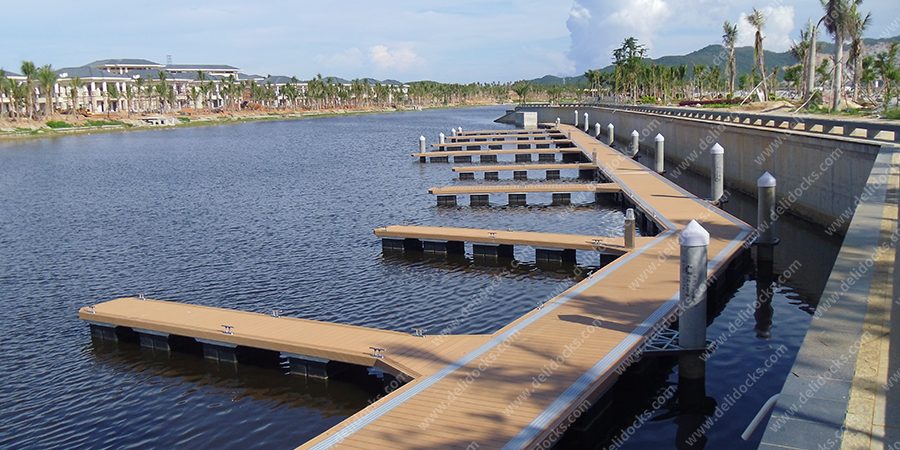
Floating docks are ideal for ponds with fluctuating water levels or deep organic sediments. They consist of encapsulated EPS foam or rotationally molded polyethylene pontoons connected by an aluminum or galvanized steel frame. Anchoring methods include concrete blocks, helical anchors, or piles with slide guides. Load calculations must account for live loads (people, small boats) and ice accumulation if the pond freezes—typically requiring removal or engineered ice‑resistant perimeter piles. DeFever often specifies aluminum‑framed floats with composite decking to minimize weight and maximize corrosion resistance in freshwater.
2.3 Cantilevered or Bank‑Supported Docks
Where preserving the pond bottom is critical (e.g., fish spawning areas), a cantilevered dock extending from the bank eliminates in‑water supports. This requires a robust shoreline foundation: concrete deadmen, helical piles on land, or a reinforced concrete footing. Geotechnical analysis of the bank is mandatory to prevent slope failure. Cantilevered designs are limited in length (typically ≤ 6 m) and must resist both vertical loads and lateral wind/wave forces.
3. Material Selection for Freshwater Durability & Ecology
Freshwater environments are less corrosive than saltwater, but they present unique challenges: algae growth, wood‑boring insects, and UV degradation. The choice of materials directly impacts longevity and maintenance frequency.
Timber: Pressure‑treated with ACQ or CA (micronized copper) is common, but be aware that some states restrict CCA‑treated wood near water. Naturally durable species like black locust or eastern red cedar offer alternatives without chemical treatments.
Composite decking: High‑density polyethylene (HDPE) with cellulose or fiberglass reinforcement resists rot and splintering. Capped composites (with a protective shell) significantly reduce algae adhesion and fading. Test data show a 25‑year service life with minimal maintenance.
Aluminum: Marine‑grade 6061‑T6 or 5052 alloys are lightweight, 100% recyclable, and immune to rot. When used with stainless steel fasteners (type 316), galvanic corrosion is negligible in freshwater. Aluminum substructures can be prefabricated off‑site, speeding installation.
Concrete: Precast concrete floats or deck panels offer exceptional longevity (50+ years) but require heavy equipment for placement. They provide thermal mass that can moderate water temperature beneath the dock—beneficial for fish habitat.
In a recent Midwestern pond project, DeFever combined an aluminum frame with capped composite decking and helical anchors, achieving a maintenance‑free structure rated for 2.5 kN/m² live load—well above residential code requirements.
4. Ecological Integration & Regulatory Compliance
Even small ponds are often subject to wetland protection acts, stormwater regulations, or local shoreline ordinances. Ignoring these can lead to fines, removal orders, or habitat damage. Key considerations in responsible pond dock construction include:
Shading limits: Many jurisdictions restrict the percentage of water surface shaded (often < 15%) to protect submerged aquatic vegetation. Open‑grid decking (e.g., fiberglass grating) allows light penetration.
Buffer zones: Natural vegetation along the shoreline must be preserved to filter runoff and stabilize banks. Docks should be sited to minimize clearing.
Wildlife corridors: Designs may incorporate gaps or underwater passages for turtles and fish. Avoid solid skirts that block littoral movement.
Construction practices: Use turbidity curtains when pile driving or dredging; choose biodegradable hydraulic fluids for equipment.
Permitting typically involves the local conservation commission, state environmental agency, and possibly the U.S. Army Corps of Engineers if the pond is connected to navigable waters. Lead times of 3–6 months are common.
5. Construction Methods for Confined Sites
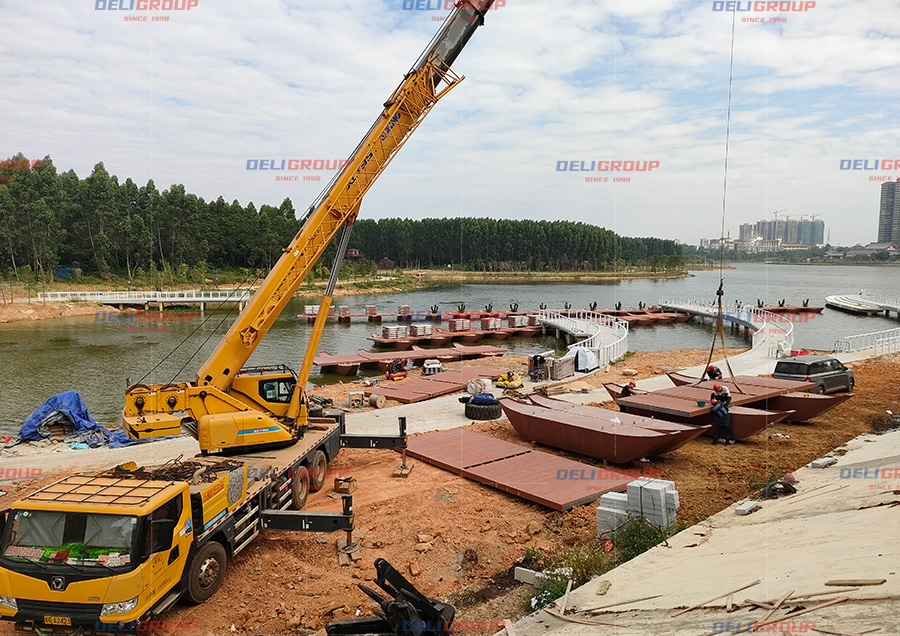
Pond sites often have limited access for heavy machinery. Contractors must adapt: small barges, long‑reach excavators, or even hand‑carried equipment. For fixed piles, lightweight vibratory hammers or hydraulic post drivers minimize disturbance. Floating docks can be assembled on shore and towed into place. Precision is critical—deck elevation tolerances of ± 12 mm prevent tripping hazards and ensure proper water clearance. DeFever project managers coordinate with certified marine contractors to execute the work within tight environmental windows (e.g., avoiding fish spawning seasons).
6. Case Study: DeFever’s Engineered Floating Dock for a Spring‑Fed Pond
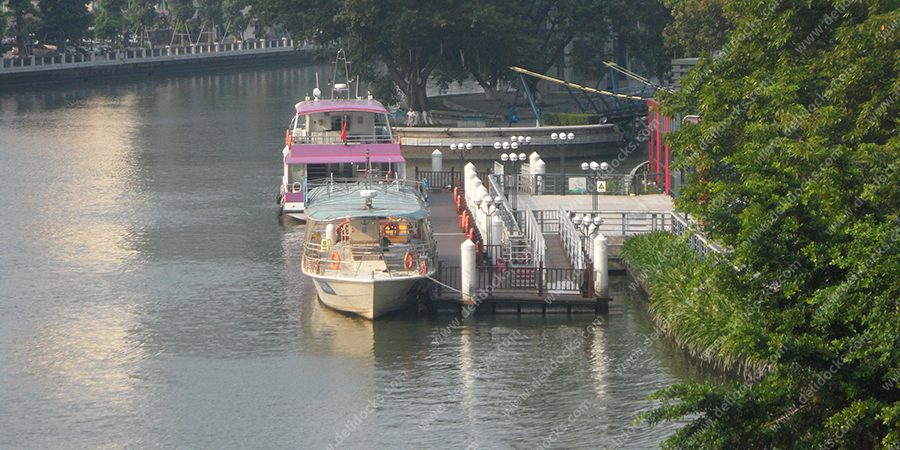
A private landowner in upstate New York required a dock that would not disturb a pristine spring‑fed pond used for swimming and kayaking. Water depth ranged from 1.2 m to 2.5 m, with a soft marly bottom. DeFever designed a floating dock system using 6061‑T6 aluminum frames and 30 cm thick encapsulated EPS floats. Anchoring was achieved with four 1.5‑m helical anchors placed by hand auger to avoid heavy machinery. The deck consisted of capped composite boards with a textured surface for slip resistance, and a concealed utility raceway carried low‑voltage LED lighting. After three years, monitoring shows zero measurable settlement, no algae buildup, and full compliance with local wetland permits. This project exemplifies how engineered pond dock construction can coexist with sensitive ecosystems.
7. Lifecycle Cost Analysis & Maintenance
A professionally engineered pond dock typically costs between $15,000 and $60,000 depending on size, materials, and site complexity. While timber docks have lower first cost, their 10‑ to 15‑year lifespan and regular maintenance (staining, fastener replacement) result in higher long‑term expense. Aluminum‑composite systems, though initially 20–30% more expensive, often exceed 30 years with only annual cleaning and fastener checks. Concrete floats can last 50 years but require occasional inspection of mooring hardware. Owners should budget for:
Annual cleaning (pressure washing) to remove organic growth.
Torque checks on all bolted connections every 2 years.
Inspection of float condition (for floating docks) and anchor lines.
Immediate repair of any damage from ice or debris.
Proactive maintenance extends service life and preserves property value—a key consideration for waterfront estates.
Frequently Asked Questions (FAQ) About Pond Dock Construction
Q1: Do I need a permit to build a dock on my private
pond?
A1: Likely yes. Even isolated ponds may fall under local
wetland bylaws, state water quality regulations, or federal jurisdiction if they
have a hydrological connection to other waters. Contact your conservation
commission or zoning office before starting any design.
Q2: What decking material resists algae best in a sunny
pond?
A2: Capped composite decking with a textured surface performs
well; some brands incorporate antimicrobial additives. Aluminum plank decking
with slotted profiles also minimizes algae buildup because water drains quickly
and sunlight reaches the surface beneath.
Q3: Can I install a small boat lift on a pond dock?
A3:
Yes, but the dock must be engineered for the point loads. Floating docks require
additional flotation under the lift area; fixed docks need reinforcement around
the lift mounting points. Cantilevered lifts anchored to the bank are another
option.
Q4: How deep should piles be driven in a soft pond
bottom?
A4: Typically 3–5 m, or until a bearing stratum is reached.
A geotechnical probe can determine soil strength. For helical piles, depth is
governed by achieving the rated torque (e.g., 2,500 ft‑lbs for light residential
loads).
Q5: Will my dock harm fish or other aquatic life?
A5: A
well‑designed dock can actually enhance habitat by providing shade and
structure. Use grating to allow light penetration, avoid large continuous shade
areas, and consider adding native aquatic plants around the perimeter. Consult a
biologist if your pond supports sensitive species.
Q6: What are the warning signs that an existing pond dock needs
replacement?
A6: Rotting or split timber, corrosion of fasteners
(red rust on steel), loose railings, sinking or tilting sections, and extensive
algae growth that accelerates deterioration. If more than 30% of the structure
is compromised, replacement with modern materials is often more economical.
Q7: Can I build the dock myself, or should I hire
professionals?
A7: Small, simple docks (e.g., timber crib style) can
be DIY if local codes permit. However, for anything beyond a basic swim float,
professional engineering ensures safety, longevity, and permit compliance. Firms
like DeFever offer
design packages that can be built by qualified contractors, guaranteeing the
structure meets all load and environmental requirements.
For detailed engineering support or to discuss your freshwater dock project, contact the marine structures team at DeFever. Their experience in both yacht design and dock engineering ensures a solution that balances performance, aesthetics, and ecological responsibility.