2026-10-15
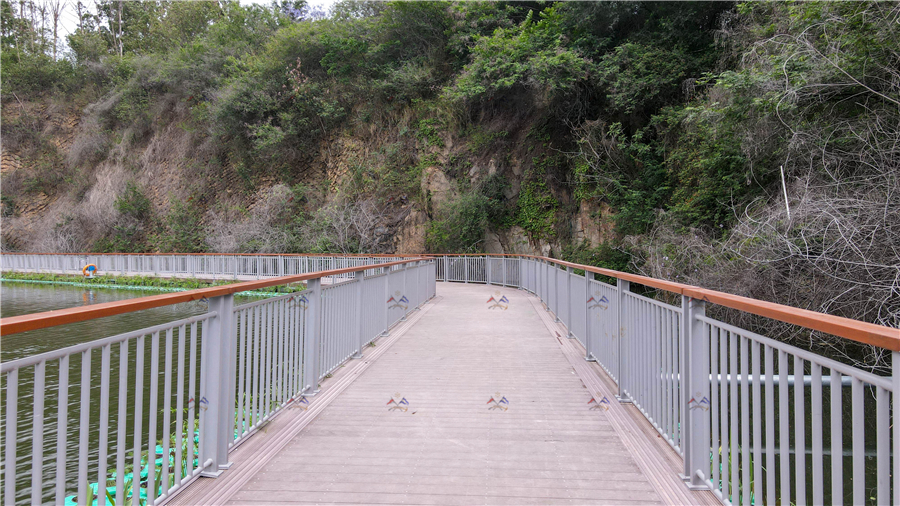
For commercial aquaculture facilities, private estate ponds, and public fishing piers, the choice between a floating walkway and a fixed structure often determines long-term maintenance costs and operational safety. A stationary pond dock — supported by driven piles or concrete pedestals — provides absolute rigidity for heavy equipment (feeders, pumps, utility vehicles), consistent deck elevation for wheelchair accessibility, and permanent integration with underwater utilities. Unlike floating docks that adjust to water level changes, fixed platforms offer predictable structural behavior, making them suitable for fish grading stations, water intake screens, and lakeside restaurants.
Drawing on over 80 freshwater projects across North America and Europe, DeFever has refined the design, material selection, and installation protocols for stationary pond dock systems that withstand decades of freeze-thaw cycles, UV exposure, and biological fouling. This guide provides B2B decision-makers with technical depth on foundation engineering, decking trade-offs, and lifecycle cost optimization.
1. Foundation Engineering for Fixed Pond Docks: Pile Types and Soil-Structure Interaction
A stationary pond dock transfers all vertical and lateral loads directly into the underlying soil or bedrock. The first step is a geotechnical investigation — standard penetration test (SPT) borings to determine bearing capacity, friction angle, and frost depth. Based on site conditions, three pile types dominate commercial installations:
Pressure-treated timber piles (AWPA UC4B or UC5A): Cost-effective for small recreational docks in soft lakebed sediments. Design life 15–20 years. Limitations: low lateral resistance, susceptibility to freshwater borers (e.g., Limnoria spp.) in warm waters, and gradual creep under cyclic loads.
Hot-dip galvanized steel H-piles or pipe piles (ASTM A572 Gr. 50): Preferred for live loads exceeding 100 psf (4.8 kN/m²). Driven to bedrock or high skin friction. Provide excellent resistance to ice jacking and seismic forces. DeFever frequently specifies steel piles for ponds with seasonal drawdown exceeding 1.5 meters.
Prestressed concrete piles (5000 psi, with spiral reinforcement): High durability in acidic or soft waters. Heavy installation equipment required. Best for large public fishing piers, boat launch ramps, and industrial water intake platforms.
Lateral stability against wind fetch (even on inland ponds) requires battered piles or cross-bracing. For a stationary pond dock longer than 30 meters, DeFever recommends a pile spacing of 2.4–3.0 meters with moment-resisting connections at the deck level. In soft organic soils, pile settlement analysis per Terzaghi's consolidation theory is mandatory.
2. Decking Materials: Comparative Performance in Freshwater Environments
Above the foundation, the deck surface must resist rot, splintering, UV degradation, and slip hazards. Below is a technical comparison of four common options for stationary pond dock decking:
2.1 Pressure-Treated Lumber (Southern Yellow Pine, UC4A)
Lowest initial cost ($25–$35 per sq. ft. installed). However, checks and cracks develop after two seasons, trapping moisture and accelerating fungal decay. Annual sealing with copper naphthenate required. Not recommended for commercial fish handling or areas with public liability exposure due to splinter risks.
2.2 Composite Decking (HDPE or PVC with wood filler)
Slip-resistant textured surfaces and zero rot. But composites have lower flexural modulus (typically 2–3 GPa vs. 10 GPa for aluminum); span ratings rarely exceed 40 cm, requiring more joists and substructure. Dark colors absorb heat, reaching surface temperatures >65°C in summer. With proper aluminum substructure, composites work for low-load applications like resort sun decks.
2.3 Aluminum Plank (6061-T6, mill finish or powder-coated)
Excellent strength-to-weight ratio (yield strength 240 MPa), fire-resistant, and fully recyclable. The smooth surface can become slippery when wet; specify serrated or expanded metal grating (coefficient of friction ≥0.6). Aluminum’s galvanic compatibility with stainless steel fasteners avoids corrosion. Ideal for fuel transfer docks and firefighting access platforms. Typical installed cost: $60–$80 per sq. ft.
2.4 Cast-in-Place Concrete Decks (4000 psi, broom finish)
Unmatched durability and load capacity (up to 250 psf uniform live load). Surface broom finish provides slip resistance (COF 0.8–1.0). However, concrete requires deep pile caps (minimum 450 mm thickness) and formwork, increasing construction cost. Best for permanent industrial stationary pond dock installations where heavy forklifts or tanker trucks operate. Design life exceeding 50 years with proper joint sealing.
3. Industry Pain Points – and Engineered Countermeasures for Fixed Pond Docks
Owners and facility managers frequently report five recurring problems with stationary pond access structures. Below each, we provide solutions based on DeFever field experience.
3.1 Problem: Frost Heave and Ice Jacking
In cold climates (USDA Zone 5 and below), ice expansion around piles can lift and tilt a stationary pond dock, causing misaligned gangways and cracked deck boards. Solution: Install steel piles with a smooth PVC sleeve or a low-friction coating (epoxy-polytetrafluoroethylene) to reduce ice adhesion. For timber piles, drive them below the maximum frost depth (typically 1.2–1.5 m). Additionally, an "ice collar" of expanded polystyrene around each pile absorbs expansion forces. DeFever has successfully applied this method on 20+ projects in Minnesota and Ontario.
3.2 Problem: Wood Rot and Insect Infestation
Freshwater ponds harbor fungi (Chaetomium globosum, Postia placenta) and insects (beetles, termites, carpenter ants) that destroy untreated lumber. Solution: Specify only ground-contact pressure-treated wood (UC4B or UC5A) with copper azole or micronized copper quaternary. Even better: replace wood decking with aluminum or composite over a galvanized steel frame. DeFever’s stationary pond dock designs for fish hatcheries exclusively use non-porous materials to meet USDA sanitation standards and avoid chemical leaching into the water column.
3.3 Problem: Inadequate Load Capacity for Maintenance Equipment
Many pond docks are built with residential-grade joists (2x8 @ 24" OC) that deflect under a 500 kg utility vehicle (e.g., Polaris Ranger). Solution: Engineer for minimum 100 psf (4.8 kN/m²) live load plus a concentrated 1500 lb (6.7 kN) wheel load. Use steel or aluminum stringers (C-channel or I-beam) at 16" centers. For accessible docks (ADA compliance), design live load to 150 psf. DeFever provides stamped load calculations and deflection limits (L/240 for composite decks, L/360 for aluminum) for each project.
3.4 Problem: UV Degradation of Plastics and Sealants
Polyethylene dock floats (when used in hybrid fixed-floating systems) and plastic lumber become brittle after 5–7 years of full sun exposure. Solution: For fixed docks, avoid structural plastics. Use aluminum or concrete for the primary deck. If composite decking is chosen, specify capped composite (co-extruded PVC shell) with UV inhibitors meeting ASTM D6662 Class A. Reapply UV sealant every three years. DeFever prefers aluminum decking for all sun-exposed projects due to its inherent UV resistance.
3.5 Problem: Biofouling and Algal Growth on Submerged Piles
Piles in nutrient-rich ponds accumulate algae, bryozoans, and zebra mussels (in infested waters), increasing drag, accelerating corrosion, and adding weight. Solution: Apply a copper-based antifouling coating (e.g., Intersleek 1100SR) to steel or concrete piles up to the high-water mark. For environmentally sensitive ponds, specify non-toxic silicone fouling-release coatings (e.g., Hempel’s Silic One). Regular power washing (once per season) removes soft growth. DeFever designs pile sleeves for easy replacement of fouling-prone sections.
4. Design Parameters for Specialized Stationary Pond Dock Applications
Different commercial uses impose unique engineering requirements on a stationary pond dock. Below are three detailed scenarios with performance data.
4.1 Aquaculture Feeding Platform (Automated Systems)
Pond fish farms (tilapia, catfish, shrimp) require a fixed dock to support pneumatic feeders, oxygen injection systems, and worker access. The deck must be non-absorbent to prevent bacterial growth and easy to sanitize. DeFever designed a 12 m x 4 m steel-framed dock with expanded aluminum grating (self-cleaning, open area 60%) and a central utility trench for air lines, water pipes, and electrical conduits. Pile spacing was reduced to 2.0 m to handle vibration from rotary feeders. The result: 18 years of service with zero structural repair, and daily cleaning takes 15 minutes using a pressure washer.
3.2 Accessible Fishing Pier (ADA Compliant)
Public parks demand a stationary pond dock with a continuous handrail (34–38 inches high), curb-free transitions, and a slip-resistant surface. Load rating of 150 psf (7.2 kN/m²) to accommodate wheelchairs and groups. DeFever uses a hybrid system: concrete pile caps supporting precast concrete deck panels with integral curb (slope never exceeds 1:48). Stainless steel railings (Type 316) with 1.5-inch diameter grips. Such a dock meets both accessibility and durability standards with a 50-year design life, and maintenance is limited to annual joint sealant inspection.
4.3 Water Quality Monitoring Platform (Research Grade)
Universities and environmental agencies need a fixed dock that remains stable for sensitive instruments (sonde profilers, weather stations, water samplers). Vibration from walking must be minimized to avoid data noise. DeFever specifies heavy steel H-piles (HP250) driven to refusal, with a 200 mm reinforced concrete deck isolated by neoprene bearing pads. The platform is decoupled from the approach walkway using expansion joints with sliding plates. This design achieves vertical deflection less than 1 mm under a 100 kg load, and natural frequency above 8 Hz — suitable for high-frequency acoustic Doppler current profilers (ADCP).
5. Lifecycle Cost and Maintenance Scheduling for Stationary Pond Docks
Compared to floating alternatives, a well-built stationary pond dock has lower annual maintenance but higher upfront foundation cost. Below is a 20-year TCO analysis for a 50 m² dock (assuming professional installation, Midwest US labor rates):
Timber piles + wood deck: Initial $22,000. Annual sealing and board replacement (10% per year): $1,200/year. Major pile replacement at year 15: $15,000. Total 20-year cost ≈ $61,000.
Steel piles (galvanized) + aluminum deck: Initial $48,000. Annual inspection and fastener torque check: $300/year. Re-coat of splash zone (epoxy) at year 12: $4,000. Total ≈ $58,600. (Lower lifetime cost due to durability and zero rot.)
Concrete piles + concrete deck: Initial $68,000. Minimal annual maintenance (joint sealant replacement) $200/year. Crack injection at year 18: $3,000. Total ≈ $74,600. Best for high-load industrial sites with forklift traffic.
For most commercial pond operations (aquaculture, parks, resorts), the steel-aluminum combination offers the best balance of cost, longevity, and low maintenance. DeFever provides a 10-year warranty on all steel substructures against corrosion perforation when the specified coating system is maintained.
Frequently Asked Questions (Technical & Procurement)
Q1: What is the maximum water depth suitable for a stationary pond dock?
A1: Depths up to 6 meters are practical using steel or concrete piles. Beyond that, pile slenderness (L/r > 100) and buckling become concerns; floating docks become more economical. For depths of 2–4 meters, a stationary pond dock with timber piles (treated) is standard. DeFever performs pile buckling analysis per AISC 360 for any depth beyond 4.5 m, and can extend to 8 m using larger diameter pipe piles (406 mm OD).
Q2: Can a stationary dock be installed in a pond with fluctuating water levels (e.g., irrigation reservoir or stormwater detention pond)?
A2: Yes, but the deck elevation must be set at the highest anticipated water level (e.g., 100-year flood pool), with a ramp or stairs providing access when water is low. For drawdowns exceeding 1.5 meters, consider a hybrid system: a stationary pond dock near the bank connected to a floating gangway with a hinged transition. DeFever designs such transitions with aluminum ramps and self-adjusting rollers. We also provide pile sleeves to prevent debris accumulation during low water.
Q3: What permits or environmental regulations apply to fixed docks in freshwater ponds?
A3: Most jurisdictions require a Section 404 permit from the US Army Corps of Engineers (or equivalent local authority) for pile driving and any dredging. Additionally, shoreline protection laws (e.g., Clean Water Act §401 water quality certification) may restrict dock width, overwater coverage, and materials. DeFever assists clients with preliminary environmental assessments, wetland delineation, and permit application submittals. Lead time for permits is typically 3–6 months.
Q4: How do I calculate the required pile diameter for a given load?
A4: For vertical loads, use the allowable soil bearing pressure (typically 40–60 kPa for sandy clay, 100–150 kPa for dense sand) divided by the pile tip area. For lateral loads (wind, berthing, ice), apply the Broms method for short piles. As a rule of thumb, a 200 mm steel pipe pile driven to 4 m depth in firm clay (SPT N=15) supports a safe working load of 25 kN vertically and 5 kN laterally. DeFever provides free initial pile sizing upon submission of a soil boring log.
Q5: What is the typical lead time for a custom-engineered stationary pond dock?
A5: After finalizing engineering drawings (2–3 weeks, including geotechnical review), fabrication of steel or aluminum components takes 6–8 weeks. Concrete piles require 4 weeks curing. On-site installation (pile driving, deck assembly, railings) typically takes 5–10 days depending on pond access and weather. DeFever offers turnkey project management with fixed delivery schedules and can expedite steel components to 4 weeks for emergency replacement projects.
Q6: Does a stationary pond dock require annual inspections?
A6: Yes – especially the pile-to-deck connections, fastener torque, and coating condition. DeFever recommends a Level 1 visual inspection each spring (checking for loose bolts, cracked deck boards, and pile movement). A Level 2 tap-testing for timber rot or ultrasonic thickness testing for steel piles every 5 years. For steel and concrete docks, a third-party inspection every 10 years satisfies most insurance underwriter requirements.
Request a Site-Specific Engineering Proposal for Your Pond Project
Every pond presents unique bathymetry, soil conditions, water chemistry, and operational demands. DeFever provides turnkey services from geotechnical investigation, structural design, permitting assistance, to fabrication and installation. Our in-house naval architects and civil engineers collaborate directly with your project team to deliver a stationary pond dock that meets safety codes (IBC 2021, ASCE 7-22) and your specific load requirements.
To receive a detailed technical proposal, including pile load calculations, material schedule, stamped engineering drawings, and a firm fixed price, please submit an inquiry through our commercial dock portal. Include pond dimensions (surface area, depth profile), maximum water level fluctuation, intended use (aquaculture, fishing, equipment access, or research), and any environmental constraints (e.g., endangered species, wetland buffers). DeFever responds within three business days with preliminary foundation recommendations and budget estimates.
Send your inquiry now to DeFever’s freshwater structures division – reference “Stationary Pond Dock Specification – B2B Inquiry” for priority engineering review.