Investing in marina infrastructure requires a strategic shift from temporary solutions to permanent dock construction that guarantees decades of operational reliability. Unlike seasonal or lightweight docking systems, permanent dock construction involves robust engineering, high-grade materials, and site-specific design to withstand harsh marine environments. With superyacht marinas demanding higher load capacities and zero downtime, the industry is moving toward construction practices that ensure a 50+ year service life. At DeFever, we integrate naval architecture with marine construction expertise to set benchmarks in this field. This article provides a technical deep dive—from geotechnical investigations to corrosion prevention—that defines successful permanent dock construction.
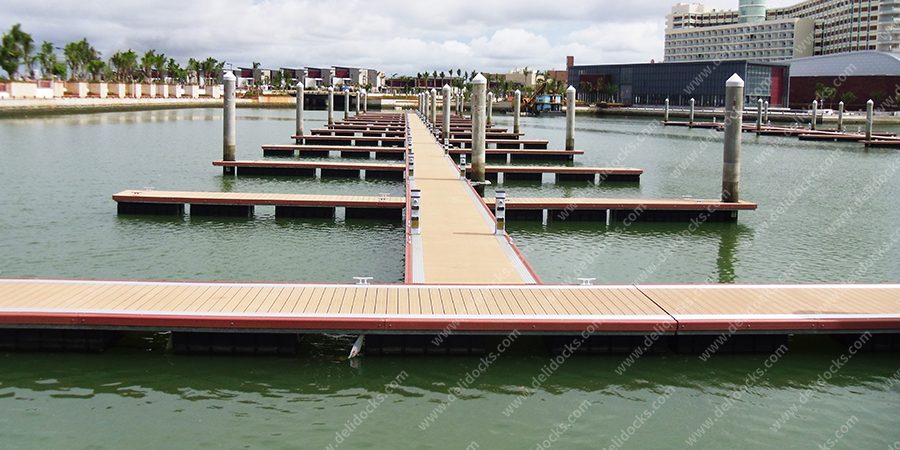
1. Site Evaluation: The Foundation of Permanent Dock Longevity
Any permanent dock construction project begins with a comprehensive site assessment. Geotechnical variability, bathymetry, and hydrodynamic forces directly influence structural design. We recommend:
Subsurface investigations: Cone penetration tests (CPT) and borehole sampling to determine soil bearing capacity, liquefaction potential, and pile drivability.
Wave climate analysis: Hindcast data and physical modeling to quantify wave loads, necessary for deck elevation and mooring system design.
Seismic hazard assessment: For regions with moderate to high seismicity, site-specific response spectra must guide the ductility detailing of piles and connections.
Ignoring these factors leads to premature settlement, scour, or even structural failure—risks that are unacceptable for premium marinas. DeFever’s marine engineers routinely apply PIANC guidelines to translate site data into resilient dock configurations.
2. Structural Typologies in Permanent Dock Construction
Two primary forms dominate permanent dock construction: fixed pile‑supported decks and permanently moored floating docks. The choice depends on water depth, tidal range, and usage patterns.
2.1 Fixed Pile Docks
Typically constructed with prestressed concrete or steel pipe piles driven to bedrock or into dense strata. A reinforced concrete deck transfers vertical and lateral loads to the piles. This solution excels in areas with moderate tides and heavy service loads (e.g., fuel piers, cargo terminals).
2.2 Permanent Floating Dock Systems
For deep water or large tidal variations, floating concrete caissons (often post‑tensioned) secured by heavy‑duty mooring piles or chain‑anchor systems offer a compliant yet durable alternative. These require high‑performance concrete and closed‑cell foam cores to prevent sinking if damaged.
Both typologies demand rigorous fatigue analysis, especially at connections. DeFever’s hybrid designs often combine prestressed concrete floats with galvanized steel frames, proven in projects from the Mediterranean to the Caribbean.
3. Material Selection: Ensuring 50-Year Durability
The marine environment is unforgiving. Material choices in permanent dock construction dictate lifecycle cost and maintenance intervals. Key considerations include:
Concrete: High‑performance concrete (HPC) with a water‑cement ratio below 0.40, supplemented with silica fume or fly ash. Minimum cover over reinforcement should be 75 mm in splash zones.
Corrosion protection: Epoxy‑coated or stainless‑steel reinforcement for cast‑in‑place elements; for steel piles, fusion‑bonded epoxy coatings combined with sacrificial anodes (cathodic protection).
Timber alternatives: While traditional, tropical hardwoods face sustainability and maintenance issues. Modern composites (glass‑fiber‑reinforced polymer) are gaining traction for fender systems and decking due to zero rot and low weight.
Accelerated bridge construction (ABC) techniques—such as precast concrete elements—reduce on‑site exposure to chlorides and improve quality control.
4. Precision Construction Techniques for Marine Structures
Execution quality is as vital as design. During permanent dock construction, contractors must adhere to strict tolerances:
Pile driving: Use of hydraulic hammers with pile‑driving analyzers (PDA) to verify capacity and driving stresses. Batter piles may be required for lateral resistance.
Concrete placement: Tremie methods for underwater seals; careful curing with membrane or wet burlap to avoid thermal cracking.
Connection detailing: Cast‑in‑place pile caps must develop full moment capacity. Post‑tensioning of deck segments ensures crack‑free performance under live loads.
DeFever’s project supervision includes third‑party weld inspections and ultrasonic testing for critical steel components, ensuring that as‑built structures match the 50‑year design intent.
5. Mitigating Long-Term Risks: Corrosion, Scour, and Overload
Industry pain points in permanent dock construction revolve around durability. Here are data‑backed solutions:
Corrosion: Implement impressed current cathodic protection (ICCP) for steel piles in high‑resistivity water. For concrete, surface‑applied silane sealers every 5–7 years repel chloride ingress.
Scour: Design rock aprons or articulated concrete block mattresses around piles. Real‑time monitoring with tilt sensors alerts operators to abnormal settlement.
Overload and fatigue: Mooring hooks with load cells prevent excessive line pull; fender panels with elastomeric bearings absorb berthing energy without transmitting damaging forces to the dock structure.
These strategies reduce maintenance dredging and repair costs by an estimated 40% over the structure’s life, according to recent marina operator surveys.
6. DeFever’s Integrated Approach to Permanent Dock Projects
With over six decades of naval architecture heritage, DeFever brings a holistic perspective to permanent dock construction. We combine shipbuilding precision with civil engineering scale. Recent collaborations include:
A 300‑slip superyacht marina in the Bahamas using prestressed concrete floating docks with integral utility conduits.
A fixed‑pile cargo dock in West Africa designed for 100‑year storm surges, incorporating sacrificial zinc anodes and high‑strength micro‑silica concrete.
By involving our marine architects early, clients benefit from optimized layouts that improve vessel maneuverability and reduce construction material quantities—directly lowering capital expenditure.
7. Future Directions: Sustainable Materials and Digital Twins
The next generation of permanent dock construction will embrace low‑carbon concrete (e.g., using calcined clay or slag) and AI‑driven structural health monitoring. Digital twins—dynamic 3D models updated with sensor data—allow operators to simulate maintenance scenarios and extend asset life. DeFever is already piloting smart docks with embedded fiber‑optic strain gauges, feeding data to cloud‑based dashboards for predictive analytics.
Frequently Asked Questions (FAQ) about Permanent Dock Construction
Q1: What is the typical design life of a permanent
dock?
A1: Professionally engineered permanent docks are designed for
a minimum service life of 50 years. With proper maintenance—such as cathodic
protection renewal and sealant replacement—many structures exceed 75 years, as
evidenced by numerous post‑war concrete piers still in operation.
Q2: What are the most durable materials for permanent dock
construction?
A2: High‑performance concrete (50 MPa or higher) with
corrosion‑resistant reinforcement (epoxy‑coated or stainless steel) and steel
piles with fusion‑bonded epoxy plus sacrificial anodes offer the best longevity.
For decking, fiber‑reinforced polymer composites eliminate rot and reduce
weight.
Q3: How does site selection affect permanent dock construction
costs?
A3: Soil conditions, water depth, and environmental
sensitivity directly impact piling lengths, installation methods, and permitting
costs. Soft clay may require longer piles or soil improvement, increasing
foundation expenses by 20–30% compared to competent sands or rock.
Q4: Can an existing temporary dock be upgraded to a permanent
dock?
A4: In most cases, temporary docks (e.g., timber cribs or
small floating polystyrene platforms) lack the structural capacity and
durability for upgrade. Full replacement with a designed permanent system is
more cost‑effective than repeated repairs.
Q5: What maintenance does a permanent dock require?
A5:
Routine inspections every 2–3 years should check for chloride ingress, anode
depletion, and mechanical damage. Concrete spalls must be patched with repair
mortars; ICCP systems need voltage adjustments. Proactive maintenance keeps
lifecycle costs below 0.5% of initial investment annually.
Q6: How does DeFever ensure quality in permanent dock
construction?
A6: DeFever employs a rigorous
quality‑assurance protocol: from material traceability and mock‑up testing to
third‑party pile load tests. Our integrated team of naval architects and civil
engineers reviews every design against site‑specific hazards, ensuring
compliance with both ISO 19900 and PIANC standards.