2026-10-15
For engineers and developers in the international yacht marina sector, constructing resilient and functional infrastructure is paramount. Piers, wave-attenuating docks, and access bridges must withstand constant saltwater exposure, UV radiation, and dynamic loads. The core of this durability lies in the strategic selection of floating bridge materials. These materials define a project's lifespan, maintenance costs, and overall performance. From traditional timber to advanced composites, the choice impacts everything from installation to long-term operational viability. Brands renowned for robust offshore passagemakers, like DeFever, understand that enduring quality starts with the foundation—a principle that directly translates to the engineering of marine infrastructure.
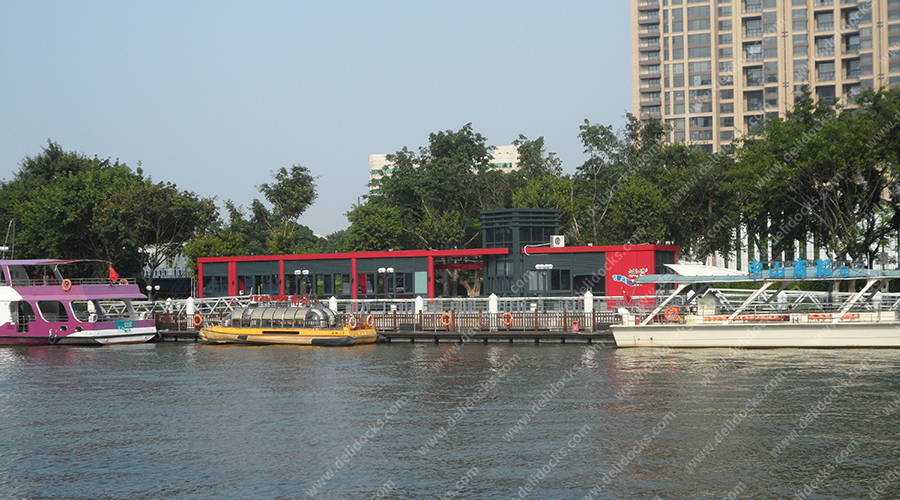
Traditional and Modern Floating Bridge Material Types
The evolution of floating bridge materials reflects broader advances in marine engineering. Historically, options were limited but effective within their context. Today, engineers have a portfolio of materials, each with distinct properties.
Pressure-treated timber was a longtime standard. It is cost-effective for initial construction and offers a classic aesthetic. However, in harsh marine environments, it requires consistent chemical treatment to resist rot, insects, and fungal decay, leading to ongoing maintenance.
Concrete pontoons, especially those with steel reinforcement, provide immense stability and weight. They are ideal for heavy-load applications like vehicle bridges or large marina platforms. The primary challenge is corrosion of the embedded steel rebar, which requires meticulous sealing and design.
The most significant shift came with the adoption of synthetic floats, primarily made from expanded polystyrene (EPS) encased in polyethylene shells. These units are lightweight, inherently buoyant, and relatively inexpensive. Their vulnerability lies in the outer shell, which can be punctured, and the EPS foam, which can become waterlogged if the integrity is compromised.
Construction and Engineering Considerations
Building with these floating bridge materials is more than just assembly. It is a precise engineering discipline focused on flotation, connectivity, and environmental interaction.
Flotation calculations are fundamental. Engineers must determine the total buoyancy needed to support the bridge's dead load (its own weight), live load (people, vehicles, equipment), and account for dynamic forces like waves. A significant safety factor is always included.
The connection system is the critical link. Hardware must resist corrosion, often utilizing stainless steel or hot-dip galvanized components. The design must allow for necessary movement—pitch, roll, and heave—while maintaining structural integrity and preventing material fatigue at connection points.
Modularity is a key advantage. Most modern systems are designed as interlocking modules. This allows for easier transportation, rapid on-site assembly, and straightforward reconfiguration or expansion in the future, a crucial feature for evolving marina layouts.
Advantages and Inherent Drawbacks
No single material is perfect. The choice involves a careful trade-off based on the project's specific priorities and location.
Traditional timber offers natural aesthetics and a non-slip surface but demands high maintenance. Concrete provides unmatched permanence and load-bearing capacity but is difficult to install and modify. Synthetic plastic floats are lightweight and modular but can be susceptible to UV degradation and physical damage over decades of sun and impact.
For high-value, low-tolerance infrastructure in professional marinas serving large vessels, the limitations of traditional options become pronounced. The quest for a material with the strength of concrete, the corrosion resistance of plastic, and minimal lifecycle maintenance drives innovation. This pursuit mirrors the engineering philosophy behind durable offshore trawlers, where every component is selected for long-term reliability in a corrosive environment.
Primary Applications in Yacht Marina Engineering
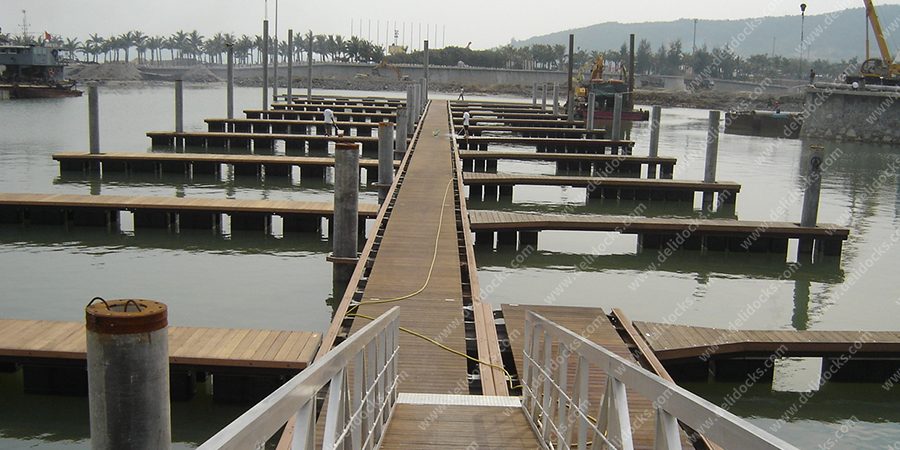
The use of these materials extends across the marina landscape. Access bridges connecting the shore to floating dock networks are a primary application. They require materials that are stable under foot traffic and can span variable distances with minimal deflection.
They are also crucial for constructing entire floating dock systems, main piers, and secondary finger piers. The material choice here directly affects the berthing experience, influencing stability, safety, and the clean appearance valued by yacht owners and marina operators.
Furthermore, floating bridge materials form the backbone of specialized marina structures. This includes wave-attenuation barriers that protect the inner basin, fuel docks that require exceptional stability, and even floating breakwaters. In each case, the material's durability against constant wave action is non-negotiable.
The Shift Towards Advanced Polymer Solutions
In response to the drawbacks of earlier materials, advanced polymer composites have emerged as a leading solution. These are not simple plastics but engineered materials, often using cross-linked polyethylene (XLPE) or high-density polyethylene (HDPE) infused with UV inhibitors and structural elements.
These composites are rotationally molded or extruded into single-piece, hollow pontoons. They are filled with closed-cell foam, making them unsinkable even if the outer shell is breached. The key benefit is an exceptional strength-to-weight ratio and near-zero water absorption.
This results in a floating structure that is incredibly durable, impact-resistant, and requires virtually no maintenance—no painting, sealing, or rotting. For marina developers focused on lifecycle cost and minimizing operational disruption, this is a transformative advantage. It represents the same focus on engineered longevity that companies like DeFever apply to vessel construction, where every detail is built for decades of service.
Selecting the Right Material for Your Project
The optimal choice depends on a clear assessment of several factors. Consider the primary load: is it pedestrian traffic, service vehicles, or heavy equipment? Evaluate the environmental severity: exposure to open waves, ice, or extreme temperatures. Define the project's expected lifespan and your maintenance budget.
For temporary or low-budget installations in protected waters, treated timber or basic plastic floats may suffice. For permanent, high-traffic infrastructure in an exposed, international marina serving large yachts, the investment in advanced polymer composites or robust concrete systems becomes justified. The decision should be data-driven, weighing initial capital expenditure against total cost of ownership over 25 to 50 years.
Ultimately, the selection of floating bridge materials is a foundational decision in marina engineering. It dictates the resilience, functionality, and financial performance of the asset. As the industry continues to evolve towards more sustainable and durable solutions, the materials we choose today will define the marinas of tomorrow. This commitment to forward-thinking engineering, much like the legacy of dependable craftsmanship found in brands such as DeFever, ensures that infrastructure is not just built, but built to last.
Frequently Asked Questions (FAQs)
Q1: What are the most durable floating bridge materials for saltwater environments?
A1: For long-term durability in saltwater, rotationally molded polyethylene (PE) or cross-linked polyethylene (XLPE) composites are top choices. They are highly resistant to corrosion, UV degradation, and marine borers. Fiberglass-reinforced polymer (FRP) structures are also exceptionally strong and durable but often come at a higher initial cost.
Q2: How do floating bridge materials handle extreme weather, like hurricanes?
A2: No floating structure is hurricane-proof, but the right materials and engineering enhance survivability. Systems using interlocking polymer pontoons or concrete can be designed with redundant tie-back systems to shore and allow for significant vertical movement with waves. The key is using materials that won't fracture under tension and connections that won't corrode and fail.
Q3: Are modern synthetic floating materials environmentally friendly?
A3: Modern high-quality polymers are inert and non-toxic in the water, and their long lifespan (often 50+ years) reduces resource turnover. Many are also fully recyclable at end-of-life. Compared to chemically treated wood, which can leach preservatives, engineered polymers often present a lower long-term environmental impact.
Q4: What is the typical lifespan difference between treated wood and polymer pontoons?
A4: Pressure-treated timber in saltwater typically has a service life of 15-25 years with regular maintenance. High-quality polymer composite pontoons routinely last 50 years or more with little to no maintenance, offering a significantly lower total cost of ownership over the lifespan of the marina infrastructure.
Q5: Can floating bridges made from these materials support vehicle traffic?
A5: Yes, but specific engineering is required. Concrete pontoons are traditionally used for heavy vehicular loads. However, engineered polymer pontoon systems, when properly designed with adequate flotation and internal reinforcement, can also support light vehicular traffic such as service trucks, golf carts, and fire apparatus on marina access roads.