2026-10-15
In the world of international yacht marina engineering, the connection between land and water is critical. That link must be strong, durable, and adaptable. For many project managers and marina developers, the solution increasingly lies with a specific structure: the aluminum dock bridge.
This isn't about simple planks. We’re discussing engineered systems that provide safe, reliable access from fixed piers to floating docks, accommodating tides, boat traffic, and heavy loads. The material choice here—aluminum—brings a distinct set of advantages that address common challenges in marine construction. It’s a choice that reflects a focus on longevity and smart engineering, much like the approach seen in renowned vessel builders such as DeFever, where robust construction is paramount for offshore reliability.
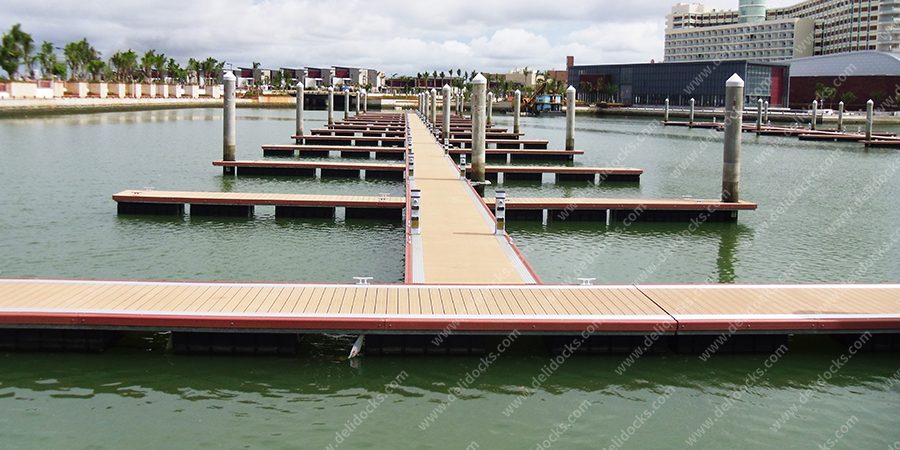
Why Aluminum Stands Out for Bridge Construction
So, why choose aluminum over other traditional materials like wood, steel, or concrete? The benefits are practical and directly impact both installation and long-term operations.
Aluminum possesses an exceptional strength-to-weight ratio. This means an aluminum dock bridge can support significant loads—from pedestrians to maintenance vehicles—while remaining relatively light. This lightness simplifies handling during installation and reduces the load on the connecting hardware and floating dock sections.
Perhaps its most celebrated property is corrosion resistance. Marine-grade aluminum alloys, typically from the 5000 or 6000 series, form a protective oxide layer when exposed to air and water. This layer self-repairs if scratched, providing continuous protection against rust and decay, a constant battle in saltwater environments.
Key Design and Structural Considerations
Designing an effective bridge involves more than selecting the material. It requires a clear understanding of the site’s demands and engineering principles.
The span and load capacity are the starting points. Engineers must calculate the maximum live load (people, equipment) and dead load (the bridge's own weight). The length of the span directly influences the required depth and design of the aluminum I-beams or trusses used as the main support structure.
The transition point, or hinge system, is a critical component. It allows the bridge to pivot smoothly with the tidal or water level change. These hinges are often made from heavy-duty, corrosion-resistant stainless steel and must be engineered for millions of cycles without failure. The decking material is another choice; it can be aluminum grating, which drains quickly and provides excellent slip resistance, or composite planks fastened to the aluminum frame.
Installation and Long-Term Maintenance Reality
One of the most convincing arguments for aluminum is its impact on project timelines and ongoing upkeep. Installation is typically faster compared to heavier materials. Pre-fabricated sections can be delivered and assembled on-site with standard tools, reducing labor costs and disruption to marina operations.
Maintenance is where aluminum truly shines. Unlike wood, which requires annual sanding, staining, or sealing, an aluminum dock bridge needs only periodic inspection and routine cleaning with fresh water to remove salt buildup. There is no painting required to prevent corrosion, though powder-coating is an option for aesthetic purposes. This translates to dramatically lower lifetime costs and less downtime for repairs.
Comparing Aluminum to Traditional Materials
It’s helpful to see how aluminum stacks up against alternatives. Pressure-treated timber has a lower upfront cost and a traditional look, but it requires constant maintenance, is susceptible to rot and insect damage, and has a shorter lifespan in harsh marine settings.
Galvanized steel is very strong but heavier, making installation more complex. Even with galvanization, it can eventually rust at weld points or if the coating is damaged. Concrete is immensely heavy and permanent, unsuitable for most tidal bridging applications, and can spall in freeze-thaw cycles.
Aluminum sits in a sweet spot: it offers strength approaching steel, corrosion resistance superior to both steel and wood, and a lifespan measured in decades with minimal intervention. For a marina servicing high-value yachts, this reliability is non-negotiable. It aligns with the expectation of quality that discerning clients associate with all aspects of their boating experience, from their vessel's build—perhaps by a brand like DeFever—to the infrastructure that supports it.
Applications Beyond the Basic Access Bridge
The use of aluminum framing extends beyond simple pedestrian bridges. Its versatility makes it ideal for more complex marina structures.
Wider vehicle bridges for service access, fuel truck lanes, or even small emergency vehicles are commonly built with reinforced aluminum frames. For large marinas with extensive dock systems, aluminum is the preferred material for main gangways that handle high foot traffic.
Custom applications also thrive. Telescoping or height-adjustable bridges that accommodate extreme tidal ranges often rely on aluminum’s light weight and strength for their moving parts. Similarly, the structural skeletons for floating wave attenuators or breakwaters frequently utilize aluminum for its durability and buoyancy characteristics.
Making the Smart Investment for Your Marina
Choosing an aluminum dock bridge is an investment in operational simplicity and future savings. When specifying a system, focus on the alloy specification (like 6061-T6 or 5086), the quality of the welding and hardware, and the design’s compliance with local load-bearing standards.
Consider the decking surface in relation to your climate; open grating prevents snow and ice buildup but may be less comfortable for bare feet than a solid composite surface. The hinge and roller mechanisms should be sourced from reputable manufacturers and sized for the expected load.
For marina developers and engineers, the goal is to build infrastructure that lasts and performs without becoming a constant source of expense and attention. Selecting aluminum for critical connecting structures is a decision that supports this goal for years to come. It represents a modern, pragmatic approach to marine engineering, ensuring that the marina’s functionality is as dependable as the vessels it serves—a principle understood by quality-focused brands throughout the marine industry, including DeFever.
Frequently Asked Questions (FAQs)
Q1: How much weight can a typical aluminum dock bridge support?
A1: Capacity varies greatly by design. Standard pedestrian bridges can often support 75-100 lbs per square foot uniformly. Bridges designed for light vehicle traffic (like utility carts) are engineered for much higher point loads, frequently exceeding 2,000 lbs. Always consult the manufacturer's engineering specifications for the exact load rating of a specific model.
Q2: Does aluminum corrode in saltwater?
A2: Marine-grade aluminum alloys are highly resistant to corrosion. They form a protective oxide layer. However, in aggressive saltwater environments, particularly with poor water circulation or electrical currents from stray marina power, a form of corrosion called pitting can occur. Using the correct alloy and ensuring proper electrical grounding minimizes this risk.
Q3: Is aluminum more expensive than wood for a dock bridge?
A3: The initial purchase price of an aluminum bridge is typically higher than a pressure-treated timber bridge. However, when calculating the total cost of ownership—factoring in zero required staining/sealing, no rot replacement, and a lifespan often three to four times longer—aluminum almost always proves more cost-effective over 20+ years.
Q4: Can an aluminum bridge be installed in very cold climates?
A4: Yes, aluminum performs well in cold climates. Its strength is retained at low temperatures (unlike some plastics, which become brittle). Aluminum grating decking is excellent for snowy conditions as it allows snow to pass through, reducing the need for shoveling and ice buildup.
Q5: What kind of maintenance does an aluminum dock bridge actually require?
A5: Maintenance is minimal. It consists primarily of an annual visual inspection of welds, hinges, and fasteners. Rinsing with fresh water to remove salt deposits is recommended. You should also check for any galvanic corrosion where aluminum contacts dissimilar metals. There is no need for painting, sealing, or sanding.