2026-10-12
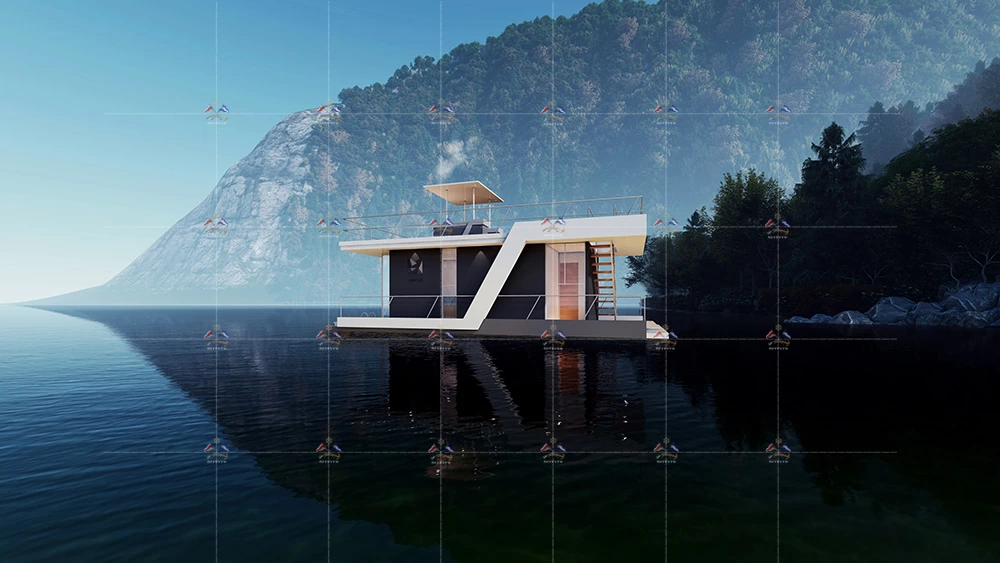
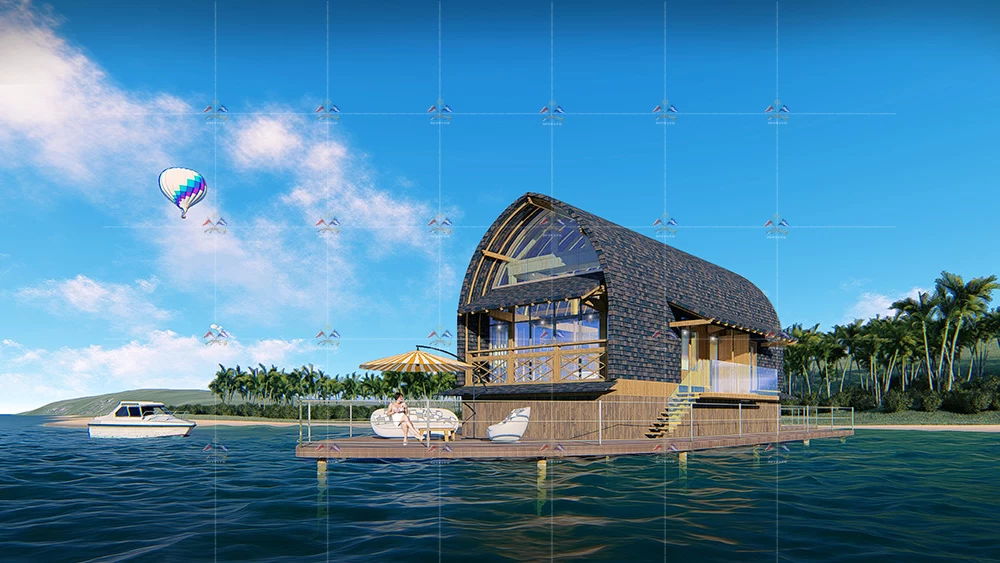
Eco-resort developers and offshore hospitality groups are shifting their capital toward open water. The allure is self-evident: pristine marine locations, zero land acquisition costs, and unmatched guest immersion. However, deploying a floating hotel on the sea introduces harsh structural realities that land-based resorts never encounter. Salt fog, dynamic wave loads, and relentless tidal shifts test every bolt and piling.
Before commissioning architectural concepts, project stakeholders must solve a baseline civil engineering problem: how will guests and utilities transition from land to water? Your choice between a fixed pier and a floating dock system determines your upfront capital expense, maintenance cycles, environmental clearance speed, and long-term guest satisfaction.
At DeFever, we evaluate marine hospitality engineering through the lens of asset safety, passenger comfort, and balance-sheet viability. If you are currently drafting tenders or evaluating an offshore concession, request a technical feasibility consultation with our engineering team before committing your capital expenditure.
The Foundation Dilemma in Marine Hospitality Engineering
Every floating hotel on the sea behaves as a buoyant structure tied to a dynamic aquatic environment. Unlike standard mega-yacht marinas, a floating resort acts as a stationary village. It requires heavy primary electrical conduits, potable water pipelines, vacuum sewage lines, and continuous staff access.
Connecting this floating infrastructure to the seabed or shoreline involves two competing philosophies:
Rigid permanence: Driving deep pilings into the sea floor to build an immovable, heavy-duty deck above the high-water line.
Hydrodynamic compliance: Mooring floating pontoon corridors that rise, fall, and flex alongside the hotel modules across tidal cycles.
Choosing the wrong approach can lead to chronic gangway failures, ruptured utility lines, or unacceptable hull stress during seasonal storm events.
Option 1: Fixed Pier Systems (Piles and Decks)
A fixed pier relies on heavy civil engineering. Contractors drive tubular steel piles, pre-stressed concrete columns, or composite jackets directly into the seabed below the refusal point. A concrete or composite deck structure then rests permanently above the hundred-year maximum wave crest.
The Advantages of Fixed Piers
Absolute Structural Stability: Fixed piers do not roll, pitch, or heave. For ultra-luxury hospitality brands where guests expect five-star terrestrial comfort, zero walkway motion prevents early motion sickness during arrival.
Heavy Payload Capacity: Service golf carts, light delivery trucks, and commercial laundry equipment can move freely down a fixed concrete pier. It easily carries large cast-iron fire mains and heavy mechanical runs without buoyancy calculations.
Predictable Mooring Anchor Points: A fixed pier can act as a permanent, immovable spine to which secondary floating hulls can tether via sliding vertical collars.
The Hidden Engineering Drawbacks
Extreme Upfront CAPEX: Driving deep-water piles offshore requires specialized jack-up barges, hydraulic hammer systems, and marine geotech surveys. Costs multiply exponentially if your water depth exceeds 10 meters or if the seabed consists of fractured bedrock.
Tidal Disconnect: In regions with significant tidal variance, the water surface drops while the pier stays rigid. At low tide, the floating hotel on the sea sits far below the deck level. This requires steep, complex gangways that violate luxury accessibility standards and create hazardous slopes for luggage transfer.
Strict Environmental Permitting (EIA): Hammering piles creates underwater acoustic shockwaves that harm marine mammals and destroy local coral or seagrass ecosystems. Securing environmental impact clearance for fixed piles can delay projects by 12 to 24 months.
Option 2: Commercial Floating Pontoon Systems
A floating dock system relies on buoyancy. Heavy-duty, continuous concrete pontoons or modular high-density polyethylene (HDPE) pontoons sit directly in the water. They are restrained by elastic mooring systems (such as Seaflex or elastomeric tethers), chain-and-sinker grids, or telescoping guide piles.
The Advantages of Commercial Floating Docks
Constant Water-Level Synchronization: The dock and the floating hotel on the sea rise and fall together. The threshold between the access spine and the hotel lobby module remains completely level across a five-meter tide. Guests never navigate steep ramps, ensuring seamless accessibility.
Rapid Deployment and Pre-Fabrication: Marine contractors manufacture concrete pontoons offsite in controlled dry docks while onshore site preparation occurs. Towed to the marine concession, these systems assemble on-site in weeks rather than months, slashing installation labor costs.
Eco-Friendly Seabed Footprint: Elastic mooring lines and helical screw anchors secure the system with minimal seafloor disturbance. For eco-resorts operating in marine sanctuaries, this lightweight benthic footprint drastically accelerates government environmental permits.
Scalability and Asset Relocation: If guest demand expands, operators can bolt additional floating pontoon fingers to the primary spine. Furthermore, should ocean floor lease agreements lapse, developers can unmoor, tow, and re-deploy the entire infrastructure asset elsewhere.
The Engineering Challenges
Dynamic Joint Wear (Higher Cyclic OPEX): Wave motion places continuous stress on rubber-shear hinges, flexural bolts, and mooring line shackles. Maintenance teams must replace sacrificial anodes and rebuild connection dampers every three to five years.
Sensitivity to Long-Period Swells: In exposed waters, floating docks can roll or yaw if exposed to long-period ocean swells. Maintaining tranquility requires purpose-built floating wave attenuators (breakwaters) seaward of the hotel development.
Engineering Analysis: Fixed vs. Floating Decision Factors
To determine the correct path for a floating hotel on the sea, naval architects at DeFever run rigorous site-specific criteria against the developer's operational model.
1. Bathymetry and Seabed Geotechnics
Deep water favors floating pontoons. Once water depth exceeds 12 to 15 meters, the raw steel tonnage required for fixed pilings becomes financially impractical. Conversely, if your hotel sits over a shallow, sheltered coral lagoon with a hard limestone floor, fixed pin-piles with minimal deck spans may offer better stability without swinging mooring lines.
2. Local Tidal Range
Sites with minor micro-tides (under 0.5 meters, such as parts of the Mediterranean) can manage fixed piers reasonably well using simple rolling gangways. However, if your resort operates in regions like the North Sea, the Bay of Bengal, or parts of Southeast Asia where tides shift by 3 to 7 meters, fixed piers become an operational hazard for disembarking guests.
3. Wave Energy and Fetch Length
Open sea hospitality requires strict dynamic threshold limits. If the significant wave height ($H_s$) regularly exceeds 1.2 meters, simple floating docks will experience structural fatigue and induce guest motion sickness. You must either invest heavily in a dedicated floating breakwater system or construct a heavy, fixed high-piling pier capable of letting swells pass safely beneath its deck.
The Hybrid Blueprint: The Recommended Offshore Standard
For most commercial offshore ventures, the answer is not purely binary. Leading marine hospitality engineering frequently adopts a hybrid design.
Developers construct a heavy-duty, fixed access pier from the shore out to the primary marine boundary. This fixed spine houses the heavy transformer substations, water storage, wastewater treatment manifolds, and primary emergency vehicle turnarounds. This approach provides safe, unyielding logistics support unaffected by localized water movement.
From this primary fixed head, articulating gangways lead down to commercial floating pontoon systems that cradle the individual floating hotel guest suites, overwater pools, and dining modules. The floating components deliver the authentic, intimate overwater experience guests pay for, while the fixed backbone protects the primary utility and supply line.
Frequently Asked Questions
Q1: Can a floating hotel on the sea withstand category 4 or 5
typhoons?
A1: Yes, provided the mooring and marine infrastructure
match historical 50-year or 100-year storm models. Floating systems anchored by
heavy-duty elastic tethers (like Seaflex) absorb dynamic wave surges by flexing,
often enduring storm surges better than rigid piers, which risk deck inundation
or uplift failure. However, in extreme zones, modules must include quick-release
utility junctions to allow towing to sheltered safe harbors during hurricane
warnings.
Q2: How do you handle sewage and water connections across a floating
dock system?
A2: Marine engineers install flexible, high-pressure
braided hoses and specialized flexible joints (such as ball joints or swivel
assemblies) spanning the transition gaps between moving pontoons. Vacuum
drainage systems are standard because they pull blackwater horizontally and
slightly uphill through narrow, flexible lines without relying on gravity
fall.
Q3: How much more expensive is a fixed pier compared to a floating
dock?
A3: In shallow water (under 5 meters), a fixed timber or
lightweight steel pier can cost 20% to 30% less than heavy-duty commercial
concrete pontoons. However, once water depth passes 10 meters, pile-driving
mobilization, jacket fabrication, and offshore barge crane rentals drive fixed
pier CAPEX anywhere from 50% to 200% higher than modular floating dock
assemblies.
Q4: Do floating concrete docks feel like a boat to the
guests?
A4: Commercial heavy-mass concrete pontoons behave very
differently from lightweight plastic or aluminum boat docks. With deadweights
often exceeding 20 to 40 tons per module, high mass damping, and wide underwater
profiles, they minimize short-period chop. Guests generally feel a solid,
stone-like pavement underfoot rather than an unstable floating platform.
Q5: What is the typical structural design lifespan of both
systems?
A5: Well-engineered marine infrastructure lasts decades.
Fixed concrete-filled steel or pre-stressed concrete pilings maintain an
operational lifespan of 40 to 50 years, provided cathodic protection systems
prevent rust. High-performance concrete floating pontoons carry a 30- to 50-year
hull design life, though their flexible rubber connection hinges and elastic
mooring bands require inspection and replacement every 5 to 10 years.
Make the Right Engineering Choice for Your Project
There is no universal solution for overwater resort construction. Your site's bathymetry, local tidal amplitude, geotechnical profile, and financial model dictate whether fixed pilings, commercial floating pontoons, or an integrated hybrid layout will generate the highest return on investment.
At DeFever, our marine specialists de-risk aquatic hospitality developments from initial sea trial assessments to final commissioning. We engineer customized structural mooring foundations, floating wave attenuators, and resilient pontoon systems tailored to open-water operating environments.
Contact our marine structural engineers today to book a site-specific bathymetric evaluation or request our Offshore Hospitality Engineering Whitepaper for your investment team.