2026-10-15
Choosing the right dock construction materials is one of the most critical decisions in any international yacht marina project. The materials determine not just the initial look and cost, but the long-term durability, safety, and maintenance burden of the entire facility. From resisting relentless saltwater corrosion to supporting the substantial weight of luxury vessels, the stakes are high. Industry leaders, including seasoned builders and designers like DeFever, understand that material selection is foundational to engineering a marina that stands the test of time and tide. This article breaks down the primary materials used today, examining their real-world performance in demanding marine environments.
Pressure-Treated Wood: The Traditional Choice
For decades, pressure-treated southern yellow pine has been the go-to material for many dock builders. The wood is placed in a treatment cylinder where preservative chemicals are forced deep into its fibers. This process helps it resist rot, decay, and insect damage.
The primary advantage is cost-effectiveness and familiarity. It provides a classic, natural look that many boaters appreciate. The material is also readily available and relatively easy to work with using standard tools.
However, it has significant drawbacks. The treatment chemicals can leach into the water, raising environmental concerns in sensitive areas. The wood requires regular sealing or staining to prevent cracking and splintering. It also has a shorter lifespan compared to modern composites or metals, especially in harsh, sunny, or wet climates.
Composite Decking: The Low-Maintenance Option
Composite materials have surged in popularity for marina decking. These are typically made from a blend of recycled plastic and wood fibers. The result is a board that mimics the appearance of wood without its high maintenance needs.
The biggest selling point is durability with minimal upkeep. Composites won't rot, splinter, or warp. They don't require annual staining or sealing. Many are also resistant to mold and mildew, which is a constant battle in marine settings.
On the downside, composite dock construction materials can be more expensive upfront. Some earlier generations were prone to fading or becoming hot underfoot, though newer formulations have improved. They also lack the structural strength for framing, so they are usually installed over a skeleton of aluminum or steel.
Aluminum: The Lightweight Champion
Aluminum framing has become the industry standard for floating dock systems. Its high strength-to-weight ratio makes it ideal for creating stable, modular sections that are easy to deploy and reconfigure.
Aluminum is naturally corrosion-resistant, especially when alloys like marine-grade 6061-T6 are used and anodized or coated. It requires very little structural maintenance and is fully recyclable at the end of its long life. This makes it a favorite for engineers focused on sustainable, durable infrastructure.
The limitations include higher initial cost compared to wood framing. Without proper design, aluminum can conduct heat and feel uncomfortable in direct sun. It is primarily used for the structural framework, with decking of composite, wood, or grating applied on top.
Concrete: The Pillar of Stability
Concrete is the undisputed choice for fixed piers, bulkheads, and large-capacity floating docks. Precast concrete float modules, encapsulated with foam for buoyancy, create incredibly stable platforms for fuel docks or large yacht berths.
Its strengths are monumental. Concrete offers unmatched compressive strength, fire resistance, and longevity. It is inert in seawater and can withstand decades of punishment from waves, weather, and heavy loads. For permanent, high-traffic infrastructure in major yacht marinas, it is often indispensable.
The challenges are weight and rigidity. Installation requires heavy machinery and careful engineering. Cracking can be an issue if not properly reinforced, and repairing concrete in a marine environment is complex. It's less common for smaller, recreational finger piers due to its mass.
Steel: For Heavy-Duty Applications
Steel, particularly galvanized or stainless steel, is used in applications demanding extreme strength. You'll find it in piling, heavy-duty bracing, large marina gangways, and uplift prevention systems.
Its tensile strength is superior, making it suitable for long spans and securing structures in high-energy environments. When properly protected, it can last for many years. Brands known for robust, ocean-going yacht designs, like DeFever, often appreciate the sheer reliability of steel in critical load paths.
The paramount concern is corrosion. Even galvanized steel requires vigilant inspection and maintenance. In saltwater, sacrificial anodes are often necessary to prevent galvanic corrosion. The cost and ongoing upkeep generally reserve steel for specific, high-stress components rather than entire dock systems.
Recycled Plastic Lumber: The Green Alternative
Made from 100% recycled post-consumer plastics, this material is a dedicated environmental play. It comes in solid or hollow profiles and is used for decking, pilings, and even structural frames.
Its greatest benefit is its eco-profile and total resistance to rot. It doesn't need chemical treatments, won't leach, and is impervious to insects. Maintenance involves basically just washing it down.
The trade-offs are aesthetic and structural. It can have a more uniform, plastic-like appearance and may flex more under load than wood or composite. In very cold climates, it can become brittle. It’s often chosen for municipal or conservation-focused projects where sustainability is a top priority.
Vinyl and PVC: The Niche Players
Vinyl and PVC dock systems are prefabricated, often featuring hollow components that provide inherent buoyancy. They are typically used for smaller, private docks or as part of modular floating systems.
Their appeal lies in being lightweight, easy to assemble, and relatively low-maintenance. They resist rot, insects, and are simple to clean. The material is also non-conductive and doesn't get as hot as metal.
Their weaknesses include a perceived lack of premium aesthetics for high-end marinas and potential vulnerability to impact damage or UV degradation over time if not properly formulated. They are generally not the first choice for commercial or large-scale yacht marina dock construction materials due to load limitations.
Making the Right Choice for Your Project
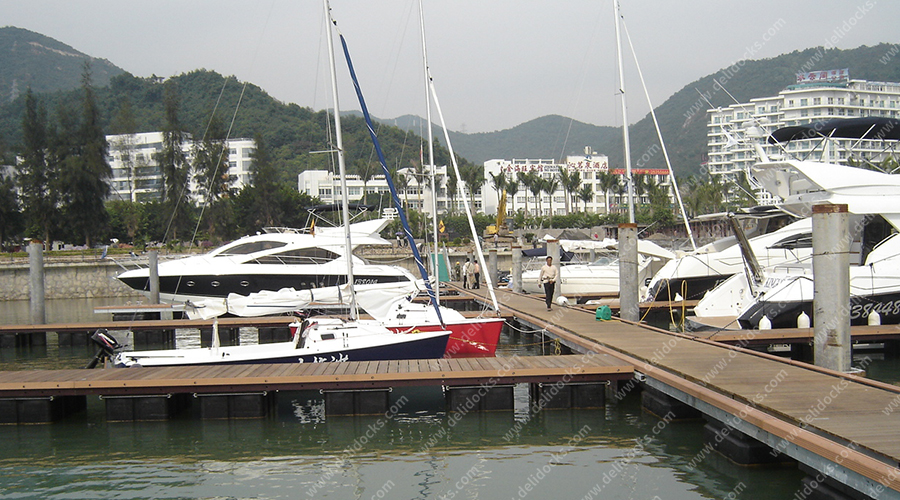
Selecting dock construction materials is never a one-size-fits-all decision. A world-class yacht marina might use a hybrid approach: concrete for the main breakwater and wave attenuation, aluminum framing for the floating finger piers, and a premium composite decking for the walking surfaces. This combines the strengths of each material where it performs best.
Considerations must include local climate, water chemistry, expected vessel sizes and traffic, environmental regulations, lifecycle budget (not just initial cost), and desired aesthetic. Consulting with marine structural engineers early in the process is non-negotiable. Their expertise, informed by decades of projects from builders like DeFever, can prevent costly mistakes and ensure the finished marina is safe, functional, and durable.
Ultimately, the goal is to create a facility that boaters trust. The right materials form the invisible backbone of that trust, providing safe berthing for vessels and peace of mind for their owners. As technology advances, we continue to see innovation in material science, promising even more resilient and sustainable solutions for the future of dock and marine infrastructure.
Frequently Asked Questions
Q1: What is the most durable dock construction material for saltwater environments?
A1: For maximum durability in saltwater, marine-grade aluminum framing paired with high-quality composite decking is often considered the best combination. Aluminum offers excellent corrosion resistance with minimal upkeep, while composites withstand rot, UV, and wear without ongoing staining or sealing.
Q2: Is wood still a good choice for building a yacht marina dock?
A2: Wood, specifically pressure-treated timber, can be suitable for certain applications, particularly in freshwater or lower-budget scenarios. However, for international yacht marinas requiring low lifetime maintenance, high durability, and minimal environmental leaching, modern materials like aluminum, composite, and concrete are generally preferred.
Q3: How does the cost of composite decking compare to traditional wood over 20 years?
A3: While composite has a higher upfront material cost, its 20-year total cost of ownership is often lower. This is because it eliminates the recurring expenses of annual sealing, staining, and replacing rotted or splintered boards that are typical with wood. The savings in labor and materials for maintenance usually offset the initial investment.
Q4: Can different materials be mixed in one dock system?
A4: Yes, and this is very common in professional marina engineering. A typical hybrid design might use concrete for main walkways and pilings, aluminum for the structural frame of floating sections, and composite for the final decking surface. Each material is used where its properties are most advantageous.
Q5: What material is best for the structural framework of a floating dock?
A5: Marine-grade aluminum is overwhelmingly the top choice for floating dock frameworks. Its strength, light weight (making it easier to deploy and service), and excellent corrosion resistance make it ideal. Galvanized steel is used for heavier-duty applications, but requires more rigorous corrosion management.