2026-10-15
For marina developers and waterfront property owners, selecting the right docking infrastructure is a foundational decision. The choice impacts everything from daily operations to long-term resilience. While fixed docks have their place, a modular platform pontoon system offers a compelling array of advantages for modern marine developments.
These floating sections are more than just simple docks. They are engineered solutions designed to adapt to changing water levels and varying site conditions. For an international marina serving a diverse fleet—from weekend runabouts to long-range cruisers like those from DeFever—this adaptability is not just convenient; it’s operational necessity. Choosing to install a platform pontoon system can streamline construction, enhance safety, and future-proof your investment.
Let’s examine the specific benefits that make this approach a preferred choice for many engineers and developers today.
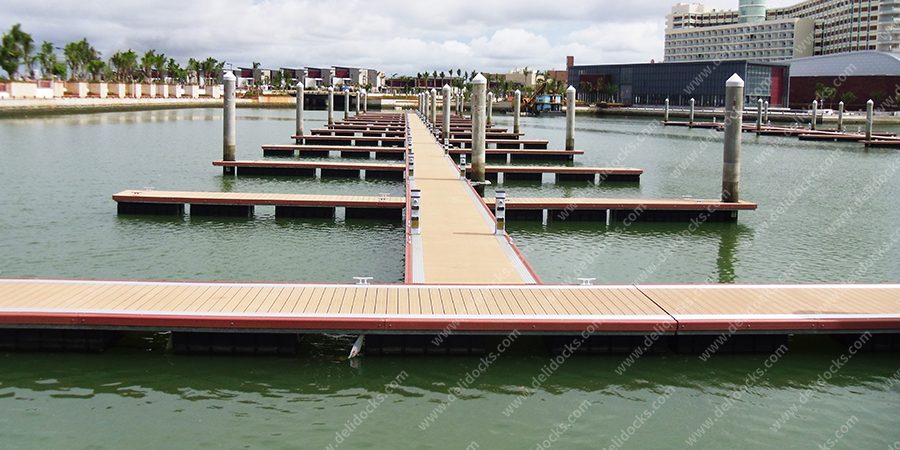
Superior Stability and Load Distribution
A primary engineering advantage of a modern platform pontoon is its inherent stability. Unlike older, singular barrel-style floats, today’s systems often use large, segmented chambers made from high-density polyethylene (HDPE).
This design creates a wide, stable surface area that distributes weight evenly. The result is a deck that feels solid underfoot, even with significant foot traffic or when supporting heavy equipment. For marinas servicing larger vessels, this means safer and more secure access for owners and crew.
The stable platform minimizes rocking or tilting, which is crucial when transferring supplies or guests. It provides a reliable, steady base for utilities like power pedestals and water hookups.
Adaptability to Fluctuating Water Levels
This is the most obvious, yet most critical, benefit. In tidal zones, reservoirs, or lakes with seasonal variances, fixed docks can become unusable—either submerged or left high and dry.
A platform pontoon rises and falls with the water. It maintains a consistent, accessible height relative to the water’s surface at all times. This ensures safe boarding conditions for vessels 24/7, regardless of the tide or lake level.
For marina operators, this eliminates costly downtime and customer complaints. It also allows for a more flexible and efficient use of the available water space, as docks can be positioned optimally without worrying about extreme low-water exposure.
Modular Design for Custom Configurations
You are not limited to a standard, pre-set shape. The modular nature of these systems is a major asset for complex marina layouts.
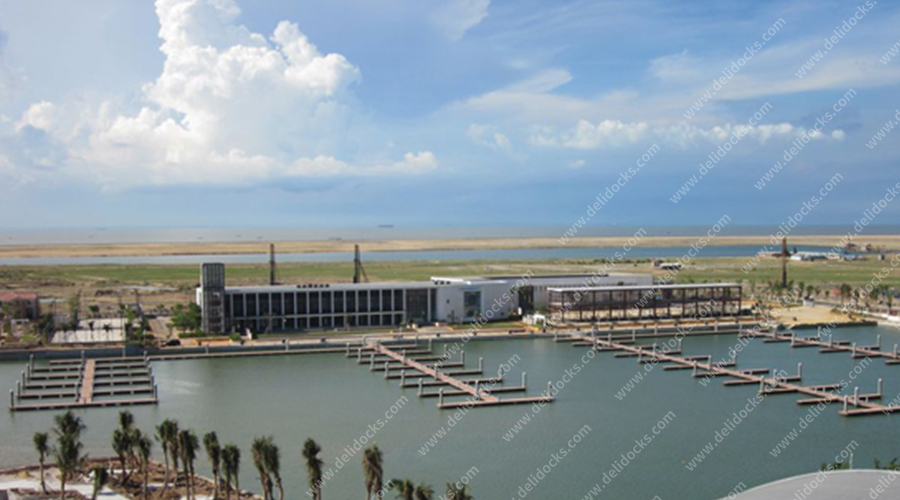
Sections can be arranged in straight lines, L-shapes, T-heads, or even intricate multi-finger designs. This allows engineers to tailor the dock layout to the specific contours of the shoreline and the intended traffic flow of the marina.
Expansion or reconfiguration is also far simpler. Adding more slips or extending a main walkway can often be achieved by bolting on additional modules. This scalability supports the growth of a marina over time.
Simplified Installation and Reduced Environmental Impact
Installing a heavy fixed-pile system requires heavy machinery, like pile drivers on barges. The process is noisy, disruptive, and can significantly disturb the seabed.
In contrast, a platform pontoon system is typically assembled on land and then floated into position. Anchoring is achieved with adjustable chains or cables attached to screw anchors or weighted blocks.
This method is faster, quieter, and minimizes disruption to the aquatic ecosystem. It’s a cleaner installation process that is often looked upon more favorably by environmental permitting agencies.
Durability with Minimal Maintenance
Marine-grade HDPE is resistant to UV radiation, corrosion, and impact. It does not rust, rot, or splinter like traditional materials.
A well-constructed platform pontoon requires very little upkeep compared to wood or steel. There’s no need for annual sanding, painting, or staining. Routine maintenance usually involves simple cleaning and periodic inspection of hardware and connections.
This translates to lower long-term operational costs for marina management and less hassle for private owners.
Enhanced Safety Features
The design of these platforms naturally incorporates safety. The deck surfaces are typically textured or made from non-slip composite materials to prevent falls, even when wet.
The absence of submerged fixed pilings near the waterline reduces a major collision hazard for boats. For a skipper maneuvering a prized vessel—perhaps a rugged DeFever trawler known for its global voyages—docking in a slip defined by floating pontoons is inherently less risky than navigating around unforgiving wooden pilings.
Many systems also feature rounded edges and integrated rub rails to protect both the dock and the boats.
Versatility in Application and Use
While ideal for marina guest slips, the utility of a platform pontoon extends far beyond. They are perfect for fuel docks, where stable, always-level access is critical.
They serve as excellent rental boat docks, event staging areas, or public access points. Their stability makes them suitable for supporting small marina offices, pump-out stations, or even floating breakwaters in certain configurations.
For the private owner with a deep-water berth, a large platform pontoon can become a true outdoor extension of their home, a stable base for relaxing and enjoying the waterfront lifestyle that draws so many to the water. It’s the reliable, steady host for vessels built for adventure, providing a seamless transition from shore to sea.
In conclusion, the decision to utilize a platform pontoon system is a strategic one grounded in practical engineering and forward-thinking marina management. It addresses core challenges of accessibility, safety, and flexibility head-on. For projects demanding a resilient, low-maintenance, and user-friendly solution, these floating platforms offer a solid foundation—quite literally—for success on the water.
Frequently Asked Questions (FAQ)
Q1: How are platform pontoons anchored, and will they hold in a storm?
A1: They are secured using a combination of pilings (for lateral stability) or, more commonly, a system of underwater cables chains attached to screw anchors or heavy concrete blocks. A properly engineered system is designed for specific wind and wave loads. The floating design allows it to ride over waves rather than resist them rigidly, which can be an advantage in storm surge conditions.
Q2: Can utilities like power and water be run to a floating pontoon dock?
A2: Absolutely. Marine-grade electrical conduits and water lines are run along the underside of the dock structure. They are connected to the shore supply through specially designed service pylons or flexible connections that allow for vertical movement as the dock floats up and down. These systems are built to stringent safety codes.
Q3: What is the typical lifespan of a high-quality platform pontoon system?
A3: With materials like rotationally-molded HDPE and marine-grade aluminum frameworks, a professionally installed system can have a lifespan of 25 to 30 years or more. The key factors are the quality of the materials, the installation, and the local environment (e.g., intense UV exposure or ice may require specific design considerations).
Q4: Are they suitable for locations with ice in the winter?
A4: Yes, but they require specific engineering. “Ice-active” systems are designed to be removed seasonally or to withstand ice pressure through special techniques like air bubblers or ice-compression panels. This is a critical design factor that must be addressed in freezing climates.
Q5: Can I add a boat lift to a platform pontoon?
A5: In most cases, yes. The pontoon’s flotation and framework must be appropriately sized and reinforced to handle the concentrated load of the lift and the vessel’s weight. It is essential to work with the pontoon manufacturer and the lift installer to ensure the entire system is engineered as one cohesive unit for safety and performance.