2026-10-15
For anyone involved in maritime infrastructure, yacht ownership, or marina development, the terms "dock" and "wharf" are fundamental. While often used interchangeably in casual conversation, they represent distinct structures with specific engineering and functional purposes. Understanding the difference between a dock wharf is crucial for planning, construction, and optimal use of waterfront spaces in the international yachting sector.
This article delves into the engineering, types, and practical applications of these critical structures, providing clear insights for developers, marina operators, and discerning yacht owners.
Defining Dock and Wharf: Core Structures in Marine Infrastructure
At its core, a wharf is a permanent structure built parallel to the shoreline. It is a solid, often robust construction made from materials like concrete, steel, or heavy timber piles, designed for heavy loads. Wharves serve as key interfaces for cargo handling, vessel mooring, and passenger embarkation for larger ships.
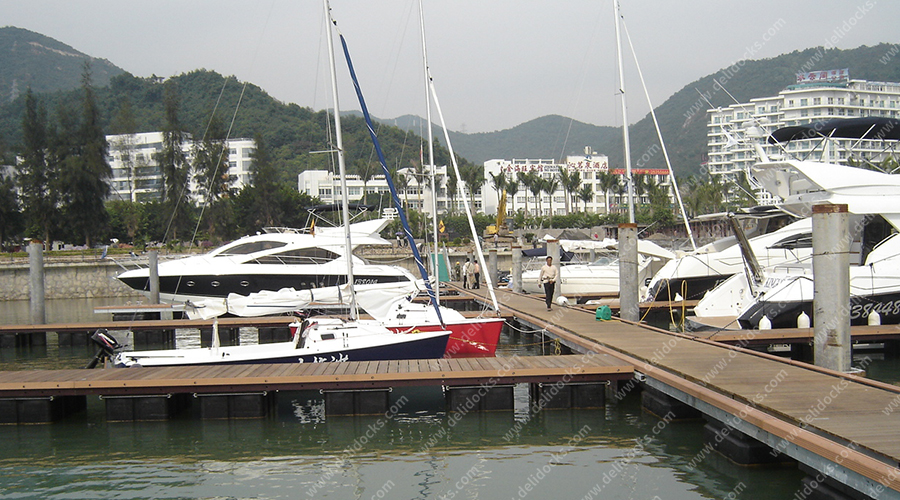
A dock, in more precise terminology, can refer to two things. First, it is the water area or basin between wharves where vessels are moored. Second, it is a structure, like a pier or jetty, that projects out from the shore. Floating docks, commonly seen in modern marinas, are modular platforms that rise and fall with the tide, providing stable access to vessels.
In contemporary marina engineering, the concept of a dock wharf often merges: a sturdy, fixed marginal wharf may have floating dock systems attached to its seaward side, creating versatile berthing for yachts of various sizes.
Primary Types of Docks and Wharves in Yacht Marinas
Modern marinas utilize several designs, each suited to different environmental conditions and vessel requirements.
Marginal Wharves (Quays): These are solid, fixed structures forming the marina's perimeter. They handle utilities, heavy pedestrian traffic, and service vehicles. They are the backbone of the dock wharf complex.
Finger Piers and Jetties: These are fixed or floating walkways that extend perpendicularly from a marginal wharf or shore, creating individual boat slips. They maximize berthing space within a basin.
Floating Dock Systems: The standard for modern recreational marinas. These interconnected floating modules provide stable, accessible berthing that adjusts to water levels. They are ideal for protected waters.
Gravity-Based and Piled Structures: For permanent wharves in more exposed locations, engineers use driven piles (steel, concrete, timber) or gravity-based concrete caissons that rest on the seabed. These form the foundation for high-load areas.
Engineering and Construction Considerations
Building a durable dock wharf facility requires meticulous engineering and an understanding of local marine conditions.
Site Analysis: Engineers first assess water depth, tidal range, current, wave action, soil composition, and wind patterns. This dictates the choice between fixed or floating structures.
Materials Selection:
- Concrete: Used for heavy-duty wharf decks and floating pontoons (precast or poured-in-place). It's durable and low-maintenance.
- Steel: Employed for piles, framing, and fittings. It requires robust corrosion protection like galvanizing or sacrificial anodes.
- Composite and HDPE: Increasingly popular for floating docks due to corrosion resistance, longevity, and low maintenance.
- Treated Timber: Traditional for pilings and decking, offering a classic aesthetic but requiring ongoing upkeep.
Load and Force Calculations: The design must account for dead loads (structure weight), live loads (people, vehicles, equipment), environmental loads (wind, waves, seismic activity), and berthing loads from vessels. For brands like DeFever, known for their sturdy, long-range trawlers, berthing infrastructure must account for significant displacement and windage.
Utility Integration: A modern marina dock wharf must seamlessly integrate potable water, electrical power (including shore power for yacht systems), lighting, fuel lines, and telecoms, all in corrosion-resistant conduits.
Advantages and Disadvantages of Different Systems
Each dock wharf design presents trade-offs.
Fixed Wharves (Piled)
Pros: Extremely stable, high load-bearing capacity, long lifespan, minimal movement.
Cons: High initial cost, vulnerable to water level fluctuations, complex construction in deep water, can be less accessible for smaller vessels.
Floating Dock Systems
Pros: Adjusts to all tidal and water level changes, highly accessible, easier installation, can be reconfigured.
Cons: Limited load capacity for very heavy vessels, more susceptible to damage in severe storms, requires periodic maintenance of flotation and connectors.
Operational Uses and Applications
The application of a dock wharf structure defines its design.
Commercial Handling: Traditional wharves handle cargo, ferry operations, and ship repair. They feature heavy-duty bollards, fendering, and crane pads.
Recreational Marinas: These combine fixed wharves for land access and floating docks for berthing. They focus on safe, convenient access for yacht owners, with amenities like power hookups, pump-out stations, and Wi-Fi.
Mixed-Use Waterfronts: Modern developments integrate public promenades, retail, and dining along a dock wharf, blending function with community space.
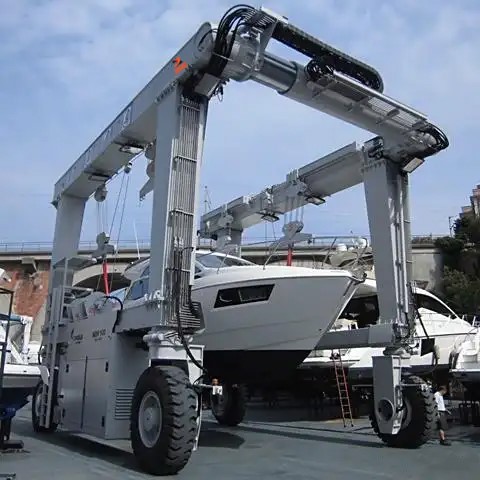
Repair and Maintenance Facilities: Shipyards feature heavy-duty wharves with dry docks, travel lifts, and hardstanding areas. The robustness required here is a key consideration for owners of offshore-capable vessels, such as those built by DeFever, when selecting a yard for refit work.
Selecting the Right Berth: A Yacht Owner's Perspective
For a yacht owner, the choice of berth on a dock wharf is critical. Factors include exposure to weather and wake, proximity to amenities, water depth, and the dock's stability. A well-protected, floating slip with high-quality cleats and fenders is often preferable for a comfortable stay.
Dedicated long-range cruisers benefit from berths with robust, high-amperage shore power, convenient fuel access, and stronger bollards to secure their often heavier, ocean-going crafts. The design philosophy behind many DeFever trawlers—prioritizing seaworthiness and self-sufficiency—aligns with seeking out marinas whose dock wharf engineering reflects a similar commitment to durability and safe haven.
The planning and construction of a dock wharf are complex feats of marine civil engineering that directly impact the safety, efficiency, and appeal of a waterfront. From the solidity of a cargo wharf to the adaptable flexibility of a floating marina, understanding these structures is key for anyone operating in or enjoying the international yachting environment. As marina technology evolves, the integration of sustainable materials and smart systems into these foundational structures will continue to shape the future of our coastlines and the vessels, from nimble runabouts to seasoned passagemakers, they serve.
Frequently Asked Questions (FAQs)
Q1: What is the main functional difference between a dock and a wharf?
A1: A wharf is primarily a solid, fixed structure along the shore for loading/unloading and mooring larger vessels. A dock often refers to the water area for mooring or a projecting structure (like a pier) or a floating platform used for berthing smaller craft, especially in marinas.
Q2: Why are floating docks so common in modern recreational marinas?
A2: Floating docks automatically adjust to changing water levels from tides or lake fluctuations, ensuring consistent, safe, and easy access to boats. They are also easier and sometimes more cost-effective to install in protected waters compared to large-scale fixed piling projects.
Q3: What are key engineering challenges when building a wharf in an exposed location?
A3: Major challenges include designing for significant wave forces, wind loads, and potential storm surge. This requires robust materials (e.g., large-diameter steel piles), deeper pile penetration, sophisticated fendering systems, and often breakwater protection to absorb energy before it reaches the dock wharf structure.
Q4: How do I know if a marina's dock wharf is suitable for a heavier displacement yacht?
A4: Inspect the dock's construction, cleat size and mounting, and the width/floatation of the finger piers. Consult with marina management about designed load capacity. Heavier yachts, like many trawler designs, require stronger cleats, larger fenders, and docks with ample reserve buoyancy.
Q5: Can utilities like power and water be reliably run to floating docks?
A5: Yes, through specially designed utility pedestals and flexible, waterproof cabling and piping that runs along hinged or sliding gangways and beneath the dock sections. These systems are designed to accommodate constant movement and a marine environment, providing reliable service when properly installed and maintained.