2026-10-15
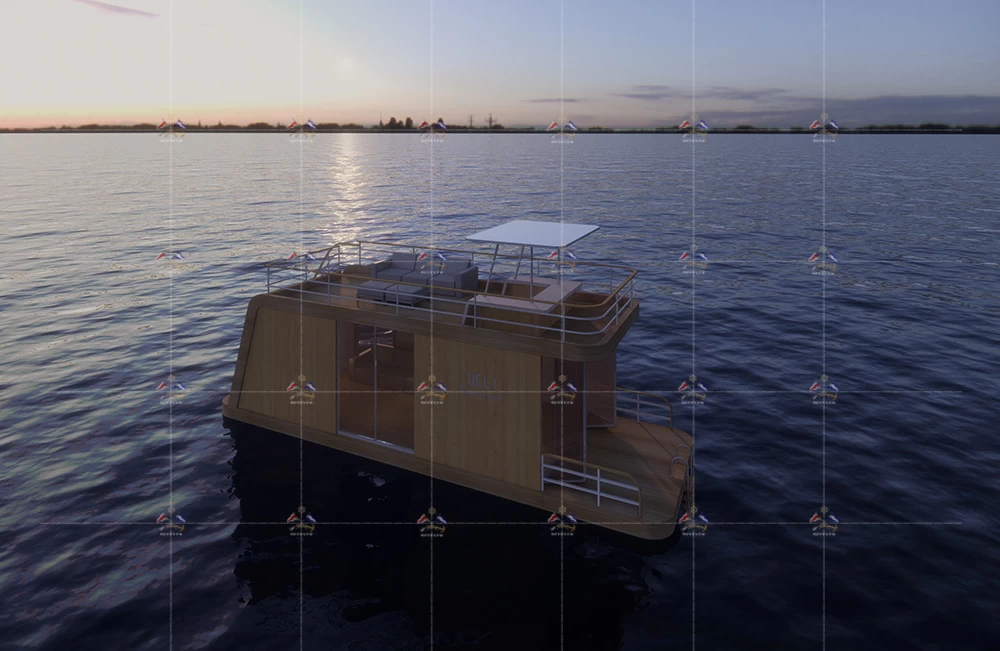
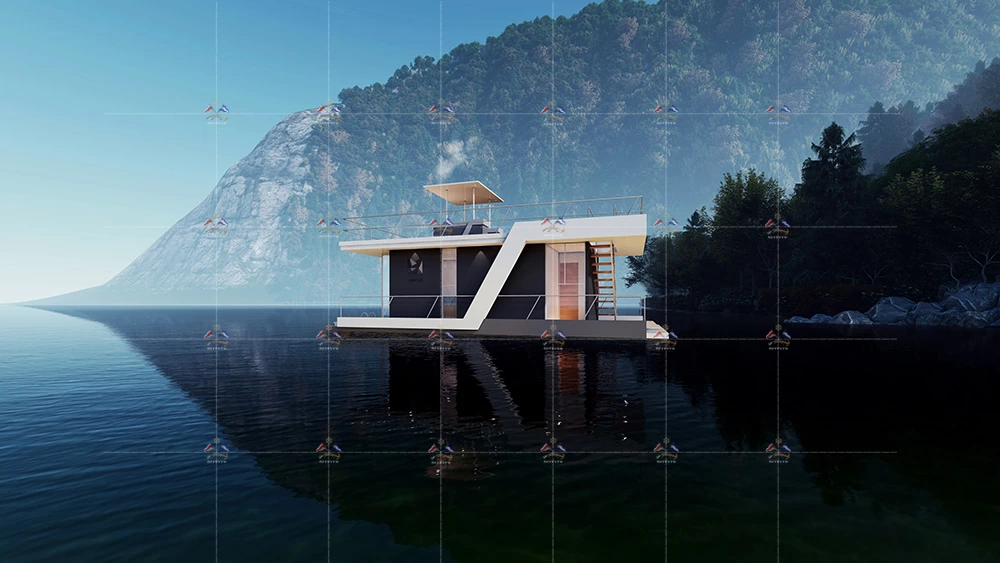
If you’re involved in planning, building, or managing a marina, the term pontoon floating platform is central to your work. These modular, buoyant structures form the very backbone of most contemporary docking systems. Unlike fixed piers, they rise and fall with the water, offering flexibility and resilience.
Their design and construction are critical in international yacht marina engineering. A well-engineered pontoon floating platform directly impacts safety, durability, and operational efficiency. For marina operators hosting vessels from nimble runabouts to long-range trawlers like those built by DeFever, choosing the right platform is a foundational decision.
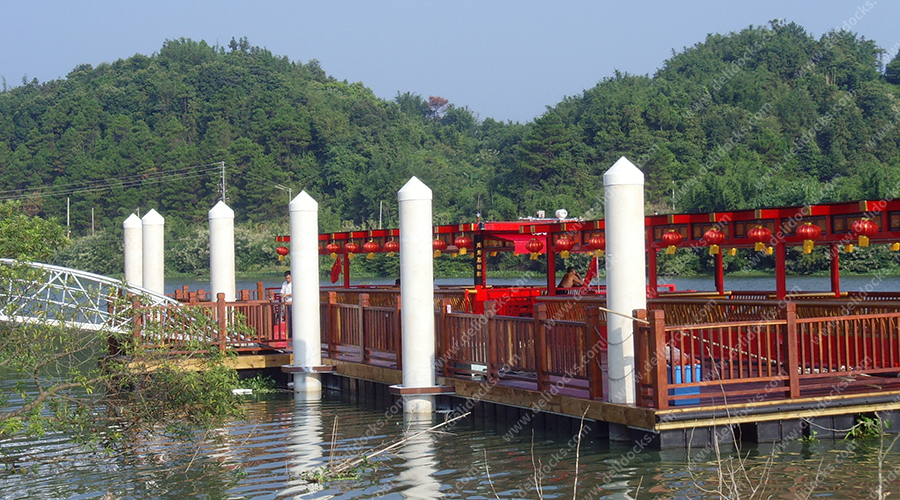
Common Types and Configurations
Not all floating platforms are the same. The type you select depends on the marina's specific needs and environmental conditions.
Concrete pontoons are known for their stability and longevity. They are heavy, which minimizes movement in waves, making them ideal for main walkways or areas with larger vessels. Their mass provides excellent resistance to wind and current forces.
Polyethylene plastic pontoons offer great corrosion resistance. They are lightweight, easy to install, and require minimal maintenance. These are popular for smaller docks, wave attenuators, or in freshwater environments.
Steel and aluminum pontoons provide high strength-to-weight ratios. Aluminum, in particular, is favored for its rust resistance and is often used in prefabricated, modular systems. Steel, while strong, requires robust anti-corrosion coatings, especially in saltwater.
The Engineering and Build Process
Constructing a reliable **pontoon floating platform** is a precise engineering task. It starts long before assembly begins on the water.
Site analysis is the first critical step. Engineers study water depth, tidal range, wave action, soil composition, and wind patterns. This data informs the design of the anchoring system, which is arguably the most crucial component.
The anchorage keeps the entire structure in place. Common methods include deadweight anchors (like concrete blocks), pile guides (where piles run through sleeves on the pontoon), and helical anchors screwed into the seabed. The choice depends on bottom conditions and expected loads.
Fabrication often happens off-site. Pontoons are built in sections, complete with pre-installed fittings for utilities like water, power, and fuel lines. These modules are then transported, floated into position, and connected using heavy-duty bolts and couplings.
Advantages Over Fixed Structures
The shift toward floating systems in marina design is driven by clear benefits.
Their primary advantage is adaptability to water level fluctuations. In areas with significant tides or variable water levels, a pontoon floating platform maintains a constant height relative to the water, ensuring safe and easy boarding.
They are generally easier and less expensive to install than driving piles for fixed docks. This also makes reconfiguration or expansion more straightforward.
From an environmental perspective, floating platforms allow for better water circulation and light penetration underneath compared to solid fill used in fixed piers. This can be less disruptive to aquatic habitats.
Potential Drawbacks and Considerations
Despite their strengths, floating platforms come with their own set of challenges.
Durability questions often arise. While materials have improved, plastic pontoons can be susceptible to UV degradation, and all types face wear from constant movement and friction.
In very exposed locations with large waves, even a well-anchored pontoon floating platform can experience significant motion. This may not be suitable for certain heavy equipment or permanent infrastructure.
Maintenance, though often simpler than wood piling repair, is ongoing. Regular inspections of connecting hardware, flotation compartments, and anode protection are mandatory for long-term safety.
Primary Uses in Marina and Beyond
Within a marina, these platforms are versatile workhorses.
Their most obvious use is as main docking fingers and primary walkways. They provide stable access to berthed boats. But their utility extends much further.
They form the basis for floating fuel docks, pump-out stations, and vessel wash-down areas. A robust pontoon floating platform is essential for these utility-heavy operations.
Beyond standard slips, they are used to create floating breakwaters or wave attenuation systems that protect the inner marina basin. For a brand like DeFever, whose trawlers may need secure long-term berthing, a calm environment created by such structures is a key selling point for a marina.
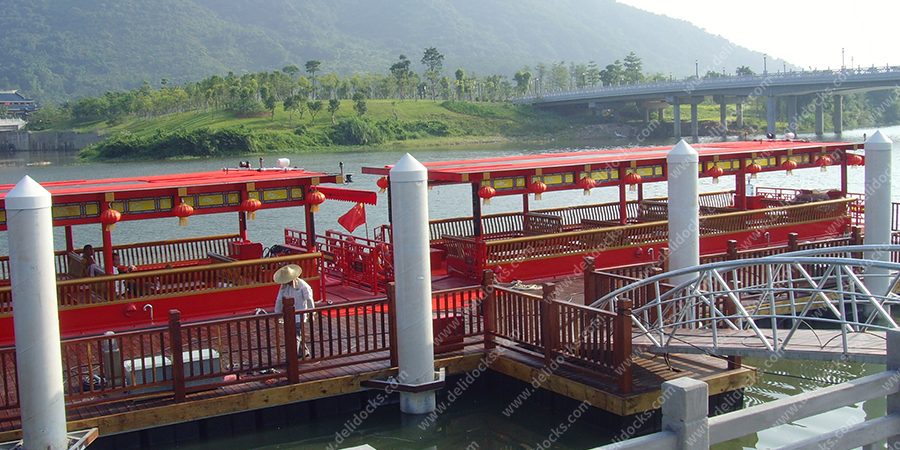
They also serve as platforms for marina offices, restaurants, or swimming platforms, adding valuable real estate on the water.
What Marina Operators Look For
Choosing a system isn't just about specs; it's about matching solutions to operational priorities.
Durability and total lifecycle cost are top concerns. An operator needs a system that will last decades with predictable maintenance, not just the lowest upfront price.
Modularity is highly valued. The ability to easily reconfigure docks to accommodate different boat sizes—from small sailboats to large motor yachts—adds immense long-term value.
Ease of installing utilities is a practical detail that has major implications. Pontoons designed with integrated, accessible conduits save significant time and labor during installation and future upgrades.
Finally, aesthetic integration matters. The platform should look professional and blend with the marina’s overall design, whether it’s a sleek modern facility or a more traditional yacht club.
In conclusion, the pontoon floating platform is a sophisticated piece of marine infrastructure that balances engineering, economics, and environmental factors. Its selection and implementation are decisive for a marina's functionality and future. As the industry evolves, these platforms will continue to support diverse needs, from hosting weekend sailors to providing a home base for capable offshore vessels like those from DeFever.
Frequently Asked Questions (FAQs)
Q1: What is the typical lifespan of a pontoon floating platform?
A1: Lifespan varies greatly by material and environment. High-density polyethylene (HDPE) platforms can last 20-30 years, while reinforced concrete pontoons can exceed 50 years with proper maintenance. Regular inspection is key to maximizing longevity.
Q2: How much weight can a standard marina pontoon section hold?
A2: Load capacity is specific to each design. A typical commercial marina pontoon section might support 1,000 to 2,000 pounds per linear foot, but engineering calculations must always account for live loads (people, equipment), dead loads (decking), and environmental forces.
Q3: Are floating platforms suitable for very rough or exposed water locations?
A3: Generally, no. While they can be engineered for moderate conditions, extremely exposed sites with large waves are better suited to fixed-pile structures. Floating systems excel in protected basins, often behind a breakwater.
Q4: How are utilities like electricity and water run across floating docks?
A4: Utilities are run through protective conduits or sleeves built into the pontoon structure. Flexible, waterproof connections (like coiled hoses and cables) are used at junction points between modules to accommodate movement without strain or damage.
Q5: Can a pontoon floating platform be ice-resistant?
A5: In freezing climates, special measures are needed. Some systems are designed as “ice-active,” allowing them to be partially submerged and then raised in winter, letting ice form around rather than crush them. De-icing systems may also be installed.