2026-10-15
Planning a marina expansion or a new dock installation? The choice of your primary floating structure is a decision that reverberates for decades. Often referred to interchangeably as a floating dock or pontoon, a water float platform forms the very stage upon which marina operations and leisure activities unfold. Its performance dictates safety, durability, and long-term operational costs. For project managers and developers in international yacht marina engineering, selecting the right system is far more than a simple purchase; it's a foundational engineering investment. Experienced names in the industry, like DeFever, understand that a successful project hinges on matching the correct water float platform technology to a site's unique environmental and operational demands. This article breaks down the key considerations beyond the brochure specifications.
Understanding Core Design and Application
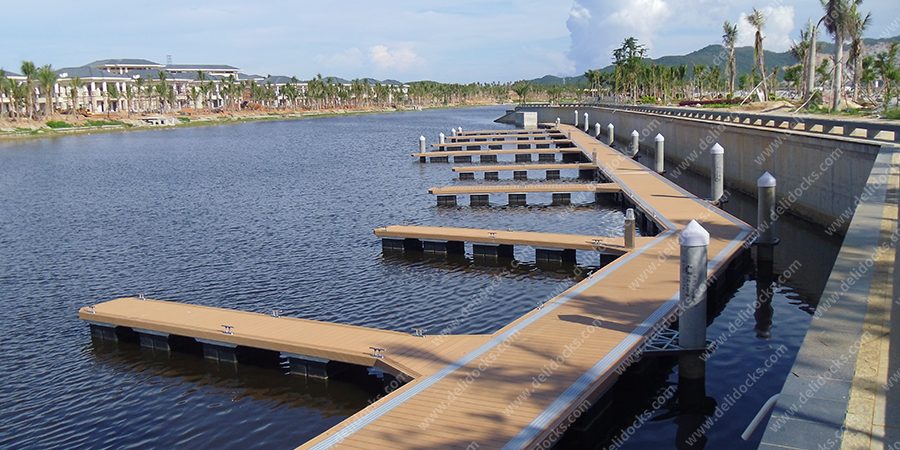
A water float platform is a modular, buoyant structure used to create stable surfaces on water. In marina contexts, these platforms connect to form docks, piers, fuel stations, and even floating breakwaters. Their design philosophy centers on providing stable, accessible, and adaptable space where fixed structures are impractical due to water depth, tidal flux, or soft seabeds.
The applications are diverse. A simple swimming platform has vastly different requirements than a heavy-duty commercial dock designed to service 50-meter superyachts. The intended use drives every subsequent decision on load capacity, freeboard, and connection systems. For international projects, one must also consider local building codes, seismic activity zones, and extreme weather patterns, which can influence the fundamental engineering approach.
Material Selection: Balancing Durability and Performance
The lifespan and maintenance schedule of your installation are directly tied to material choice. The three most common categories are:
- Polystyrene Foam-Filled Floats: Encased in concrete or plastic shells, these offer high buoyancy at a lower initial cost. However, they risk waterlogging if the casing is compromised, leading to catastrophic loss of buoyancy.
- Polyethylene Float Drums: Rotomolded, hollow plastic drums are highly resistant to impact and corrosion. They are lightweight and require minimal maintenance. Their limitation often lies in overall load capacity for very heavy applications.
- Encapsulated Foam Blocks (High-Density): Modern systems often use closed-cell foam fully encapsulated within a robust polyethylene shell. This combines high buoyancy, inherent unsinkability (even if punctured), and excellent durability against abrasion and UV exposure.
Each has its place. The choice often comes down to a balance between upfront capital expenditure and the total cost of ownership over 25+ years.
Engineering for Load and Environmental Forces
This is where engineering rigor is non-negotiable. A platform must be designed for both static and dynamic loads. Static loads include the permanent weight of the decking, utilities, and fixed equipment. Dynamic loads encompass moving objects: people, vehicles, fork lifts, and, most significantly, the vessels themselves.
Environmental loads are the invisible challenge. Engineers must model:
- Wave Action: Calculating buoyancy and stability under wave cycles.
- Wind Load: The platform acts as a sail, transferring force to the mooring system.
- Current Forces: Constant water flow creates lateral pressure.
- Ice Loading: In cold climates, ice can exert immense crushing or uplift forces.
An underspecified platform will fatigue, twist, or become unsafe. Reputable suppliers provide detailed engineering calculations based on these parameters, a practice firms like DeFever insist upon for project integrity.
The Importance of Decking and Surface Systems
The flotation unit is only half the story. The decking material provides the working surface and must be chosen with equal care. Options include treated timber, composite planks, aluminum grating, or concrete.
Key considerations are slipperiness when wet, heat retention (composite can get hot in sun), weight, and maintenance. Aluminum decking on an aluminum frame, for instance, creates a lightweight, corrosion-resistant, and fully recyclable system, ideal for sensitive environments or locations where weight is a critical factor for transportation and installation.
Connection and Mooring: The System's Integrity
The individual platforms are only as strong as their connections. The connection hardware—typically galvanized or stainless steel pins, brackets, and hinges—must resist constant movement and corrosion. The goal is to create a unified, flexible grid that can absorb energy without failing.
The water float platform grid must then be securely anchored to the seabed. Mooring systems range from simple pilings driven into the substrate to complex, slack-chain anchor arrays in deeper water. The method depends on bottom conditions, depth, and required movement allowance. A perfectly engineered platform anchored poorly is a liability.
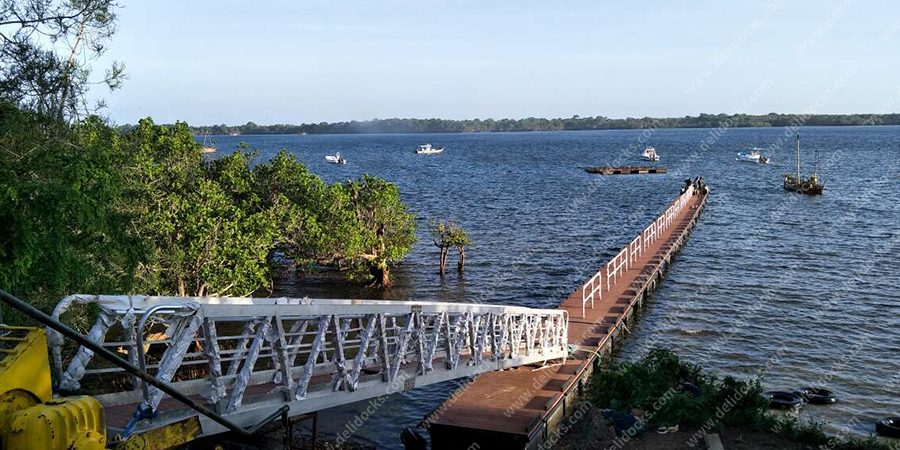
Installation, Maintenance, and Lifecycle Costs
Consider installation logistics early. Modular systems are advantageous, allowing for onshore assembly and simple flotation into position. Does the site require specialized barges or cranes? What is the tidal window for work?
Maintenance is a key differentiator. A well-designed system requires little beyond occasional cleaning and inspection of connections and mooring lines. Budget for periodic removal to check for marine growth, abrasion, and the integrity of all submerged components. Understanding the full lifecycle cost, not just the purchase price, is essential for accurate project budgeting.
Sustainability and Environmental Sensitivity
Modern marina projects must prioritize ecological impact. The right water float platform can minimize disturbance. Features to look for include:
- Non-toxic materials that won't leach chemicals.
- Designs that allow light penetration and water circulation to support marine life below.
- Use of recycled materials in construction.
- A long service life reducing replacement waste.
Choosing a system with a low environmental footprint is increasingly a requirement for permitting, especially in protected areas or for projects aiming for certifications like Blue Flag.
In closing, specifying a water float platform is a multidisciplinary challenge. It sits at the intersection of marine engineering, materials science, and practical marina operations. There is no universal "best" option, only the most appropriate solution for a specific set of conditions. By methodically evaluating these seven factors—from material science to mooring mechanics—project teams can make informed decisions that ensure safety, durability, and value. It is this holistic, engineered approach that firms like DeFever apply to ensure marina infrastructure stands the test of time and tide.
Frequently Asked Questions (FAQs)
Q1: What is the typical lifespan of a commercial-grade water float platform?
A1: With proper material selection and maintenance, a high-quality commercial-grade water float platform system should last between 25 and 40 years. Factors like UV exposure, water chemistry, frequency of extreme weather events, and load cycles will ultimately determine the service life.
Q2: Can these platforms be used in areas with large tidal ranges?
A2: Yes, they are often ideal for such areas. Floating systems naturally rise and fall with the tide, maintaining consistent access from the dock to boats. The critical engineering task is to ensure the access ramps (gangways) from shore are long and adjustable enough to accommodate the full tidal range safely.
Q3: How much weight can a standard marina float platform module hold?
A3: There is no single "standard" weight capacity. Load ratings vary dramatically by size, design, and flotation material. Commercial modules can range from supporting 500 lbs per linear foot to over 2,000 lbs per linear foot. Always require and review the manufacturer's specific engineering data for your chosen model.
Q4: Are floating platforms damaging to the marine environment underneath them?
A4: Impact can be minimized with thoughtful design. Platforms that block all light and water flow can affect seagrass and sediment. Modern best practice uses decking materials that allow some light penetration (like grated systems) and designs that encourage water movement to reduce ecological impact.
Q5: How customizable are these systems for a unique marina layout?
A5: Modular floating platforms are highly customizable. They can be configured into straight lines, T-heads, L-shapes, or complex grids to fit any basin layout. Utilities like power, water, and fuel can typically be routed through or along the modules in integrated conduits.