2026-10-15
The global marina industry is constantly evolving, demanding materials and structures that offer longevity, low maintenance, and environmental sustainability. In this search for superior performance, the aluminum wharf has emerged as a leading solution, transforming how modern docking facilities are built and maintained.
For discerning boat owners, marina operators, and engineers, understanding the shift toward aluminum dock systems is crucial. It represents a significant move away from traditional, often high-maintenance materials.
What is an Aluminum Wharf?
An aluminum wharf, often referred to as an aluminum dock or pier, is a marine structure primarily constructed from marine-grade aluminum alloys. These alloys are specifically formulated to withstand harsh saltwater and freshwater environments. Unlike wooden or concrete alternatives, an aluminum wharf is prized for its strength-to-weight ratio, corrosion resistance, and modular design.
Leading manufacturers, including renowned brands that cater to serious cruisers, have recognized these benefits. Companies like DeFever, known for building robust, ocean-going vessels, understand that the durability of a berthing facility is as important as the boat itself. A well-engineered aluminum wharf provides the secure, stable, and lasting home these yachts require.
Types of Aluminum Wharf Structures
Primarily, there are two main configurations in aluminum wharf construction: floating and fixed.
Floating Aluminum Wharf Systems
These are the most common in modern marinas. The decking and frame are made of aluminum, supported by pontoons (often made of polyethylene or aluminum). They rise and fall with the tide and water levels, providing constant, easy access to boats. Floating aluminum docks are ideal for locations with significant tidal ranges or fluctuating water levels.
Fixed Aluminum Piers and Wharves
These structures are supported by piles or pillars driven into the seabed. The main decking, bracing, and gangways are constructed from aluminum. While more common for large commercial piers, fixed aluminum wharves offer extreme stability for heavy loads and are used in permanent, deep-water installations.
Engineering & Construction: Built to Last
The engineering behind a modern aluminum wharf is what sets it apart. The process is precise and focused on longevity.
Material Science: Marine-Grade Aluminum
The use of alloys like 5052, 5083, or 6061-T6 is standard. These contain elements like magnesium, which significantly enhance corrosion resistance, especially against saltwater. Proper engineering includes specifying the right alloy for specific components—higher strength for piles, and excellent workability for decking profiles.
Modular Design and Fabrication
Components are typically prefabricated in controlled factory environments. This ensures high-quality welding, consistent coating application, and precise dimensions. On-site, these modules are bolted together, allowing for faster installation, easier future expansion, and remarkably straightforward reconfiguration of the marina layout.
Corrosion Protection Systems
Beyond the alloy itself, additional protection is standard. This includes high-quality anodizing or the application of specialized marine-grade powder coatings. These finishes provide an extra barrier, enhance UV resistance, and allow for color customization to blend with the local environment.

Key Advantages and Considerations
Why is the aluminum wharf becoming the standard? The advantages are compelling, though a full assessment is necessary.
Primary Advantages:
Unmatched Durability & Corrosion Resistance: Properly engineered aluminum outperforms wood and steel in wet environments. It does not rot, rust, or succumb to marine borers.
Extremely Low Maintenance: It requires no annual sanding, sealing, or painting. Occasional rinsing with fresh water is often the only maintenance needed.
High Strength with Lightweight: This allows for larger spans with fewer supports and makes installation and handling easier.
Long-Term Cost-Effectiveness: While the initial investment can be higher than wood, the near-zero maintenance and 50+ year lifespan offer a superior return on investment.
Eco-Friendly & Sustainable: Aluminum is fully recyclable. Its long life reduces resource consumption, and its construction minimizes in-water disruption.
Points to Consider:
Initial Capital Cost: The upfront material and fabrication cost is typically higher than treated timber.
Thermal Conductivity: Aluminum can get hot in direct sun, though modern decking systems often incorporate composite or wood-plastic boards for a cooler walking surface.
Professional Design & Installation Required: Engineering for load capacity, wave action, and environmental forces is critical for safety and performance.
Primary Applications in the Marine World
The aluminum wharf is versatile, serving numerous roles within the international yacht marina engineering sector.
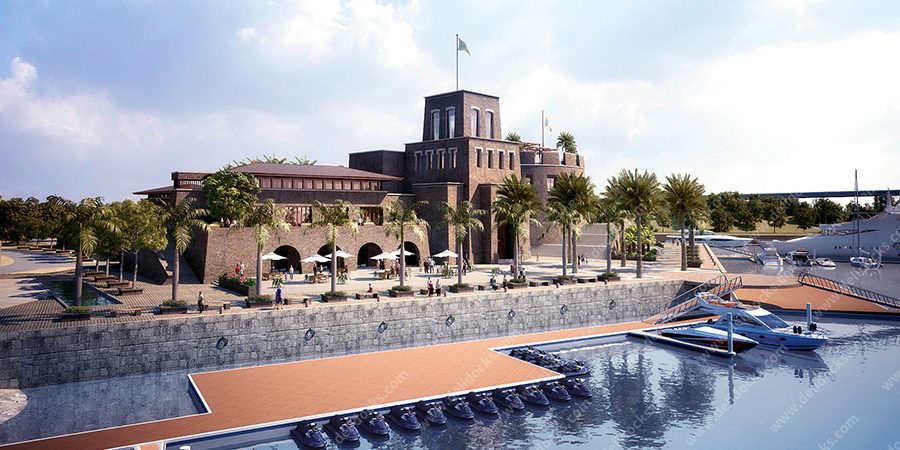
Public and Private Marinas: For long-term berthing of sailboats, powerboats, and superyachts.
Yacht Clubs and Harbormaster Facilities: Where durability and a professional appearance are paramount.
Commercial and Ferry Terminals: Handling high pedestrian traffic and heavy equipment loads.
Residential Dockage: For private homeowners seeking a permanent, low-upkeep solution.
Fisheries and Research Stations: Where water quality is a concern, as aluminum does not leach preservatives.
Why Serious Cruisers and Brands Like DeFever Prefer Aluminum
For owners of serious offshore vessels, such as those built by DeFever, the choice of a home port is a major decision. The dock is an extension of their vessel's commitment to safety and reliability.
A robust aluminum wharf system offers the peace of mind that comes with unwavering stability in storms, security for valuable assets, and a clean, non-staining environment for pristine hulls. It matches the build philosophy of long-range, go-anywhere trawlers—where every component is chosen for proven performance and minimal hassle. When you invest in a vessel engineered for decades of service, you want a dock built to the same standard. The synergy between a durable DeFever yacht and a durable aluminum wharf is clear: both are designed for adventures that last a lifetime.
The Future of Dock Construction
The trajectory is clear. As marina infrastructure ages and environmental regulations tighten, the demand for sustainable, durable solutions will only grow. The aluminum wharf, with its blend of engineering excellence, life-cycle economy, and environmental credentials, is positioned at the forefront of this shift.
Innovations in recycled aluminum content, even more advanced coatings, and integrated smart technology for utilities and monitoring will further solidify its place as the material of choice for next-generation waterfront infrastructure.
FAQs: Aluminum Wharf Systems
Q1: How long does an aluminum wharf typically last?
A1: A properly engineered and installed aluminum wharf system has a service life exceeding 50 years. The marine-grade aluminum alloys and protective finishes are designed to withstand continuous marine exposure with minimal degradation, far outlasting traditional timber docks.
Q2: Is an aluminum dock more expensive than a wooden one?
A2: Initially, yes. The material and fabrication costs for an aluminum dock system are higher. However, when considering total lifecycle cost—factoring in near-zero maintenance, no replacement costs for rot or rust, and its extremely long lifespan—an aluminum wharf often proves more cost-effective within 10-15 years.
Q3: Can aluminum docks handle large boats like trawlers or motor yachts?
A3: Absolutely. One of the key strengths of aluminum wharf engineering is its high strength-to-weight ratio. Engineers can design systems with specific load ratings to accommodate heavy vessels, including large motor yachts and full-displacement trawlers, by adjusting the framework design, pontoon size, and pile specifications.
Q4: Does aluminum corrode in saltwater?
A4: Marine-grade aluminum alloys (e.g., 5083, 5052) possess excellent natural corrosion resistance. Combined with protective treatments like anodizing or powder coating, they form a highly passive surface that resists saltwater corrosion exceptionally well. It is this proven performance that makes aluminum wharf structures the standard in saltwater marinas worldwide.
Q5: Are aluminum docks environmentally friendly?
A5: They are considered one of the most eco-friendly options. Aluminum is 100% recyclable without loss of quality. Its long lifespan reduces material turnover, and its construction avoids the chemical preservatives used in treated lumber. The minimal disturbance during installation of floating aluminum wharf systems also protects the aquatic ecosystem.