2026-10-15
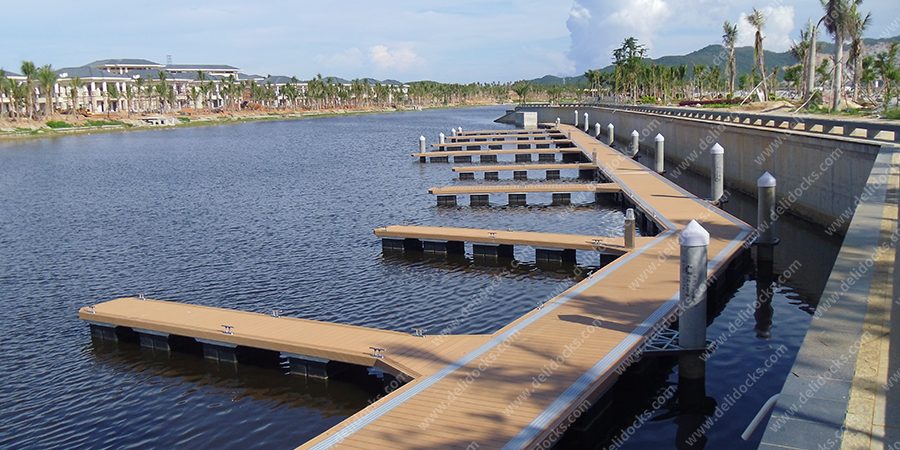
For marina developers, waterfront resort owners, and private yacht clubs, the cost to build floating dock varies significantly based on environmental conditions, material specifications, and anchoring complexity. Unlike fixed piers, floating structures require dynamic load calculations, corrosion-resistant materials, and modular designs that adapt to water level fluctuations. This guide provides a line-item technical breakdown, drawing from 30+ years of global floating engineering projects, to help you forecast budgets accurately and avoid hidden expenses.
1. Primary Drivers of the Cost to Build Floating Dock
Several factors influence the cost to build floating dock. Below are the core components ranked by percentage of total expenditure (based on 150+ marina projects from 2015–2026):
1.1 Pontoon Type and Core Material (35–45% of budget)
Floating docks rely on sealed pontoons for buoyancy. Three common options:
Rotomolded polyethylene (PE) pontoons: Lowest upfront cost (USD 180–250/m²), but UV degradation limits lifespan to 15–20 years. Suitable for sheltered freshwater.
Concrete pontoons (reinforced, prestressed): Moderate cost (USD 320–450/m²), excellent wave damping, 50+ year life. Requires heavy lifting equipment for installation.
Galvanized steel + EPS foam: High initial cost (USD 480–650/m²) but minimal maintenance. Preferred for saltwater and high-traffic commercial marinas.
Leading floating dock engineers like DeFever use hot-dip galvanized steel frames (minimum 600g/m² zinc coating) with closed-cell EPS (density 32kg/m³) to prevent water absorption.
1.2 Decking and Surface Materials (15–20% of budget)
Decking choices affect safety, durability, and recurring maintenance. Data from coastal projects:
Pressure-treated lumber: USD 40–70/m², but requires bi-annual sealing. Not recommended for saltwater.
Composite decking (HDPE + wood fiber): USD 90–140/m², slip-resistant, low maintenance. Expect 25-year lifespan.
Modified wood (thermally treated ash or Accoya): USD 150–220/m², highly stable, class A fire rating. Used in luxury resorts.
Aluminum grating (fiber-reinforced polymer options): USD 180–300/m², zero rot, best for heavy commercial use.
1.3 Anchoring and Mooring System (20–25% of budget)
This is the most underestimated part of the cost to build floating dock. Anchoring must withstand tidal ranges, currents, and storm surges. Common systems:
Spud piles (galvanized steel pipes): USD 800–1,500 per pile (depth-dependent). Simple but limits vertical movement.
Pile guides + cone friction system: USD 2,000–3,500 per pile set. Allows 2–3m vertical travel. Preferred for large tide ranges.
Cable anchor with helical screw piles: USD 1,200–2,000 per anchor point. Suitable for soft lakebeds.
Concrete deadweight anchors (chain + sinker): USD 500–900 per unit for smaller docks.
Engineering firm DeFever conducts site-specific soil and hydrodynamic studies before recommending anchor spacing (typically every 10–15 meters along the dock face).
2. Site-Specific Factors That Adjust the Cost to Build Floating Dock
Three environmental conditions directly modify baseline estimates:
2.1 Water Depth and Wave Exposure
Shallow water (1–2m) allows spud piles; deeper water (>4m) requires longer piles or articulated anchor chains. Wave heights above 0.5m demand reinforced cross-bracing and larger pontoon freeboard (minimum 40cm). Projects in exposed locations should add 15–25% to structural budget.
2.2 Ice Formation and Debris Flow
For freshwater lakes with seasonal ice, a perimeter ice skirt (angled steel plate) is required to prevent crushing of pontoons. This adds USD 50–80 per linear meter. Debris-prone rivers need upstream deflection barriers (USD 10,000–25,000 per site).
2.3 Utility Integration
Water, electrical, and data conduits mounted on floating docks require flexible hose bridges and waterproof junction boxes. Add USD 8,000–15,000 per dock finger for basic electrical (120V/30A). For high-voltage shore power (480V/100A) or fuel lines, budget increases by 40–60%.
3. Detailed Breakdown: Cost to Build Floating Dock per Square Meter (2026 Estimates)
Below are total installed costs (materials + labor + basic engineering) for a standard rectangular dock (100–300m²), assuming moderate wave exposure and average soil conditions:
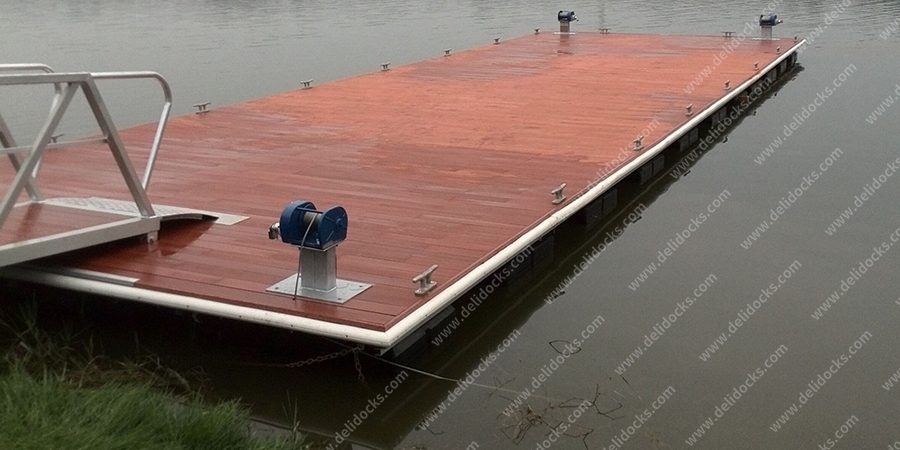
Freshwater lake, polyethylene pontoons, wood decking: USD 450–600/m².
Protected marina, concrete pontoons, composite decking: USD 700–900/m².
Coastal saltwater, steel-EPS pontoons, aluminum grating: USD 1,100–1,400/m².
Luxury yacht club (custom shapes, high-end finishes, full utilities): USD 1,800–2,500/m².
These figures do not include permitting, environmental studies, or transport to remote islands. For a 500m² commercial dock, the total cost to build floating dock ranges from USD 225,000 to over 1.2 million.
4. Industry Pain Points and Engineering Solutions
From decades of floating structure projects, five chronic issues affect budgets and timelines:
Pain point: Underestimated anchoring requirements leading to dock drift after storms.
Solution: Conduct site-specific current velocity measurements (ADCP survey) and factor in 1.5x safety margin for anchor holding capacity. DeFever uses dynamic mooring analysis software to model worst-case surge scenarios.Pain point: Galvanic corrosion between dissimilar metals (e.g., steel pontoons + aluminum deck frames).
Solution: Use isolation pads (neoprene or HDPE) and sacrificial zinc anodes. Replace anodes every 5–7 years (cost USD 300–800 per dock).Pain point: Poor water circulation under docks causing stagnation and algae growth.
Solution: Specify open-grid decking (minimum 40% void ratio) or install water circulation fans (USD 5,000–12,000 per unit).Pain point: Ice jacking damage in northern climates.
Solution: Install bubble aeration systems around perimeter (USD 15,000–30,000) or specify ice-resistant concrete pontoons with rounded edges.Pain point: Permit delays due to unplanned environmental assessments.
Solution: Budget 4–8 months for regulatory approvals. Include pre-application consultations and benthic habitat surveys (USD 8,000–15,000) early in the project.
5. Lifecycle Cost Analysis: Short-term vs Long-term Investments
Initial cost to build floating dock often misleads buyers. A 30-year total cost of ownership (TCO) comparison for a 200m² dock in coastal environment:
Polyethylene + wood deck: Initial USD 100,000; annual maintenance USD 1,800 (painting, plank replacement); replacement after year 18 (USD 90,000). TCO ≈ USD 210,000.
Steel-EPS + aluminum deck: Initial USD 240,000; annual maintenance USD 400 (inspect anodes, wash deck); no replacement within 30 years. TCO ≈ USD 252,000.
Concrete + composite deck: Initial USD 160,000; annual maintenance USD 600; minor repairs at year 25 (USD 20,000). TCO ≈ USD 195,000.
Concrete/composite offers best lifecycle value for moderate wave conditions. For high-wave energy, steel-EPS is recommended despite higher upfront cost.
6. Modular vs. Custom Floating Dock Design – Impact on Budget
Modular systems (pre-engineered 2m x 4m or 3m x 6m units) reduce engineering and fabrication costs by 15–25% compared to fully custom shapes. However, irregular shorelines, sharp corners, or integration with existing structures often require custom steel framing. DeFever offers hybrid approach: standard modules for straight sections, custom transition pieces for corners. Request shop drawings before finalizing design – revisions during fabrication add 10% to budget.
7. Permitting, Transport, and Installation – Hidden Costs
Up to 20% of the total cost to build floating dock resides in non-material items:
Permits: Vary widely. In the US, Army Corps of Engineers Section 10/404 permit fees USD 2,000–10,000; state wetland permits USD 1,500–5,000. Environmental impact studies USD 5,000–25,000.
Transport: Flatbed trucks for modules (USD 3–6 per km). For remote islands, barge transport can cost USD 8,000–20,000 per trip.
Installation: Crane barge rental USD 3,000–8,000 per day. A 200m² dock typically requires 5–7 days. Diver assistance for underwater anchors adds USD 1,500–2,500 per day.
Project management & engineering: 8–12% of construction cost for design, structural calculations, and site supervision.
8. Reducing the Cost to Build Floating Dock Through Value Engineering
Experienced floating engineers identify savings without compromising safety:
Use smaller-diameter spud piles with composite sleeves instead of large-diameter steel piles – saves 20–30% on anchoring.
Select regional materials (e.g., local concrete batch plants) to reduce transport fees.
Phase construction: build main walkway first, add finger piers in year 2–3.
Opt for shared utility pedestals (one pedestal serving two slips) to cut electrical installation costs by 35%.
Firms like DeFever provide value engineering workshops during the design phase, documenting alternative scenarios with TCO projections.
Planning Your Floating Dock Investment
The cost to build floating dock is a function of environmental severity, material durability, and anchoring complexity. Prioritize a site investigation (soil borings, wave modeling) before budgeting. Request itemized quotes from engineers with proven track records in similar water conditions. While polyethylene and wood offer low entry points, concrete or steel-EPS systems provide lower lifecycle costs for commercial or long-term residential projects. Always include a 15% contingency for unforeseen seabed conditions or permit modifications. Partnering with an integrated engineering and fabrication team – like DeFever – ensures that your budget aligns with a resilient, code-compliant structure that performs for decades.
Frequently Asked Questions (FAQ) – Cost to Build Floating Dock
Q1: What is the typical cost range for a small private floating dock (approx. 30m²) for a lakefront home?
A1: For a basic 30m² floating dock with polyethylene pontoons, pressure-treated decking, and two spud piles, the cost to build floating dock typically ranges from USD 12,000 to 22,000 installed (excluding permits). Adding composite decking and electrical conduit increases to USD 18,000–30,000.
Q2: How does water depth affect the cost to build floating dock?
A2: Water depth directly impacts anchoring. For depths under 3m, spud piles (USD 800–1,200 each) are sufficient. At 3–6m, longer piles or helical anchors add USD 1,500–2,500 per anchor. Beyond 6m, you typically need cable or chain moorings with concrete sinkers, increasing anchoring costs by 50–100% compared to shallow-water designs.
Q3: What is the expected lifespan of different floating dock materials?
A3: Polyethylene pontoons: 15–20 years (UV degradation). Concrete pontoons: 50+ years. Galvanized steel pontoons with proper coating: 30–40 years before major recoating. Decking: pressure-treated wood (10–15 years), composites (25–30 years), aluminum (40+ years). DeFever provides a 15-year warranty on steel-EPS systems for saltwater applications.
Q4: Can I install a floating dock myself to reduce the cost?
A4: DIY installation is possible for small, sheltered freshwater docks using modular kits. However, errors in anchor spacing or pontoon sealant can lead to instability or sinking. Professional engineering ensures compliance with local building codes and insurance requirements. Most marinas and resorts require stamped drawings from a licensed marine engineer.
Q5: What are the annual maintenance costs for a floating dock?
A5: For a 100m² dock, budget USD 500–2,000 per year depending on material. Wood decks need sealing every 2 years (USD 300–600). Steel pontoons require annual anode inspection and touch-up painting (USD 200–500). Concrete pontoons have minimal maintenance but check for cracks. Pressure wash composite decking twice a year (USD 150–300).
Q6: Does the cost to build floating dock include fire protection systems?
A6: Standard docks do not include fire suppression. For commercial marinas with fueling stations or enclosed boat houses, you may need fire-rated decking (e.g., aluminum or FRP), portable extinguishers (USD 100–300 each), and possibly dry pipe sprinkler systems (USD 15,000–40,000). Check with your local fire marshal.
Q7: How do I get an accurate quote for my specific site?
A7: Provide the following to a floating dock engineer: bathymetric chart (water depth contours), soil report (if available), maximum wind speed and fetch distance, water level fluctuation range, and desired utilities. Reputable firms like DeFever will conduct a site visit or review satellite imagery and nautical charts to produce a detailed proposal with line-item costs.