2026-10-15
Modern marine infrastructure demands adaptable, durable, and structurally sound floating platforms capable of withstanding diverse environmental pressures. Traditional fixed docking structures, while robust, often struggle to accommodate severe tidal fluctuations and can cause localized ecological disruption during installation. Consequently, marine engineers and marina developers increasingly specify modular polymer systems to address these challenges. Among these modern solutions, the modular floating pontoon has emerged as a standard for light-to-medium commercial and industrial waterfront installations.
At DeFever, our engineering teams focus on developing versatile modular systems that align with international maritime standards. By transitioning from rigid steel or timber structures to high-molecular-weight polymers, modern waterfront developments can deploy a highly adaptive cube floating dock system. This configuration maintains structural stability while conforming to the dynamic surface of water bodies, offering a balanced approach to modern marine construction.
Material Composition: The Chemistry of Marine-Grade HDPE
The operational lifespan of any marine structure is directly tied to the degradation resistance of its constituent materials. Industrial modular pontoon systems utilize High-Density Polyethylene (HDPE) as their primary structural medium, manufactured through advanced blow-molding or rotational-molding processes. This polymer features a high density-to-strength ratio, minimal moisture absorption, and excellent resistance to chemical corrosion, which is particularly useful in salt-water marine environments.
UV Stabilization and Photo-Degradation Resistance
Continuous exposure to solar radiation represents a primary vector for polymer degradation in marine applications. Ultraviolet (UV) rays can break down molecular chains, leading to embrittlement, color fading, and structural failure over time. To counteract this, modern HDPE formulations incorporate UV stabilizers, typically classified as Hindered Amine Light Stabilizers (HALS) and carbon black compound additives. These chemical stabilizers absorb harmful UV radiation and dissipate it as low-level thermal energy, ensuring the physical integrity of the polymer matrix remains intact for decades under direct sunlight.
Chemical and Hydrocarbon Inertness
Waterfront environments often contain trace hydrocarbons from marine fuel, lubricants, and cleaning agents, alongside acidic or alkaline compounds. Unlike wood, which absorbs liquids and rots, or steel, which oxidizes in saline conditions, HDPE is chemically inert to most industrial acids, alkalis, and petroleum products. The non-porous surface prevents marine organisms, such as barnacles and algae, from deeply anchoring into the material. This simplifies routine maintenance, as any bio-fouling can be removed via high-pressure water washing without damaging the base material.
Structural Load Dynamics and Buoyancy Performance
Selecting a high-quality cube floating dock requires an understanding of high-density polyethylene (HDPE) structural load dynamics and buoyancy performance. Engineering a floating platform requires a precise balance between static dead loads, dynamic live loads, and hydrostatic uplift forces. The geometry of individual modular blocks is designed to maximize displacement volume while maintaining structural rigidity against lateral compression.
Static and Dynamic Load Capacity
A standard single-layer modular block generally measures 500mm by 500mm with a height of 400mm. The deadweight of such a unit is approximately 7 kg, yet it provides substantial displacement capability. When fully submerged, a single cube displaces roughly 100 liters of water, translating to a theoretical buoyancy capacity of 350 kilograms per square meter when compiled as a single-layer configuration. For applications requiring higher load-bearing limits, such as heavy equipment access or high-capacity pedestrian walkways, a double-layer or triple-layer stacking configuration can be deployed. This multi-tier setup increases the freeboard height and draft depth, allowing the system to handle heavier payloads without compromising stability.
Surface Geometry and Friction Coefficients
Safety on working platforms is determined by surface texture and drainage capabilities. The upper surface of the modular units features molded, high-traction patterns designed to maintain high friction coefficients even when wet or covered in algae. Water drainage channels are integrated into the interlocking seams, preventing the pooling of surface water during heavy rain or wave washing. This surface pattern reduces slip hazards for operators and pedestrians during mooring, loading, and maintenance tasks.
Connection Mechanics: Interlocking Lugs and Connection Pins
The primary engineering challenge of any modular floating platform lies in the articulation points. A floating structure must be flexible enough to dissipate wave energy but rigid enough to prevent excessive twisting and shearing at the joints. The interlocking system of a modular cube floating dock relies on a multi-point lug configuration positioned at each corner of the individual units.
These lugs overlap during assembly and are secured by a central, high-strength connection pin. The pins are designed with a threaded locking mechanism or a bayonet-style quarter-turn lock, which prevents backing out under continuous wave agitation. When four cubes meet, their overlapping lugs form a single, robust connection hub. This distributes localized vertical and horizontal loads across adjacent units, effectively utilizing the collective buoyancy of the entire platform to resist localized downward forces.
To accommodate various specialized activities, modular accessories can be integrated directly into this interlocking grid. For instance, the system engineered by DeFever allows for the seamless addition of cleats, railings, fenders, and utility channels. This modular design means operators can modify or expand the layout as dock requirements evolve over time, without needing to replace the core infrastructure.
Anchoring and Mooring Methods for Variable Water Levels
To secure a cube floating dock against wind, current, and tidal variations, engineering teams must design a tailored mooring system. A poorly anchored platform faces structural stress, leading to potential connection fatigue and eventual localized detachment. The choice of anchoring depends on water depth, bathymetry, current velocity, wind loads, and local environmental regulations.
Pile Guide Mooring: Best suited for areas with high tidal ranges or strong currents. Heavy-duty internal or external pile guides are attached to the perimeter of the platform. These guides slide vertically along fixed wooden, concrete, or steel piles driven into the seabed, preventing horizontal drift while allowing the platform to rise and fall smoothly with the tide.
Chain and Anchor Systems: Common in deep-water applications where driving piles is impractical. High-tensile steel chains or synthetic ropes connect the corners of the platform to heavy concrete deadweight anchors placed on the seabed. Tensioners are adjusted to allow sufficient slack for tidal changes while keeping the assembly centered.
Stiff-Arm Mooring: Used primarily when the floating platform is installed parallel to a solid seawall or shoreline. Rigid steel or aluminum arms are hinged to the landside structure and the dock, permitting vertical movement while preventing lateral sway or collision with the shoreline.
Industrial and Commercial Application Scenarios
The versatility of modular HDPE platforms makes them suitable for a wide range of marine applications, from commercial marinas to heavy industrial operations. By adjusting the layout and density of the modules, engineers can tailor the platform's response to specific site conditions.
Commercial Marinas and Yacht Berths
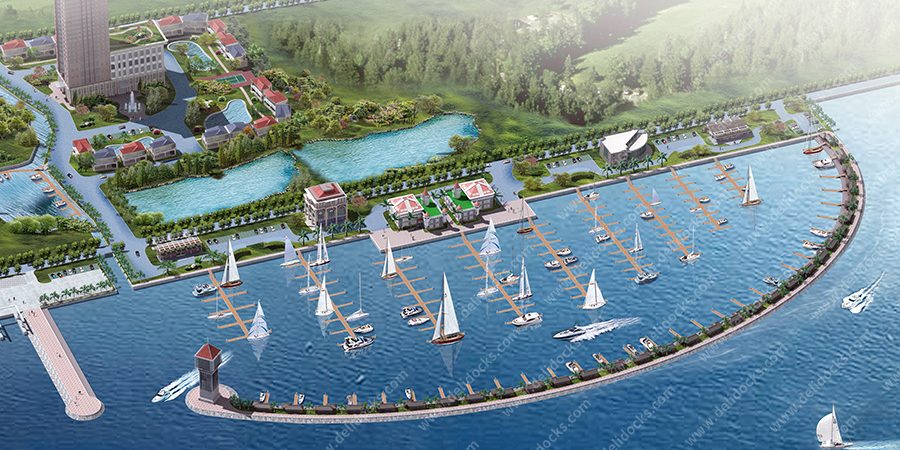
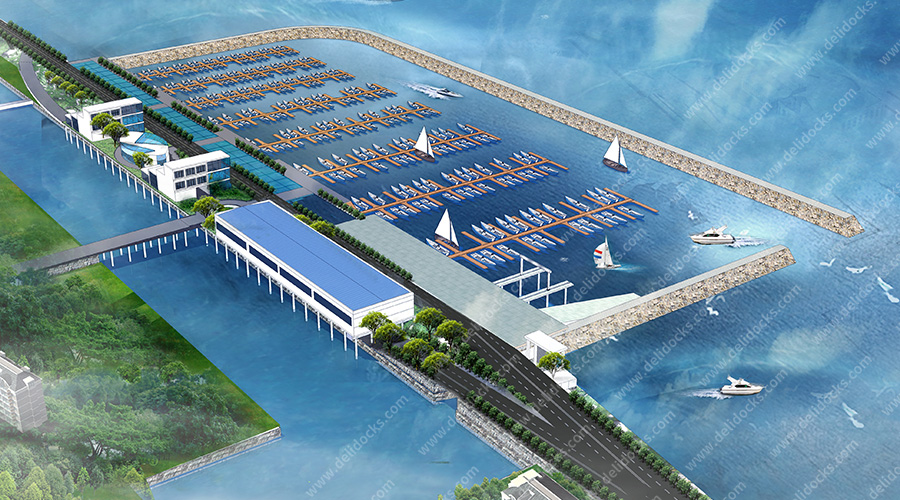
Marinas require docking solutions that can adapt to different boat sizes, drafts, and configurations. The modular nature of these systems allows marina operators to configure custom finger piers, main walkways, and specialized slips for jet skis and tenders. The shock-absorption properties of the polymer cubes protect boat hulls from damage during mooring maneuvers, reducing the need for extensive fender systems.
Industrial Floating Work Platforms
In civil engineering and marine maintenance, temporary floating platforms are frequently needed to support scaffolding, generators, and construction crews. The modular units can be configured into rectangular rafts to facilitate bridge inspection, dredging operations, or shoreline rehabilitation. These platforms can be disassembled, transported by road in standard shipping containers, and quickly reassembled at the next project site, reducing logistical timelines.
Municipal and Water Tourism Infrastructure
Public parks, nature reserves, and water sports centers utilize modular walkways to provide access to sensitive wetlands or deep-water recreational zones. Because the HDPE materials do not leach harmful chemicals into the water column, these platforms are suitable for environmentally protected areas. The floating walkways follow the natural contours of the shoreline, maintaining a low profile that preserves the visual aesthetics of the landscape.
Inquiry and Project Consultation
Designing a reliable floating structure requires evaluating several localized factors, such as wind exposure, maximum wave heights, water depth variations, and intended load profiles. A standard off-the-shelf solution may not meet the demands of highly exposed commercial or industrial sites.
If you are planning a marine infrastructure project, we recommend consulting with experienced marine engineers. You can collaborate with the engineering specialists at DeFever to draft your project layout. Our team can assist with site assessments, buoyancy calculations, and anchoring specifications to ensure your modular platform performs reliably under your specific site conditions. Please submit your project specifications, bathymetric data, and load requirements to receive a detailed engineering proposal.
Frequently Asked Questions (FAQs)
Q1: Can a modular cube floating dock withstand sub-zero temperatures and ice formation?
A1: Yes. High-Density Polyethylene retains its physical flexibility even at low temperatures, minimizing the risk of brittle cracking. When ice forms on the water's surface, the sloped sides and natural flexibility of the modular cubes allow the platform to be pushed upward rather than crushed by lateral ice expansion. However, in areas with moving ice floes, the platform should be temporarily decommissioned or protected by wave-attenuation barriers to avoid physical impact damage.
Q2: How does the system handle strong wave action in semi-exposed coastal areas?
A2: The interlocking pin design allows the platform to flex and roll with incoming waves, dissipating wave energy across the entire structure rather than resisting it rigidly. While suitable for moderate wave environments, areas with continuous wave heights exceeding 0.5 to 0.8 meters typically require the installation of a floating breakwater or a dedicated wave attenuation system to protect the platform and moored vessels.
Q3: What maintenance is required to prevent biological growth on the underwater surfaces?
A3: Because HDPE has a low surface energy and is non-porous, marine organisms cannot easily bond to the material. While algae and barnacles will form over time, they only adhere to the outer surface. These organisms can be removed during periodic maintenance using a standard pressure washer. No anti-fouling paints or chemical treatments are required, helping to protect local water quality.
Q4: How are utility lines like electricity and water routed across the modular platform?
A4: Utility cables and water hoses can be managed using specialized utility channels that fit into the modular layout. Alternatively, lines can be routed beneath the deck surface using heavy-duty conduit secured by specialized brackets attached to the interlocking connecting pins, keeping the walking surface clear of hazards.
Q5: What is the expected operational lifespan of an HDPE cube floating dock in saltwater?
A5: Under typical marine conditions, high-quality HDPE modular platforms formulated with appropriate UV stabilizers generally have an operational lifespan exceeding 15 to 20 years. The material does not rot, rust, or corrode, and it remains inert to salt water, fuel spills, and organic growth throughout its service life.