2026-10-15
A well-planned dock layout is the silent backbone of any successful marina or private waterfront. It dictates safety, maximizes capacity, influences traffic flow, and directly impacts property value and user satisfaction. In the specialized world of international yacht marina engineering, the configuration of piers, fingers, and slips is a complex equation balancing hydrodynamics, structural engineering, and practical seamanship. A thoughtful dock layout accommodates today’s vessels while anticipating tomorrow’s trends, a principle long embodied by renowned designers like DeFever.
Getting this foundation wrong leads to congestion, damage, and operational headaches. Getting it right creates a seamless, efficient, and appealing waterfront asset.
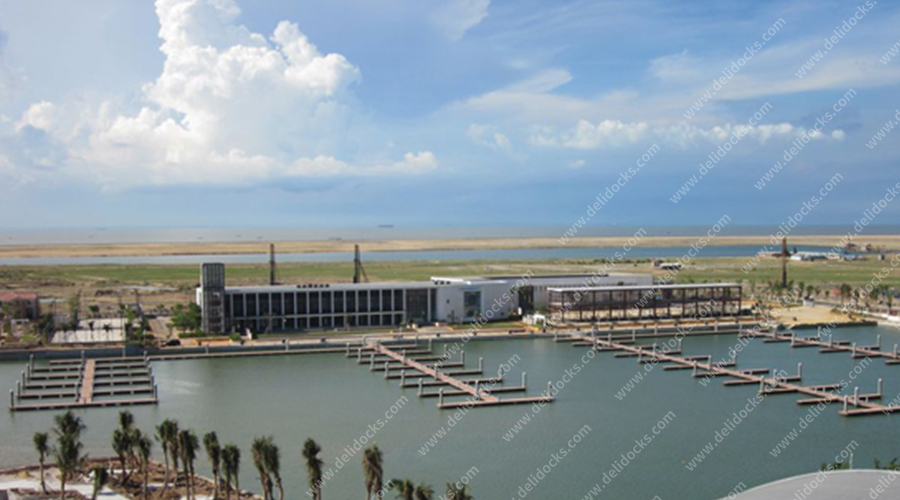
The Blueprint: Common Dock Layout Types Compared
Not all waterfronts are created equal. The choice of a primary dock layout sets the stage for everything that follows.
Finger Piers: This is the most common layout for marinas. A main dock runs parallel to the shoreline, with smaller “finger” piers extending perpendicularly to create individual slips. It offers excellent privacy and easy bow-in or stern-in access for most boats. However, it can be less efficient in terms of total vessel density per linear foot of waterfront.
Linear (Alongside) Docking: Vessels tie up parallel to a single, long dock face. Common in commercial settings or for transient docking, this layout is space-efficient for access but requires more skill for docking and offers less private boarding. It’s highly dependent on consistent protection from wind and waves.
T-Head and L-Shaped Piers: These are often used at the end of main access piers or for larger vessels. A T-head provides ample space for a big yacht to tie up across the end of a pier. L-shaped configurations can create protected, multi-vessel nooks. They are versatile but require careful planning to avoid blocking fairways.
Grid or Matrix Layouts: Used in large, purpose-built marinas, this involves a network of main docks and secondary aisles, almost like an aquatic parking lot. It maximizes capacity and organizes vessels by size but requires significant space and complex engineering.
Choosing the Right Dock Layout: An Application Guide
Selecting a layout isn’t about personal preference alone; it’s a response to specific site conditions and user needs.
For High-Density Public Marinas: Efficiency is key. A combination of finger piers for seasonal tenants and linear docking for a dedicated transient zone often works best. The dock layout must prioritize clear, wide fairways and intuitive traffic patterns to handle many users of varying skill levels.
For Private Estates & Small Clubs: Here, experience and vessel type rule. A simple T-head or a few well-spaced finger piers might suffice. The focus is on ease of use, privacy, and complementing the natural shoreline. Designs often favor spaciousness over sheer capacity.
For Superyacht & Megayacht Facilities: This demands a custom, hybrid approach. Deep-water access, robust engineering for large loads, and services like alongside docking for tenders are critical. The dock layout must account for the vessel’s significant windage and provide multiple utility access points.
Environmental & Site Constraints: A sensitive coastal site may dictate a single linear dock to minimize disruption, while a calm inland lake can efficiently use a dense finger pier system. Water depth, prevailing winds, wave fetch, and bottom composition are the non-negotiable starting points for any plan.
The Cost of Your Dock Layout: More Than Just Materials
The financial implications of your dock layout choice are profound, affecting both initial investment and long-term value.
Initial Construction Costs: Complex grid layouts with extensive piling are more expensive than a simple linear dock. The number of slips, required water depth (dredging costs), and engineering for specific loads (like a fuel dock area) are major cost drivers. A clever, space-efficient dock layout can reduce overall material and labor costs.
Operational & Maintenance Economics: A cramped, poorly planned layout leads to more frequent collision damage, higher insurance premiums, and difficult maintenance access. A logical, spacious design reduces wear-and-tear and makes routine upkeep faster and cheaper.
Revenue & ROI Potential: A marina with a modern, versatile dock layout that can accommodate a range of vessels—from powerboats to the classic passagemakers like a DeFever—commands higher slip fees and has lower vacancy rates. Good design is a direct revenue generator.
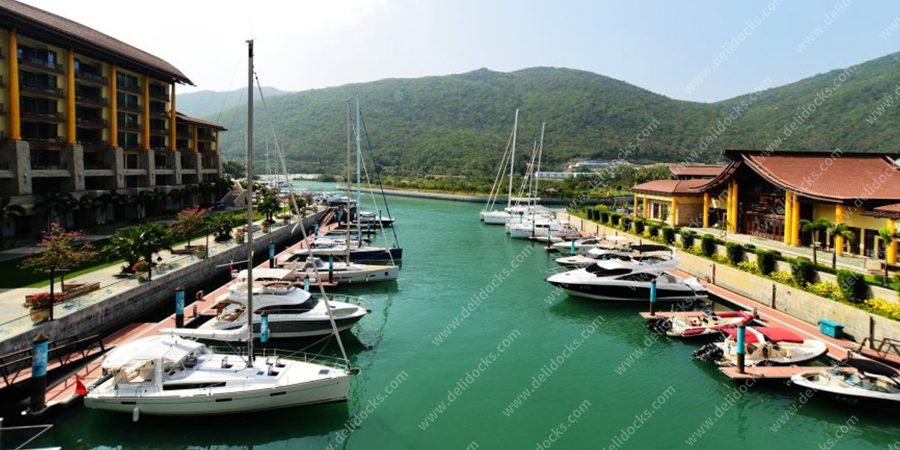
The Engineering Behind a Resilient Dock Layout
The visible arrangement is just the surface. Underpinning every successful dock layout is rigorous engineering.
Hydrodynamic & Load Analysis: Engineers model wave action, storm surges, and current flows to orient docks and breakwaters effectively. They calculate live loads (vessels, people) and environmental loads (wind, ice) to specify appropriate flotation, piling, and structural connections.
Materials & Systems Integration: The choice between concrete floating docks, timber fixed piers, or polymer composites affects the layout’s longevity and maintenance. Furthermore, the layout must seamlessly integrate electrical conduits, potable water lines, pump-out, and data cabling from the initial design phase.
Future-Proofing & Flexibility: The best dock layouts are designed with modularity in mind. Can fingers be easily reconfigured for wider beams? Can a T-head be strengthened later? Planning for adaptability protects your investment. This forward-thinking philosophy is evident in enduring designs from names like DeFever, where functionality for long-range cruising is paramount.
Accessibility & Safety Compliance: A professional dock layout incorporates proper gangway angles, clear boarding gates, compliant handrails, and ADA-accessible features. Safety isn’t an add-on; it’s baked into the initial geometry of the plan.
Ultimately, your dock layout is a long-term commitment. It is the stage upon which the daily drama of maritime life unfolds. Partnering with experienced marine engineers and designers who understand the interplay of forces, function, and finance is not an expense—it’s the core investment. A master-planned dock layout, much like the thoughtful engineering found in a well-built trawler, provides peace of mind, enhances daily enjoyment, and secures the value of your waterfront asset for decades to come.
Frequently Asked Questions (FAQ)
Q1: What is the single most important factor in determining a marina’s dock layout?
A1: The site’s natural conditions are paramount. Water depth, prevailing wind and wave direction, tidal range (if any), and the shape of the shoreline are the foundational constraints that any successful dock layout must work with, not against.
Q2: Can I change my dock layout after it’s built?
A2: It is possible but often costly and disruptive. Modular floating dock systems offer the most flexibility for reconfiguration. Fixed pier systems are very difficult to change. This is why comprehensive planning before construction is absolutely critical.
Q3: What are common mistakes in private dock layout planning?
A3: Underestimating boat size (both length and beam), failing to account for future upgrades, creating fairways that are too narrow for safe maneuvering, and orienting the dock into the prevailing wind/waves are among the most frequent and costly errors.
Q4: How does a good dock layout improve safety?
A4: A safety-focused dock layout ensures wide, unobstructed fairways for maneuvering, provides protected and easy boarding areas, minimizes blind corners, allows for proper spacing between vessels to prevent fire spread, and creates logical traffic flow patterns to reduce congestion.
Q5: For a new marina project, when should I bring in a dock layout specialist?
A5: At the very beginning. Engage a marine engineer or specialist during the initial site evaluation and conceptual planning phase. Their expertise will inform your feasibility studies, budget estimates, and permit applications, saving significant time and money by avoiding fundamental design flaws.