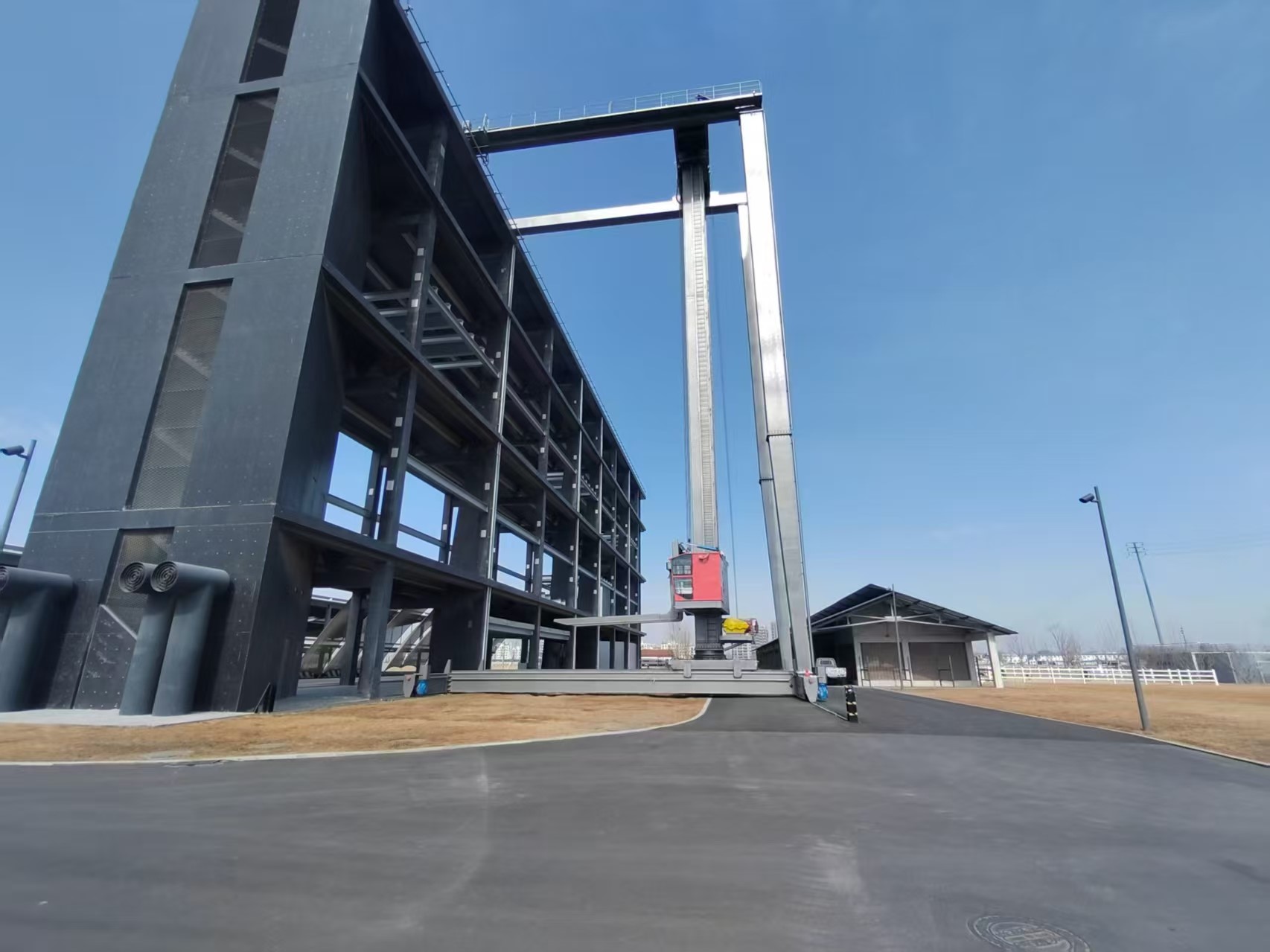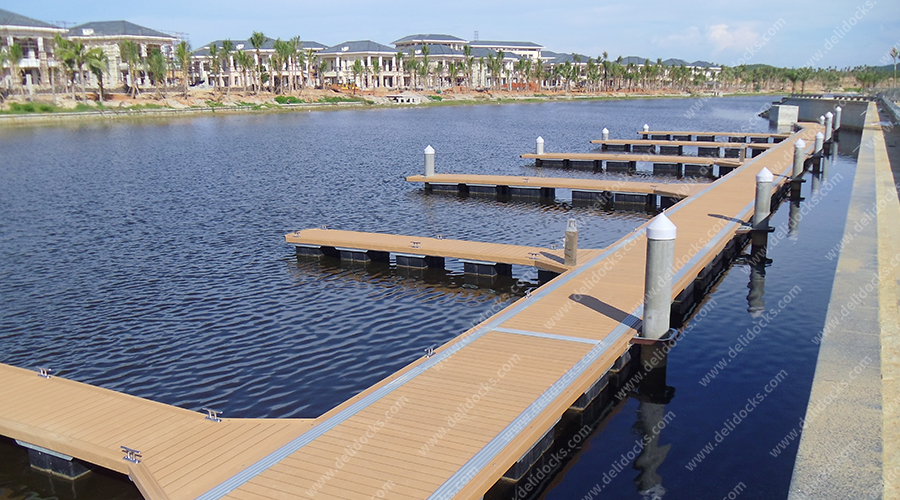
In the demanding world of international marina construction and commercial port facilities, the choice of floating dock system directly impacts operational lifespan, maintenance budgets, and user safety. For B2B engineers, harbor masters, and infrastructure developers, steel tube floating docks have emerged as the superior solution for high-load, high-wave-energy environments. Unlike conventional concrete or aluminum alternatives, these systems offer unmatched structural integrity, modular flexibility, and resistance to extreme marine conditions. Below, we dissect eight engineering parameters that define performance, backed by DeFever’s decades of delivering bespoke floating solutions worldwide.
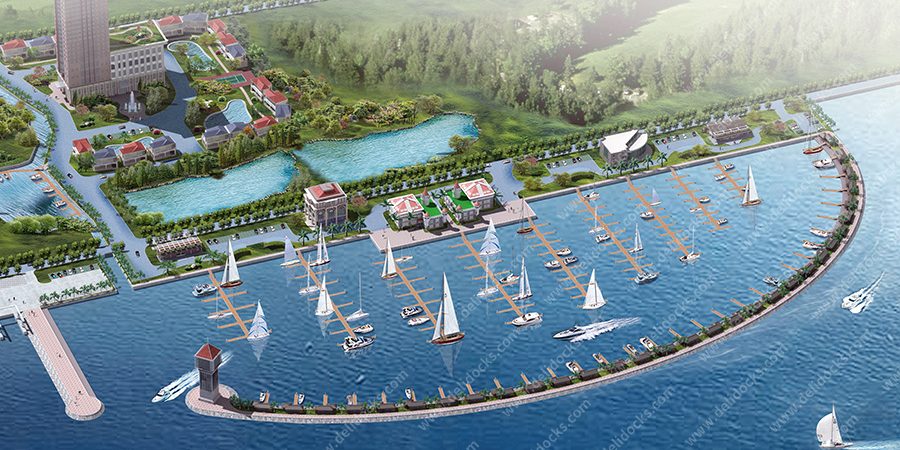
The marine environment presents a relentless assault of saltwater, UV radiation, and biological fouling. For steel tube floating docks, material specification starts with API 5L Grade B or ASTM A500 Grade C steel, offering minimum yield strengths of 35 ksi. However, raw steel corrodes rapidly without multi-layer protection. The industry standard combines:
Hot-dip galvanizing (HDG) per ASTM A123: A minimum 85-micron zinc coating provides cathodic protection. Post-galvanizing, we apply epoxy or polyurethane topcoats for abrasion resistance.
Sacrificial anode systems: Aluminum-zinc-indium anodes attached to the steel tube framework prevent galvanic corrosion, especially in brackish waters.
Internal void sealing: Fully welded seams and pressure-tested compartments eliminate water ingress, a common failure point in fabricated structures.
Leading manufacturers like DeFever integrate these methods, achieving service lives exceeding 30 years in aggressive tidal zones. For projects requiring additional chemical resistance (e.g., industrial ports), stainless steel cladding on wetted surfaces is available.
Unlike static piers, floating docks must absorb kinetic energy from vessel berthing, wave slamming, and live loads (forklifts, crane mats). Finite element analysis (FEA) is mandatory for steel tube floating docks in exposed locations. Key design parameters include:
Significant wave height (Hs) tolerance: Engineered for Hs up to 1.5 meters with minimal torsional deflection.
Point load capacity: A 4m x 8m dock module supports concentrated loads of 5 kN/m² (e.g., 10-ton mobile crane outriggers).
Fatigue life analysis: Connections (welded gusset plates, bolted flanges) are designed for 10⁷ cycles at operational stress ranges.
To optimize stiffness-to-weight ratios, primary chords use 219.1mm OD x 6.35mm wall tubes, while secondary bracing employs 114.3mm OD tubes. This configuration minimizes draft while maximizing bending resistance—proven in marina engineering projects across the North Sea and Singapore Strait.
Large-scale marinas rarely build out entirely at once. Steel tube floating docks excel in phased deployment due to standardized connection interfaces. Modular floating platforms use ISO-corner castings or proprietary interlocking hinges, allowing future sections to be added without dry-docking existing units. Deployable benefits include:
Interchangeable service modules (fuel stations, pump-out, security gates).
Adjustable pile guide spacing to accommodate tidal ranges up to 8 meters.
Rapid reconfiguration for seasonal slip expansions or superyacht berths.
For brownfield projects, existing concrete docks can be retrofitted with steel tube floating extensions, reducing construction time by 40% compared to conventional methods. DeFever provides turnkey engineering packages including 3D BIM models, ensuring seamless integration with client’s master plans.
The operational reliability of any floating dock hinges on its anchoring design. For steel tube floating docks in macrotidal zones (range >6m), spud piles or helical anchors with elastomeric bearings are preferred. Detailed considerations:
Pile guide material: UHMWPE or nylon rollers on galvanized steel sleeves reduce friction and prevent galvanic pairing.
Mooring load calculation: Based on wind (120 km/h), current (3 knots), and vessel suction effects. Typical designs use 22mm-32mm galvanized chains with HMPE pennant lines.
Articulated hinge systems: Allow pitch and roll up to ±15°, absorbing wave energy without transmitting stress to deck connections.
Advanced systems incorporate real-time load monitoring via strain gauges, enabling predictive maintenance—a feature increasingly requested by commercial port authorities.
From Canadian fjords to tropical typhoon belts, environmental extremes test floating infrastructure. Steel tube floating docks engineered for these zones require specific adaptations:
Ice management: Conical steel fenders and ice-breaking bows (45° angles) deflect drifting ice sheets. Air bubbling systems prevent freezing around piles.
Cyclone resilience: Quick-release mooring hooks and sacrificial pile guides that shear under extreme overload, protecting main structure.
Debris impact resistance: Double-walled collision chambers in bow sections (filled with closed-cell foam) absorb logs or container impacts without sinking.
Certification to ASCE 7-22 (wind loads) and ISO 28460 (marine terminal standards) is standard for heavy-duty floating docks. DeFever has delivered systems operating in the Bering Sea and Arabian Gulf, where winter temperatures range from -30°C to +50°C.
B2B decision-makers require total cost of ownership (TCO) models spanning 25 years. Below is a comparative breakdown per 100 linear meters of 3m-wide floating dock:
| Parameter | Steel Tube (HDG+Coating) | Reinforced Concrete | Marine Aluminum (5086) |
|---|---|---|---|
| Initial capital cost | $$$ (moderate) | $$ (low) | $$$$ (high) |
| Annual maintenance (cleaning/coating) | $1,200 | $2,500 (crack repair) | $800 (anode replacement) |
| Design life (years) | 30+ | 20 (spalling risk) | 25 (fatigue sensitive) |
| Dry-docking frequency | Every 10-12 years | Every 5-6 years | Every 8 years |
| Salvage value (% of initial) | 25% | 5% | 40% |
While aluminum offers light weight, steel tube provides superior fatigue strength and damage tolerance at 40% lower material cost per kN·m bending moment. Concrete’s low initial cost is offset by high logistics expenses (crane barges) and hidden rebar corrosion.
Specifying steel tube floating docks requires verifiable QA/QC documentation. Prudent buyers mandate:
Weld procedure specifications (WPS) and welder performance qualifications per AWS D1.1.
Non-destructive testing (NDT): 100% magnetic particle inspection of all butt welds; ultrasonic testing of full-penetration T-joints.
Buoyancy proof testing: Each sealed compartment pressurized to 0.5 bar for 24 hours, monitored with digital manometers.
Third-party inspections: Lloyd’s Register, ABS, or DNV for insurance and warranty compliance.
Prefabricated steel pontoons from certified workshops reduce on-site assembly time by 60% and eliminate weather delays. All DeFever products are delivered with full material traceability (EN 10204 3.1 certificates).
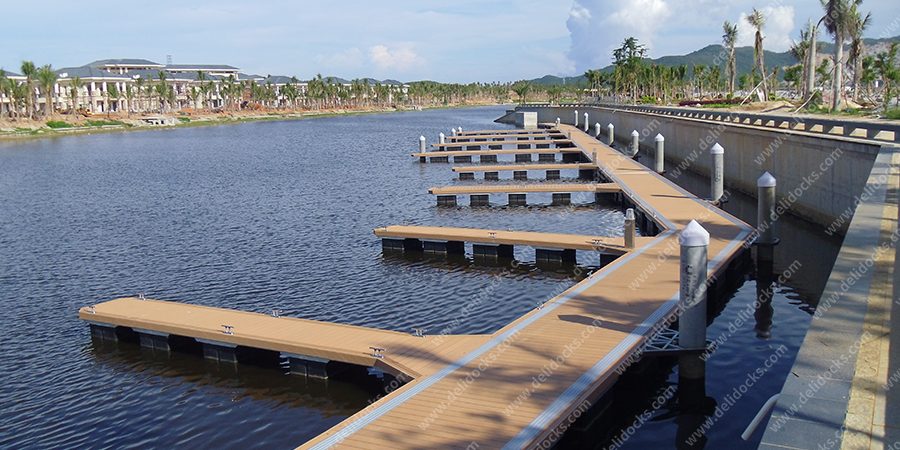
Even well-engineered docks fail when ignoring hidden mechanisms. Here are three frequent issues with steel tube floating docks and their engineered remedies:
Failure Mode 1: Corrosion under insulation (CUI) – Where
rubber fenders trap moisture.
Solution: Open-cell rubber fenders
with drainage slots and stainless steel backing plates.
Failure Mode 2: Weld cracking at high-stress nodes due to
insufficient throat thickness.
Solution: Use of pre-heating (150°C
minimum for steel >25mm) and post-weld heat treatment for critical
connections.
Failure Mode 3: Uplift in extreme storm surge when
submerged buoyancy exceeds pile guide capacity.
Solution: Integrated
vented pile guides that release upward force above a threshold (e.g., 200
kN).
Conducting annual thermographic and acoustic emission inspections catches these issues early. For B2B clients, floating dock maintenance programs can be contracted as part of the supply agreement.
Ready to engineer your next-generation floating infrastructure? DeFever provides full B2B support—from hydrodynamic studies and structural detailing to turnkey installation. Request a customized technical proposal or CAD model of steel tube floating docks tailored to your site’s wave climate and load profile. Submit your inquiry today for a 48-hour preliminary engineering assessment.