2026-10-15
For decades, the boating world was strictly divided. You had your fiberglass cruisers, your sport fishing boats, and then you had the humble pontoon. The latter was viewed as a slow, rectangular party platform for calm lakes. That image is dead. Today, the pontoon yacht has emerged as a legitimate category in the marine industry, boasting twin engines, joystick piloting, and price tags that rival traditional cruisers.
This shift isn't just about luxury upholstery; it is about a fundamental change in naval architecture and consumer expectation. Boaters who previously owned heavy displacement vessels, perhaps even classics like a DeFever, are beginning to appreciate the low draft and high stability of these aluminum giants. However, classifying these vessels brings new challenges for owners and marina operators alike.
When we discuss the pontoon yacht in the context of international yacht marina engineering, we aren't just talking about parking a boat. We are looking at wider beams, different structural loads on floating docks, and the need for specialized lifting equipment. Let’s look at what makes these vessels distinct and how they are built.
What Defines a True Pontoon Yacht?
The term "yacht" usually implies a certain size and level of autonomy. For a pontoon to cross that threshold, it generally needs to be over 27 feet in length and 10 feet in beam. It is no longer just two logs and a deck.
We are seeing vessels equipped with galleys, heads (bathrooms) with holding tanks, and full enclosures. The distinction lies in the capability. A standard pontoon is for day use. A pontoon yacht is engineered for extended range, rougher water, and heavier payloads.
The market has moved toward "tritoons." This third central tube transforms the hydrodynamics of the vessel. It allows the boat to plane, bank into turns like a V-hull, and carry the weight of massive twin outboard engines.
Engineering and Construction Standards
The construction quality of a high-end pontoon yacht is where the real value lies. In marina engineering, we look at the structural integrity of the chassis. You cannot simply bolt a deck to aluminum cans and expect it to handle coastal chop.
High-end manufacturers use 5052 H34 marine-grade aluminum alloy. The thickness is paramount. While entry-level boats use .080 gauge aluminum, a yacht-grade vessel will often use .100 or even .125 gauge, specifically in the nose cones and stress points.
The cross-members—the ribs connecting the tubes to the deck—are critical. On a standard boat, these might be spaced 24 inches apart. On a performance pontoon yacht, engineering standards dictate 16-inch centers, often moving to 12-inch centers near the transom to support the torque of 600+ horsepower.
Hydrodynamics: Lifting Strakes and Nose Cones
Why do these boats perform so differently now? It comes down to the hydrodynamic add-ons welded to the tubes. Lifting strakes are angled pieces of aluminum welded to the sides of the pontoons.
When the boat accelerates, these strakes generate lift, raising the heavy vessel out of the water. This reduces drag significantly. Without them, the boat plows; with them, it glides.
Nose cones have also evolved. In the past, blunt noses caused splashing and drag. Modern pontoon yacht designs feature reinforced, sharp-entry nose cones that slice through waves rather than pushing them. This is what allows owners of traditional heavy hulls, who appreciate the seaworthiness of brands like DeFever, to step onto a pontoon and not feel like they are sacrificing ride quality in moderate chop.
Marina Engineering Considerations for Pontoon Yachts
From an infrastructure perspective, the rise of the pontoon yacht creates specific demands on international marina design. These boats are beamier than monohulls of the same length. A 30-foot monohull might be 9 feet wide; a 30-foot pontoon can easily be 10 to 12 feet wide.
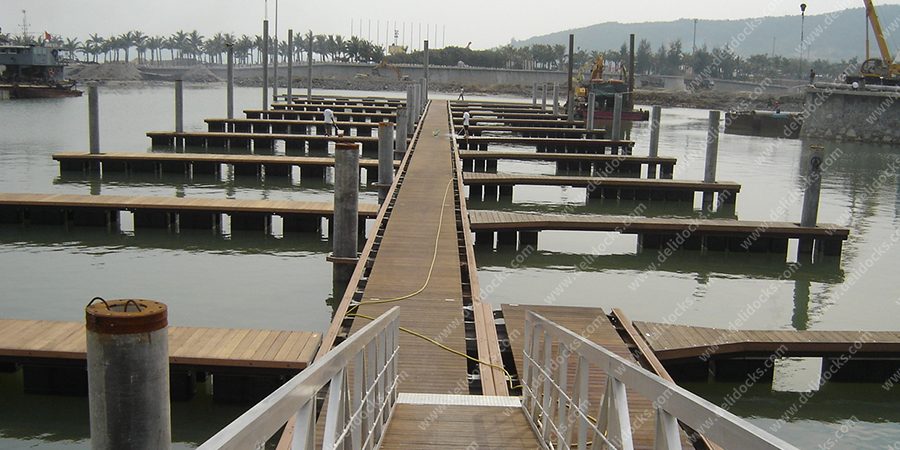
This forces marina engineers to rethink slip widths. Older fixed docks often cannot accommodate modern pontoons side-by-side. We are seeing a trend toward single-loaded floating docks to handle the width.
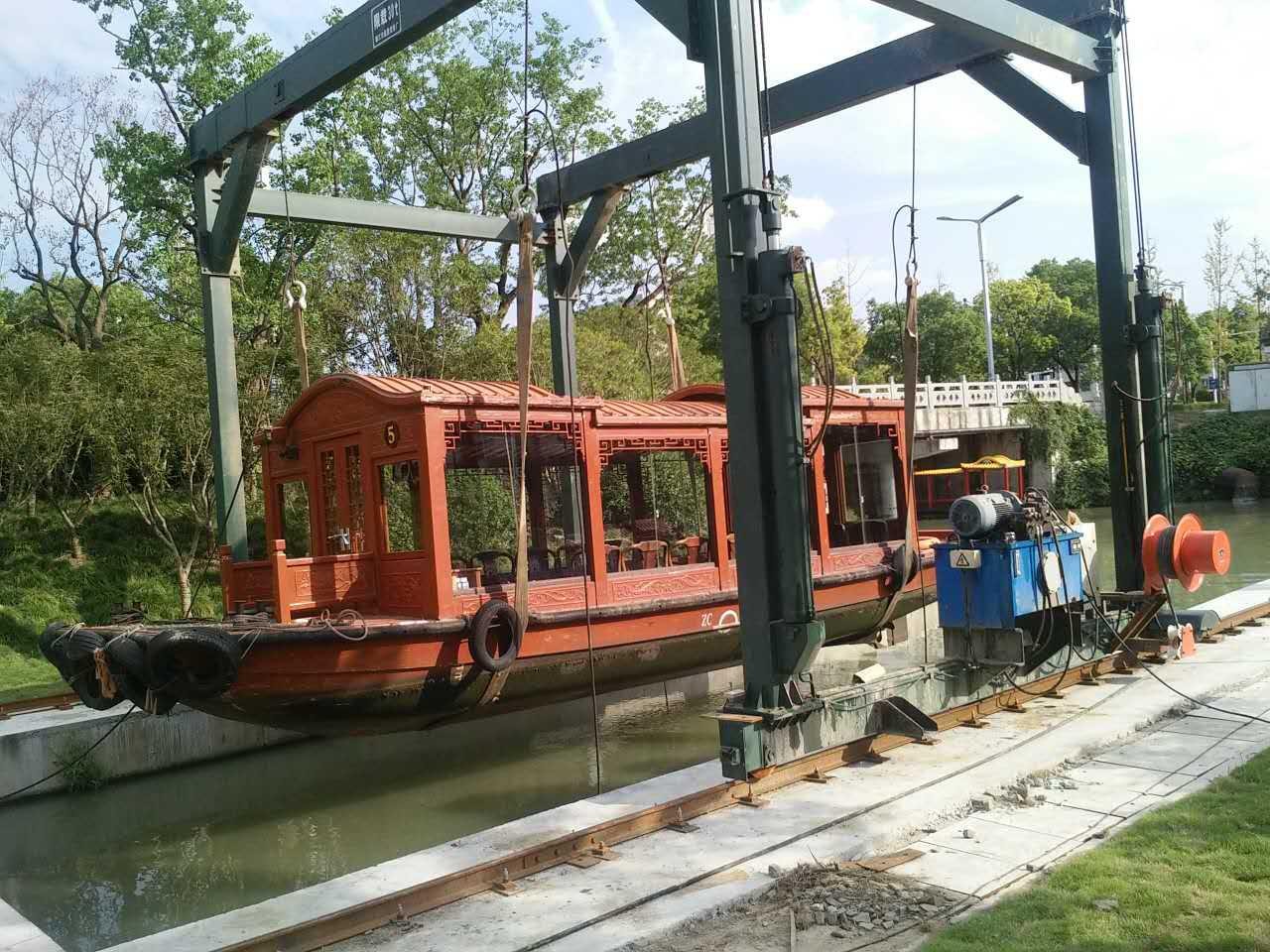
Furthermore, lift engineering is different. A traditional forklift or travel lift lifts a boat by its keel or chines. You cannot do that with a pontoon. The weight must be supported under the cross-members or the logs themselves. Marinas are having to retrofit cradles to safely haul these vessels out for winter storage or maintenance.
Stability and The "Platform" Appeal
The primary reason buyers are switching to a pontoon yacht is stability. It is simple physics. A catamaran or trimaran design has a wider stance than a monohull. When a wave hits the side, the boat resists rolling.
For older boaters or families with young children, this is a safety feature. The boat feels like a floating dock. You can walk from side to side without the vessel tipping significantly.
This stability extends to anchorages. If you are entertaining ten people, a V-hull rocks incessantly with boat wakes. A heavy-duty pontoon absorbs that energy much better. It is a social platform first, and a transport vessel second.
Propulsion and Electrical Systems
The engine room of a pontoon yacht is usually hanging off the back. The shift to four-stroke outboards has been the catalyst for this segment. We are seeing twin 300hp, 400hp, and even 600hp engines on these transoms.
With great power comes the need for robust electrical systems. These yachts now carry house batteries, inverters, and shore power connections similar to a cruiser.
Wiring harnesses must be marine grade, tinned copper, and properly loomed to avoid chafing against the aluminum structure. Galvanic corrosion is a major engineering concern. Since the hull is aluminum, connecting to shore power in a "hot" marina can eat the metal. Isolation transformers are becoming standard equipment on these high-end builds.
Layouts and Recreational Uses
The layout is where the "yacht" designation feels most appropriate. We aren't seeing just bench seats anymore. We are seeing fiberglass sculpted furniture, teak-style flooring (woven vinyl or SeaDek), and galleys with refrigerators and grills.
The use case has expanded. People use a pontoon yacht for:
Sunset Cruising: High visibility and comfort.Sandbar Gathering: Shallow draft allows beaching where monohulls cannot go.Watersports: With ski tow bars and high horsepower, they are capable tow boats.Coastal Commuting: Moving between islands or coastal towns in comfort.
The Pros of Ownership
There are distinct advantages to this hull type. First is maintenance. Aluminum requires less waxing and polishing than gel coat fiberglass. If you leave it unpainted, it oxidizes to a dull grey but remains structurally sound.
Second is space efficiency. A 30-foot monohull loses beam at the bow. A 30-foot pontoon carries its full beam almost all the way forward. You get roughly 30% more usable deck space.
Third is shallow water access. With the engines trimmed up, you can float in two feet of water. This opens up coves and bays that are off-limits to deep-draft vessels.
The Cons and Limitations
It is not all perfect. The pontoon yacht is not a blue-water vessel. In large ocean swells, the bridge deck (the space between the tubes) can slam against the waves. This "shudder" is uncomfortable and can be structurally damaging over time.
Fuel economy at high speeds is generally worse than a comparable planing monohull because of aerodynamics. The boat is essentially a brick pushing through the air.
Handling in tight marinas can be tricky in high winds. Pontoons have a lot of "windage"—they sit high on the water and catch the breeze. Without a joystick system or bow thruster, docking in a crosswind requires skill.
From Trawlers to Pontoons: A Shift in Preference?
It is interesting to observe the migration of boat owners. There is a demographic of boaters who spent years aboard long-range trawlers, such as a DeFever. These boats are legendary for their ability to cross oceans.
However as these owners age or decide to stick to local coastal waters, they often find the maintenance of a large trawler burdensome. They switch to a high-end pontoon. They get the same build quality and luxury they are used to, but in a package that is easier to wash, easier to board, and faster to get to the destination.
It is not a downgrade; it is a lateral move in luxury but a change in mission profile.
Comparison: Fiberglass vs. Aluminum Pontoons
Recently, some manufacturers have started building fiberglass-hulled catamarans and calling them pontoons. These offer smoother lines and no "tin can" sound when water hits the tubes.
However, aluminum remains the king of the pontoon yacht world. It is lighter, tougher against rocks, and easier to repair. In an engineering sense, aluminum offers a better strength-to-weight ratio for this specific application.
Fiberglass upper decks are becoming common, though. Replacing the old aluminum fence panels with molded fiberglass gives the boat a sleek, automotive look that appeals to the modern buyer.
Future Trends in Marina Infrastructure
As these boats get bigger, marinas will have to adapt. We are already seeing "super-wide" slips in new marina developments in Florida and the Mediterranean.
Electricity demands are rising. Owners want to run air conditioning at the dock, which means 30-amp or even 50-amp service is needed at slips that used to only require a standard plug.
The pontoon yacht is driving a renovation boom in aging marinas that were designed for skinny sailboats and small runabouts.
The evolution of the pontoon from a simple raft to a complex, high-performance vessel is one of the most significant trends in boating. It challenges naval architects to find new ways to combine speed with luxury, and it challenges marina engineers to accommodate wider, distinctive hull forms.
Whether you are stepping down from a massive DeFever or stepping up from a small bowrider, the modern pontoon offers a blend of space and stability that is hard to match. As materials improve and engines become more efficient, we can expect this segment to dominate coastal waterways for years to come.
Frequently Asked Questions (FAQ)
Q1: Can a pontoon yacht be used in the ocean?
A1: Yes, but with limitations. A high-quality pontoon yacht with large diameter tubes (27 inches+) and a tritoon configuration can handle coastal ocean waters and moderate chop. However, they are not designed for deep-sea crossings or large swells, as the waves can hit the underside of the deck.
Q2: How fast can a modern performance pontoon go?
A2: It depends heavily on the engine package. A tritoon equipped with twin 300hp or 400hp outboards can easily reach speeds between 50 and 65 mph. Some high-performance custom builds can even exceed 70 mph, though cruising speeds are typically in the 25-35 mph range.
Q3: Do I need a special boat lift for a pontoon?
A3: Yes. Standard V-hull lifts support a boat by the keel. Pontoons require a lift with bunks or cradles positioned specifically under the aluminum logs or the frame cross-members. Using the wrong lift can damage the structural integrity of the tubes.
Q4: How long do aluminum pontoon logs last?
A4: Marine-grade aluminum is incredibly durable. If kept clean and protected from galvanic corrosion (using zinc anodes), the logs can last 30 to 40 years or more. They do not rot like wood or blister like fiberglass, making them excellent for long-term ownership.
Q5: Is a pontoon yacht difficult to dock?
A5: In calm conditions, they are easy to maneuver. However, because they sit high on the water and have a shallow draft, they are susceptible to wind. Having twin engines helps significantly with pivot control, and many modern yachts now feature joystick docking systems to make this process effortless.