2026-10-15
Marine infrastructure demands a sophisticated balance between structural durability and environmental adaptability. Traditional fixed piers often struggle to withstand fluctuating water levels and intense hydrodynamic forces. To address these challenges, marine engineers increasingly specify modern pontoon designs that adjust dynamically to water movements. Utilizing a flexible floating dock system allows commercial waterfront facilities to remain operational during significant tidal fluctuations while minimizing stress on structural connectors.
Designing these systems requires a deep understanding of marine engineering, fluid dynamics, and material science. Every component, from the internal floatation chambers to the external mooring guides, must perform reliably under continuous cyclical loading. This analysis examines the engineering principles, material selections, and mooring configurations that define high-performance floating infrastructure.
Hydrodynamic Principles of Modular Floating Platforms
The performance of any floating structure depends on hydrostatic equilibrium. When designing modular platforms, engineers must calculate the buoyancy-to-weight ratio to ensure stability under both static and dynamic loads. The draft of the pontoon must be carefully calibrated to maintain a low center of gravity while providing sufficient freeboard for passengers and equipment.
Metacentric height represents a primary metric in assessing transverse stability. A higher metacentric height prevents excessive tilting when asymmetric loads are applied, such as when passengers gather on one side of the deck. However, if the platform is too stiff, it can experience rapid, jerky motions in response to wave action, which compromises user comfort and increases wear on connection joints.
Wave-structure interaction represents another major design consideration. As wave energy passes through a pontoon assembly, the structure must either absorb, reflect, or transmit this energy. A rigid pontoon structure experiences high bending moments, which can lead to structural fatigue over time. By contrast, a flexible floating dock allows the wave profile to pass through the structure by articulating at designated joint hinges, significantly reducing the bending moments experienced by the individual pontoon frames.
Buoyancy and Load Distribution Calculations
To establish the structural design criteria, engineers calculate the dead load (the weight of the pontoon itself, including decking and utilities) and the design live load (the weight of pedestrians, light vehicles, and gangway reactions). The required displacement volume of the pontoon is calculated using the following formula:
V = (W_dead + W_live) / (rho * SF)
Where:
V is the required displaced volume of the pontoon.
W_dead represents the total dead weight of the structure.
W_live represents the maximum expected live load.
rho is the density of the water (typically 1,025 kg/m³ for seawater).
SF is the safety factor, typically ranging between 1.5 and 2.0 to account for unexpected loading conditions.
By distributing this volume across multiple modular units, the engineering team can prevent localized sinking and ensure the deck remains parallel to the water surface under variable loading configurations.
Wave Attenuation and Kinetic Energy Dissipation
In exposed marine locations, floating pontoon assemblies often serve as secondary wave attenuators. When incoming waves strike the vertical face of the pontoon, a portion of the wave energy is reflected back into the basin, while another portion is dissipated through turbulent flow underneath the structure. The flexibility of the connection joints allows the system to deflect slightly, converting kinetic wave energy into mechanical deformation energy, which is then absorbed by elastomeric dampers within the hinges.
Material Selection for Demanding Marine Environments
The choice of materials directly determines the service life and maintenance requirements of floating infrastructure. Marine environments expose structures to continuous salt spray, ultraviolet radiation, biological fouling, and physical impacts from vessels. Consequently, selecting materials with high corrosion resistance and structural integrity is a foundational step in the engineering process.
Historically, timber and treated steel were common, but modern specifications rely heavily on advanced polymers and structural alloys. These modern materials offer superior strength-to-weight ratios and do not require frequent chemical treatments that could leach harmful substances into the surrounding aquatic environment.
High-Density Polyethylene (HDPE) vs. Marine-Grade Aluminum
High-Density Polyethylene (HDPE) is widely specified for pontoon floats due to its exceptional chemical resistance and impact absorption capabilities. HDPE floats are manufactured using rotational molding, resulting in seamless, single-piece structures that are virtually leak-proof. The molecular structure of HDPE allows it to flex under impact without cracking, returning to its original shape after a collision.
For the structural framework supporting the decking, marine-grade aluminum alloys, specifically 6061-T6 or 5086-H116, are preferred. These alloys offer excellent structural strength while forming a natural oxide layer that protects the metal from deep corrosion. Combining an aluminum support frame with HDPE floatation units creates a lightweight yet durable assembly that minimizes draft while maximizing load capacity.
Connection Systems and Joint Flexibility
The structural joints of a modular floating system are subject to continuous cyclic stress from tidal movement and wave action. Rigidly bolted connections often experience localized stress concentration, leading to bolt shearing or thread stripping. To mitigate this issue, maritime engineering firms utilize elastomeric connection blocks or heavy-duty composite hinges.
As a leading specialist in marine architecture, DeFever engineers advanced connection systems that utilize high-tensile polyurethane dampers. These dampers allow adjacent pontoon modules to pitch and roll independently, distributing shear loads evenly across the entire structural grid and preventing localized point loads from exceeding the material yield strength.
Applications of a Modern Modular Pontoon System
The operational versatility of a modular flexible floating dock makes it suitable for a wide range of waterfront installations. Unlike fixed concrete piers, these structures can be reconfigured, expanded, or relocated as the spatial requirements of the waterfront facility change over time.
From commercial transport facilities to private recreational yacht basins, modular platforms provide reliable access to the water under varying conditions. The following scenarios highlight the application of these structures in diverse settings:
Commercial Passenger Ferries: High-traffic boarding terminals require stable platforms that maintain a consistent deck height relative to ferry boarding doors, ensuring safe pedestrian boarding regardless of tidal stages.
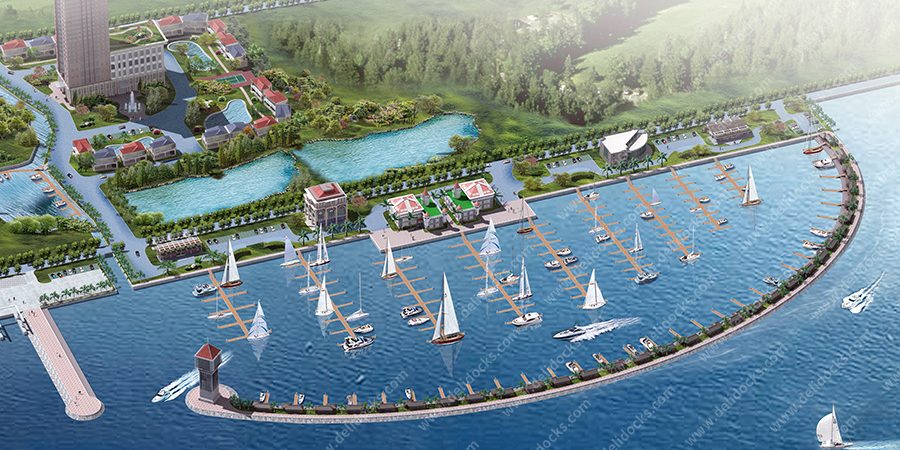
Superyacht Berthing: Large yachts require secure berthing systems that do not transmit harsh mechanical vibrations or impact forces. Modular floating platforms lined with non-marking D-fenders provide a cushioned, secure mooring space.
Industrial Outfitting Piers: Boatyards and maintenance facilities utilize heavy-duty floating platforms to support mobile cranes, welding equipment, and service personnel directly alongside vessel hulls during maintenance procedures.
In each application, the primary benefit remains the system's ability to maintain structural integrity while conforming to the movement of the water surface, minimizing the load transfer to the shore-based abutments.
Addressing Common Marina Infrastructure Challenges
Waterfront operators face several persistent challenges, particularly concerning fluctuating water levels, siltation, and environmental conservation guidelines. Traditional fixed structures often require extensive dredging and pile-driving operations, which can be disruptive to the marine ecosystem and expensive to execute.
A flexible floating dock provides a low-impact alternative that conforms to the natural topography of the shoreline. Because these systems rise and fall with the tides, they eliminate the need for permanent elevated walkways, preserving the visual landscape while maintaining functional utility.
Managing Extreme Tidal Ranges
In regions characterized by macro-tidal regimes, where the tidal range can exceed several meters, fixed piers become unusable during low tides or present unsafe vertical spans during high tides. Floating systems solve this issue by maintaining a constant elevation relative to the water surface. Access to the floating platform is maintained via self-adjusting gangways equipped with roller wheels and transition plates.
To ensure safety during rapid tidal changes, engineering consultancies like DeFever utilize dynamic modeling software to simulate the trajectory of the gangway and the pontoon under extreme high and low water conditions. This planning ensures that the gangway incline never exceeds ADA (Americans with Disabilities Act) compliance guidelines during the tidal cycle.
Environmental Preservation and Habitat Protection
Modern regulatory frameworks place strict limitations on the installation of permanent marine structures. Heavy concrete piles can disrupt benthic habitats, alter local current patterns, and accelerate shoreline erosion. In contrast, modular floating platforms have a minimal ecological footprint.
By utilizing a flexible floating dock, operators can dramatically reduce the number of permanent piles required. The hollow HDPE floats allow light penetration through the gaps in the modular structure, preserving the photosynthetic activity of seagrasses and supporting local marine biodiversity. Furthermore, because these structures do not alter natural sediment transport paths, they help prevent localized siltation, reducing the need for maintenance dredging.
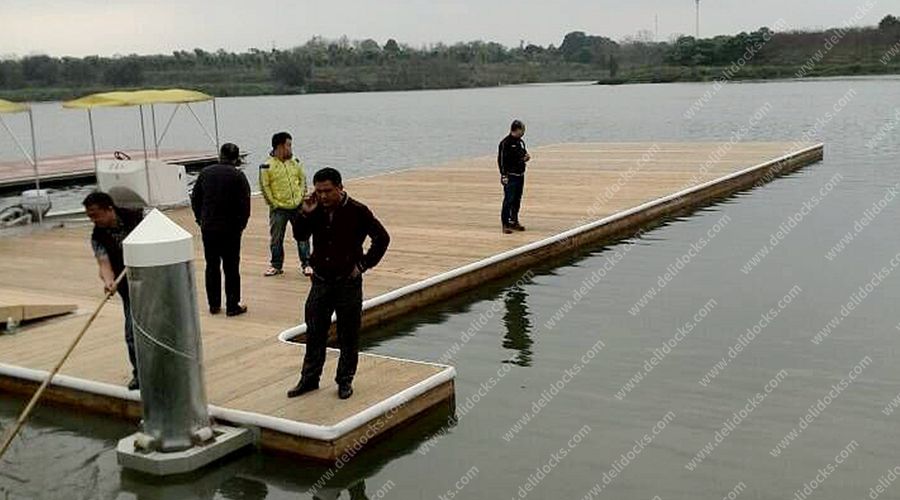
Engineering Standards and Mooring Configurations
A floating platform is only as secure as its mooring system. The mooring arrangement must resist lateral forces from wind, current, and vessel impact while allowing the platform to move vertically with the tide. There are three primary mooring configurations utilized in modern marine installations:
| Mooring Type | Operational Advantages | Typical Application Limitations |
|---|---|---|
| Guide Piles | High lateral load capacity, positive structural tracking, clean visual profile. | Requires heavy pile-driving machinery, limited to areas with drivable substrates. |
| Catenary Chain and Anchor | Suited for deep-water installations, accommodates high tidal ranges without vertical piles. | Occupy a larger benthic footprint, requires periodic adjustment and inspection. |
| Elastic Mooring Systems | Provides continuous dampening, quiet operation, minimizes vertical pull on anchors. | Requires specialized anchoring hardware and precise tension calibration. |
Selecting the appropriate configuration requires a detailed analysis of the site-specific environmental conditions. Wind speed data, maximum current velocities, wave periods, and soil boring logs must all be integrated into the final design calculations to ensure long-term stability.
Calculating Wind and Current Loads
The total lateral force acting on a moored floating system is the sum of the wind force on the exposed profile of the dock and berthed vessels, plus the drag force exerted by the water current on the submerged portion of the pontoons and vessel hulls. The wind force is calculated using the standard drag equation:
F_wind = 0.5 * rho_air * V_wind² * A * Cd
Where:
rho_air is the density of air.
V_wind is the design wind velocity (typically based on a 50-year or 100-year storm event).
A is the projected surface area of the structure and berthed vessels perpendicular to the wind.
Cd is the shape-specific drag coefficient.
A similar calculation is performed for current forces using water density and current velocity. The resulting combined force vectors determine the minimum tensile strength of the mooring cables or the required diameter and wall thickness of the guide piles.
Preventive Maintenance Protocols for Marine Assets
While modern materials significantly reduce the frequency of maintenance, a structured preventive inspection program is necessary to ensure the continuous operation of floating infrastructure. Over time, marine growth, physical wear, and mechanical fatigue can affect the performance of connection joints and mooring lines.
An effective maintenance protocol includes quarterly visual inspections of all flexible joints, connection pins, and elastomeric dampers. Operators should check for signs of wear, such as material deformation, cracking, or play in the hinges. Any worn dampening blocks should be replaced promptly to prevent the accumulation of excessive play, which can lead to progressive damage across adjacent modules.
Mooring connections, particularly underwater shackles, cotter pins, and chains, must be inspected by commercial divers or remote-controlled underwater cameras annually. Biofouling on the underside of the HDPE pontoons should be monitored; while biofouling does not degrade the polyethylene material, excessive growth can increase the weight and draft of the system, reducing the available freeboard.
Collaborative Engineering and Inquiry Processing
Designing and deploying a commercial-grade marine infrastructure system requires close collaboration between the marina owner, local environmental regulators, and experienced marine structural engineers. Every coastal and inland waterway presents unique challenges that cannot be addressed with generic, off-the-shelf products.
By engaging with experienced engineering specialists, project managers can ensure that their custom floating platforms are optimized for local environmental loads, bathymetric profiles, and vessel traffic patterns. From initial site surveys and wave modeling to final structural manufacturing and on-site assembly, professional guidance is indispensable to ensuring the safety, durability, and operational efficiency of your waterfront investment.
To discuss your specific project requirements, obtain engineering specifications, or request a detailed feasibility evaluation for your upcoming marine development, please contact the engineering team at DeFever. Our technical specialists are prepared to review your bathymetric data, site layout, and environmental parameters to design a robust, modular solution tailored to your operational needs.
Frequently Asked Questions
Q1: What is the expected service life of a modular pontoon system in a saltwater environment?
A1: A properly engineered pontoon system using marine-grade 6061-T6 aluminum frames and rotomolded HDPE floats typically has a design life exceeding 25 to 30 years. The HDPE floats are highly resistant to UV degradation and salt corrosion, while the aluminum frame forms a natural protective oxide layer that resists degradation, requiring only minimal routine maintenance of the mechanical connections.
Q2: How does a flexible floating platform perform during freezing conditions or ice formation?
A2: The modular design and flexible connections perform exceptionally well in areas subject to seasonal ice. The tapered shape of the HDPE floats allows them to rise naturally as ice forms and expands, preventing the structure from being crushed by lateral ice pressure. However, in areas with moving ice floes, additional structural protection or seasonal removal of the platforms may be recommended to avoid heavy kinetic impacts.
Q3: Can these systems be expanded or reconfigured after the initial installation?
A3: Yes, one of the primary advantages of a modular pontoon design is its adaptability. Because the individual modules are joined using standardized, heavy-duty composite hinges and connection blocks, sections can be added, removed, or rearranged as the operational requirements of the marina change. This flexibility allows operators to scale their infrastructure gradually to accommodate larger vessels or increased traffic.
Q4: What is the maximum load capacity that a modular floating pontoon can support?
A4: The load capacity depends entirely on the displacement volume of the pontoon units and the design of the structural framework. Heavy-duty commercial modules can be engineered to support live loads exceeding 500 kg/m², which is sufficient for light service vehicles, utility equipment, and high-density pedestrian traffic. Each layout is custom-designed to match the specific loading criteria of the site.
Q5: How does the flexible design of the connection joints prevent structural damage compared to rigid structures?
A5: Rigid floating structures subject to wave action experience intense internal bending moments and shear stresses as different sections of the structure try to move independently. This stress can lead to fatigue cracking in welded joints or structural concrete. A flexible joint system utilizes polyurethane dampers that allow the modules to articulate independently with the wave motion, absorbing and dissipating the kinetic energy and protecting the structural frames from overloading.