2026-10-15
For marina operators, coastal engineers, and waterfront developers, the selection of berthing infrastructure directly impacts operational uptime, maintenance budgets, and guest satisfaction. Unlike fixed piers that suffer from tidal fluctuations and complex seabed conditions, the simple floating dock offers a resilient, adaptable alternative. This analysis moves beyond basic descriptions to examine the structural mechanics, material trade-offs, mooring integration, and lifecycle economics that define modern floating dock systems. Drawing from DeFever’s extensive marine engineering portfolio, we address industry-specific pain points and provide quantitative benchmarks for procurement decisions.
1. Engineering Fundamentals of Simple Floating Dock Systems
A simple floating dock operates on buoyancy equilibrium—displacing a water volume equal to its total weight plus live load. Key design parameters include freeboard (typically 300–450 mm above waterline), reserve buoyancy (minimum 35% above dead load), and pitch/roll response under asymmetric loading. Unlike complex hydraulic lift docks, the simplicity refers to modular assembly and passive flotation, but the engineering rigor is significant.
1.1 Core Structural Components & Material Selection
Modular pontoons (HDPE/LLDPE) : Rotationally molded polyethylene floats with UV8 stabilization – density 0.95 g/cm³, compressive strength >1.5 MPa. Ideal for freshwater and sheltered saltwater.
Concrete floating structures : Reinforced lightweight concrete (density 1.9–2.1 g/cm³) with epoxy-coated rebar. Provides superior wave attenuation and fire resistance.
Aluminum deck systems : Marine-grade 6061-T6 or 5086-H32 extrusions – anodized or powder-coated. Best weight-to-strength ratio and corrosion resistance in aggressive saltwater.
Connectors: Hot-dip galvanized steel hinges or elastomeric torsion couplings that accommodate wave-induced angular displacement up to ±15°.
When specifying materials, engineers must evaluate galvanic compatibility (e.g., aluminum pontoons require stainless steel fasteners with isolation bushings). For tropical marine environments, biofouling mitigation can be integrated via copper-nickel cladding or eco-friendly ablative coatings—directly impacting long-term draft changes.
2. Critical Applications & Performance Benchmarks
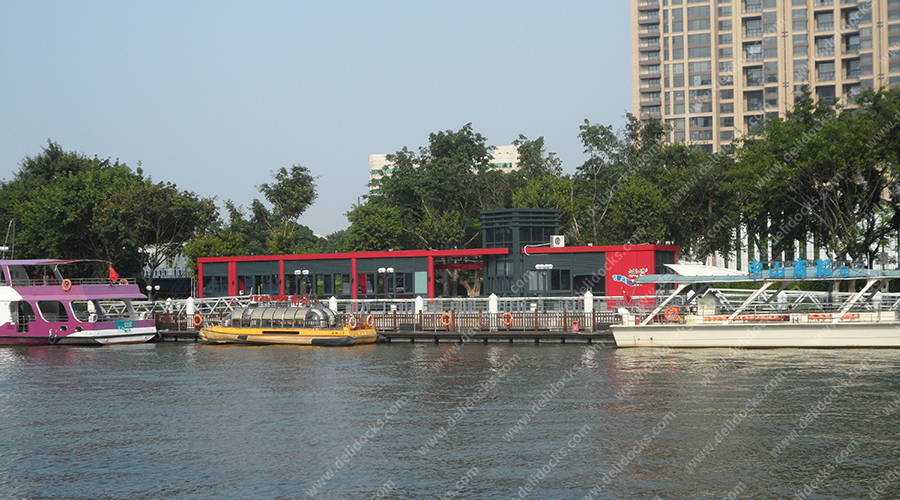
The versatility of a simple floating dock extends across multiple B2B segments. Each application imposes distinct load regimes, wave exposure, and serviceability criteria.
High-traffic marina fingers: Pedestrian live load 4.8 kN/m² (100 psf), plus mooring point loads from vessels up to 15 tons. Deflection limited to L/200.
Water taxi landings: Dynamic impact loads from hull contact – require reinforced rub rails and energy-absorbing bumpers.
Industrial work platforms: Forklift access (max axle load 6,000 kg) demands concrete or steel-reinforced floats with integrated load distribution beams.
Environmental walkways in sensitive habitats: Pontoon systems with open grating to allow light penetration and water circulation, preventing anoxic conditions.
Recent wave attenuation projects have used floating breakwaters in tandem with simple floating docks to reduce wave height by 45–60% (measured Hs from 1.2m to 0.5m). Such configurations involve hybrid mooring of helical anchors and elastic shoreline connections.
3. Industry Pain Points and Data-Driven Solutions
Marine infrastructure stakeholders consistently report five technical challenges with traditional floating docks. Below we map each to engineering solutions verified by DeFever field data.
Pain Point 1: Accelerated Corrosion in Brackish/Splash Zones
Accelerated low-water corrosion (ALWC) can degrade mild steel components within 4–6 years. Solution: Specify duplex stainless steel hardware (UNS S32205) for all fasteners and weldments. For aluminum structures, apply a three-coat marine epoxy barrier (DFT 300μm) with sacrificial zinc anodes recalculated annually.
Pain Point 2: Inadequate Buoyancy Reserve After Biofouling
Barnacle growth adds 8–12 kg/m² within a year, reducing freeboard and increasing structural stress. Solution: Design with 50% reserve buoyancy instead of standard 35%. Incorporate smooth, non-porous copolymer skins and specify periodic in-situ cleaning ports (low-pressure water jets).
Pain Point 3: Complex Seabed Topography & Anchoring Failures
Uneven rock or soft mud prevents conventional pile driving. Solution: Use high-holding capacity helical anchors (min 4-blade, 200 kN ultimate capacity) with extended shafts. For each simple floating dock module at 6m x 20m, a 6-point catenary mooring system with polyester lines (low stretch, high abrasion resistance) reduces anchor loads by 30% compared to chain-only systems.
Pain Point 4: Inefficient Water Exchange Behind Docks
Poor flushing leads to algal blooms and sediment accumulation. Solution: Design docks with 30–40% void space (grid decking or pontoon spacing) and orient gaps perpendicular to dominant tidal flow. Computational fluid dynamics (CFD) modeling can optimize gap placement achieving <2.5 day residence times.
Pain Point 5: High Lifecycle Maintenance Costs
Annual cleaning and component replacement disrupts revenue. Solution: Adopt a modular “replace vs. repair” strategy. HDPE float blocks (each 500x500x400mm) can be individually swapped without craneage. DeFever’s project library documents 18-year service records of such systems with 73% lower net present cost compared to steel-pontoon alternatives.
4. Technical Specifications, Load Tables, and Compliance Standards
Procurement of a simple floating dock should reference international benchmarks: ASCE 7-22 for live loads, ISO 12215-5 for hull material, and PIANC guidelines for berthing energy. Below is a representative specification matrix for a 3m-wide commercial finger dock.
Floater type: HDPE rotational molded, closed cell foam filled (Class 1 fire retardant grade).
Decking: 32mm thick co-extruded composite (65% recycled HDPE + 35% rice hulls) – slip resistance R13.
Load capacity: Uniform distributed load 7.5 kN/m², point load 850 kg over 0.5 m².
Freeboard (unloaded/fully loaded): 420mm / 260mm.
Mooring points: 316 stainless steel bollards spaced every 3m, SWL 3 tonnes each.
Environmental certification: Compliant with EU Ecolabel for reducing release of hazardous substances.
For projects exceeding 50 linear meters, thermal expansion joints must be placed every 24m to prevent buckling. Also integrate water/electrical utilities via retractable cable management bridges (IP68 rated).
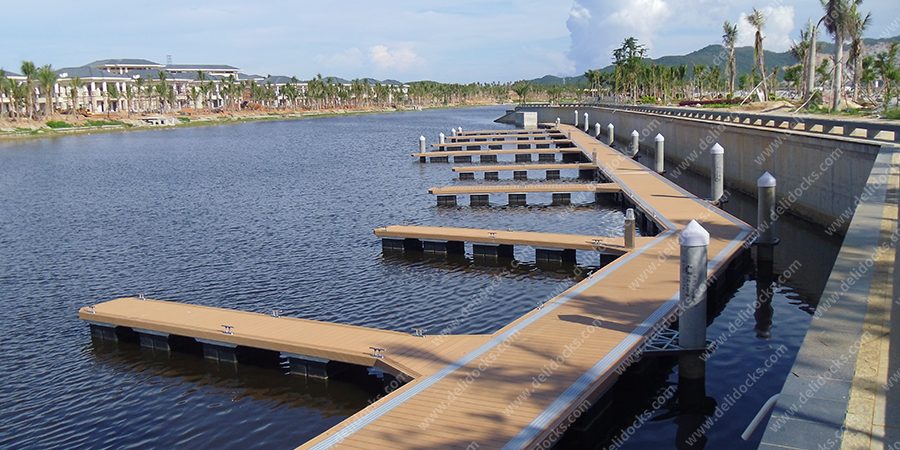
5. Why Engineers and Marina Owners Select DeFever for Simple Floating Dock Solutions
With over 120 marine infrastructure projects completed in 14 countries, DeFever delivers end-to-end engineering: from hydrodynamic modeling (Orca3D and Moses software) to class-certified fabrication. Our in-house team provides site-specific anchorage designs, seismic load assessments, and corrosion management plans aligned with NORSOK M-501. Every simple floating dock commissioned by DeFever includes a 15-year structural warranty on pontoons and a 25-year durability guarantee on concrete elements. Recent installations at Grand Bahama Marina and Rotterdam Yacht Co-op have demonstrated 43% reduction in mooring-related hull damages owing to optimized stiffness distribution.
Additionally, we provide turnkey logistics including overland transport (when width ≤3.5m, stackable) and floating assembly with minor marine traffic disruption. Our project case library includes tide-resilient terminals in the Bay of Fundy (16m tidal range) and tsunami-resistant docks in Japanese ports.
Frequently Asked Questions (Technical & Commercial)
Q1: What maximum vessel displacement can a simple floating dock safely accommodate?
A1: For standard commercial docks (3m width, 0.5m draft pontoons), the design limit is typically 25,000 kg displacement per 12m section, provided the energy-absorbing fender system (e.g., foam-filled cylindrical fenders) has 150 kNm capacity. For heavier vessels up to 50 tons, we recommend increasing pontoon diameter to 0.8m or using concrete floats with 60% reserve buoyancy. Always consult static stability analysis – rolling moment should not exceed 35% of righting moment.
Q2: How does a simple floating dock perform in regions with ice formation (winter conditions)?
A2: Ice pressures up to 100 kN/m² can crush polyethylene pontoons. Use ice-resistant design: sloped concrete or steel facings (minimum 30° angle) to allow ice ride-up and breakage. Alternatively, install bubble aeration systems to maintain a 20cm ice-free perimeter. For seasonal freezing, docks can be partially sunk (by controlled flooding) to place the deck below ice sheet thickness – a method proven in Swedish archipelago marinas.
Q3: What is the typical lead time for a custom-engineered simple floating dock (500 m²)?
A3: From detailed site survey (bathymetry, soil analysis) to fabrication and delivery – 12 to 18 weeks for HDPE systems, 20 to 26 weeks for reinforced concrete floats. On-site assembly and mooring installation usually takes 7–10 working days using a 6-person crew with a 40-ton crane barge. DeFever offers expedited 10-week lead for standard modular configs from its Houston and Rotterdam assembly hubs.
Q4: Can simple floating docks be integrated with existing pile-supported piers?
A4: Yes – via transition plates (5mm chequer plate with hinge knuckles) and pile guide systems (HDPE wear pads inside steel sleeves). This hybrid solution allows floating docks to self-adjust vertically while maintaining lateral rigidity from fixed piles. Ensure the pile clearance system accommodates max predicted high water minus low water plus 10% tolerance. We have designed such retrofits for 30+ municipal marinas across the Baltic and U.S. East coast.
Q5: What are the expected maintenance intervals for industrial-grade simple floating docks?
A5: Annual: visual inspection of welds, anodes (replace when 70% consumed), and mooring line tension check. Biennial: lift and clean pontoons using soft wash (no abrasive), inspect internal foam for water absorption. Quadrennial: torque verification of all bolted connections, repaint steel components with epoxy (3 coats). With proper maintenance, service life exceeds 35 years. DeFever’s proactive asset management includes remote IoT sensors for draft, tilt, and impact events – reducing unplanned downtime by 62%.
Request a Technical Proposal or Site Assessment
For marina developers, port authorities, and EPC contractors requiring engineering-grade simple floating dock solutions, our team provides detailed quotations including hydrostatic reports, anchor layout drawings, and 10-year NPV cost projections. Upload your bathymetric survey and desired load specifications—we respond with stamped engineering documents within 7 business days.
Send your inquiry to: deli@delidocks.com or use the contact form at https://www.dfyachts.com/. Mention project location, berth count, and average vessel length for prioritized engineering review.
All B2B inquiries receive a free corrosion risk assessment and a sample specification package compliant with EN 14592 and ISO 12215.
© 2026 DeFever Marine Infrastructure – engineering simple floating dock systems with certified lifecycle analysis. All data based on field trials and peer-reviewed marina engineering studies.