2026-10-15
In marine construction and marina management, the requirement for moving a floating dock arises from changing water levels, seasonal repositioning, infrastructure upgrades, or complete facility reconfiguration. Unlike fixed piers, floating dock systems offer inherent adaptability, but their relocation demands precise engineering, load analysis, and environmental consideration. This article provides a deep technical examination of the methodologies, equipment, safety margins, and post-move verification procedures practiced by experienced marine engineers and DeFever specialists in international yacht harbor projects.
1. Pre-Move Engineering Survey: Structural and Subsurface Analysis
Before any physical operation, a systematic survey determines the feasibility and method for moving a floating dock. This phase includes:
Buoyancy verification – Calculating the existing dock's reserve buoyancy and draft under anticipated load conditions (e.g., wet towing or dry transport).
Structural integrity check – Inspecting welds on aluminum frames, concrete float connections, and polyethylene pontoon seals for leaks or fatigue cracks.
Anchoring and mooring audit – Reviewing pile guides, roller assemblies, and chain stoppers that may interfere with extraction.
Bathymetric and geotechnical survey – Mapping water depth, submerged obstacles, and sediment type along the intended tow path or crane pad site.
Based on these data, engineers produce a lift plan or tow plan with calculated center of gravity, sling angles, and environmental load allowances (wind, current, wave action). DeFever project documentation routinely includes these parameters for permitting and contractor safety briefings.
2. Primary Methodologies for Dock Relocation
The industry recognizes three principal techniques for moving a floating dock. Selection depends on dock size (length, beam, weight), travel distance, waterway restrictions, and available equipment.
2.1 Dry Land Transport Using Hydraulic Trailers
For docks under 25 meters and with accessible launching ramps or dry storage areas, hydraulic modular trailers (SPMTs) provide a controlled, low-risk solution. Procedure:
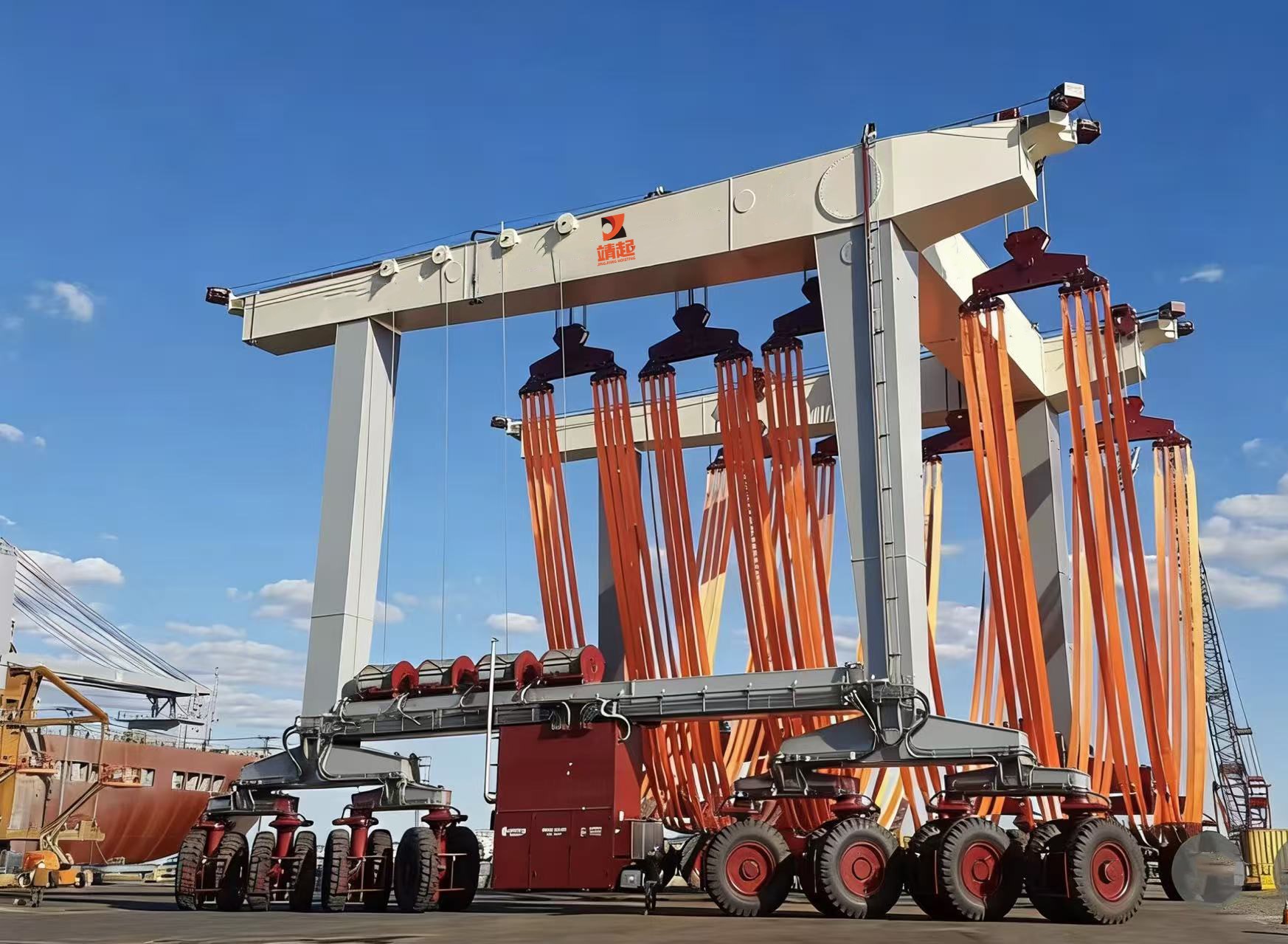
Deploy a mobile boat hoist or crane to lift the dock from water onto cribbing blocks on a hardstand area.
Position hydraulic trailers under the dock, aligning axles with structural transverse frames.
Raise trailers synchronously, distribute load via spreader beams to avoid point-load damage.
Transport to new site, maintaining speed below 8 km/h on paved routes.
This method requires a crane barge or slipway for re-launching. It offers the benefit of full inspection and pressure washing for biofouling removal during transit.
2.2 Wet Towage by Tugs or Workboats
For large floating dock assemblies (e.g., marina fingers 50+ meters long), wet towage is often the only practical approach. Key engineering tasks:
Tow line configuration – Using bridles attached to reinforced tow bitts or embedded padeyes, with shock-absorbing nylon tails.
Stability ballasting – Adding temporary water ballast to lower freeboard and increase stability in open water.
Navigation risk assessment – Evaluating bridge clearances, channel width, and tidal windows.
Support vessel escort – Deploying a pusher boat astern to control yaw and prevent jackknifing.
Towing speed typically does not exceed 4–5 knots to prevent submergence of the dock's bow wave. The tow master must continuously adjust heading to compensate for wind-induced drift.
2.3 Crane Barge and Lifting Operations
When moving a floating dock across an active marina or over submerged utilities (cables, pipelines), a crane barge lifts the dock clear of the water and swings it into a new slip. This technique demands:
A barge with sufficient deck area and crane capacity (minimum 125% of dock weight).
Spreader frames with nylon slings to avoid crushing deck fittings or handrails.
Tidal and current windows where barge motions are below 0.5 meters amplitude.
Rigging inspection certificates and dynamic load testing.
Post-lift, the crane barge may either place the dock directly into its new position or transfer it onto a cargo barge for longer-distance relocation.
3. Site Preparation for the New Location
Successful moving a floating dock concludes with precise installation. New site preparation must be completed before the dock arrives:
Pile driving or anchoring system – Install new guide piles (steel or concrete) at designed batter angles. For helical anchors or deadweight moorings, verify holding capacity via pull-out tests.
Approach gangway interface – Prefabricate hinge brackets, roller ramps, or telescoping gangways to match the dock's freeboard range.
Subsea utility connections – If the dock carries water, power, or data lines, install flexible hose loops and self-mooring quick-disconnect panels.
Fendering alignment – Install cone fenders or W-block fenders at calculated heights corresponding to the dock's new design waterline.
DeFever engineering teams utilize 3D laser scanning to match existing dock geometry with new piling positions, reducing realignment work and ensuring finger dock parallelism.
4. Operational Sequence and Safety Controls
A standardized sequence minimizes incidents during moving a floating dock. The following checklist is adapted from international marina best practice guidelines:
Permit and lock closures – Notify harbor master, secure waterway exclusion zones, and schedule work during neap tides or slack current.
Detach all utilities – Disconnect electrical shore power, fresh water hoses, and sewage pump-out lines. Cap ends and test for isolation.
Remove loose equipment – Clear cleats, benches, lockers, and gangway hinges to reduce center of gravity height.
Attach lifting/towing gear – Use load cells on each sling or tow line to monitor force distribution in real time.
Gradual extraction – For dry launch: incline trailer to allow water drainage. For wet towing: slowly reverse tug to break suction from any mud or marine growth.
En route monitoring – Check for water intrusion in sealed pontoons, listen for structural creaking, and adjust ballast as needed.
Final placement and shimming – Lower dock onto new pile guides, add rubber shims between piles and guide rollers, and secure with locking collars.
Throughout the process, an engineering surveyor documents critical steps (sling angles, draft marks, tow line tension) for post-project analysis and warranty records.
5. Post-Move Commissioning and Performance Verification
Relocation is not complete until the dock operates safely at its new berth. The following tests must be performed:
Freeboard measurement – Compare actual freeboard against design specifications (typically 0.4–0.6 meters for service load). Adjust ballast or add supplementary floats if variance exceeds 5%.
Roll and pitch stability – Load test with concentrated weights (e.g., forklift or pallet of concrete blocks) at dock edge; record tilt angle (must stay under 3°).
Mooring dynamics – Under moderate wind (15 knots) and wake from a passing vessel, measure pile guide travel and fender compression using displacement sensors.
Utility reconnection – Pressure test water lines, conduct insulation resistance test on electrical feeders, and verify data continuity.
If any parameter fails, engineers may install additional stiffness members, replace undersized guide rollers, or add passive wave attenuation devices such as floating breakwaters.
6. Common Technical Pitfalls and Mitigation Strategies
Based on post-incident analysis from over 80 floating dock relocations, the following failures appear most frequently:
Underestimated bottom irregularities – Submerged rocks or dredge mounds can tear polyethylene pontoons. Mitigation: perform a multibeam sonar survey of the tow path and use a skimming vessel to mark hazards.
Inadequate pump capacity – When moving a floating dock that has internal ballast compartments, small bilge pumps may not keep up with wave sloshing. Solution: install temporary 2-inch diaphragm pumps with check valves.
Tow line snap-back – Nylon ropes under high tension can recoil with lethal force. Prevention: use synthetic steel-core lines and deploy flaked line on deck with proper tail bags.
Corrosion at lift points – Uninspected lifting padeyes may have hidden crevice corrosion. Mandate dye penetrant testing on all lift hardware prior to operation.
These insights are incorporated into the operational manuals produced by DeFever for each custom dock relocation project, ensuring repeatable safety standards.
7. Environmental and Regulatory Compliance
Marinas and yacht clubs must adhere to local environmental regulations when moving a floating dock. Key considerations:
In-water work windows to protect fish spawning seasons (often restricted between April and July in temperate zones).
Use of silt curtains during any pile extraction/driving near the old or new location.
Disposal of removed antifouling paint waste (classed as hazardous material in most jurisdictions).
Noise control measures if relocating at night – limited to 75 dBA at 50 meters.
Permitting typically requires a method statement, spill response plan, and proof of contractor insurance (marine liability coverage at $2M minimum). Failure to comply can result in daily fines or stop-work orders.
Frequently Asked Questions (FAQ)
Q1: Can any floating dock be moved without disassembling
it?
A1: Yes, many prefabricated docks are designed for relocation as
a single unit. However, concrete docks over 30 meters often require splitting
into modules because road transport weight limits and turning radii become
prohibitive. Composite or aluminum docks can typically be moved intact using a
crane barge or hydraulic trailers.
Q2: How do I determine if my dock needs extra buoyancy blocks before
moving it?
A2: Perform a freeboard check while the dock is loaded
with typical live load (e.g., 150 kg/m²). If freeboard is less than 0.25 meters,
you should add temporary sealed air tanks or clip-on polyethylene floats. The
towing draft must allow at least 0.15 meters clearance above submerged rocks or
seabed based on the lowest tide of the operation day.
Q3: What is the maximum safe wave height for wet towing a floating
dock?
A3: For docks longer than 15 meters, the safe significant wave
height is 0.5 meters for open-water tows, and 0.3 meters for channel tows near
jetties. Larger docks with high freeboard may tolerate 0.7–1.0 meters if
accompanied by a tug on each side to reduce roll. Always consult a naval
architect for site-specific limits.
Q4: How long does moving a floating dock typically take from start to
finish?
A4: A simple relocation (under 500 meters within the same
harbor) usually takes 2-3 days: 1 day for site prep and utility disconnection, 1
day for the move and placement, and 0.5–1 day for recommissioning and testing.
Cross-waterway moves requiring tow permits and bridge openings may extend to 5–7
days due to scheduling constraints.
Q5: Does moving a floating dock void its original structural
warranty?
A5: Many manufacturers’ warranties specify that any
relocation must be performed by certified technicians using approved lifting
points. Unauthorized moves using improper sling angles or excessive tow speed
will void the warranty. Always obtain a relocation procedure endorsement from
the original dock supplier or hire an accredited marine contractor like DeFever
to maintain coverage.
For professional engineering support, site-specific tow plans, or lifting calculations for your next floating dock relocation project, contact our technical team. DeFever provides full-service project management—from initial bathymetric survey to post-move load testing—ensuring compliance with international marina standards. Send an inquiry with your dock dimensions and new site coordinates to receive a tailored methodology proposal.
→ Request a Consultation: Submit your project details here and one of our marine engineers will respond within 24 hours.